









165: Moral Imagination, Patient Capital and Averting Collective Climate Suicide with Jacqueline Novogratz



About this episode
Crippling heat, fire, and death in the U.K., Europe, and the U.S. are bringing the climate emergency to our literal doorsteps. At the same time, political antipathy一in the lack of climate depth among Britain’s leadership candidates or the collapse of sweeping climate legislation in the U.S., for example一seems to be adding fuel to the fire.
Co-hosts Tom Rivett-Carnac and Paul Dickinson, and especially Christiana Figueres, are outraged! They explore what this means for the climate agenda going forward and, of course, how compassion, inclusion, and optimism must be part of the solution. Will deaths in the streets of Madrid and 40+°C (102°F) temps in the alleys of London compel us to wake up and see what’s happening?
Next, how do we use the tools of capitalism without being controlled by them?
In this segment the gang explores the differences between traditional and enlightened capital and their connections to poverty, moral imagination, and climate – joined by visionary entrepreneur, philanthropist, and best-selling author Jacqueline Novogratz.
Novogratz, described by Forbes as one of the World’s 100 Greatest Living Business Minds (2017), is the head of the global nonprofit impact investment fund Acumen.
Novogratz explains, “What is the problem we’re here to solve, and how do we use the tools we have to solve them? Investment has always been [one of those] tools…but we see investment as a means, not as an end in itself.”
Listen in as they deconstruct patient capital, off-grid solar, outrage over ongoing divisiveness, and how moral imagination as corporate strategy might just work a little magic for the future.
NOTES AND RESOURCES
Check out more of Gabrielle Sey’s Music here, and be sure to spin her cut of “Patterns” and add it to your summer playlist!
Learn more about Acumen and its inspirational founder, Jacqueline Novogratz.
You Can buy Novogratz’s 2020 work “Manifesto for a Moral Revolution: Practices to Build a Better World” here, or in the US, here.
You can buy Novogratz’s bestseller, “The Blue Sweater: Bridging the Gap between Rich and Poor,” here, or in the US, here.
To learn more about our planet’s climate emergency and how you can transform outrage into optimistic action subscribe to the podcast here.
Full Transcript
Transcript generated by AI. While we aim for accuracy, errors may still occur. Please refer to the episode’s audio for the definitive version
00:00:12.665 --> 00:00:14.465
Tom Rivett-Carnac: Hello, and welcome to Outrage and Optimism. I'm Tom Rivett-Carnac.
00:00:15.765 --> 00:00:19.905
Christiana Figueres: I'm Christiana Figueres, and today we will do Outrage.
00:00:19.905 --> 00:00:21.105
Paul Dickinson: And I'm Paul Dickinson. I've been experiencing the hottest day that any human's ever experienced in my country.
00:00:25.005 --> 00:00:27.705
Tom Rivett-Carnac: Paul is looking very hot at his London flat. Thanks for joining us today. We are going to talk about the extreme weather in the UK, Europe, North America, the political implications of that. And we're going to speak to Jacqueline Novogratz, CEO of the Acumen Fund, plus we have music from Gabrielle Sey. Thanks for being here. So you almost couldn't make it up what's happening at the moment, if you just look around. I mean, Paul and I are sitting in the UK, Christiana, you're in Costa Rica. The continent is undergoing unprecedented extreme heat. We're seeing fires from Portugal to Spain to France to now London is burning as we speak on Tuesday afternoon. At the same time, the UK is going through this leadership election where the candidates are proving themselves really to not have the depth on climate change that we would hope for. And we're seeing the collapse of the Democrats' attempt to pass sweeping climate legislation in the US. Both of those issues, of course, are ones that we dived into in detail recently. But today we're going to look at this extreme heat because this is something that has been happening all around the world, of course, and we've covered it before, but it's never really happened quite this way in Europe. And I don't know about you two, but from where I'm sitting and of course, because I happen to be in Europe, there is just this level of breathless alarm that is going on at the moment, and people are really realizing what's happening and that it's at their doorstep. So how's this looking? First of all, Christiana, you're sitting obviously in Costa Rica. What does it look like looking back to Europe from where you are today?
00:02:01.566 --> 00:02:22.946
Christiana Figueres: Well, I have to tell you, I woke up this morning with such a big, heavy stone in my stomach because how is it possible that we are yet seeing rising emissions when Europe is blistering, scorching, frying? I don't even know what verb to use. So I will leave the UK to Paul. But buckle up because here is just a tiny little sense of what is going on. In Portugal, one person died every 40 minutes. I repeat, one person died every 40 minutes between July 7th and 13th. In Luísa, a city in the center of Portugal, it hit a record 46.3 degrees Celsius, 115 Fahrenheit just a few days ago. Farmers are not even able, if their crops are still there, they can't even go out and harvest the crops. Spain, 30 fires raging across Spain. There again, people dying between July 10th and July 15th. Check this out because Tom, in our book we said that the heat would get so hot that people wouldn't be able to walk out on the street. Do you remember that? But that was for 2050. This is 2022. And in Madrid, you have a 60-year-old man who was working as a street cleaner in Madrid City Council, collapsed on Friday, died. His body was 41.6, 106 degrees Fahrenheit when he was discovered dead. His body frying on the streets. Italy, the Po River is Italy's longest river ever, hitting record low water levels after months without any heavy rainfall. So that the municipalities, 170 municipalities have issued ordinances prohibiting all use other than for food, domestic use, and health care. Anyone who's caught using water for irrigation of public or private gardens, washing of courtyards or cars or anything that is not considered absolutely existential is fined up to 500 euros. The bishop sold me, goes to the river, and has a ceremony blessing the waters and praying for rain. This is a Catholic bishop, praying for rain because they haven't seen any rain in more than 200 days. France, and I was just in Plum Village, 14,000 people have been evacuated from areas in that area, southwest of the country. The smoke from that area in the southwest, in the Gironde, has actually reached Plum Village. The green French lawmaker, Melanie Fogel, says this is not just summer, this is just hell. She says, will pretty soon become just the end of human life if we continue with our climate in action. That's just a few little tidbits of what Europe is going through, and I will leave UK to Paul and to Tom. But honestly, what the hell has heat completely burned our frontal lobe that we cannot bring these two things together? Heat is being caused. This extraordinary heat has been caused by climate change, and climate change is caused by greenhouse gas emissions. Hence, we have to reduce greenhouse gas emissions. I am into total outrage today in case you haven't noticed.
00:05:50.686 --> 00:05:51.606
Paul Dickinson: Thank you, Christiana. And of course, behind your outrage always is empathy and care and love, and that makes it all the stronger and more intense. I mean, look, I'll talk a little bit about the heat in London, which is trivial in comparison really to what you've just described. I do want to point out one thing, which is that we had a heat wave in Europe in 2003, and it went to a lot of countries, but widely regarded as having taken the lives of at least about 30,000 people, including 14,000 in France alone. Now, what's interesting, I mean, that was 19 years ago, and it was kind of the beginning of a wake-up call. It started a lot of debate about climate change, but 2003, you know, 19 years ago, the public debate was quite different. There wasn't such an awareness of climate change and how well it's kind of attributable, the extreme weather and increasing greenhouse gas emissions. I mention that because we discussed this previously, how shocking it is when these things happen, and then we kind of, we, how can I put it, we go along with them. It's a terrible and very unfortunate image, but it's kind of like in a violent relationship or something. Somebody creates an act of violence, in this case, the extreme weather, and then if we carry on with our lives as before, we've actually normalized it. And so the thing I really applaud you for here, Christiana, is like calling it out, saying this is, we've had all this kind of code red language, but when it's happening to people, it's more real. So the UK story is relatively trivial in comparison. It's 42.2 degrees centigrade here, the hottest it's ever been in the history of the UK. That's 104.3 Fahrenheit. So my experience here yesterday was I just kind of went to sleep, but I think that obviously the UK is not prepared for this. And I think that the key point you make, Christiana, and this is my final point is that we absolutely have to, we have to learn something. Humans cannot see really big things. We see small things. All around me are advertisements for kind of shops and products and food or stuff like that. And then there's like entertainment and there's people going around and they got fashion. And then we, you know, holidays and hotels and shows, you know, and these all seem really, really important. But this absolutely gigantic thing that's about to wipe us out, no one seems to be able to see it. And I hope today, of all days, everyone will understand, whoa, you know, this is basically an existential situation for our nations.
00:08:26.726 --> 00:08:28.986
Tom Rivett-Carnac: Yeah, I mean, I agree with you there. The only thing I'd say is I don't see that happening. So yesterday, I was on a radio show for an hour in the afternoon with Eddie Mayer, who's one of the leading talk show hosts in the UK. And I joined him for an hour and I answered questions from callers who called in, and they were asking about the extreme heat and what's going on. And of course, as you would expect, it was a whole range of different people listening to the radio. But, you know, there was a few of them that were quite sort of angry. And the narrative, like, I don't want to be told what to do, we don't know what's happening here. What about China and India? And as I was listening to it and sort of working out what I was going to say in response, it struck me that they were scared and they were afraid. And what that was coming out in was a form of blame of others. Someone's telling me what to do. Someone else isn't being fair. It's difficult for that sense of anger and fear to turn inwards into a sort of, I'm going to do something different as a person. Yes, so important. And for that, I think we have to look at ourselves. I mean, there was a statistic I saw the other day that said 47% of the people in Europe don't believe the climate movement is welcoming to people like them. That actually they see it as something for other people in whatever way that gets wrapped up into our culture wars. We need to find a way for these teachable moments where it is literally cooking us in our homes to actually make this more of a collective moment of engagement. Because if we try and tell people that they should be ashamed of something or they're doing something wrong, they'll just go back into that sense of fear and frustration and we won't get the change we want. What do you think?
00:10:06.966 --> 00:10:09.406
Paul Dickinson: There's a whole therapeutic thing about how it's dealt with. What was it? I can't remember which US president talked in the Great Depression about we have nothing to fear but fear itself. I think that there is a real need now for some kind of leadership of different kinds. However, it might manifest whether it's children or whatever it is to lead us out of this.
00:10:25.646 --> 00:10:27.386
Tom Rivett-Carnac: Christiana?
00:10:27.386 --> 00:10:30.626
Christiana Figueres: Tom, I'm really with you. You know, in my in my best days, I'm really with you tapping into that compassion and I completely even in my worst days, I completely agree with you that we cannot alienate a single human being on this, even with my rage today. No, it is not. It's not about alienating. It's not about blaming people. But it is about waking up for heaven's sakes. I mean, the stupor that we're in, the fact that we're sleepwalking ourselves in, the fact that in the United States, you know, now climate legislation is out down the drain. And now Biden is going to do executive order climate. Well, we know what happens with executive orders, don't we? Yeah. And the fact that just until a few days ago, the potential leadership in the UK was actually even quivering about whether they were going to take on net zero or not. I mean, it's just a little bit difficult to understand how these two realities stand in front of us holding hands. And we're here going like, where is the coherence between these two things? It's just... And I know that both are part. And, you know, for listeners who have been with us for such a long time, they will know that one of my commitments in life is to hold two realities that seem to completely conflict and cancel each other, to hold them in equal standing. And that is the challenge today. But Jesus, is that a big challenge? It is so difficult to do that.
00:12:15.806 --> 00:12:21.446
Tom Rivett-Carnac: And it's a very hard day to feel empowered, like you can have an impact on something, right? I mean, I remember some months ago, Christiana, you talked about this when you were in your house in Costa Rica, and there was a king tide or a flood, and the ocean came right up to the very doorstep of your house, and you sort of thought, my God, I really feel like I'm living inside something much more powerful, and it's quite alarming. I mean, this extreme heat, and I'm in Devon, so I mean, I've got a very, very mild version of this compared to most people in Europe. It really makes you feel like something is happening around you, that it feels kind of out of control, that something is now emerging around you, and you don't know what's going to happen next, and it's frightening to feel that.
00:12:55.526 --> 00:12:56.426
Christiana Figueres: Of course. And I agree with you that a lot of what is expressed as anger and blaming other people is fear, because of the helplessness, right? So right underneath the anger. And usually, we know that from human psychology, usually underneath anger, there is fear. And that is very, very often the case. And certainly here, certainly here there's fear. But, you know, I almost like welcome that fear, Tom, because let's remember these temperatures, these were the temperatures in India just a few months ago. And we talked about it on the podcast. And more. But yes, higher temperatures. And we talked about it in the podcast, but it certainly didn't make the media, you know, focus on it as long or as deeply as the heatwaves in Europe for the same reasons that we know. The point is, whether it's India, Pakistan, Europe, or Latin America, or the US, or wherever, no one is spared. No one is spared. And in fact, statistically, it is the content of Africa that is actually going to be hit even worse than what we're seeing right now in Europe.
00:14:12.026 --> 00:14:14.166
Tom Rivett-Carnac: Well, that is a very good and important point. And we'll segue in a minute to our amazing guest who we have this week, who I think will provide us with more of the uplift and the solutions. But Paul, do you want to come in?
00:14:21.506 --> 00:14:26.326
Paul Dickinson: Yeah, no, I mean, I'm going to quote a little bit of...
00:14:26.326 --> 00:14:26.946
Christiana Figueres: Gusbeth.
00:14:26.966 --> 00:14:28.186
Tom Rivett-Carnac: Gusbeth or Churchill, yeah.
00:14:28.186 --> 00:14:29.346
Paul Dickinson: No, it's back to Churchill. You've got to flick between this. You've got to have variety. Spice of life. No, but this is a tiny bit. I think I said this in one of our first ever podcasts two years ago, but it's a little bit from obviously a self-serving book. But the words, they have such weight today. And just imagine not that this is Winston Churchill writing in 1946, imagine this is me speaking today. It's not possible to tell this story without recording the milestones which we passed on our long journey from security to the jaws of death. Looking back, I am astonished at the length of time that was granted to us. Isn't that true? And then one to your point, Tom, about the climate movement. We are so few, the cause is so great that we cannot afford to weaken each other in any way. But I think that once again, fast forward, what is it, 70 years or something since the war, 80 years since the war, we've really got in our minds some idea that the military is important. You know, the military, the budget of the UK on defense is, I think, about 60 billion pounds. In the US., $800 billion. Get that, $800 billion being spent every year on defense, weapons, all that kind of stuff. Now, I think what we're facing here is a failure of the administrative state because it's not like there isn't enough money in the world to deal with climate change. There's more than enough money. But the administrative state is doing things like investing in weapons, when actually it could be investing in decarbonizing. And I think that kind of refocusing, refashioning of our sense of national and global security is the heart of this. And it does require all of us to find common cause, and it does require leaders to emerge who will articulate our collective vision because otherwise, yeah, we really are doomed. What was it, Secretary General of the United Nations said? Sort of collective suicide.
00:16:23.506 --> 00:16:25.146
Christiana Figueres: I mean, that's terrifying.
00:16:25.146 --> 00:16:26.986
Paul Dickinson: Terrifying phrase, but very accurate. If we don't all pull together, if we don't all hang together, we're all going to hang separately.
00:16:33.206 --> 00:16:39.346
Tom Rivett-Carnac: Well, it's quite an experience, I think, for millions of people at the moment to sort of have a visceral experience of this. And I certainly hope that this is the seed of change and that we find that everybody finds an emotional way to internalize this towards political and personal transformation, rather than towards blame and apathy. And we have that choice, right? That's in our hands.
Load More00:16:56.146 --> 00:16:58.706
Paul Dickinson: Don't go to any disaster movies anymore. Because you're in one. You just basically buy the popcorn, stay at home and work the phones. That's my advice. Watch the news.
00:17:05.626 --> 00:17:06.126
Tom Rivett-Carnac: Right. OK. So this week we have a fantastic guest, Jacqueline Novogratz, who has been a leader in the space for such a long time. Sadly, I couldn't join you on this interview. So, Paul, why don't you introduce Jacqueline?
00:17:18.586 --> 00:17:43.066
Paul Dickinson: Well, I mean, the company that she set up, Acumen, that has over decades produced fantastic returns for investors, but far more importantly, it's seeded absolutely hundreds of extraordinary enterprises that have grown to immense scale, providing electricity for hundreds of millions of people, mosquito nets for hundreds of millions of people. There are too many to name here. She's crowdsourced in hundreds of millions of additional funds. She's an absolute miracle worker with the business system creating. And it's something entirely new that I think has lessons for us all. I think you'll enjoy the interview.
00:17:58.706 --> 00:17:59.506
Tom Rivett-Carnac: Fantastic. Here's the conversation.
00:18:05.600 --> 00:18:09.640
Christiana Figueres: Jacqueline, thank you so much for joining us here on Outrage and Optimism. You've been a very busy bee in the past few weeks, and I'm sure you will weave the wisdom that you have continued to gain from these trips into our conversation. But Jacqueline, I wanted to honestly, very unashamedly, take advantage of your very unusual positioning that has such deep roots of so many years, and with both wisdom and love brought into it. Your positioning into the very wild and wonderful, and sometimes crazy and evil field of, how do we use our capital for either good or bad? Because it strikes me, Jacqueline, that we're at a very interesting moment in which I think we were almost on the cusp of really moving serious capital into arresting climate change, addressing emissions, really doing a lot of good, financing SDGs, really doing a lot of good. We were really moving there, and then all of a sudden, we have this reaction from the other side with this famous accusation of woke capitalism that we're also struggling to understand what on earth is that. But as far as I can tell, it's basically an accusation from those who have used traditional capital to differentiate from enlightened capital. Traditional capital, accusing those who are using enlightened capital as basically greenwashing and not using their capital with the integrity that they claim. Of course, then we also have on the other side, the accusations of, well, capitalism is the problem to begin with. And the mess that we're in right now is because of capitalism. So let's just chuck capitalism and invent something else. And so here we are, you know, it's like Wimbledon with two players on two sides, you know, throwing the ball back and forth. And there you are, Jacqueline, positioned, I think, right in the middle and being able to look at both sides and harvest the good from both sides. But why don't you tell us, Jacqueline, how did you get to position yourself so wisely right there in the middle? And how's it going for you?
00:20:41.760 --> 00:20:43.080
Jacqueline Novogratz (guest, CEO of Acumen Fund): Well, thank you, Christiana. It's great to be here with you and Paul. And it's the perfect question. I guess I would start with a plea for nuance. And it goes back to 21 years ago when we started Acumen. I remember going into a meeting in Bangladesh and I was called a rapacious venture capitalist. And in the very next meeting, I was called a socialist. And I thought, OK, I'm right exactly where we need to be. Perfect. This is it. And it is where we are. We're living in a moment where everything is seen in binaries. And we hurl insults at each other rather than actually asking ourselves, what is the problem we are here to solve? And how do we use the tools we have to solve them? And for us at Acumen, investment has always been that tool, at least one of those tools. But we see investment as a means, not as an end in and of itself. In other words, traditional capitalism that I was taught when I went to business school, focused everything on the shareholder, maximize the returns to the shareholder, and you are fulfilling your fiduciary responsibility. On the other hand, what we've seen over the last 30 years, since I've been out, is increasing inequality, a climate crisis verging on catastrophe, and a growing level of divisiveness. And an entire generation understands that. So to write it off as woke capitalism is again in that insulting category. On the other hand, to see a generation then, as you said, want to throw capitalism away, is also recognizing, or is also jettisoning one of the most powerful tools we've ever had as a world. And so how do we use the tools of capital without being controlled by them has been my life's work.
00:22:42.040 --> 00:22:45.660
Paul Dickinson: How to use the tools without being controlled by them? That's beautiful.
00:22:46.960 --> 00:22:49.840
Jacqueline Novogratz (guest, CEO of Acumen Fund): Well, you know, it started when we first started Acumen. I had worked on Wall Street. I'd seen how the poor were overlooked, excluded, exploited by traditional capitalism. I also had seen as a banker, the power of investing in entrepreneurs to take innovation, turn it into action, build jobs, change systems. Then I moved to Rwanda in the 1980s and I'd saw the power of moving large pieces, large pools of capital toward solving problems of poverty, but too often that created dependency. And so the question that we asked at Acumen was, how do you take capital, invest in entrepreneurs because they are our best problem solvers, but give them time to build markets that have never existed, to solve problems that are wicked problems, where the market is part of the solution but may not be all of the solution. And it's been 20 years now using Haitian capital, which is take philanthropy, rather than give it away, invest it for 10 to 15 years to allow those entrepreneurs time to learn who their customers are, try, fail, try again. We accompany them so that we use our social capital, not just our financial capital, our access to networks, to supply chains, to help them build. And then we measure not just the financial impact that they might have, but also the social and environmental impact. Now, 21 years later, our 140 companies have brought critical goods and services to over 400 million individuals. It works. The money that comes back gets reinvested. And as those companies get to a place where they can bring on more traditional capital, so have we entered the more traditional impact investing sphere and have about a quarter billion dollars now under management to help scale those companies, at which point they're in a much better place to partner with governments and corporations to actually solve problems.
00:24:56.580 --> 00:25:13.760
Christiana Figueres: And you know, this sort of middle-of-the-way field that you have carved out and almost invented, I would say, you know, you recognize the problem and you are inventing, because I'm sure it's still in the process of innovating. You're inventing the solution to it, Jacqueline. It's so beautiful to see that. And the patient capital that you speak of, I can see how it works for the companies that you have capitalized. Does it also work for companies that operate at much higher levels? And I guess my question comes out of the element of time. Because as you say, the climate crisis is almost a catastrophe, as you said at the very beginning, is because of the time that we have left to solve it. So how do you find a middle way between the patient capital that you know from experience is absolutely necessary, and without which we wouldn't be able to solve anything? How do you find the middle way between that and the fact that we're running out of time as science continues to warn us?
00:26:13.200 --> 00:26:13.880
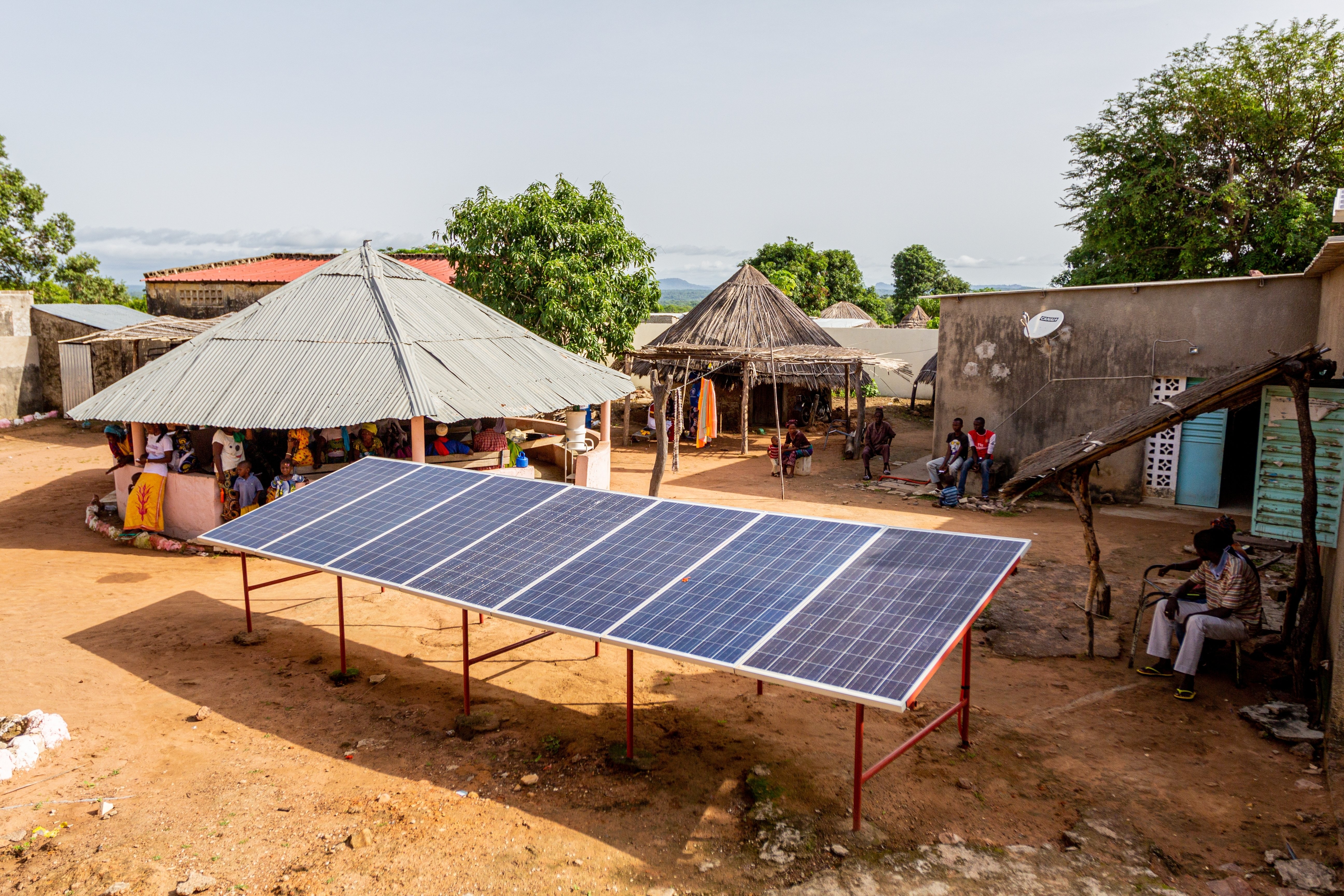
Jacqueline Novogratz (guest, CEO of Acumen Fund): Well, it's funny. I was giving a talk last week and I said, if our first 21 years were about patient capital, our next 20 are about impatient capital. We need both. And even more so, we need to focus on the right kind of capital, the right character to solve the critical issues. And so, to give you an example of how this whole thing works, 15 years ago, when there were 1.5 billion people on the planet with no access to electricity, we invested patient capital in a company called D-Lite, which was a startup with a solar lantern. We didn't understand at the time that we were building a market that had never existed for people who make $2, $3 a day, where there was no distribution, where there was a lot of corruption, where there were kerosene and diesel mafias that had no interest in seeing solar replace the status quo. And so you needed a crazy investor that had real risk capital to help build this company. For 15 years, we continued to invest in other companies, not just like D-Lite, but all across the growing ecosystem that was off-grid solar for the poor. Today, our companies represent about 160 million people with light and electricity that is clean. That represents 30% of all people on the planet who have gotten access to light and electricity. Now we have 800 million people as a world who still have, who still need electricity. If we are going to bring universal electrification by 2030, we don't need patient capital. We need impatient capital now. But the question is, how do you do it? The markets that were built with patient capital will take care of about 550 million. To reach the 250 million, we need a combination of big time grant financing so that we can allow these companies to go into markets mostly within Africa. 75% of people without electricity are in sub-Saharan Africa. Build awareness, help people, help them find the right distributors, set up inventory financing. All of the things that we need to do fast, and finding long-term investment capital is not the right call. Once that happens, because we now know how to do this, then you can build a quarter billion dollar concessionary debt instrument that pays for impact, so that we can fast forward universal electrification by 2030 in a way that mitigates carbon in the future because you are actually putting people on an energy level and bringing them into the economy in a way that is clean. And so this is about justice, this is about climate, this is about economic development. It will not happen without the nuance of using markets and using capital but not being controlled by it and asking our investors and frankly our philanthropists to start moving their money, Christiana, to where it is most needed, not where it is safest. And we're seeing too much of our money go to where it feels safest. The investors want to make returns, the philanthropists want to feel good and aren't comfortable with markets too often. And yet this is the creative space. This is the space where change happens.
00:29:51.240 --> 00:29:52.500
Paul Dickinson: Exactly. And I'm kind of getting a sense of almost like the entrepreneurs, there's an image that comes to me as like it's like a biological model, like there's this new DNA, new replicating organisms, like you're sort of, you know, like a petri dish with these amazing new organisms. And look what comes from them. I mean, I live in Brighton in the south of England, and we just had a 1.3 billion pound wind farm put up. Now, you talk about investing 130 million in Acumen and crowd sourcing about another 780 million. So it's a comparable amount of money. But no disrespect to the wind farm people. What you've done is massively more than the achievement of the wind farm, which is tiny in comparison. I think we confuse two different kinds of money. You're talking about, you were talking to Per from the IKEA Foundation, and he said, oh, we need 20 more Acumens. And you said, no, no, we need 20 more IKEA Foundations. And I couldn't help agreeing with you. Isn't there something about a kind of tragedy about what we could do so easily? I think these people with 10 million or 100 million or a billion or 10 billion, you've shown us that there's another way to kind of use the organic power of business to change our world. And it's a new kind of political system of sorts, this new kind of capitalism. You talk about 160 million people getting light. I mean, these are just crazy numbers. Our wind farm in Brighton gives energy to like 200,000 people or less. You know, there's something, there's a magic, isn't there? There's a magic in what you do.
00:31:19.440 --> 00:31:21.000
Jacqueline Novogratz (guest, CEO of Acumen Fund): I love that you call it magic. It doesn't always feel like magic. There's a magic in the people that make the decision that they are here on Earth to solve big problems. And they are incredibly pragmatic about the way that they are going to solve them. But what differentiates them is they start not by thinking about how profitable they can be, but about how they can insist on including the vulnerable and people who have been overlooked and excluded and the Earth. And then they solve from there. And if there's magic, it is in flipping the way we typically think about how we build businesses. These are the voices unheard. And yet what we've seen in our world today where we recognize the increasing fragility is that if we don't start there and ask ourselves, are we protecting Earth, are we protecting those who have been left out, we're not going to a very pretty place. And so I think the magic is in the character of the entrepreneurs that make this their focus. Paul, I was just in India, and there are three or four companies that I visited that could each take $50 to $100 million in capital at this point and build. But it takes what I would call the moral imagination in recognizing that you're looking at very thin margins. They are supporting people who make $2, $3, $4 a day. And yet their trajectory will have them reaching tens if not hundreds of millions of people. One quick example is a company called S4S. A young guy who had grown up in a family of farmers saw that low-income farmers have to essentially leave 40% of their produce either in the ground or at the market if they don't sell it on a given day, which is why we lose 40% of food before it hits the consumer plate. And it makes no sense for the farmers and their own livelihoods. It makes no sense for food as a problem that we need to solve. And too many of them that were using technologies were fueling those technologies with diesel for the most part. And so he created these solar dryers. But more than that, a supply chain that was truly inclusive, working only with smallholder women, they only buy from women, recognizing that so much of our transport costs, again, which hurts the environment, comes from transporting tomatoes, onions, vegetables full of moisture and water. And so they find these low-income farmers, they sell them on easy financing terms, solar dryers, they dry the onions and the tomatoes, chop them up, bag them, and then sell them into, you know, to wholesalers. It's a young company, but they'll also already have about $20 million in sales. And I can see the trajectory to changing, to your point, changing the system, recognizing that, like the Italians did all those years ago, you can have the freshness if you can your tomatoes. Now you can see farmers drying produce and and transporting them at lower power. With solar power, with solar power, that is very low tech and therefore very low skilled, low income people can do extremely well. There are so many solutions like this that are coming out of a new generation with a level of creativity and commitment to a world that is inclusive and environmentally sustainable. And I guess, ultimately, to your word again, the magic for me is that I can't imagine a better way of spending our time, our money, than finding those entrepreneurs, investing in them, real investment, but accompanying them so that we can help them solve the problems of this generation.
00:35:40.320 --> 00:35:42.660
Paul Dickinson: You don't describe yourself as an investor, do you? I mean, maybe you do, but isn't it something else you're doing? It's not politics. What is it? Is it like society building? I mean, I'm just trying to find a name for it.
00:35:52.540 --> 00:35:55.240
Jacqueline Novogratz (guest, CEO of Acumen Fund): I do describe myself as a patient capital investor.
00:35:55.240 --> 00:35:57.120
Christiana Figueres: Paul, you're trying to put Jacqueline in a box. She doesn't belong in any box.
00:35:58.760 --> 00:35:58.940
Paul Dickinson: Yeah.
00:35:58.940 --> 00:36:00.180
Jacqueline Novogratz (guest, CEO of Acumen Fund): I don't like boxes, Paul. I don't like boxes.
00:36:01.080 --> 00:36:03.200
Paul Dickinson: No.
00:36:03.200 --> 00:36:10.340
Jacqueline Novogratz (guest, CEO of Acumen Fund): But no, we all sit at the capital table with increasingly traditional investors. But people want us there because we stand for the moral imagination. We stand for the mission for which these companies were originally built. We are agnostic when it comes to what kind of players need to partner to actually solve the problem. I think it's that agnosticism combined with the discipline and the rigor of understanding how markets work and investment works that allows us to get outside of boxes and be support systems to those entrepreneurs that are doing the real work of solving the problems. I guess you get to a certain age where you get a lot more unapologetic about the instruments, the tools and the people with whom you need to partner to make it happen.
00:36:58.980 --> 00:37:01.560
Christiana Figueres: That is so true. Jacqueline, when I hear you speak, I can't help but ask myself, is the truth that you so eloquently describe, is it still the truth or has it been affected by, let's say, just the recent last six months crisis of energy crisis and food crisis? You've just come back from Asia, including India and Indonesia and a couple of other countries. Does the truth that you know to be true, does it still hold or has the food and the energy crisis rolled that truth back?
00:37:49.640 --> 00:37:51.040
Jacqueline Novogratz (guest, CEO of Acumen Fund): Rolled it back? Help me understand what you're asking there.
00:37:55.400 --> 00:38:37.860
Christiana Figueres: Well, I'm wondering whether the instruments that you have so carefully woven together can still be effective under the stress test that they are under right now of no more access to energy or much more difficult and complicated and expensive access to energy, of food being so much more expensive and difficult to get for, everything to do with human well-being, especially of, let's call it, the bottom of the pyramid that you address as your major audience for the work that you do. They are the ones that are being most affected right now, or at least that is what we read. I'm trying to get from you a different read. Is it true that those stressors are actually leading to very different decisions and very different behaviors at that level, or can we still use the instruments that you have honed over so many years to continue to push forward?
00:39:07.240 --> 00:39:10.820
Jacqueline Novogratz (guest, CEO of Acumen Fund): I feel that we now have the foundation for the instruments. We have to increase our creativity in how we use them. The good news, and for the optimism side of the outrage, the outrage comes from seeing, in a single season, smallholder farmers that are not only dealing with very little income, and the vagaries and vicissitudes of a climate crisis, where they don't even know when the rains will come, and they're often then followed by droughts, then they're followed by a locust swarm. Their harvests are wiped out, and they have nothing to start with. We are, and then there's the Ukrainian-Russian war, and we see supply chains further reduced and starvation. That is the outrage. The optimism part comes from the technologies that are now connecting people across the world, whereby farmers can have access to knowledge information each other like never before, where there's a new generation that is willing to put their money where their mouth is, and are sending clear messages to corporations that they better start doing that as well. And I'm seeing a confluence on the optimism side as well that we need to build on. And then the third leg of this is that increasingly financial institutions and individuals, whether they be philanthropists or major development finance institutions, are starting to recognize that this bifurcated way of looking at capitalism, either I make my, I just maximize my returns or I give my money away, is shifting. And so some of the financial instruments that we're starting like Hardest to Reach, whereby financial institutions are willing to come in with concessionary debt, with first-loss guarantees, with side-by-side technical assistance grants. I haven't seen before, not like this.
00:41:26.320 --> 00:41:32.080
Christiana Figueres: And still holding true, still holding true despite the additional stress.
00:41:32.080 --> 00:41:33.300
Jacqueline Novogratz (guest, CEO of Acumen Fund): Still holding true. Accelerated, and COVID has further accelerated it, and more creative.
00:41:39.160 --> 00:41:40.460
Christiana Figueres: That's brilliant.
00:41:40.460 --> 00:41:44.740
Jacqueline Novogratz (guest, CEO of Acumen Fund): The problem is, it's still on the edge, right? We need to mainstream it. We need to go from building the $50 million or $100 million funds to the billion dollar funds.
00:41:54.280 --> 00:41:57.020
Paul Dickinson: So let me ask you a question on that specific point. I mean, you know, the amazing work you've done in, you know, many nations where people think it's harder to do business, and the entrepreneurs and the enlightened venture capitalists like yourself, they don't normally see so much of that kind of business develop. I've heard you say that moral imagination is corporate strategy. So can I ask you about the people who are listening to this podcast, who work in larger industries, if they want to adopt that idea that moral imagination is corporate strategy, what does that look like next time they're in a planning or strategy meeting? How do they bring that dialogue into the corporate deliberation?
00:42:31.940 --> 00:42:38.540
Jacqueline Novogratz (guest, CEO of Acumen Fund): Some of our less successful corporate partnerships have been when there's a total lack of moral imagination. And so there's a desire to create more inclusive supply chains, for instance, using regenerative agriculture. But there is, it's a delusion in terms of where the conversation is because they want to do it without giving up a single basis point. And so when you get into the realities of what it actually takes to integrate smallholder farmers in a way that uses regenerative ag, in the short term, you have to give up some basis points. The moral imagination doesn't start with, we want to do this, but we're going to do our work exactly as we used to do it. Rather it says, what will it take to partner with you? What will it take? And so we have a coffee company in Columbia that decided that they would start with understanding, the moral imagination, start with understanding the farmers. What does it cost them to produce coffee? How do they produce it in the most ethical and sustainable way? And then partner with companies like Blue Bottle and Stumptown who were willing to pay significantly more for that coffee, knowing it would be higher quality and that there would be real transparency so that customers could see that they were actually contributing to a more just and sustainable world as they were buying coffee rather than to reinforcing a systemic industry where people, where farmers typically make under two dollars a day. That is what gives me real hope.
00:44:22.200 --> 00:44:24.740
Paul Dickinson: And just a little tech check for our listeners. A basis point is one hundredth of one percent. So when you say they give up a couple of basis points, you're saying people have to give up a couple of hundredths of one percent. It's not going to break the heart of someone who's got one.
00:44:37.720 --> 00:44:40.120
Christiana Figueres: It shouldn't break the heart of someone who's got one.
00:44:40.120 --> 00:44:40.900
Jacqueline Novogratz (guest, CEO of Acumen Fund): Well, that's right. But that is the moral imagination, that long term, this will be good for everyone. But we have to look at in the short term, what will it cost to actually solve these problems and getting back to patient capital. You want to build in post-conflict or conflict zones, you need to build trust. That does not happen overnight. You want to create markets that have never existed before, like off-grid solar. That means you have to go up against a lot of status quo players that do not want you to succeed. You want to build truly inclusive supply chains in a world where our current capitalist system works very well for everybody in it. You have to help those farmers become what we will call price makers, that they are contributing and they are partners to actually creating the price, rather than just taking whatever price somebody will pay them. These are the shifts, to your point on, are you an investor or do you care about societal change? These are the shifts that a new generation of entrepreneurs understands that we must make if we are going to survive and thrive as a world together. And I think it's the most important and fascinating work that we can do. And it's our work. And at the heart of what's happening with climate, we can sit with great depression and this goes to Christiana's just fantastic piece on moral nerve. We can sit and be angry and depressed and fearful and do nothing. We can throw aspersions to reinforce business as usual. Or we can recognize all of the opportunity that exists in solving these problems if we dare to reimagine our systems in a way that put our humanity and the earth at the center of them and not just sit with the barren, dry focus on the individual and profit.
00:46:51.640 --> 00:46:52.900
UNIDENTIFIED SPEAKER — please verify: Wow.
00:46:52.900 --> 00:46:55.200
Christiana Figueres: Jacqueline, how fantastic. You really throw a gauntlet in front of the whole financial world to join you here. We're going to put a link to your fantastic book, The Moral Manifesto, in the show notes. But as you look with the added stress that we now have, Jacqueline, of time running out, crazy, crazy immoral wars, more pressure on the poor, either energy poor, food poor, production poor. Sadly, it all overlaps over the same segment of the population. As you look forward into that, where did you just get completely angry? Angry, it goes beyond outrage. I mean, for me, I'm beyond outrage now, me personally. I'm angry at many things and would love to know where your buttons are pressed. But also, where do you take most faith, hope, optimism from?
00:48:06.440 --> 00:48:17.020
Jacqueline Novogratz (guest, CEO of Acumen Fund): I think that my history is that I helped start the first microfinance bank in Rwanda seven years before the genocide. That was a case of people seeing scarcity and demagogues preying on the fear that comes with that, that erupted in a genocide. When I go to places where there is scarcity, and it is why I'm so passionate about bringing electricity to the 250 million hardest to reach people, in ways that are clean, not driven by fossil fuels, which is where a lot of the status quo would like to see it driven. Part of what fuels me, Christiana, is a fear that we are seeing a growing divisiveness everywhere we look. We are seeing more countries careening towards civil war, social unrest. And so for me, my button is that the confluence of poverty, climate, and divisiveness is a terrifying combination that we seem to either want to see as three separate verticals, or we just want to turn our eyes from it. And yet it is, it is in every one of our nations, every one of the nations, certainly where we work across the world. What gives me hope is this new generation, is sitting where I sat just a few days ago with a group of women from the scavenger cast. They're the lowest cast in India. Their job is to pick up human excrement and seeing them instead being part of a movement of women who talk to me about the earth, the importance of being a green warrior, who are now connected through organizations like Buzz, Women, and Fool, which means flower in Sanskrit. Not only to make income, but as one woman who's a day laborer said to me, when I said, what else do you want to learn? You've told me so much about climate. You've told me about income generation. And one of her co-women said, we want to learn how to make more money. And then this day laborer said, no, money isn't everything. I want knowledge. Our earth is limited. Our earth's resources are limited. I want to learn how to conserve them. And I want to learn how to make our community less divisive and turn it into a unit. And I thought, if only we would listen to the wisdom of people that we too often see as throwaway, that we think, oh, if there are too many more of them, it will actually hurt the climate. If we give them electricity, it will hurt the climate. Rather than, no, they want clean electricity. They want to be part of a world that they can contribute to, where they can bring the dignity that already exists within them to the rest of us. I find careening between the perils that are so obvious and the possibilities that I see emerging a truly exciting moment to be alive, in part because there's so much at stake. We're dancing on a cliff, but I just don't understand why everybody doesn't want to be dancing there with us. I don't.
00:52:13.340 --> 00:52:17.240
Paul Dickinson: I think maybe a whole bunch of people are going to be dancing with you very soon.
00:52:17.240 --> 00:52:21.080
Jacqueline Novogratz (guest, CEO of Acumen Fund): Well, I hope so, Paul, because this is the moment.
00:52:21.080 --> 00:52:22.880
Christiana Figueres: Yes, so true.
00:52:22.880 --> 00:52:33.560
Jacqueline Novogratz (guest, CEO of Acumen Fund): For us to start celebrating those entrepreneurs, not because of the money they make, but because of the energy they create and the beauty they left and the carbon they save. That is our moment to make a mind shift change.
00:52:38.040 --> 00:52:38.540
Christiana Figueres: Absolutely.
00:52:38.540 --> 00:52:42.100
Jacqueline Novogratz (guest, CEO of Acumen Fund): I'm glad to be alive to be a part of it.
00:52:43.000 --> 00:52:51.640
Christiana Figueres: Well, Jacqueline, aren't we delighted to have had a few minutes of your time and a little inkling into your mind and heart. Thank you so much for having shared that with us. May that light shine much brighter everywhere. Thank you so much.
00:53:03.440 --> 00:53:04.340
Jacqueline Novogratz (guest, CEO of Acumen Fund): Thank you so much. What a privilege.
00:53:11.617 --> 00:53:14.117
Tom Rivett-Carnac: So, what a fantastic conversation with Jacqueline. Hugely inspiring to hear all of the solutions and everything she's been working on for such a long time. What did you both leave that discussion with?
00:53:21.557 --> 00:53:31.997
Paul Dickinson: I think that the incredible phrase that I've zeroed in on was how to use the tools of capital without being controlled by them. She said that had been her life's work. And I think that's an incredibly exciting and dignified thing to do. You know, how childish and stupid to reduce the world down to kind of people who were working for the state or NGOs or something, who were kind of doing good, and then people who were like working in business, who were just in it for themselves. That's ridiculous. That means like 80% of the entire human activity is kind of the century of the self. That's not true at all. She's simply found ways by using patience, patient capital, her moral imagination, which she spoke about, which she said can be part of corporate strategy, and yeah, just reimagining our system in ways that put humanity in the earth at the center of them. I personally believe that there are many tens of thousands of people listening to the show. We know that. I think many of them are in businesses, and they'll feel empowered tomorrow to say, I'm not going to kind of leave where I work and go and work in an NGO or something like that. I'm going to follow her example, Jacqueline's example, and take this kind of wisdom of a bigger me and a bigger us into my business, make different strategy and change the world for the better and have the delight that comes from that, which is within our grasp.
00:54:53.117 --> 00:54:58.877
Christiana Figueres: Yeah, I was also very inspired, have always been so inspired by her. Her term, moral imagination, is just so refreshing, right? And one would wish to give a little injection or a big injection of that to everyone who's making any decisions right now. And what I think is fantastic is that she follows through, she doesn't just stay in the moral imagination. She then takes that to the implementation to actually get extraordinary things done with both patience and determination. And I think that combination of the two is so powerful. And the other thing that I left that with is she reinterpreted microfinance for me because I, and I think many other people, have traditionally thought of microfinance as being this financial network that finances very small sums to individual people. As sort of the end of the pipe is very distributed, not very high in demand, very low demand, but very distributed, sort of a long tail. But what she did for me is to that long tail, she added the big head. Because she speaks about these amazing, amazing scales of financing that she's been able to attract. And that's the big head of her microfinance magic that she then moves through the system to that very, very, very long tail that eventually ends up with, you know, a little solar panel on some wonderful little home in rural Africa. But there are millions of those. And so the fact that she's been able to take advantage of the big head of finance through cultivating the responsibility and the experience of that long tail, she now can actually, she can access the big head of finance. And that, to me, is just such a reinterpretation of what microfinance is. Because otherwise, you tend to walk away from the conversation going, oh, well, microfinance is never going to really make a big difference because the amounts are so small. Not so.
00:57:35.717 --> 00:57:36.117
Tom Rivett-Carnac: Yeah. No, I completely agree with all of that. And I mean, what you just said, Christiana, I really like it. It's a real form of alchemy to make the global financial markets work for the types of people that she does. And that level of translation between those different universes is so impressive. I also was really struck by, I mean, for a few years now, I've described myself as a hopeless pragmatist. And I learned this from you, Christiana, in any situation, you would say, where's the needle and how can I move it? Rather than what's the perfect scenario and how do I try to bring that about? That's not always possible, but you can always say, where are we now and how do we move it? And I really liked what she said to you, Paul, about the fact that, you know, she's agnostic when it comes to what kind of players need to partner to actually solve a problem and that agnosticism. I really liked that sort of, in complete practicality, she'll work with those who she needs to work with to deliver the outcome that she knows is so important and that combined with the discipline and the commitment, I'm sure, is part of what's made her so successful and so impactful. So how wonderful to have her on the podcast.
00:58:38.857 --> 00:58:43.757
Paul Dickinson: And patient capital, you know, spending years, trying, failing, trying again, all of this. But I think we just met a point for me, you know, there are a lot of people with a lot of money in this world and they're investing in all kinds of things. But who cares in a way, you know, if it's not really contributing? A friend of mine pointed out that NASA's budget to promote the moon shot, landing a human on the moon, was zero. Because if you're doing something sufficiently impressive, all the world's media will want to gather around and see what you do. If you are a wealthy investor and you want people to write books about you after you've passed on, do something meaningful because there's so much that needs to be done and all that it lacks is intention.
00:59:21.237 --> 00:59:22.397
Tom Rivett-Carnac: Yeah. Great. Okay, so unless either of you have anything to add, I think that's a wrap for this week. Thank you for joining us. And as ever, we'll part from you with some wonderful music. And this week, we are very privileged to have Gabrielle Sey with Break My Silence. So here's the music and we'll see you next week. Bye.
00:59:40.217 --> 00:59:42.917
Christiana Figueres: Bye.
00:59:42.917 --> 00:59:47.617
Gabrielle Sey (musician guest): Hey, my name is Gabrielle Sey and I'm going to be playing my song, Break My Silence for you. Break My Silence is about using your voice and the battle that sometimes you can go through when you're about to do that. In the context of climate change, a lot of people feel like that, where we as an individual feel powerless and we don't know what we can do to help, especially when we see our governments and those in power not actually pushing to do the things that will actually bring about an effective change. And I'm hopeful that people are using their voices to break past the barrier so that real change can be brought into our policies to solve the issue of climate change. And I hope this song encourages you to break your silence. Over thinking, over thinking, over thinking.
01:04:26.536 --> 01:04:27.756
Clay (podcast producer): So there you go. Another episode of Outrage and Optimism. I'm Clay, producer of this podcast, and I hope you're doing well. The track you just heard was Break My Silence by Gabrielle Sey. I hope that that phrase sticks with you for a while. Break My Silence. Gabrielle has a track titled Patterns that will shake up your summer playlist and bring a different energy to your backyard get together. What does everybody have? Backyard, front yard, balcony, patio, park? You know, bring the speaker, stay in the shade, stay hydrated because... Anyway, thank you to Gabrielle Sey for letting us spin your track this week. Link is in the show notes to check out more of her music. I gotta say, we love having artists on the show. And thank you to our guest this week, Jacqueline Novogratz. Jacqueline has two books for you to read. The Blue Sweater, Bridging the Gap Between Rich and Poor, and Manifesto for a Moral Revolution, Practices to Build a Better World. Those are great titles. You know I love a good title. You can find links to those books below. Thanks, Jacqueline. Okay, we are one week away from taking our little summer break. I've been prepping you for four or five weeks, and we've had a busy month with a lot of podcasts. If you haven't listened to all of our episodes over the last four weeks, I fully understand. But hey, they're waiting for you to check them out. So maybe go deep in our catalog during August while we're away. Please make sure to hit follow or subscribe to our podcast so that you don't miss our return in September. It's like the button, it's the plus sign. Sometimes it's like an arrow. Sometimes it's a button that literally says subscribe or follow. You know the one. That's the one. And speaking of following, Instagram, Facebook, LinkedIn, Twitter, at Outrage Optimism is our handle. And we're actually at the point now, if you Google Outrage and Optimism, we're like the top 15 links. So if you forget our handle, just Google us.
01:06:41.276 --> 01:06:41.936
Paul Dickinson: All right.
01:06:41.936 --> 01:06:42.496
Clay (podcast producer): Those are my notes. Friends, please stay cool out there. Check in on your elderly neighbors, and we'll see you next week. See you then.


.jpg)