









160: No Doom for Boomers! Mobilizing a Generation with Bill McKibben
ESG is in hot water - Is it just simmering or is it spoiling?



About this episode
When Elon Musk tweets “ESG is a scam” that “has been weaponized by phony social justice warriors.” and a day later, an HSBC executive says that “climate change isn’t a financial risk that we need to worry about,” and then after that Former Vice President Mike Pence writes an opinion in WSJ that “ESG is elevating left-wing goals over the interests of businesses and their employees”...You start to wonder - What is all this fuss about? And why now?
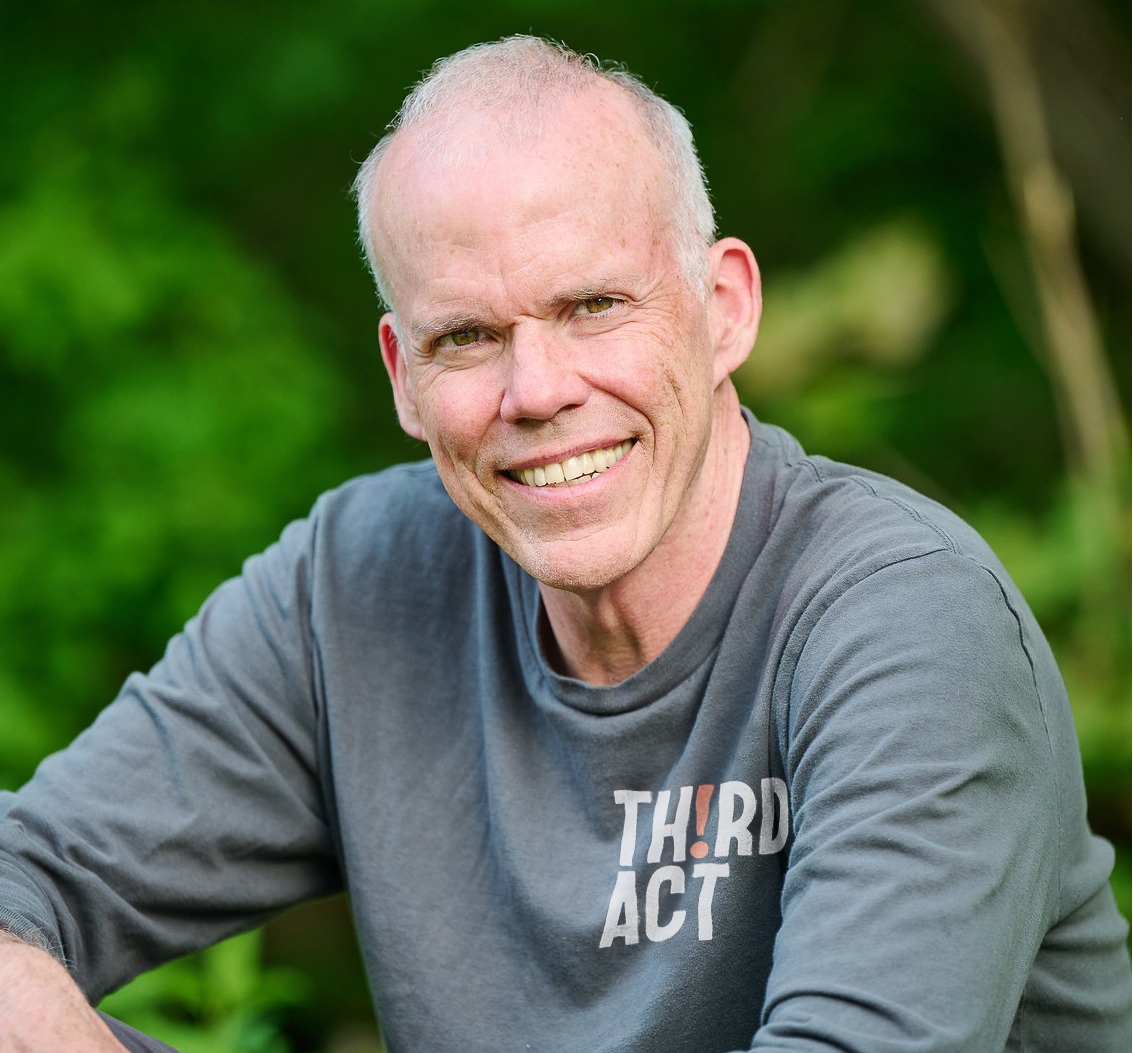
This week we dig into the future or collapse of ESG as we know it, and is all this attention making ESG better or worse? And later on in the episode Bill McKibben returns to the podcast to talk about his latest venture mobilizing ‘The Greatest Generation’ to take action on Climate Change call Third Act - and his new book, ‘The Flag, the Cross, and the Station Wagon: A Graying American Looks Back at His Suburban Boyhood and Wonders What the Hell Happened. What a title!
And of course, be sure to stick around for an exclusive podcast performance of ‘Leaving Song’ by Max Jury.
Enjoy the show!
—
Christiana + Tom’s book ‘The Future We Choose’ is available now!
Subscribe to our Climate Action Newsletter!
—
Mentioned links from the episode:
READ: Could Google’s Carbon Emissions Have Effectively Doubled Overnight?
READ: The Carbon Bankroll
ACT: ShareAction
ACT: Make My Money Matter
—
Third Act
350.org
Twitter | Facebook | Instagram
NEW: Bill’s New Book - The Flag, The Cross, and The Station Wagon
—
Follow @OutrageOptimism on social media and send us a message!
Facebook | Twitter | Instagram | LinkedIn
Don't forget to hit SUBSCRIBE so you don't miss another episode of Outrage + Optimism!
Full Transcript
Transcript generated by AI. While we aim for accuracy, errors may still occur. Please refer to the episode’s audio for the definitive version
00:00:12.617 --> 00:00:14.497
Tom Rivett-Carnac: Hello and welcome to Outrage and Optimism. I'm Tom Rivett-Carnac.
00:00:15.877 --> 00:00:17.257
Christiana Figueres: I'm Christiana Figueres.
00:00:17.257 --> 00:00:18.797
Paul Dickinson: And I'm Paul Dickinson.
00:00:18.797 --> 00:00:24.817
Tom Rivett-Carnac: Today we talk about the rise and possibly the fall of environmental social governance investing. We speak to activist and author Bill McKibben, and we have music from Max Jury. Thanks for being here. Right, so we have a topic today that Paul Dickinson is just going to shine in. Paul is one of the world leaders in this issue, so get ready.
00:00:52.628 --> 00:00:53.488
Christiana Figueres: Oh, no, no, no, here we go.
00:00:54.228 --> 00:00:56.088
Tom Rivett-Carnac: Get ready to be dazzled.
00:00:56.088 --> 00:00:59.168
Christiana Figueres: A Dickinson cascade coming our way.
00:00:59.168 --> 00:01:00.508
Paul Dickinson: Cascade, Christiana.
00:01:00.508 --> 00:01:03.588
Tom Rivett-Carnac: We will do our best to keep the man contained. So.
00:01:03.808 --> 00:01:05.028
Christiana Figueres: Cascade.
00:01:05.028 --> 00:01:08.288
Tom Rivett-Carnac: I think we'll draw the line at singing and poetry, but everything else, very welcome, Paul. We look forward to benefiting from your experience. We're going to talk about a range of things today, but in particular, we're going to focus on environmental, social, and governance investing. So many of the listeners will be aware, this is a kind of investing that's been popular for the last couple of decades that prioritizes not only a financial return, but also an attempt to make the world better in a variety of ways. And how it's made better and what the metrics are is complicated, but that's the rough principle. In the last few years, it has become the fastest growing area of the asset management world. However, some real cracks have recently started to appear with aspersions cast about what does it really mean, is it all greenwash regulators raiding offices in Germany and investigations going on to Goldman Sachs. And now we're seeing the amount of capital going into ESG is dropping precipitously. And in some areas like exchange traded funds, which are very important, it's actually falling. So the question we're going to ask today is, is it the end of ESG and should it be the end of ESG? Is it such a flawed concept that it's not really meaningful? So PD, go.
00:02:11.988 --> 00:02:15.588
Paul Dickinson: Well, thank you, Tom, for setting me up, Christiana. I think this is so interesting. So this used to be called years ago, it was called ethical investment, probably like 40 years ago, 30 years ago. Then it became responsible investment or socially responsible investment.
00:02:28.028 --> 00:02:30.748
Tom Rivett-Carnac: It's not a good sign that he starts his intervention 40 years ago.
00:02:30.748 --> 00:02:35.788
Paul Dickinson: First there was the replicating organisms, then the dinosaurs, then there was lava, volcanoes. But now we move from sort of responsible investment or socially responsible investment into ESG, which was a phrase that I think was coined by UNEP-FI. And they were saying that there are sort of three special factors in investment. E for environment, S for social issues, and G for governance. Now, this great war that's broken out fits in with the Gandhian dialectic, which says that first they ignore you, then they laugh at you, then they fight you, then you win. So, we should be quite positive about the fact that people are...
00:03:11.148 --> 00:03:13.368
Tom Rivett-Carnac: Are they laughing at us or are they fighting us?
00:03:13.368 --> 00:03:14.348
Paul Dickinson: I think they're fighting. I think they're fighting. I mean, you know, they're being led by Mike Pence. Now, Mike Pence, the former US Vice President, who saved US democracy by not doing what his boss said. I think I don't trust Mike Pence because his boss tried to get him hung on the 6th of January. Do you remember all those people? And they were all going to hang Mike Pence. And his boss was saying, Go on, Mike Pence, you better do what I say.
00:03:38.088 --> 00:03:39.568
Tom Rivett-Carnac: They were 40 feet from him.
00:03:39.568 --> 00:03:45.288
Paul Dickinson: Have you seen that in this week's So, I mean, would you trust someone whose boss tries to get them executed? I wouldn't.
00:03:46.208 --> 00:03:47.988
Christiana Figueres: Well, would you trust them or the boss? I think, you know, the responsibility has to fall where it is.
00:03:50.868 --> 00:03:51.528
Paul Dickinson: Well, indeed. But Mike Pence, bless him. He said that he said that what was his exact phrase? Give me a half a second, sorry.
00:03:59.208 --> 00:04:01.668
Tom Rivett-Carnac: A left-wing conspiracy that Republicans must rein in.
00:04:01.668 --> 00:04:02.328
Paul Dickinson: There you go. That the ESG is a left-wing conspiracy that the Republicans must rein in. Now, look, what's really going on?
00:04:08.848 --> 00:04:10.488
Tom Rivett-Carnac: He dubbed it the devil incarnate.
00:04:10.488 --> 00:04:12.768
Paul Dickinson: No, no, that's Elon Musk, bless him.
00:04:12.768 --> 00:04:13.368
Tom Rivett-Carnac: Oh, Elon Musk, you're right.
00:04:13.368 --> 00:04:21.128
Paul Dickinson: He was a great one for sort of dominating the Twitter sphere, a bit like Donald Trump did by sort of saying outrageous things that kind of people think, oh, that's a bit clever. It's a bit naughty, whatever. All right. What we've got to accept here, the fundamental principle. People have been saying, what is sustainability? You don't know what these sustainable funds are. It's all a mystery. No one knows what sustainability is. It's a complete mystery. It's impossible to define. And the German police are raiding German asset managers because they say their funds are sustainable, but no one knows what it means. Friends, it is easy. It is easy to understand what sustainability is. Very simple definition. It is problems the government can't fix. And famously, Milton Friedman in 1970 said, The social responsibility of business is to make a profit. And he was suggesting that as long as you act within the law, you can do whatever you like to make a profit. And he might have been right in 1970, but 50 years is a long time and now government is controlled by business. And that's where we are at the moment. ESG is an attempt to demonstrate that business must act responsibly. It must not control government. It must not stop lawmakers passing laws to protect citizens. And that's the fight that's broken out. Now, I've got lots more to say, but I think Christiana and Tom, you should get a word in edgeways. Do you agree with my central thesis, by the way? Marks out of 10.
00:05:30.928 --> 00:05:31.788
Christiana Figueres: That quickly. I thought we were going to cascade for a much longer period of time.
00:05:34.888 --> 00:05:35.668
Tom Rivett-Carnac: I've got lots more. I've got so much more.
00:05:36.808 --> 00:05:39.068
Paul Dickinson: I noticed you started looking out the window. Tom's choking the cat or the duck or whatever. So you know, no, no, I wanted to give you a chance to come in so I can come back and shine brighter in version two.
00:05:46.488 --> 00:05:47.788
Christiana Figueres: I see.
00:05:47.788 --> 00:05:49.568
Paul Dickinson: Do you agree with the central thesis?
00:05:49.568 --> 00:05:56.648
Christiana Figueres: Well, you know, I am definitely not the expert in this field that you are, Paul. And so I fell back on consulting with my daughter, who is in the impact investment space.
00:06:04.408 --> 00:06:05.148
Tom Rivett-Carnac: Ah, yes.
00:06:05.148 --> 00:06:24.668
Christiana Figueres: And I consulted with her when we saw the news item that Goldman was being investigated, and investors were bailing because Goldman didn't, you know, stand up to ESG. And we've seen several other things since then. Now, here is the very educational reaction of my daughter. She says that she's actually quite glad that ESG investment is getting scrutinized, and she also thinks it's a very good thing that retail investors are getting sharper on what they want and what they don't want. She also educated me that the fact is that every firm, at least in the United States, because she works in the United States, every financial firm is getting investigated, and that that's a good thing, that the SEC has actually started these investigations because they are developing ESG policies. Now, that is a very good thing. I think, you know, we're moving with ESG investment. We're moving from good intention, pioneering in the space to actually being able to almost standardize across the field so that we can actually know what is what. And that's not a bad thing. To move from good intention to being able to differentiate what is seriously ESG and what is not, is not a bad thing. From here to there, it's going to be painful, but necessary.
00:07:58.368 --> 00:07:59.188
Tom Rivett-Carnac: Yeah. I think that's a really interesting analysis, that this is an important part of an evolution, right? I mean, I think that we've all been quite aware, I think for a long time, that ESG is flaky in many ways, and that there's all sorts of different categorizations and characteristics, and because it has attracted such enormous inflows of capital and so many investors want to hold ESG funds or equities or ETFs or whatever it may be, then as a result of that, the incentive in the marketplace has been to label everything as ESG in order to get more capital into it. But now that we're moving into a regulated area, we've got to go through that complexity of sorting all of this stuff out. Now, I agree that that's necessary. The fear, of course, is that the pendulum swings too far the other way, that we go from the wild west of self-regulated ESG funds to something that ends up being so stringently applied that the barrier to entry is so high and ESG starts to disappear because actually it's very difficult to have that level of visibility into the marketplace to know which funds are actually delivering better in terms of climate or social issues or governance issues. So as a result of that we kind of we go too far and we kill the momentum that was in the system, but notwithstanding that risk, which I think is real, I think it's a great thing that it's being cleaned up.
00:09:22.208 --> 00:09:33.668
Christiana Figueres: What if, Tom, what if we're on the way to actually mainstreaming this so that it no longer would be a category, right? ESG funding over here, non-ESG funding here. What if actually we by normalizing this, by standardizing it, by investigating, what if we're laying the groundwork for financial flows to be ESG without the label?
00:09:55.508 --> 00:09:56.128
Tom Rivett-Carnac: Yeah. I mean, I think Paul wants to come in and he's going to say something very intelligent I can see already. But I would say that this tightening up of ESG is one part of an overall tightening up that's happening in the world, right? So we now see the Securities and Exchange Commission in the US and the EU coming out with requirements to disclose corporate actions towards net zero and decarbonization. That's the other piece of the puzzle. Once that data is actually regulated and required and consistent and submitted in legal filings every year from companies, that can form the basis of the analysis of which company is doing what on the road to ESG. So the whole thing kind of gets more and more tightened up together with a tip of the hat, of course, to CDP and all the work they've done together to this point. But Paul, what are you going to say?
00:10:42.168 --> 00:10:54.308
Paul Dickinson: Yeah, no, first of all, I kind of agree with both of you completely, and particularly, Christiana, your daughter, talking about the fact that sunlight is the best disinfectant and greater public interest in this is very important. But I'm still going to go back a little bit to the sort of philosophical first principles there because I think they're really important. You know, the great pretence, the great lie, I suppose, in society for the last, I don't know, 30 years has been that politics and business are separate. They're not. Business has been exerting more and more power over government and politics. And what ESG does is it recognizes that business is performing a political and a societal and a governance role. Now, I don't think we're going to sort of be able to solve and bring complete clarity to this. In the way we can't solve politics, right? We're eternally evolving our sort of understanding of things. But I think one of the things that one of the great pretenses, and I think this is a point that, you know, Mike Pence and others in this sort of, the right are saying, is that, you know, that when business has any other motive than profit, it's kind of corrupt. It's a left-wing conspiracy. But I don't think it's actually there's a kind of left-wing conspiracy or a right-wing conspiracy. I think that this is like a sort of death cult. If we pretend that business can just go and dig stuff out of the earth without any kind of limit, and we know government can't stop it, and we say business shouldn't get involved in government, then we're not left-wing or right-wing. We're just sort of worshipping our own demise. And so ESG is a way to lift us out of this inability to recognize the hegemonic force of business, and to say, oh no, actually we do have agency within business. And that's why there's this fighting right now. I mean, one of the sort of cheerleaders for this, Elon Musk, to many people in the climate movement, Musk would be a complete superstar hero for kind of validating the electric car and changing everything. But because some evaluators of ESG or whatever don't think Tesla's life cycle analysis of a great big electric car versus a tiny petrol car is all that positive, whether they're right or wrong, I don't think Musk can stand there being a debate about it. But that's what ESG is, it's a debate.
00:13:17.548 --> 00:13:30.688
Tom Rivett-Carnac: But hang on, I mean, I just want to come in on that because to me, if you start getting into ESG and you're analyzing different pieces and what's the disclosure requirement and how good are their targets and is it incorporated into the board governance, those are all important things. But then you end up going down into the granular stuff really, really far. And then you come back up and you say ExxonMobil should be in the top 10 companies rated for ESG, arguably one of the companies that has done most damage to the climate throughout history. A fossil fuel company, massive climate misinformation spreader, and the company that has popularized the electric car should actually not only not be in the leadership index, it should be thrown out. I mean, by the time you get to that point, you have to say you have lost the big picture in service of the minutiae and your index is not solving the overall objective of what we're trying to achieve.
00:14:05.988 --> 00:14:13.968
Paul Dickinson: But that is like saying, I don't know, an extreme left-wing politician or an extreme right-wing politician renders the legislature invalid. I disagree. What makes legislatures valid is a multiplicity of different voices competing in the public sphere for attention. I mean, one of the reasons why a lot of these companies are being investigated is because of their marketing. Now, weirdly enough, when I spent a lot of time looking at this in the late 90s, I came to the conclusion that the marketing was actually key. What I called sustainability product marketing would be critical in terms of a healthy politicization of business to a certain extent, although it's also true that if the manifestos of companies or investors are fraudulent or full of lies, that should be exposed. But we should not criticize the debate and the debate growing.
00:14:56.128 --> 00:14:57.028
Tom Rivett-Carnac: I don't know. Christiana, what do you think about, particularly on this ExxonMobil?
00:15:00.248 --> 00:15:03.368
Paul Dickinson: I'm not, by the way, defending Exxon as better than Tesla.
00:15:03.628 --> 00:15:15.948
Tom Rivett-Carnac: Yeah, I mean, I'm sure that it's very clever, the underlying analysis, and I'm welcome to debate on this, but it just strikes me that some bigger picture of what we're trying to do here has been lost when that's the outcome.
00:15:15.948 --> 00:15:17.868
Christiana Figueres: Well, I would agree. It's very difficult. No, it is completely unacceptable, not difficult. It is completely unacceptable to turn it around and lose the whole purpose. I do agree with Paul that the role of corporations has evolved dramatically over the past few decades and that corporations that continue to refuse to contribute to societal problems, whether they are E or S or anything else, are corporations that have not understood the evolution that we're all in.
00:16:03.468 --> 00:16:10.508
Paul Dickinson: I mean, a last word from me, I think what's scary is that you've got, well, I'm not scary, maybe I'm also positive about this. You've got, you know, California, for example, mandating legislation on ESG. Notice that laws preventing US government pension, California government pension funds from investing in tobacco stocks are 20 years old. So none of this is necessarily new. What's new is laws coming in from the Texas legislature that's taking revenge on financial institutions that, for example, sell out of fossil fuels. So you can see this is turning into a street fight at the legislative level. But I think it's good that we're focusing on the political role of the corporation and the investor. Yeah.
00:16:44.308 --> 00:16:46.928
Christiana Figueres: Why do you call it the political role? I would, I think it's more the societal role, isn't it?
00:16:52.528 --> 00:16:56.628
Paul Dickinson: I mean, I, you know, I'm always using this phrase, politics with a small p. You know, if you think about what happened, for example, in the recent Australian elections, a whole bunch of citizens managed to unite against opposing the mining industry. But they were very clear they were not opposing the other political party. They were opposing the mining industry. Christiana is thinking.
00:17:17.708 --> 00:17:20.428
Christiana Figueres: Yeah, I don't know where that left me.
00:17:20.748 --> 00:17:30.728
Paul Dickinson: I think we have to get real about, you know, the Australian election is an example of where citizens are now getting together and sort of saying, our enemy, our commercial interests, they're not another political party. And once again, I think that's an evolution, that's a maturity in the realism of our politics.
00:17:37.348 --> 00:17:37.568
Tom Rivett-Carnac: Cool.
00:17:37.568 --> 00:17:39.348
Paul Dickinson: But we have an expert, Bill McKibben.
00:17:39.348 --> 00:17:39.808
Tom Rivett-Carnac: We do. Okay, so anything else to add? Or should we go now to our interview? So there is a great conversation we have here today with Bill McKibben. Now, Bill, of course, will be known to many listeners and indeed is a former guest on this podcast. He has been an activist and an author for decades. He founded 350.org, one of the most influential activist organizations about 20 years ago. He's written numerous books. He's a commentator in the New York and elsewhere. And sadly, I couldn't join you for this conversation, but Bill has long been a leader on speaking out about the ways in which the financial services industry as a whole now needs to get on top of the climate crisis. He led the early campaigns for divestment. He is a deep thinker on these issues. So here is Bill McKibben, and we'll be back afterwards with some more discussion.
00:18:31.922 --> 00:18:36.402
Christiana Figueres: Bill McKibben, what an absolute honor, delight. We are just so thrilled to have you on the podcast. I must say, when I think about who are the icons of environmental action, and especially specifically climate, there are few people who trickle up to the top as brilliantly as you do, Bill. It really, truly is just a delight and an honor to have you here with us. Paul and I were just saying, how do we press our conversation into the 2025 minutes, because we would really love to have you on for hours.
00:19:13.402 --> 00:19:17.182
Bill McKibben (guest): Well, it's very good fun to join you, old friend. It's a real pleasure.
00:19:20.242 --> 00:19:22.322
Christiana Figueres: Well, thanks, Bill. I actually am very tempted, although we want to get to Third Act, and your newest book, and individualism versus collective action, and all of these things that are actually more real for you right now. I'm very tempted, Bill, just to have you very quickly go back to 350.org, because I remember when I was made aware of 350.org, and my reaction was, well, not very politically correct. I said like, holy shit, this is a real organization doing such amazing work. So I would love for you to just briefly tell listeners how you came to the idea of 350. Why 350 was a hope at that time? We've gone way past it. But also, why did you think it was necessary? Why is it still so absolutely critical today?
00:20:26.302 --> 00:20:33.042
Bill McKibben (guest): Well, 350.org was the first attempt at a global grassroots climate campaign. And really, it came to me out of the frustration that I was having. As you know, I wrote the first book about climate change way back in 1989, a book called The End of Nature. And I thought, well, in a rational world, this is my job. I write books, people, leaders will, you know, the information will trickle up and we will, they'll start doing what they need doing.
00:20:55.582 --> 00:20:58.902
Christiana Figueres: Leaders will read and obey, is what you thought.
00:20:59.122 --> 00:21:04.562
Bill McKibben (guest): In a rational world, you know, the important thing is to win the argument, you know. And once you've won the argument, then action should follow. But by the mid-aughts, we'd clearly won the argument. There was no longer any doubt about what was going on. We were just losing the fight because the fight wasn't about data and reason, it turned out. The fight was about what fights are usually about, which is money and power. And we were never going to match the money and power of Exxon. Our only hope was to build power the other way, which history indicates is possible, which is by assembling large numbers of people in non-violent movements to demand change. There wasn't that in the climate movement, and so we set out to build it. I mean, it was an absurd, it should have been an absurd proposition. We started 350.org with myself and seven college students. There are seven continents, so each one took one. The guy who took the Antarctic had to do the Internet too, you know? And we set to work, organizing, and I think because of a certain amount of beginner's luck, but mostly because there was a kind of unfilled ecological niche, it was quite successful. Our first big global day of action in 2009, which was kind of a coming out party for a global climate movement, had 5200 demonstrations in 181 countries around the world the same day. CNN called it the most widespread day of political action in the planet's history. After that, we went to work with fights about fossil fuel infrastructure like the fight over the Keystone Pipeline that became one of the first big defeats for big oil. Then we launched this fossil fuel divestment campaign that we're now at $40 trillion in endowments and portfolios that have divested. But probably the best thing that happened as a result of 350.org was many, many, many other people figuring out how to fill this same space. So now we have Extinction Rebellion and so many of those kids who did divestment on their college campuses formed the Sunrise Movement and brought us the Green New Deal. And then there were the completely magnificent, you know, inspiring examples of young people. Everybody knows Greta Thunberg, and they should. She's one of my favorite people in the world to work with. I really adore her. But she would be the first to say there's 10,000 Greta's, and they have 10 million followers. In fact, 10 million is how many kids went out on school strike in September of 2019, at the absolute crest of the climate movement before COVID kind of cut things off at the knees, you know? So as opposed to 12 or 13 years ago, when we started 350.org, there's now a big, vibrant global climate movement that's making a difference. I think that one of the huge differences between Copenhagen and Paris was that in the meantime, a movement had arisen that meant that people like Barack Obama couldn't go home with no result and not pay a price for it. And so we had a different, you know, we gave those of you doing the hard work, a different environment, a different zeitgeist in which to work. The only thing that worries me now is, well, there's a lot of things that worry me now, but one of them is that people got very used to this idea that young people were supposed to do all this, you know, that it was their job, that their generation, which A, seems a little unfair to sort of dump the biggest problem the world's ever seen into the laps of 17 year olds and, you know, say in between algebra homework and field hockey practice, could you please also save the world, you know? That seems ignoble, but it also seems impractical just because they don't have the power that's necessary to, on their own, make their idealism and energy and inspiration and brains count for as much as they should. So that's why we're now doing our best to take this movement building and move it into those of us who are, shall we say, of a certain age, over 60.
00:25:26.682 --> 00:25:32.182
Christiana Figueres: Well, of a certain age, over 60, which means that's all of us here. Okay, wait a second. Let's just keep Paul out of this because he's definitely not there yet. I'm definitely there. And I think you're turning your attention, and rightly so, Bill, to baby boomers. And I totally agree with you that it is not only impractical, but frankly, completely irresponsible for us who are still sitting at several tables of decision to all of a sudden say, well, I'm so grateful for the young people because they're going to take care of this, especially because we know the two targets that we have, the two goals for 2025 and 2030. And many of those young people will not have risen yet to those tables of decision. But Bill, you're bringing up something even deeper than that, Bill, in your new book and with the Third Act. And we wanted to get into that a little bit more in depth because it is a very justifiable call to those of us who basically have been responsible as a generation for the atrocities that we have committed and who are still holding many of the levers of decision. It is definitely justifiable to call us to account and to say, wait a minute, before you go off into your pension, into your lala land, stand up to your responsibility. So Bill, here's where I would really like you to get into. Under the hood of that, do you think that we could mobilize a significant number of people over the age of 60 to really do what we ought to be doing? Because those over 60, you know, we're sort of looking at comfort now. Many of us are saying, well, you know, we did what we need to do, and now it's time for comfort. Well, Jesus Christ, if we go into comfort, then we know what's going to be happening to other generations after us. But how do you get under their skin, Bill? Rather, how do you get under our skin? Just to put myself in there. How do we get under our skin to mobilize us to do something that our age is, well, let's say, not quite right for anymore?
Load More00:27:55.582 --> 00:28:00.982
Bill McKibben (guest): Well, so it's an open question whether we can do this mobilizing or not. The early returns at Third Act are good. The Third Act is this new operation we've set up in the last year aimed at organizing for people over the age of 60. And people by their tens of thousands have been showing up. What we lack at the moment is the financial resources to have enough staff to deal with the overwhelming flood of volunteers, but that's a good kind of problem to have. The question of whether we can organize people in sufficient numbers is an open question. But I think if you were being optimistic, and I am being optimistic at the moment, what we would say is, this is a very interesting group of people. The theory is that people become more conservative as they age for some of the reasons that you described, Christiana. But this particular generation has interesting historical DNA. If you're in your 60s or 70s or 80s now, you were around in your first act for some of the most potent cultural, social, political transformation in the history of the planet. You were around for the moment when we began to take women seriously as equal parts of the population, when the civil rights movement was at its apex, when people really began to question whether or not war was a good idea, and when we had the first Earth Day in 1970, which jump-started around the world, the process of trying to deal with the enveloping environmental crises. So that was a pretty good first act. In our second act, with plenty of noble exceptions, I think it's fair to say that people of this age group may have been more focused on consumerism than they were on citizenship, and with, you know, kind of frightening results, in terms, among other things, of the huge cloud of carbon that those of us in the rich parts of the world pumped into the air. The third act that people are now emerging into, they come with skills acquired over a lifetime, resources. In the US, 70% of financial assets belong to people over the age of 60, compared with 5% for millennials. So if you want to push banks, well, you better have some old people on board. Those of us over 60 vote like crazy. Far greater numbers than younger people.
00:30:31.382 --> 00:30:33.262
Christiana Figueres: Yeah, they turn up more.
00:30:33.262 --> 00:30:41.422
Bill McKibben (guest): So if you want to pressure Washington or any national capital that has elections, it would be a good idea to get some older people. But also now we have two great gifts. One is some time, and the other is, well, kids and grandkids, who take this question, they take the question of the future and of legacy and move it from the category of abstraction into the category of love, you know? Yeah.
00:31:05.582 --> 00:31:09.522
Christiana Figueres: Morality knocking personally at our door.
00:31:09.522 --> 00:31:11.682
Bill McKibben (guest): Yes, that's a very good way to say it. And I think that's one of the reasons why people have been joining in in such numbers. The other, I'll say one other thing, which is that many of the cultural icons from that first act are still around, still kicking and still eager to be helpful. I tell my young friends, fight me on this if you will, but our generation did produce the greatest music of all time. So it's good fun to have Carole King and Bette Midler and Patti Smith and Neil Young, people helping out in this effort.
00:31:43.982 --> 00:31:46.382
Christiana Figueres: Paul will have something to say about the music.
00:31:46.382 --> 00:31:47.542
Paul Dickinson: Now you're talking. She was on my chemistry folder when I was 14. Bill, one thing I loved about the book, The Flag, The Cross, and The Station Wagon, is you're absolutely naming the fact that the Reagan and in my country Thatcher revolution was really just this rolling back of regulations by government. I decided in 1988 to pursue a political career through the business system for this reason. You've done such a great job of waking the world up to the political power of business, particularly with the divestment movement, which has set alive hearts and minds around the whole world, and it's an amazing achievement. Can I ask you directly, is the global business system, the corporate and investment system, is it actually a political system? Are we just beginning to appreciate that this is a new kind of politics? I mean, I've read Jane Mayer's brilliant book, Dark Money, but you're such a pioneer in creating and discovering these new levers. How do you see us growing into recognizing that the global business system is a political system?
00:32:55.222 --> 00:32:58.042
Bill McKibben (guest): Well, I think that's a very good way of putting it. Look, our political systems, such as they are, are fully broken in too many cases now. In the US, we struggled back for the moment from Trumpism, but when I was at Glasgow looking around, I was very struck by how much things have deteriorated even since Paris. So many of the countries of the world are now run by authoritarians who brook no protest and where civil society can't really operate. The good news, if you want it, I guess, is that much of the world's money is still located in places and in systems where we can get at it in a sense. You know, in New York, in San Francisco, in Bonn, in Frankfurt, in Tokyo, in London. And that's very important because these are the systems that at the moment are enabling destruction. Since the Paris Accords were signed, the four big American banks, Chase City, Wells Fargo, Bank of America, have lent more than a trillion dollars to the fossil fuel industry. They didn't need Donald Trump to sabotage it. They were completely happy to do it themselves. And so it's incredibly important to be able to figure out how to stand up to those guys going forward. And we now understand, with new data from just a few weeks ago, exactly what that means. There's a new algorithm or a new set of calculations that demonstrates that that money stored in the banking system is producing vast amounts of carbon. It turns out that for an American, if you have 125 grand in the bank, that 125 grand in the mainstream banking system produces more carbon than all the actions of a normal American life, all the cooking, flying, heating, cooling, driving in the course of a year. It is outdone just by the fact that your money is sitting there being leveraged to build pipelines and frack new oil wells. If you are a company like Google, we found out three weeks ago that their carbon emissions effectively doubled overnight when you took into account the effects of their cash. Amazon produces more carbon from its cash on hand than it does from all the delivery vans and warehouses that it owns on Earth. Netflix produces more carbon from its cash than all the streaming of 10 million bad movies every night on sofas across the planet, you know. So this is a huge deal.
00:35:38.522 --> 00:35:40.382
Christiana Figueres: Can you go into that, Bill? Can you say what do you mean by that, that they produce more emissions from cash? Can you explain that?
00:35:47.342 --> 00:35:52.442
Bill McKibben (guest): That's the burden of this new study, Christiana, that I in fact just wrote a long piece about in The New Yorker. You know that every company in the world keeps track of or should if it's scope one, scope two, and scope three emissions. Scope three are the indirect ones. There's always been a form on the worksheet for how much carbon your cash on hand produces, but everybody left it blank because nobody had a methodology for figuring it out. And now there is a methodology and it's really remarkable. I mean, the numbers, the guy who did the original work when I interviewed him for The New Yorker said, I thought I'd moved the decimal point one place to the right by mistake. And it's a place where we're doing our best to organize at Third Act and elsewhere to get people to move their money. But hopefully we can also get now the Googles and the Apples and the Microsops of the world to put pressure on the Chases and Citybanks and Wells Fargoes and Barclays of the world because they can't keep their promises to go net zero unless they're able to change the way their banks operate. Exactly right.
00:36:56.622 --> 00:37:12.142
Paul Dickinson: And it makes you realize actually how dangerous it is that there may be people with a hundred million or a billion dollars or ten billion dollars and they may have solar panels on the roof and drive a Tesla, but actually they probably don't appreciate the gigantic emissions from their investments. And this is a fantastic new way of looking at the problem.
00:37:15.162 --> 00:37:16.342
Bill McKibben (guest): Yes. And hopefully it provides leverage in the time that we need. Because our problem now, of course, is not that we're not moving in the right direction. We are moving in the right direction. We're just moving there so slowly that we're going to get completely overwhelmed by-
00:37:33.362 --> 00:37:34.282
Christiana Figueres: Crawling. We're not even moving. We're crawling.
00:37:37.022 --> 00:37:38.442
Bill McKibben (guest): Yeah, that's a better way to put it. And we're crawling. And, you know, ice melt is galloping. Sea level rise is galloping. Forest fire is galloping. So if we don't speed up dramatically the pace at which we're moving, I mean, I've said for a long time, winning slowly is just another way of losing on climate change.
00:38:00.242 --> 00:38:01.442
Paul Dickinson: Yeah, we have no time. Bill, one last question. I just got to ask you about really the security of assets in a way. A lot of us were very shocked by the 6th of January insurrection. Do you think that there are actually now political risks that could mean, I guess, a total loss of the stock market? I mean, we're a Trump administration to get in and abolish elections. Does that mean that the stock market value goes to zero? Is it time for the pension funds to talk to the Army? How much trouble are we in?
00:38:28.142 --> 00:38:36.802
Bill McKibben (guest): Well, we're clearly in a lot of trouble because we've taken for granted the stability of things we shouldn't have taken for granted, and that's one of the arguments of this new book. We thought 50 years ago that we were on the right track. We'd passed the Clean Air Act and the Clean Water Act, and what do you know? The air got cleaner, and so did the water, and so I think people assumed that we could take at least the physical stability of the planet for granted. In America, 50 years ago, we had Watergate, which was terrible, but the system worked, and we kicked the guy out on his butt, and on we went. We did not question the stability of our democratic system. Now, with half the Arctic melted, it's clear that the planet isn't stable, and now with people killing policemen on the steps of the Capitol in order to try and stop the counting of votes in an election, it's clear you'd be a fool to take democracy for granted either. So that's why at Third Act, those are the two issues, democratic stability and planetary stability that we organize around, and they're very deeply linked. And if anyone's keeping their powder dry, waiting for the right moment to get in, the right moment is here, guys. If we don't do it now, we may find it very, very hard to ever catch up.
00:39:46.702 --> 00:39:49.962
Christiana Figueres: Yeah, the right moment has actually been here for a while. It's not like it just arrived.
00:39:51.962 --> 00:39:53.642
Paul Dickinson: Hello, I'm the right moment.
00:39:54.182 --> 00:39:59.982
Christiana Figueres: And it would have been righter a while ago than it is now, but yes.
00:39:59.982 --> 00:40:12.122
Bill McKibben (guest): Christiana, I have to, I do my best to since, as I say, I started writing about all of this in 1989, I do my best not to say, oh, if only you'd listen to me when, you know, because it doesn't do much good.
00:40:12.122 --> 00:40:15.162
Christiana Figueres: God bless you, but you know, you should, actually. Bill, quick question before we have to close. You know that at Glasgow, we had this Glasgow Financial Alliance for Net Zero with 450 financial institutions vowing to bring their portfolio down to net zero. How do we interpret that from your perspective? Because, you know, from a top-down perspective, one can, you know, say, okay, applause, applause, you know, they're all moving or crawling in the right direction. But from your perspective, where you have so eloquently put forward that it actually is money in the bank that is responsible for emissions, how do you see that, let's call it intention, collective intention?
00:41:03.902 --> 00:41:22.862
Bill McKibben (guest): So, this new data about money in the bank and how much carbon it produces is going to be the acid test for whether or not any of this stuff about finances is real or not, and whether or not the financial alliance in Net Zero is an exercise in greenwashing or in sincere effort to do something. And I think the place where the deal has to be struck and right away is pretty clear. No one is talking about stopping fossil fuel overnight. Sadly, that isn't going to happen. But we have to stop right now, as the IEA has made explicit, the expansion of anything to do with the fossil fuel industry. And that's what the financial industry has to do. If they're to be credible at all, they have to say no money for new stuff. Anything that grows the size of the fossil fuel industry has to be off limits beginning now. And that's hard for them, but it's not impossible. I understand why Exxon fights to the last bridge, right? They only know how to do one thing in the world, which is dig stuff up and set it on fire. The idea that they were going to be a serious part of the renewable energy revolution, I'm afraid that that water has passed beneath the bridge. But the banks, you know, yeah, Chase makes six, seven percent of its deal book is filled with oil and gas stuff, but that's not existential for them, you know, especially since renewable energy is growing so fast. They could do the right thing here. And if they did, well, they'd save the world so they could, you know, keep profiteering off it for generations to come. And I'm afraid that's the most we could ask of them at the moment.
00:42:52.822 --> 00:42:57.882
Christiana Figueres: So your recipe here is starve the industry of capital.
00:42:57.882 --> 00:42:58.462
Bill McKibben (guest): That's right. I think the way to think of it is less starvation almost than weaning them off, you know? We have to wean the world off fossil fuel. We have to do it aggressively because we waited so long to get started. We have a very serious set of timetables set by the IPCC. 2030 is a pivotal moment. And the only way to make that happen is to cut off that flow of capital. At this point, money is the oxygen on which the fires of global warming burn. And if we don't understand that at the deepest level, then we're just going to keep spinning our wheels until it's too late to do much.
00:43:39.982 --> 00:43:40.442
Christiana Figueres: Wow. Here, here. Nicely put. Well, Bill, sadly, we have to come to a close today, although we would love to have another opportunity to have you on the podcast. And we have a little tradition on the podcast that we ask everyone that we interview. So, we are not minded to exempt you of the tradition. And that is to ask you, from your vantage point now, seeing what boomers, what you assess they can or will not can, what they will willingly do or not in the time that we have, what banks will do in the time that we have. What makes you just horribly outraged still that we are not doing? And what gives you an array of hope and optimism?
00:44:35.142 --> 00:44:49.382
Bill McKibben (guest): Well, I mean, I continue to be outraged in particular at the just amorality, not immorality, but amorality of the world's bankers and financiers. They're in a unique position to do something on the scale and at the pace that we need. And so far, it's just been too much bother for them to really do it. But I'm optimistic that people are starting to catch on to that and that they're some of the right people. So we've been doing all this organizing with older people who, as I say, have all the money. And what's really fun, Christiana, is that we're often doing it with younger people in tandem. So we had this big demonstration last week or two outside one of the Chase Bank branches here. And the young people were in the lead, in both metaphorical and literal terms, because they move a little faster. But behind them was a very big crowd of older people marching under a big banner that said, fossils against fossil fuels. So we're doing what we can to do it in the right spirit. And hopefully we can take a chunk out of these guys. That's the hope. But so many thanks to the two of you for doing this work and keeping everybody informed and engaged and moving on. And just keep reminding everybody that it's a very good thing that young people are in the lead, but it's not fair to push them out on the stage by themselves. They need a strong backup, which we can provide.
00:46:11.702 --> 00:46:12.422
Christiana Figueres: Absolutely. I agree with you so wholeheartedly. Bill, thank you. Thank you not just for coming on today, but thank you for lifetime work, for always raising the flag, never giving up, absolutely never giving up, and always just having that fantastic energy to take on the next hill in front of us. So thank you so, so much, really.
00:46:36.762 --> 00:46:37.902
Bill McKibben (guest): Back at you, friend.
00:46:37.902 --> 00:46:40.162
Christiana Figueres: We are in debt to you.
00:46:41.222 --> 00:46:41.562
Paul Dickinson: Salut.
00:46:47.771 --> 00:46:50.031
Tom Rivett-Carnac: So, I was so sorry to miss that conversation. Bill is always so compelling and engaging, but you two did a brilliant job. What did you leave that conversation with?
00:46:57.591 --> 00:47:03.811
Paul Dickinson: Look, I'm really just endlessly impressed with Bill McKibben. I didn't quite get 350.org when it started, but by combining the kind of movement building power of 350.org with the thesis of Carbon Tracker actually, regarding stranded assets, the whole global divestment movement where students, universities, for example, across the world started following in the noble footsteps of the anti-apartheid activists previously, many decades beforehand, and have been encouraging the endowments of the universities, for example, to sell out of fossil fuel stocks. This has once again, I would say, greatly elevated people's understanding of the political role of investment and business. And so I'm a huge fan of his. What Bill said that I was particularly struck by is he said democratic stability and planetary stability are the two issues he's organizing around, and they're very deeply linked. And I think that's absolutely right. We're seeing that play out right now, you know, geopolitically in no uncertain terms. But linking that democratic stability and that planetary stability, I think is a great gift in probably the heart of modern ESG. And I mean, the final thing I'd say, I was just reading Bill in his excellent New Yorker article recently, and he was talking about how, for example, the cash investments of companies and their pension funds and their insurance arrangements generate larger financial footprints than actually their operations. The key point here that Bill is noticing is that the sort of industrial system as it is does generate huge emissions. And he points out the absurdity, for example, of a billionaire, for example, putting solar on their roofs and having a Tesla and having a storage and a ground horse heat pump, and then a billion invested in the stock market, which is fundamentally funding massive expansion in fossil fuels. You know, Bill helps us join the dots, integrate and create a sort of holistic way of expressing our personal financial engagement with climate change. And for that, we will always be in his debt.
00:49:18.491 --> 00:49:19.591
Christiana Figueres: Yeah, I agree. I agree with that, Paul. I must say, you know, I've always loved Bill McKibben's work. And I think in this conversation, what he does so brilliantly is he opens up... Do you remember that when we were kids at Christmas time, we got this little cardboard thing, and then you opened up windows on December 1?
00:49:46.971 --> 00:49:47.971
Paul Dickinson: An advent calendar.
00:49:47.971 --> 00:49:49.091
Christiana Figueres: Thank you. An advent calendar. Thank you. So Bill continues to open up little windows for us, right? That's what he does for me. And here in this conversation, he's opened up two more windows that, for me, were actually quite closed. So A, one fantastic window that he opens up is to say, okay, this is not just the responsibility. Acting on climate is not just the responsibility of those who are actually already doing. It is the responsibility fundamentally of this huge generation that is sitting there quite comfortably on a sofa and twiddling our toes.
00:50:34.351 --> 00:50:36.351
Tom Rivett-Carnac: Do you mean like the boomer generation?
00:50:36.351 --> 00:50:37.571
Christiana Figueres: Yeah. And so I just think it's so brilliant to then embrace the entire generation, because it is a generation, my generation, it is a generation that is sitting there, honestly, with not everyone, not in every country, but certainly in the Global North, many of that generation are sitting very comfortably and just letting everyone else move forward or be active. And he's saying, no, no, no, no, no, get off the couch, you couch potato.
00:51:13.951 --> 00:51:14.291
Paul Dickinson: Yeah.
00:51:14.291 --> 00:51:18.991
Christiana Figueres: And as a generation, you have here a huge responsibility. So that's a wonderful, wonderful window that he opens in. Let's not call it the advent calendar. Let's call it the Bill McKibben calendar. And the other window that he opens is this window of the carbon intensity of financial resources that are invested. Because he says, you know, it's not just products, it's not just services, it's not just scopes one, two, and three of each company, is where on earth are the financial resources and what is the carbon intensity of the assets in which those financial resources are invested. That is a window that had not been looked through before. And I just love that Bill is always looking for the next window. It's almost like, you know, he is, I almost think of him as a let's say a hunting dog, you know, that is smelling and going like, where's the next piece? Where's the next thing that we can actually get to? And so, you know, absolute admiration and respect for Bill, for continuously, continuously bringing our attention to the next opportunity, or rather the next responsibility.
00:52:46.571 --> 00:52:48.011
Tom Rivett-Carnac: Yeah, no, I completely agree with that. And he is amazing at doing that. And this report that came out that he was instrumental for pulling together, at least the thinking behind it, to point out these vast cash reserves and the impact of them. I also thought it was very interesting, the way in which he pointed out the impact of that on an individual and made it so specific. If you live in the US and you have 125,000 in the bank, that's probably going to be the biggest impact you have, no matter how much cooking, flying, heating, cooling, driving you do. It's quite interesting, actually. I mean, this is not a criticism of Bill, but it's just one thing I reflect on, because I know a lot of people who work inside corporations and they're chief sustainability officers, or they're trying to get the corporation to do the right thing. And the only thing I worry about with this sort of rapport is I see sometimes the psychological and emotional impact that it can have on people who I think of as our allies, who are playing these lonely roles inside corporations, trying to turn the ship, trying to get them to do the right thing. And sometimes their reaction can be, oh my God, what now?
00:53:55.731 --> 00:53:56.931
Christiana Figueres: Too many windows.
00:53:56.971 --> 00:53:59.431
Tom Rivett-Carnac: Too many windows, I've been killing myself. Getting on top of Scope 1, 2, and now 3. I've got SEC regulations coming down the road. I'm trying to get on top of what the employees want. And now I've got to do this blasted thing to try and look at our cash reserves. And of course he's right. And absolutely we need to be totally clear about those impacts. But I don't think we pay enough attention to the psychological step of what happened next, when that then ends up on the desk of overworked people who are in important jobs doing the right thing for all of us, trying to move corporations. And they can just feel like it's a Sisyphean task and no matter what they do, we'll come back with something else. And that's science based, right? So we can't hide from the reality that there's more that needs to be done. But I also just want to give a shout out to those people who are now having to do this additional work. You know, we need to be aware of that too.
00:54:48.931 --> 00:54:53.971
Paul Dickinson: You know, on the war memorials, it says, lest we forget. That we should never forget that sacrifice. There is a famous film many people would have seen called Saving Private Ryan. And about the first 30 minutes of it is the most intolerable torture to watch of anything you will ever see. And it explains the sort of heroism and the catastrophic loss and suffering of soldiers in the D-Day landings in 1944. The point of my story is that after watching half an hour of this, you see the sort of captain, played by Tom Hanks, in the kind of base with the generals or whatever. And he's noticing the cups of coffee and the bacon sandwiches that people are drinking. And his commanding officer asks for a description of this disaster, which Hanks gives. And it's so blood-curdling, the commander says it was a tough assignment, that's why you got it, and I've got another one for you. Now, that's the shorthand of war. Now, we don't like war, war is a disaster, but it's the shorthand of heroism also. The Secretary General of the United Nations was reported on the 17th of June as saying that fossil fuel companies and banks that finance them have humanity by the throat. That was what the Secretary General of the United Nations said. This is a serious situation. My heart goes out to those sustainability officers, Tom. They are doing the bravest and the best work, many of them, and should be applauded. It's a tough assignment, but we've got another one for them. And Bill is a writer. He actually works at getting into the media, those clues, as you said, Christiana, he puts together the thinking. He's a connector. And I think the genius of what he does is it does over time empower individuals. You could say those chief sustainability officers are under more pressure as a result of these reports. Or you could say their status and their influence in the organization has increased. They're closer to the CFO. They should have larger budgets and a bigger role, asserting the influence of the corporation in the broader system. So you could be very encouraged by this. But you're right, it is a tough assignment.
00:56:58.651 --> 00:57:00.811
Tom Rivett-Carnac: No, I think you're absolutely right. And I think it's good that we name this. I think that the piece which I think they sometimes find exhausting is the people who sit in those kinds of roles feel like they are demonized by those who should see them as friends, right? And so because XYZ Company is not looking at their vast cash pile and the implications of that, clearly that's a morally questionable person. And they're not doing enough and they're not doing their job, etc. while realizing that this landed on their desk, along with the 900 other things that they're trying to get through. So I think we're all in agreement there and we need to keep naming these new areas of focus. But I think we need to make sure that we do it in partnership with those people who are playing that role on the front lines, shifting corporations and governments and making sure that we partner with them to be successful in the implementation of it. Because if we just say, well, it's a tough assignment, but you got to do it, we're going to lose hearts and minds throughout that process, right? Because people are going to feel abandoned.
00:57:55.831 --> 00:57:56.651
Christiana Figueres: Totally agree. I think the demonization and the blaming and the finger waving is the problem here. It's not identifying the levers of change. That's the difference. It's the finger waving and saying, you know, you're to blame, you're to blame. Actually, if this can actually be understood as this is a huge lever of change. We've been talking about asset owners and their capacity to transition society and the economy for a long time. I think what Bill has done with this is go down one level deeper into, wait a second, it's not just big, huge financial institutions, insurance companies, you know, pension funds that are asset owners. Actually, every company is an asset owner. Every individual is an asset owner. And as such, all of us can actually use that power of transformation with our assets. So it's not a blaming game here. It's actually uncovering the agency that our assets give us to change the investment profile and therefore help other asset owners, the larger ones, the universal asset owners, to do the job that they have already decided they wanted to.
00:59:20.391 --> 00:59:25.151
Paul Dickinson: Yeah, and actually, you can see this as a sort of movement creating. You know, Bill McKibben is a kind of Oliver Cromwell uniting a kind of a new democratic force in the system. And of course, it's early days and it's tough, but I think that the prize is what we have to recognize here, the opportunities here for us to make enormous leaps forward in terms of the influence that we're having, changing the investments, moving towards decarbonizing our society. We're unlocking doors here, and it's tough, but it's also allowing us to move forward with much more speed and confidence.
00:59:56.091 --> 00:59:56.831
Tom Rivett-Carnac: Well, it could.
00:59:56.971 --> 00:59:58.691
Christiana Figueres: It actually is not very far. Sorry.
00:59:58.971 --> 01:00:04.091
Tom Rivett-Carnac: No, I was going to say it could do that, but the relationship between activism and implementation needs to be correct. That can either be toxic or it can be healthy, right? Activism can push implementation faster, or it can slow it down, depending on the emotional and practical relationship between the two. So we need to not only name the issues, we also need to get that dynamic right.
01:00:16.711 --> 01:00:25.491
Christiana Figueres: Yes, and one person who has gotten that dynamic very right in the UK is Richard Curtis with his Make My Money Matter campaign, right? Because he has gone and he has said, look, each of us, well, those of you who have pension money in the UK, you can actually use that as your tool of change. So it's not just the big banks, it's not just big companies, it's everyone who has a pension. And he's following exactly this argument of Bill McKibben saying, look, there are many hidden pots, many hidden pots of carbon intensity in financial resources that are saved, and you as the owner of a, even if it's a small part of that, you can help to change that. So, Make My Money Matter, which is Richard Curtis' campaign to have pension owners be much more active in where that pension money is, is actually right up the same alley with what Bill is saying.
01:01:31.691 --> 01:01:33.891
Paul Dickinson: Yeah, and you made a brilliant point there. Sorry, Tom.
01:01:34.371 --> 01:01:38.231
Tom Rivett-Carnac: No, as you can see, you're absolutely right, that Make My Money Matter, and that's by pension owners, you mean all of us, right? Mums and dads, people on the street, that's who you're looking to get engaged, which is on all of us.
01:01:43.091 --> 01:01:59.411
Paul Dickinson: Yeah, I mean, I actually sort of studied this rather unsuccessfully, but anyway, I studied the link between these giant asset owners, these huge pension funds, Christiana, that you mentioned, and how they do something that's called universal ownership, or more recently, it's being called system investing. And because they're huge asset owners with hundreds of billions, they can look at the whole economy as an integrated unit. But what you pointed out just now, Christiana, which is tremendously important, is that the philosophical understanding they have actually applies to you if you've just got $100 to invest somewhere. It's the same principle. Exactly. These are universal principles. And we are beginning to realize that fundamentally, when we are investing our money, we're voting. That's what actually Madeleine Albright said in 2003 at the first CDP event in New York. And I will actually have to give a shout out alongside Richard Curtis' brilliant Make My Money Matter is also the NGO Share Action. If you go to the Share Action website, you can find lots of information free of charge about which of the more responsible investors and who are the leaders on ESG and independent analysis. And there are many other sources as well. But I think as we come to understand that in a sense, we are running the world, perhaps without realizing it, when we invest our money and when we spend our money, we're voting in the great global business system, which is this sort of parallel political architecture for the world or governance architecture for the world, in your phrase, Christiana. And that realization is important and it's growing. And back to Bill, what a genius for helping us develop this new sort of third eye that we can see the world with to get a truly three-dimensional picture. Do you need three eyes for three dimensions? Not sure about that. I don't know.
01:03:19.411 --> 01:03:21.671
Tom Rivett-Carnac: But you came out with some absolutely brilliant phrases there. We are running the world, perhaps without realizing it. And Bill developed us a third eye.
01:03:24.951 --> 01:03:26.991
Paul Dickinson: So both of those are classic, Paul Dickinson.
01:03:27.031 --> 01:03:27.311
Tom Rivett-Carnac: Right. Okay. All right. I think that probably takes us to the top of the episode. So thank you for joining us once again on Outrage and Optimism. We're leaving you as ever with a piece of music. This week, Max Jury with Leaving Song. Hope you enjoy it. Thanks for joining us this week. We'll be back as ever in a week's time. Until then, have a good week.
01:03:45.891 --> 01:03:52.131
Max Jury (musician guest): In regards to the inspiration for Leaving Song, it was written in the early days of the pandemic. And with that as a backdrop, finding ways to stay mentally healthy and to stay positive and accepting of what life throws at you. And I don't mean that in a superficial, toxic positivity way, but you have to be able to have some level of peace and clarity to get by in these situations.
01:07:27.956 --> 01:07:31.996
Clay (podcast producer): So there you go, another episode of Outrage and Optimism. This is Clay. I am the producer of this podcast. Hello. Leaving Song by Max Jury was the track that you just listened to, and what a cinematic third act tune. So every artist we feature on the show, we get a bio submitted to us about them, and I read it, and usually I have a word or two that jumps out to me as to how I would describe them, and during the credits, I kind of riff off of that in my own words, but this week, Max Jury's bio had a line that perfectly described his music. I'm gonna read it to you here. Okay, in describing his music, here it is. Think a gauzy, hazy road trip, Sufjan Stevens riding shotgun, and Bruce Springsteen in wistful mode, dozing in the back. I mean, that's it. Every song of his, it's golden hour, and I'm driving from Des Moines to Chapel Hill, and Sufjan and Bruce are with me. Great description. But Max's music definitely stands on its own, and it's cinematic, gritty, and has a very visceral place during the third act in the car, hand out the window listenability. So can I prescribe a music video for each tune this weekend? You can go to the show notes to catch more of Max's music, and give a weekend spin to Highway Song or the album version of Leaving Song, which we just heard. And hey, put the windows down, and put your hand out the side of the car. Thank you, Max Jury. By the way, Max Jury vinyl would be a great addition to your collection. Okay, if you missed it, last week we did a massive episode on the future of food titled How to Feed the World Without Devouring the Planet. I was describing the episode to a friend the other day, and I said, your food will taste better after you listen to this. Okay, bold claims, I know, and for legal reasons, I can't actually promise that. But to borrow another phrase from another future of food episode we published, the food revolution is here. And in the episode, I mean, like, there's like scientific breakthroughs that we're living while they're happening, and we're talking about it and discussing it on the podcast with people who are at the absolute center of this food revolution. So you don't want to miss it. Just go back one episode in our feed, it's right there. By the way, anybody else think about food all day? No, just me? Okay. Thank you to Bill McKibben this week for returning back to our podcast. He was one of our first guests, and so it's great to have him back on the show. You can connect with Bill online. You can read his latest piece in The New Yorker. I've got a link for you to that. You can learn more about Third Act and 350.org, all in the description, the show notes, whatever you want to call it. We are linked up and ready to click. Okay, last thing before I go. We've only got about a month left on our show before summer break, and things are only getting more and more exciting from here. So we have more episodes coming your way in the feed, and then we're actually already planning big stuff for the rest of the year. So I really want to emphasize this point. The best way to stay up to date with us is by hitting subscribe or follow on your podcast player. It's right there. It's just a little button. And as always, you can also give us a follow online at globaloptimism on socials. And if you like this podcast, we say it every week. Please leave us a rating or review on Apple podcasts. People scroll. They read those, and they're like, hey, should I listen to this podcast? They read the reviews, and then they decide. It's a thing that's happening. So thank you for writing a review. Okay, that's it from us this week. We'll see you in the next. Bye.