









64: Alan Jope is Doubling Down
What happens when you’re the new CEO at a company that has 100+ year roots in feminism, pensions, and social safety?



About this episode
When a new CEO steps in to their new role at their new company, more often than not they take the company in a new direction. But what happens when you’re the new CEO at a company that has 100+ year roots in feminism, pensions, and social safety?
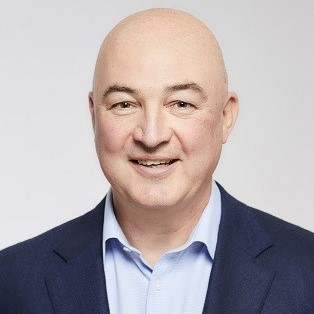
Enter Alan Jope, CEO of Unilever. With a company that has its products being used everyday by over 2 billion people, changing direction would be a massive undertaking. But Alan doesn’t want to change direction, he wants to double down on speed and scale. We find him in a unique moment of converging crises (COVID, Climate, Inequality, etc. to name a few) completely able to take care of everyone at Unilever, while accelerating the progress of addressing climate and sustainability, and staying accountable for it. You won’t want to miss what he has to say.
And stick around for a live performance of “We Don’t Get More Time” by I See Rivers!
—
Happy Birthday, Christiana!!!
—
Our musical guest this week is I See Rivers!
Facebook | Instagram
Full Transcript
Transcript generated by AI. While we aim for accuracy, errors may still occur. Please refer to the episode’s audio for the definitive version
00:00:00.900 --> 00:00:03.220
Tom Rivett-Carnac: Paul, Christiana gets mad at us if it's over an hour. It has to be less than an hour today.
00:00:05.120 --> 00:00:06.240
Paul Dickinson: I'm not.
00:00:06.240 --> 00:00:07.000
Tom Rivett-Carnac: I think she likes it.
00:00:07.560 --> 00:00:08.560
Paul Dickinson: No, no, no.
00:00:08.560 --> 00:00:09.300
Tom Rivett-Carnac: I'm relying on you. We've got to be brief, okay? Less than an hour, starting now. Clay, let's go. Hello, and welcome to Outrage and Optimism. I'm Tom Rivett-Carnac.
00:00:28.397 --> 00:00:29.897
Christiana Figueres: I'm Christiana Figueres.
00:00:29.897 --> 00:00:31.217
Paul Dickinson: And I'm Paul Dickinson.
00:00:31.217 --> 00:00:36.497
Tom Rivett-Carnac: This week, we talk about the state of ambition from businesses on climate action. We speak to Alan Jope, CEO of Unilever, and we have music from I See Rivers. Thanks for being here. Right, to business, we're not messing around today. Christiana, last week you said that you didn't want these podcasts to be more than an hour. Message and challenge received.
00:00:57.266 --> 00:01:01.066
Paul Dickinson: Message and challenge received, yeah, you have to proceed now, so gender point one that I've loaded.
00:01:01.066 --> 00:01:06.926
Christiana Figueres: Especially today, you have to be very, very attentive to my wishes and desires.
00:01:07.006 --> 00:01:08.706
Tom Rivett-Carnac: It's your birthday!
00:01:18.126 --> 00:01:20.386
Christiana Figueres: Do you know how funny this is? Clay, is this our 64th episode?
00:01:23.726 --> 00:01:24.846
Tom Rivett-Carnac: Yes.
00:01:24.846 --> 00:01:27.946
Christiana Figueres: And it's also my 64th birthday?
00:01:27.946 --> 00:01:29.526
Tom Rivett-Carnac: Really?
00:01:29.526 --> 00:01:30.786
Paul Dickinson: Really.
00:01:30.786 --> 00:01:31.986
Tom Rivett-Carnac: Happy birthday. And doesn't that call for, Probably not that one. Yeah, that's right.
00:01:40.786 --> 00:01:41.826
Paul Dickinson: Happy birthday!
00:01:41.826 --> 00:01:43.506
Christiana Figueres: Thank you, thank you, thank you.
00:01:43.506 --> 00:01:44.686
Tom Rivett-Carnac: Christiana, happy birthday! How wonderful. How are you spending your day?
00:01:47.226 --> 00:01:56.466
Christiana Figueres: I am going to be travelling back to the beach because I haven't been there in weeks and I miss my walks on the beach.
00:01:56.466 --> 00:02:01.886
Tom Rivett-Carnac: By the beach, you mean, of course, the tropical paradise where you normally live in the beautiful coastal...
00:02:01.946 --> 00:02:03.906
Paul Dickinson: Which country is that, which country is that?
00:02:05.326 --> 00:02:09.106
Christiana Figueres: I didn't want to make you jealous again. So I'm trying to downplay the beauty.
00:02:11.766 --> 00:02:12.746
Tom Rivett-Carnac: How wonderful. I'm very glad that you will be there with friends and family having a lovely time on the beach. Happy birthday.
00:02:16.806 --> 00:02:22.466
Paul Dickinson: If I may speak on behalf of all of our listeners, I would like to wish you a very happy birthday, Christiana.
00:02:22.466 --> 00:02:23.546
Christiana Figueres: Well, thank you very much. But since we're committed to doing an episode that is under an hour, let's move on.
00:02:27.266 --> 00:02:28.186
Tom Rivett-Carnac: Oh, God, absolutely. Right, let's move on.
00:02:28.946 --> 00:02:29.246
Paul Dickinson: No, 100%. Tom, wait. Hurry, hurry, hurry.
00:02:33.106 --> 00:02:35.266
Tom Rivett-Carnac: So I came with a question this week. The world has been massively distracted by COVID over the course of the last six months, or I can't remember how long it was, but it feels like ages. Does that mean that businesses have stopped taking action on climate, stopped being ambitious and stepping up to do more, because we know it's so critical? What do you guys think? What have you found out about that issue? Well, Paul, you run the world's largest platform for corporate disclosure. Surely, you've got an insight.
00:03:01.126 --> 00:03:10.886
Paul Dickinson: My 400 colleagues run the largest platform for corporate disclosure, and I have the privilege to work alongside them, and they even let me do a podcast with you, when I probably ought to be writing a funding proposal or some such. But anyway, look, there have been fantastic actions taken by corporations on COVID. And we've looked at examples from huge companies like Apple and Microsoft, but also come to Cisco, BlackRock, Coca-Cola. There are loads of them. But I don't think the fact that corporations take that kind of action on COVID means that they're going to stop taking action on climate change. I'll give you one example of that. You will be familiar with the inspiring United Nations Framework Convention on Climate Change, one of the world's most delicious organizations. And it has been looking after a campaign called Race to Zero in partnership with Nigel Topping, our climate champion and his colleagues. And they have actually managed to get, and can you believe this, or at least they've managed to coordinate or facilitate, 995 companies to participate in committing to getting to net zero emissions by 2050. And I mean, if you know, if just I'm looking down this list, 995 companies, Acciona. This is just, I mean, the A's at the moment, AES, Air Corp, Aldo Group, Allbirds, Alta-Enco.
00:04:28.426 --> 00:04:30.646
Tom Rivett-Carnac: Is this the beginning of a list of 995 names? Because if it is, maybe, yeah, okay.
00:04:32.626 --> 00:04:34.826
Paul Dickinson: We're not going to make the one hour limit. Amicosola, Anco.
00:04:37.666 --> 00:04:42.286
Tom Rivett-Carnac: Maybe you could jump to the B's and tell us about BP, because they did something pretty chunky this week, didn't they?
00:04:42.966 --> 00:05:01.186
Paul Dickinson: Well, BP, I mean, seeing as I have the mic and nobody seems to be interrupting me, yeah, BP did something absolutely extraordinary and inspiring and just completely changed, I believe, industry in many regards. They have announced that they are increasing their low carbon investments tenfold to five billion annually, whilst reducing their oil and gas production by 40% over the next decade. Now, isn't that an absolutely extraordinary action by an oil and gas major?
00:05:17.826 --> 00:05:36.966
Tom Rivett-Carnac: Now, and what was interesting about that, because I saw that and I think that the amazing thing about that was they announced that, they announced a cut in dividend, so clearly a major refocus of corporate strategy on a different kind of future, major cut in production and reinvestment into renewables, as you said, and their share price went up by 8%. Clearly the market knows that this is the right move that's necessary. What do you think of that, Christiana?
00:05:43.226 --> 00:05:47.966
Christiana Figueres: Yeah, cut in dividend is highly unusual for these companies, right? They do everything to guarantee their dividend payments. And I was struck, do you remember when Statoil, the Norwegian oil and gas company changed its name to Equinor?
00:06:03.926 --> 00:06:04.306
Tom Rivett-Carnac: Yeah.
00:06:04.326 --> 00:06:07.686
Christiana Figueres: Now, what they did is they changed their name. BP is not changing its name, it's changing its identity, which goes much farther than changing its name. Because we can no longer speak of BP as an oil and gas company. They have now self-proclaimed themselves to be an international, an integrated energy company, which is a complete transformation of their identity. And one, frankly, that we've been speaking about for oil and gas sector for a long time. They have, if they get on the, if they get with the program and they understand where we have to go this century, they have a huge future in store for them because we will always be consuming energy and we will be consuming more energy given that we will have been having more population. So if they are able, as BP has been able to do so, to de-link their identity and their business model, their core business model from what they extract from the, from the bottom of the ocean and from the bottom of land, oil and gas, and actually look up toward sun and wind and hydro, well, that's a completely different company. And I'm sure that they're not just changing the sources from which they will generate energy, they're actually going to be looking at how do you optimize the relationship between supply and demand of energy. That's what the Integrated Energy Company is going to be about. So it's very exciting, and it's doubly exciting, that this announcement comes during post-COVID crisis. Perhaps not surprising since they know that demand is going to be going down, right? We know that demand has gone down hugely during COVID, and they understand that it's not going to be coming back, certainly not to the previous levels, and that the demand that does come back is a demand for cleaner energy. It's not just less demand, it's a demand for much higher quality energy. And the fact that they're getting in front of that is actually a testament to the leadership of the new CEO, who we should get on this podcast.
00:08:32.666 --> 00:08:33.886
Tom Rivett-Carnac: We should get on this podcast.
00:08:33.886 --> 00:08:34.966
Paul Dickinson: That's a very good idea. That's a very good idea. By the way, I just want to say, I have to say about oil and gas, I mean, you know, sometimes people say some kind of technologies are a kind of like dinosaur technology. And what they mean is it became extinct like the dinosaurs. But the thing about oil and gas is it actually is dinosaurs. I mean, it's made of dinosaurs. So it's like a dinosaur technology and it actually is also a dinosaur technology, if you take my point.
00:08:56.826 --> 00:08:58.986
Tom Rivett-Carnac: Dinosaur technology and a technology of dinosaurs. Very nice.
00:08:59.566 --> 00:09:04.666
Paul Dickinson: That's perfectly put in contradistinction or not contradistinction, in samey samey samey.
00:09:04.666 --> 00:09:06.866
Tom Rivett-Carnac: In sharp contradistinction. Right, and the other data point that I'm, you know, I suppose it's anecdotal in a way, but we haven't really talked in much detail about this podcast, but we will more in the future. One of the things that Christiana and I spend a good chunk of our day jobs on is working with Amazon. So we work very closely with Amazon with the Climate Pledge that they created, that was created by Jeff Bezos in September 2019, which is a commitment to get to net zero by 2040, 10 years earlier than the Paris Agreement. And so I spend a good chunk of my days calling companies up, understanding where their commitments are, and encouraging them to go further and faster, and just anecdotally spending time doing that. There was a moment in the midst of the coronavirus pandemic right in the heart of it some months ago, where everybody was distracted, no one wanted to talk about this. But now it does seem to be front and center again. People are really keen to talk. They really understand that many of their stakeholders want them to go further and faster, whether that's citizens and consumers, whether it's investors, supply chain companies, governments. So we're seeing real appetite and interest in that. And we'll delve more into that in future episodes about how the Climate Pledge is working. But it's been really encouraging to me.
00:10:14.346 --> 00:10:22.026
Paul Dickinson: I got one other story to share, which is our former colleague Zoe, that we used to work with, who works now at Mission 2020. But she first moved to New York very long time ago and started communicating with US corporations, trying to get them to report on their greenhouse gas emissions. And I said to her, what are these corporations like? I mean, I've been contacted corporations myself, but I wanted to get her perspective, because she was spending a long time doing it. And do you know what she said? She said, there is different as people. I always remember that. So let's just remember that, you know, when we're thinking about these-
00:10:46.446 --> 00:10:47.746
Christiana Figueres: Because they're made up of people.
00:10:47.746 --> 00:10:48.826
Tom Rivett-Carnac: There you go.
00:10:48.826 --> 00:10:52.126
Paul Dickinson: But in different configurations and with different cultures.
00:10:52.126 --> 00:10:53.486
Tom Rivett-Carnac: Now I'm aware of time. Clay, how are we doing?
00:10:55.886 --> 00:11:00.186
Clay (podcast producer, live in studio): If I say you're doing well, are you just going to keep going? Or if I say-
00:11:01.746 --> 00:11:03.146
Tom Rivett-Carnac: I think, should we just like move on? Because the interview is 27 minutes long, right? So then we need to do a wrap up at the end and play the song. So if we're serious about the hour thing, we've got to crack on.
00:11:09.566 --> 00:11:11.366
Clay (podcast producer, live in studio): Yeah, we're at about 11 minutes.
00:11:11.366 --> 00:11:11.546
Tom Rivett-Carnac: Okay.
00:11:11.666 --> 00:11:18.586
Clay (podcast producer, live in studio): So we have all the time in the world.
00:11:18.586 --> 00:11:20.546
Tom Rivett-Carnac: Well, maybe why don't we go to the interview now anyway? Then we can do more of a wrap up afterwards. And this is any other points anyone wants to make before we pivot?
00:11:25.146 --> 00:11:28.686
Paul Dickinson: I keep talking every time Christiana looks like she wants to talk, but you don't want to talk.
00:11:28.686 --> 00:11:31.926
Clay (podcast producer, live in studio): It is Christiana's birthday, so she gets to decide.
00:11:31.926 --> 00:11:33.406
Christiana Figueres: Move to the interview.
00:11:33.406 --> 00:11:33.886
Tom Rivett-Carnac: Okay. So we are now going to pivot to this fantastic interview that we conducted just the other day with the relatively new CEO of Unilever, Alan Jope. So this is just such an interesting conversation because Alan, of course, has come in into the position that Paul Polman was previously in as CEO of Unilever, and Paul has probably been, for the last five years, the best known person, business leader on climate action. So Alan-
00:12:02.946 --> 00:12:04.486
Christiana Figueres: And on all the SDGs.
00:12:04.486 --> 00:12:06.566
Tom Rivett-Carnac: And on all the SDGs, you're absolutely right. So what we were particularly interested to talk to Alan, because one of the things that plagues business action on climate change is that it can become the pet issue of a CEO. And then when that CEO moves on, the business no longer maintains its leadership position on climate. But Alan has come in and doubled down. So he has had a long career at Unilever and in business at a senior level. He joined Unilever in the UK in 1985. He worked in North America for 14 years, in Asia for 13 years. He's formerly the CEO of Unilever's personal care business from 2014 and remained as president of that when it changed the beauty and personal care. He's had this deep experience of Unilever over many years. So and interestingly, he's from Glasgow, where the negotiations are going to take place next year. So we'll also have to ask him about that.
00:12:52.926 --> 00:12:56.506
Paul Dickinson: Glasgow smiles better and a fantastic accent people have in Glasgow.
00:12:58.446 --> 00:12:58.906
Tom Rivett-Carnac: Let's hear it.
00:13:04.753 --> 00:13:31.233
Christiana Figueres: Alan, for those who know you, it's not surprising, but it still is unusual, I must say, that a new CEO comes in and not only doesn't veer the company in a different direction, but actually deepens the commitment of a company, the size of yours, into all of these incredibly challenging issues. So we wanted to invite a frank conversation with you, because it must not have been easy to take over the steering of this boat that was already going at full force. And then you did it with such grace and take over the steering wheel and at the same time, keep the direction, but deepen the commitment. How did you do that?
00:13:57.373 --> 00:14:12.653
Alan Jope (guest, CEO of Unilever): Well, Christiana, let me not bore people with too much background information on Unilever other than to say we're a big consumer products company, selling everything around the world from soap to ice cream in just about every country around the world. The important thing to understand is that Unilever's commitment to trying to do business the right way is about 120 years old. The founders of the legacy businesses that came together to form Unilever all had purpose in their soul. One of the founders is this guy, William Lever. He built decent housing for his workers. It was called a model village and it's still there right now. It's beautiful little brick buildings around the factory area in Port Sunlight. He invented pensions for his workers. When his workers had kids had a birthday, he would send each of them a book and he would maintain a very careful library of the books that they received so that no child in the same family ever received the same book. So that the whole family could build up a library. And I think the one that got to me when I heard about it was when his workers had to go off and fight in the First World War. Not only did he hold their jobs open for them, which was unusual at the time, he paid their wages to their families for the whole time that they were off fighting. So he defined the purpose of the firm. Remember this is in about 1870. He defined the purpose of the firm as being to make cleanliness commonplace and lessen the load for women. So he was a feminist back at the end of the 1800s.
00:15:36.153 --> 00:15:38.933
Christiana Figueres: And lessen the load for women.
00:15:38.933 --> 00:15:44.933
Alan Jope (guest, CEO of Unilever): Yeah, because they bore the brunt of household chores back then, just as they unfortunately do today. Now, what that says, I think, is that trying to do business the right way, so call it purposeful business, sustainable business, responsible business, is very deep in our company's DNA. But it took my predecessor, the absolutely brilliant Paul Polman, to resurrect the true spirit of this about 10 years ago, when he oversaw the development of something called the Unilever Sustainable Living Plan. And that really propelled, there was a huge accelerator of us putting social and environmental responsibility at the center of the company. Then fast forward to the beginning of last year, by the way, I still consider myself a very rookie CEO. I'm very much a work in progress. But with my leadership team, we identified some areas that we wanted to take things forward. And I think if I just quickly call out three, the first is up until earlier this year, we had two strategies. We had a business strategy and we had a sustainability strategy. And we felt that wasn't right. So we spent a year working on how do we totally integrate the business strategy and the sustainability strategy so they coexist and one builds and feeds on the other. The second thing we wanted to do was increase the extent to which our responsible practices contributing to society, contributing to the environment, lived in our brands and not just at a corporate level. So that every brand, every time a consumer made a choice to choose a Unilever brand, they were taking a small action that would contribute to, I don't want to sound too idealistic, but a slightly better world. And the third was to distribute the leadership. I do feel my predecessor took on too much on his own shoulders. And I've asked all the, everyone in Unilever actually to lead for sustainability so that we have a multiplier effect of 13 people on the leadership team and 150,000 employees all advocating for sustainability or responsible business. So this is a very long tradition in Unilever. My predecessor did an absolutely brilliant job and I think we're clear on how we want to take it forward and accelerate things.
00:18:13.973 --> 00:18:24.633
Christiana Figueres: Thank you for giving us that history because it really puts things into the context of your legacy and your deep roots. I'm taken by in your overview, Alan, the complexity of this operation. Most corporations have one or two or three or ten products that they put out under one brand. And you have how many brands? 400, 500? Do you even know how many brands you have?
00:18:45.513 --> 00:18:49.873
Alan Jope (guest, CEO of Unilever): Let me dodge the question and say about 400.
00:18:49.873 --> 00:18:51.533
Christiana Figueres: About 400 brands. So and then that many employees, as you say, and as well as your partners in business. So the complexity of imbuing all of this incredible universe with a commitment to sustainability and to active leadership. And all of these brands, right, that you are, I'm assuming, putting through your own filter of, are they really contributing to sustainability in each of them in their different ways. It's an incredibly complex operation that is both educational, exemplary for other companies, but goes sizably beyond what other companies need to look at. And then on top of that, as though that weren't complex enough, then we're all catapulted into COVID reality. So, you know, the complexity of the leadership role that you have right now is definitely not to be underestimated. How are you feeling about that as you called yourself a rookie CEO? How does a rookie CEO address that kind of a complexity? There's so many moving parts at the same time.
00:20:12.653 --> 00:20:17.333
Alan Jope (guest, CEO of Unilever): Well, I think the short answer is you need to bring some organizing principles. We are a complex business because we've got 150,000 people on the payroll. We've got 3 million people who work for Unilever every day. Exclusively, when you include our extended value chain. We do business in every single country in the world. There's not a country in the world where you can't buy Unilever products. In fact, about 2.5 billion people a day use a Unilever product. And so, yes, we are a complex. But let me be very clear. The people who really run Unilever, it's not me who runs Unilever. It's the thousands of women and men who are making decisions close to our customers and close to consumers every single day. And we have a generation who have joined Unilever as a choice to join a purposeful company. Your earlier question about could I have changed direction? No chance. There would have been a mass revolution if I would have tried to de-sustainability-fy Unilever. So, that's the, that's the, there's a huge momentum in the, in the women and men in the company. Now, the current context is unbelievably difficult because we've got at least five crises piled up on top of each other. We've got a biological crisis, and we have to remember we're living in a time of human tragedy right now. We were discussing before we started recording the show that there's been 14 members of the Unilever team have died of coronavirus so far. And it's not often I see tears in our boardroom, but there's been tears in our boardroom on a kind of weekly basis at the moment. And it's terrible. And it's a reminder of what we're dealing with. But that's just the biological crisis. Then there's the social crisis called lockdown, just everybody being in their homes, massive changes in consumption patterns. It won't surprise you. Our business that supplies food to restaurants or ice cream to tourists has collapsed. But our business that provides hand cleanliness or surface cleanliness or bleaches is through the roof. And they're more or less offset. But what an adjustment that is. So that's the second crisis, the sort of changing living styles. Then the third crisis is the economic crisis that's just coming upon us. And it hasn't really hit yet. Unfortunately, the world is in for a period of recession. And we're having to adjust to that in real time. Then on top of that, you have a racial justice crisis, which has particularly affected the world in North America. But it's a global issue for sure. And then meanwhile running in the background, there's a climate crisis that's not going away. And so there's these kind of crisis on crisis. And with this big complicated business and a multi-layered crisis, how do we organize to address that? And it goes back to our business model. We believe in a multi-stakeholder business model. And that's a fancy jargon. What does it mean? It means we believe that if we look after our employees, and we look after our customers, and we look after our business partners, and we do the right thing for society, and we try to take care of the planet, at the end of all of that, then the shareholder will be well rewarded. And the rewards for the shareholder are an outcome of looking after the other stakeholders. And in fact, it's not a trade-off. We believe that the better job we do with the other stakeholders, the better the shareholder will be rewarded. So it's not a compromise. And what I'm going to say now is pure post-rationalization.
00:23:59.813 --> 00:24:01.813
Christiana Figueres: Get ready.
00:24:01.813 --> 00:24:07.053
Alan Jope (guest, CEO of Unilever): When the biological crisis hit, our first reflex was to look after our people. So we went into a couple of examples. We went into a global indefinite work-from-home order on the 13th of March for all 50,000 office-based workers. And it seemed like an overreaction at the time, but now it's, of course, perfectly normal. We committed that nobody needs to worry about their livelihood for several months. So we said everyone will be paid and looked after, including by the way, the contractors, the people who guard our offices and work in the cafeterias and clean the floors. We said we would look after their income for at least through to the end of June.
Load More00:24:45.553 --> 00:24:49.313
Christiana Figueres: In the tradition, Alan, very interesting, in the tradition of Mr. Lever when his people went off to war, right? A very interesting parallel there.
00:24:54.853 --> 00:25:00.053
Alan Jope (guest, CEO of Unilever): And we took huge steps, obviously, to keep the people in our factories safe. It's not pleasant working in a factory wearing PPEs all day at all. But nevertheless, we insisted on it. So our first reflex was look after the people. The second was look after the community. So we immediately made a pledge to donate 100 million euros worth of hand sanitizers, hand hygiene products, food, etc. Then very shortly after that, we said, you know what? Our small suppliers are going to run out of cash. So we extended credit. We used 500 million euros on our balance sheet as early payment to small suppliers so that they could stay in business. Then we started to say, you know what? We need to worry about our ability to run our supply chain. Then we started worrying about collecting cash. Then we started to say, demand patterns are changing with customers. It was only afterwards we realized that basically we had marched through our multi-stakeholder model and used our instincts in the correct sequence. So the first sequence was our people, second sequence was community, then supply, then cost and cash. That served to organize our work in the middle of all this complexity.
00:26:09.633 --> 00:26:12.873
Paul Dickinson: Can I ask actually two questions, but I'm going to do them one at a time, if I may. The first one is about, first of all, I salute the extraordinary coherence of your response to the crisis. It's very moving and I love the lineage of the company. With regard to inequality, that Christiana points out underpins all of these problems and exacerbates them. There has been a crisis. The Black Lives Matter movement has been enormous. You yourselves have used some of your power in terms of advertising budgets, for example, to warn some of your partners like Facebook. Is that correct? That's a very innovative way for you to play your part in society. How is that feeling?
00:26:50.373 --> 00:27:11.913
Alan Jope (guest, CEO of Unilever): You know, on most of these tricky issues, we like to follow a model of first is get our own house in order, then worry about the value chain that we operate in, are our suppliers, are they operating to a high standard, and only then worry about our impact on society through our brands, etc. And I just want to give the caveat that we are not finished on the journey of becoming a fully inclusive organization that's representative of the communities we do business in. So we've got work still to do to get our own house in order. However, we have a choice of where we advertise our brands, and we felt and feel that the level of divisiveness and hate speech that we were seeing on some of the, particularly the social media platforms, was creating an environment that we wouldn't want our brands to be part of. And there was a growing movement to come off Facebook for a month, but we decided we didn't want to jump on that bandwagon and rather we would set our own course. So we made the choice to come off of a number of social media platforms in the US for six months. So we're actually off for the whole of the rest of this year. And the reason is we want to give the platforms time to take meaningful action and not do something that's just tokenism. And if I'm honest, also that'll take us through the political turmoil of the upcoming elections in the US, which we think are likely to create a highly toxic environment on social media. And we just don't want to... Our brands are simple products that offer simple benefits, and we don't want them showing up in that context. And maybe just to back up, I don't like to characterize it as a boycott. It was more just being sure that our brands were showing up in the right place.
00:28:52.413 --> 00:28:54.533
Paul Dickinson: That's a very, very thoughtful answer, thank you. So my second, final little question, and it's... We've got thousands, many, many thousands of listeners. It's a great privilege. Many of them are in business or starting businesses. And to the degree to which, across all of your brands, you've got so much experience of how to make a sustainable business plan. Is it about marketing? Is it about... If you're approaching the challenge of building business for good, from your brilliant experience, what are the two or three high-level things people should think about when they're trying to change their business into a purpose-led business that leaves the world in a better place than we found it?
00:29:34.873 --> 00:29:48.113
Alan Jope (guest, CEO of Unilever): So the first thing is a change in mindset that there is absolutely no trade-off between responsible business and strong business performance. So we spent many years trying to understand what's the business case for sustainability. And it's absolutely there in our face. Our brands that operate on purposeful platforms are growing faster than the rest of the brands in the portfolio. We think we've taken out 800 million euros of cost, that's a billion dollars of cost, through responsible sourcing and sustainable sourcing. We know it has triggered innovation. We know it has reduced risk in our supply chain. There's no successful Unilever in an unsuccessful planet. And so the more we can do sustainable sourcing, the better our business is. And last, but by no means least, some have already mentioned, is our employees, it's an absolute magnet for talent. We have a graduate recruitment program in 54 countries around the world. We're employer of choice in our sector in 52 out of 54 countries. And that was 17 countries just a few years ago. So we have this profound belief that the more we move our business onto sustainable footing, the better the performance will be. And the final point is it must not be just a bolted on piece of marketing activity. We don't use the word corporate social responsibility because that implies that it's something that is just slapped on top of your existing operations. And you know, one of our kind of secrets that we talk about openly, but not too many people seem to copy is brand say is different from brand do. Now, what do I mean by that? The reason why Dove can talk about girl self-esteem is because we've taught 35 million girls one to one, a one hour class that shifts their perception on body image. The reason why Lifebuoy can talk about saving lives of kids from preventable illness is because we've now taught a billion people proper hand washing techniques. The reason why Domestice can talk about a campaign for decent sanitation and hygiene everywhere is because we've put 18 million toilets into homes that wouldn't otherwise have them, mainly in India. And it's those actions on the ground that give you the permission to talk with authenticity about what your brand stands for. And too many brands talk the talk, but don't walk the walk.
00:32:13.533 --> 00:32:14.853
Clay (podcast producer, live in studio): Yeah.
00:32:14.853 --> 00:32:15.773
Tom Rivett-Carnac: Alan, I love that. And I love also that you talk about mindset as this sort of like basis to change your mindset and change your set of expectations in terms of what's possible. The book Christiana and I wrote, The Future We Choose, we base all of that in terms of how we face this challenge has to be based on a shift of mindset that infuses all the action that you then take with meaning and you go in a different direction. So I love that. And I just connect that to something you said earlier, which is that if you'd come into Unilever and try to sort of de-sustainability, you know, take that away, you'd have faced a revolution, right? Because the mindset had shifted and they identified with being part of a company that was doing the right thing and that had values at its core. So that's very hopeful because that suggests this is a one-way street as companies go down on this road and it becomes embedded in the culture and in mindset shift, they won't go back. But where does that take you next? Because the interesting thing about that is that always has to kind of go further and go deeper and, you know, keep moving further forward and keep pressing the boundaries. So as you sort of look forward in this world of climate change, sustainability, inequality, where do you hope Unilever goes next?
00:33:15.473 --> 00:33:24.973
Alan Jope (guest, CEO of Unilever): So, Tom, I think that we are at a little bit of a tipping point on particularly, let's just focus on climate change. It's an important area. It's an area you guys are real experts in. But there are significant headwinds at the moment. The low cost of fossil fuels, perverse government policies that subsidize and incentivize dirty energy, cheap, now cheap, hydrocarbon based petrochemicals, the empty coffers in many treasuries where people are panicking about short term costs of shifting systems towards green systems. You know, you could at this moment throw in the towel. And fortunately, we are inspired by the tailwinds. And the tail, the single biggest tailwind is the energy of young people. We we take absolute inspiration that, you know, for for a generation has been told, be careful, there's a pandemic coming. And as grownups ignored it, and now look where we are. And it's absolutely incontrovertible now that climate change is well, you know, well on its way. And frankly, we've just not taken enough action. And I don't think young people are going to tolerate that. And I think we're going to get driven hard. And we're very inspired. And so, you know, three weeks ago, we made a series of very big commitments around climate change. We're already using 100% sustainably sourced electricity across all of our operations. But we want the whole company to be climate neutral by 2039. We announced that we're setting up a one billion euro fund for our brands to invest in climate positive projects and nature positive projects. We've introduced a generative agricultural policy. We've committed to putting carbon footprints on all of our products. And we've asked all of our suppliers to start putting the carbon footprint of the products they're supplying to us. So look, business can, we can take big action. And I think the wind beneath our sails is the energy and impetus of young people. And we will not be distracted from addressing climate change.
00:35:42.373 --> 00:35:42.733
Christiana Figueres: Love it. Well, that's very heartening and inspiring to hear, Alan. And as we sadly wrap up, Alan, you know, this podcast is called Outrage and Optimism, because we believe that we have to be outraged about what we haven't done yet. And yet at the same time, optimistic about what we're doing and what we can do. So at the end, we usually ask our guests to put yourself somewhere on that gamut, on that range between outrage and optimistic, especially now in the face of all of these compounding and converging crises. Where would you put yourself?
00:36:23.913 --> 00:36:26.793
Alan Jope (guest, CEO of Unilever): Well, I'll pick two things on different ends of the spectrum. I am outraged at the mismatch between the scientific evidence of where we are in this disease progression and the political lack of leadership that's encouraging opening up far too quickly. And many more people are going to die because of popular politics rather than following the science that sits behind this disease. And I am outraged at that. But I'm highly optimistic about a world that is increasingly going to be led by young people.
00:36:59.333 --> 00:36:59.833
Paul Dickinson: Yeah. Oh, wonderful.
00:37:01.533 --> 00:37:02.393
Christiana Figueres: Wonderful.
00:37:02.393 --> 00:37:03.593
Paul Dickinson: Love it.
00:37:03.593 --> 00:37:05.413
Christiana Figueres: Alan, thank you so much. Thank you for taking the time. Thank you for letting us peek into both your head and your soul. That was really quite an honor. Thank you very, very much.
00:37:15.513 --> 00:37:16.253
Alan Jope (guest, CEO of Unilever): Thank you for having me. It's been a privilege.
00:37:17.093 --> 00:37:17.633
Tom Rivett-Carnac: Thanks, Alan.
00:37:17.633 --> 00:37:18.453
Paul Dickinson: Great to talk to you.
00:37:18.453 --> 00:37:18.973
Tom Rivett-Carnac: Bye, Alan.
00:37:18.973 --> 00:37:19.673
Paul Dickinson: Thank you so much.
00:37:19.673 --> 00:37:19.813
Tom Rivett-Carnac: Bye. How amazing to get the chance to sit down with Alan and hear how things are going in Unilever and how he's stepping up. I mean, I hadn't quite just thought through the reality of running a business in this time of COVID. And of course, there's all this personal tragedy and the fact that actually individuals are being affected by this. And I thought that it was very moving the way he talked about how that's affecting the board and how they're thinking it through. But what did you guys think? What did you leave the conversation with?
00:37:52.737 --> 00:38:06.997
Paul Dickinson: I mean, I'm just so excited at this notion of a pretty large business serving literally billions of customers having purpose written into what they do. And I really admire them for going all in and doing it across the whole portfolio and saying this is what our company is completely about and the idea that they can attract better talent and the fact that maybe it comes from a particular route, that there's still some of the founding spirit and great brands like Ben and Jerry's have joined. And I'm sure that they're kind of complex DNA, I believe has now a will to good. And that I find tremendously exciting.
00:38:39.257 --> 00:38:48.937
Christiana Figueres: I was really impacted by the story he told of the legacy of Unilever over a hundred years old and how one of the founders, Mr. Lever, way back when was from today's perspective, quite a pioneer in the SDGs. Really devoting his company to cleanliness, i.e. health, SDG, and to making everyday life easier for women, i.e. empowering women, another SDG. I mean, it's pretty impressive to see companies that have such long, long, deep roots into not just doing well, but doing good. But it also made me think of the following. I wonder how the challenge of moving towards sustainability, including climate, is different for large companies than for small companies. Because what we have heard from the likes of Microsoft going to be climate neutral by 2030, Apple just a few weeks ago going to be climate neutral by 2030, Amazon launching their climate pledge to be climate neutral by 2040, and inviting other companies to come along, as Tom has told us. And then BP that we just spoke about, right? What do these have in common? They're all mammoth companies. So my question is, is there a competitive advantage? Is there a legacy advantage? Is there a public exposure advantage? Is there an advantage to positioning because you want to get the best and the brightest brains? Are all of those advantages being harvested by large companies? And can they be harvested by small and medium enterprise or do small and medium enterprise have other advantages that they could take on board now because they're smaller, they're more flexible? Have either of you thought about this or talked to any small and medium enterprise CEOs? I must admit to my shame that I tend to talk to CEOs of large companies and not to small and medium. So there you go. A lagoon identified.
00:41:06.057 --> 00:41:17.537
Paul Dickinson: Well, actually, you know, when I want to talk to the people running these small enterprises, I look in the mirror and I talk to myself because I have a little insulation company for 10 years.
00:41:17.717 --> 00:41:19.337
Christiana Figueres: Okay, so tell us.
00:41:19.337 --> 00:41:20.597
Tom Rivett-Carnac: What do you tell yourself?
00:41:20.597 --> 00:41:21.777
Paul Dickinson: Congratulations. No, no. It hasn't gone completely as one might hope. And you know, I have actually lovely colleagues who've been working really hard for a decade. And I think when you were talking, Christiana, I noticed my kind of heart being ripped open again. It's not just massive attack that achieves that. My thesis has been probably for 20 years that the kind of sustainability marketing, like people want to buy the solutions. They don't want to buy the problems. There is a definition of marketing that says marketing is giving people what they want. So, there should be, it should be like easy to say we're the kind of, we're the solution to your climate change problems, buy from us. But actually, I've discovered that some of the most successful brands in the world don't kind of major on that. You don't tend to see Tesla advertising at all, to be honest with you. But when Tesla talk, they don't really present themselves, for example, as a climate change company. And yet, the electrification of vehicles is thought to be one of the most important parts of climate change. I myself find it very difficult. I've talked to people at Unilever many times, lots of different people at all levels. To what degree can you put sustainability into the marketing of the products and achieve certain goals? But what I would tell you is that things for the little insulation company that I work at, Mitchell and Dickinson, if you want to get your home insulated, in the UK. We don't work anywhere else.
00:42:48.997 --> 00:42:52.057
Tom Rivett-Carnac: And I've had my windows done by Mitchell and Dickinson, thoroughly recommended.
00:42:52.697 --> 00:42:53.677
Paul Dickinson: Thank you very much indeed, Mr. Carnac. My point being, our older book is kind of looking better than it has ever looked before. But it wasn't the case that going around just sort of saying, we're a climate change company, you know, don't waste your money on lost heat. That didn't immediately turn into sales for us. I wish it had.
00:43:08.937 --> 00:43:16.157
Tom Rivett-Carnac: Yeah, I mean, I think there is a little bit, Christiana, of just media attention on all of this, right? I mean, you know, you don't get, because SMEs, small and medium-sized enterprises, are not media-worthy necessarily on their own. They could be if they band together or if there's some way of gathering them together. But it is big news when Apple does something or Amazon does something. So I think there's a bit of kind of mind-share attention.
00:43:34.237 --> 00:43:36.797
Christiana Figueres: Well, sorry, let me say they're newsworthy. They're not covered by the media. That's a different issue. But they're definitely newsworthy.
00:43:41.777 --> 00:43:42.637
Tom Rivett-Carnac: They're definitely newsworthy. And, but actually much of the power does come through working collectively, right? I mean, the other interesting thing is about the intersection between governments and businesses and the lobbying that takes place and the way in which that does or doesn't facilitate change. And SMEs tend to be more recipients of what happens in that rather than participants in it, which is a real shame, actually. I mean, on the occasion when I have spoken to smaller businesses, you can, they are just as purpose driven, right? And often more so, they can be much more human, right? Because they're smaller and they have deeper relationships, et cetera, and people really want to do the right thing. Of course, there's a different suite of benefits and challenges. They're much, generally, less cash rich. So they might not do things like buy nature-based solutions or be able to invest quickly.
00:44:25.257 --> 00:44:27.817
Christiana Figueres: And have less access to credit.
00:44:27.817 --> 00:44:36.477
Tom Rivett-Carnac: So they maybe can't invest in particular, you know, high capital items like renewable energy, infrastructure, or other things. But my sense is that there is massive latent demand. And as we know, 95% of the economy is small and medium sized enterprises. So we do need to expand this conversation out from just being the big companies to also being small and medium sized enterprises as well.
00:44:51.197 --> 00:44:55.897
Christiana Figueres: So I think on this podcast, we should take on a little homework. Which is to not immediately, because we will have to do our research here and talk to people. But I think we should devote an episode to where are small and medium enterprise companies now in the post-pandemic world faced with climate coming at them. How have they been surviving? What is their vision? I think we should definitely open that conversation. It would be hugely educational for us as co-hosts as well as for the listeners.
00:45:31.777 --> 00:45:36.817
Tom Rivett-Carnac: And if we could find someone who runs a small business, maybe an insulation company, we could have him on as a guest.
00:45:37.457 --> 00:45:40.157
Paul Dickinson: Well, I'll see if I'll ask her out if we find somebody. On the subject, just before we move off the large companies, I do believe that one of us is a director of a very large company called Axiona. Can I ask you, Christiana, Axiona, I believe, are involved in energy. What percentage of Axiona's business is renewable or green energy?
00:45:58.277 --> 00:46:02.957
Christiana Figueres: Well, Axiona does two or actually three main businesses. They produce energy, they generate, they build and generate electricity, all of it renewable, all of it either wind or solar. They operate in every continent in 40 countries. And they also own actually a wind turbine company. So they go all the way from the production of the technology all the way to the generation itself. They also have a branch that is infrastructure. So they do heavy infrastructure, tunnels, roads, subways. Paul would call it underground.
00:46:46.917 --> 00:46:48.197
Paul Dickinson: The underground, yes, that's correct.
00:46:48.197 --> 00:46:50.197
Christiana Figueres: The underground. And they also have a branch that does services. So many airports are, all the operations on the ground are serviced by a Xionet team.
00:47:00.157 --> 00:47:01.857
Paul Dickinson: This is what happens when you have a big company. It just like does a million, billion different things. But here, Christiana, let me ask you a question.
00:47:05.677 --> 00:47:08.937
Christiana Figueres: But again, it's also a company that is over 100 years old, right?
00:47:08.937 --> 00:47:11.597
Paul Dickinson: Yeah, well, that gives you more time to get things done. But here's the thing. You told me a little bit earlier before we were recording that Xionet does 150% of its energy is renewable. And I just wanted to pick you up there on a certain questionable character to the maths. But my ultimate question is, why did that business focus completely on renewables? Why is there not some kind of fossil energy in there somewhere? What's the secret of that pure renewables?
00:47:37.357 --> 00:47:45.197
Christiana Figueres: Well, that I must say is totally the vision of the current CEO. It's a family owned company. They have some shares out in the market, but mostly it's family owned. And the current CEO, when he became the CEO, it was his decision to turn the company that was mostly an infrastructure company, infrastructure in terms of roads, buildings, bridges, et cetera, tunnels, to begin to move some of the capital over to renewable energy. Why? Because he is a total climate-directed person. He understands both the threats of climate change to business, but also to human beings. And he saw the opportunity. So it was, I don't think it was an, I wasn't there when he started, but I don't think from what I hear that it was an easy conversation inside Acciona. He really had to work with other members of his family and with the other shareholders to do this. But it has proven to be a very interesting combination between renewable energy that ultimately is also infrastructure for them, because they build these power plants and more traditional infrastructure. And it's actually turned out to be very interesting to have both of those arms, because at different periods in an economic cycle, they do better on one than they do on the other, and so it balances out. But it's definitely to the credit of José Manuel Entre Canales.
00:49:22.297 --> 00:49:23.537
Tom Rivett-Carnac: Which is so often the case, right? That it's always the way of... And that's, I think, partly another reason why Alan is so impressive, that he decided... And in fact, I really liked in the interview that he said he couldn't have done anything other than double down on this. It was so ingrained in the culture at Unilever that he had to come further forward, which I thought was really positive, hopefully when José Manuel Antrocanales leaves Acciona, that will be also true of the culture of Acciona and so many of these other businesses that are now stepping up and going further and faster. And Alan also said that that has made Unilever a magnet for talent. Mission-driven businesses are a magnet for talent in this massively competitive labor market, where people are trying to get the best talent for their companies. That's a huge plus. Now, being very mindful of your birthday, Christiana, and my desire to give you a birthday present, which is a podcast under an hour. I'm now going to a pivot.
00:50:10.177 --> 00:50:11.477
Paul Dickinson: That's my birthday gift. I like it. I like it. Last time for 53 weeks or something.
00:50:15.257 --> 00:50:15.717
Tom Rivett-Carnac: Exactly. Next year, we'll do another one. Right. So this week, we have a beautiful song for you from a band called I See Rivers. And the song is called We Don't Get More Time.
00:50:27.857 --> 00:50:30.397
Paul Dickinson: Very appropriate for this one-hour-long podcast, actually.
00:50:30.397 --> 00:50:32.337
Tom Rivett-Carnac: Very appropriate. Now, they wrote to us and said that, the stories about how our planet is suffering from human actions are endless. And there was an event that became a huge motivation for them in writing this song, which was when the Norwegian government gave a permit to a big company in the north of Norway to dump mine waste in a fjord. And that had a big emotional reaction from them. They see, you know, they feel they're seeing politicians all over the world repeatedly decide on things in a damaging way for nature, animals, and humans. And that is heartbreaking, which was the precipitation of their artistic process that created this song. They also say that the role of the artists during the climate emergency is to reflect and mirror the society we live in. The climate emergency is one of the biggest threats we've stood upon. And everyone should be doing something about it in one way or another. Artists have to use their voice and their platforms to shine a light on the emergency. It is a very beautiful piece of music. I'm sure you'll enjoy it. We're very grateful to I See Rivers for providing this track, as we are to all of the artists who come on Outrage and Optimism. I hope you're enjoying the music as much as we are. And thank you so much for joining us this week. It's been a great conversation. Great to have Alan with us. Happy birthday, Christiana.
00:51:47.197 --> 00:51:48.937
Paul Dickinson: Happy birthday, Christiana.
00:51:48.937 --> 00:51:49.457
Clay (podcast producer, live in studio): Happy birthday. Thank you.
00:51:49.797 --> 00:51:50.697
Tom Rivett-Carnac: It's been a lot of fun. We'll see you all next week. Thanks for joining us. Bye for now.
00:51:55.037 --> 00:51:55.197
Clay (podcast producer, live in studio): Bye.
00:51:55.197 --> 00:51:55.277
Alan Jope (guest, CEO of Unilever): Bye!
00:54:37.764 --> 00:54:38.864
Clay (podcast producer, live in studio): Okay, so there you go. Another episode of Outrage and Optimism. The song you just heard was We Don't Get More Time by I See Rivers. I've put a link to their social media in the show notes. Go give them a follow and listen to more of their music. Okay, I know we're getting close to an hour, but let me find out how fast I need to do these credits. Hey Siri, tell me how much time we have until I hit one hour. I would hurry up if I were you.
00:55:05.844 --> 00:55:08.024
Alan Jope (guest, CEO of Unilever): You only have a few minutes.
00:55:08.024 --> 00:55:12.344
Clay (podcast producer, live in studio): Okay, Outrage and Optimism is a production of Global Optimism and it's... Yes.
00:55:15.544 --> 00:55:18.004
Alan Jope (guest, CEO of Unilever): Can I make a suggestion?
00:55:18.004 --> 00:55:19.404
Clay (podcast producer, live in studio): Yes.
00:55:19.404 --> 00:55:24.224
Alan Jope (guest, CEO of Unilever): When you ask someone to do something for you, you should say, please.
00:55:25.784 --> 00:55:29.544
Clay (podcast producer, live in studio): Wow, yeah, I've been bad at that lately. I will try to remember that. Thank you for the reminder.
00:55:33.904 --> 00:55:36.264
Christiana Figueres: What do you want to be reminded about?
00:55:36.264 --> 00:55:37.364
Clay (podcast producer, live in studio): No, no, no. I was just thanking you for reminding me about saying, please.
00:55:41.424 --> 00:55:42.364
Christiana Figueres: I didn't get that.
00:55:42.364 --> 00:55:43.224
Clay (podcast producer, live in studio): Could you try again? I didn't. Okay, where's the button to shut this off? I didn't get that. Could you try again? I don't have time for this. Christiana is going to be so mad. Christiana Figueres was the executive secretary of the UNFCCC. Okay. Outrage and Optimism is a production of Global Optimism and is produced by Clay Carnell, an executive produced by Marina Manzilla-Germann. Our team is small but mighty. It's Sarah Law, Katie Bradford, Laura Richardson, Sophie McDonald, Freya Newman, Sarah Thomas, and Sharon Johnson. Our hosts are Paul Dickinson, Christiana Figueres, and Tom Rivett-Carnac. Special thanks this week to musical guest, I See Rivers. Go buy their music. Link in the show notes. A special thank you to Georgia Surridge for making this week's interview with Alan happen. Speaking of, thank you to our guest this week, Alan Jope. Last week, we asked you, please, if you could nominate us for the Podcast Awards, and just wanted to thank everybody for doing that. It was amazing to hear from all of you. See your support. We are shipping books out to the first 10 people who nominated us, so please check your messages. Right now, at the time I'm recording this, the announcement of who is in the top 10 for the Podcast Awards has not been made public, but it should be made public sometime on Friday, by the time you're hearing this. So, stay tuned for more on that. You can join us on Instagram, Twitter, and Facebook at Global Optimism, and I always forget, but you can also see us on LinkedIn, so look up Global Optimism on LinkedIn. If you love the podcast, please hit the Subscribe button and leave us a rating. Take a screenshot of your review that you leave and send it to us. We'd love to see it. Okay, I think I did it in time. Next week, another episode in your feed. We'll see you then.