









365: Can $30k Change the World? The Power of Climate Giving
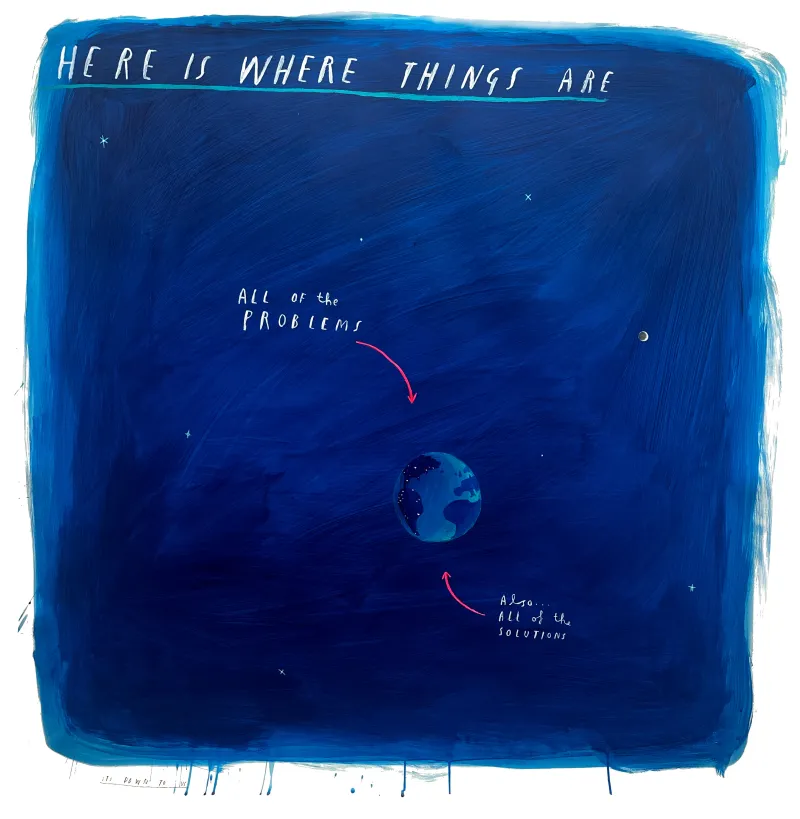
When climate wins happen, we often credit the market. Or the policy. But is philanthropy the most underappreciated force in the climate fight? And can less than 2% of global giving actually change anything?



About this episode
Behind the headlines, people like Jennifer Kitt of Climate Lead are identifying where finite resources can be spent in order to make a real difference, and helping to grow the pie. Tom Rivett-Carnac, Christiana Figueres, and Paul Dickinson sit down with her to ask: what does well-targeted philanthropic money actually unlock? Who decides where it goes? And why, when it works, do we so rarely notice? From the coalition that quietly accelerated the EV transition by decades, to the $30,000 grant that helped take climate responsibility all the way to the World's Court.The uncomfortable truth is that climate action is becoming reliant on the generosity of a wealthy few. The good news is that this money is growing; the bad news is that it needs to grow much, much more. So how much would it take to start solving some of tomorrow’s problems today? And are there risks in expecting a small and privileged group to fund a movement that belongs to everyone?
Learn More:
🌱 Learn more about Climate Lead and their work advising philanthropists new to climate giving
⚖️ Catch up on the ICJ advisory opinion on climate obligations of states
⚡ Explore the Drive Electric Campaign, the global NGO coalition whose story Jennifer tells in the episode
🌍 Learn more about ClientEarth and the legal battles Tom references
📊 Track progress on climate transitions with the Systems Change Lab, referenced by Jennifer in the episode
📺 Read about the Trump AI video throwing Stephen Colbert in a dumpster, posted and reposted by the White House the day after the Late Show ended, via The Hill
🎤 Leave us your voice notes and questions for upcoming episodes on SpeakPipe
Join the conversation:
Instagram @outrageoptimism LinkedIn @outrageoptimism
Or get in touch with us via this form.
Producer: Ben Weaver-Hincks
Edited by: Miles Martignoni
Planning: Caitlin Hanrahan
Exec Producer: Ellie Clifford
This is a Persephonica production for Global Optimism and is part of the Acast Creator Network.
Hosted on Acast. See acast.com/privacy for more information.
Full Transcript
Transcript generated by AI. While we aim for accuracy, errors may still occur. Please refer to the episode’s audio for the definitive version
00:00:02.520 --> 00:00:05.060
Tom Rivett-Carnac: Hello, and welcome to Outrage and Optimism, I'm Tom Rivett-Carnac.
00:00:05.060 --> 00:00:07.240
Christiana Figueres: I am a very excited Christiana Figueres.
00:00:07.320 --> 00:00:11.200
Paul Dickinson: And I'm with the regular Paul Dickinson, wondering why Christiana is so excited.
00:00:11.200 --> 00:00:15.040
Tom Rivett-Carnac: Okay, wait, wait, wait, wait, wait.
00:00:15.480 --> 00:00:17.480
Christiana Figueres: Hurry up, Tom, hurry up.
00:00:17.480 --> 00:00:21.920
Tom Rivett-Carnac: This week, we hear why Christiana is so excited, and we do some other stuff. Thanks for being here.
00:00:22.860 --> 00:00:24.980
Christiana Figueres: Okay, thank you, Tom, that's so much better. Okay, you guys, last week, we just glided over the fact that the ICJ decision was going up for vote in the UN, and we just glided over. And when I heard the resounding, resounding vote at the UN approving the ICJ decision, I was honestly going to call you, both of you, at two in the morning. And I thought, well, maybe that's not the right thing to do. But how exciting is that? You know, honestly.
00:00:59.020 --> 00:01:01.840
Tom Rivett-Carnac: So tell us exactly what happened, Christiana, and what it means.
00:01:02.340 --> 00:01:04.940
Christiana Figueres: Well, Paul has Paul has the numbers here. But as listeners will remember, the ICJ, the court itself, put out an advisory opinion because the students from Vanuatu and other Pacific Islands had asked the UN, can the UN ask the ICJ to express itself about the responsibility of governments to protect their people from climate change? So it went from the students to the UN to the ICJ. The ICJ gave us the advisory opinion. Basically, yes, it is the responsibility of governments and companies to protect people from climate change. Then it went back to the UN for a vote to say, you know, does the UN support this vote? And oh my God, just 24 hours before, mostly people were panicked because what do we do if we don't have a majority vote? And listeners, thank God that in New York, there is voting because as we know in the climate convention, there is no voting. But in New York, there is. And so people were panicked. What if we don't have a majority? And then one after the other, after the other, they all said, yes, yes, yes, except for, Paul, give us the numbers.
00:02:23.020 --> 00:02:25.240
Paul Dickinson: Well, almost every country in the world said yes. There were a few abstentions. And there were just eight countries that said no. Belarus, Liberia, Saudi Arabia and Yemen. And then three others that you may notice, Iran, Israel and the USA, who were all at war with each other, and Russia. Just like 90% of the world voted in favor or 80% of the world voted in favor of doing something about climate change. And that is a beautiful, wonderful international success, because the vote supports entirely agreements like the Paris agreement. It's a sterling endorsement.
00:02:56.820 --> 00:03:06.680
Tom Rivett-Carnac: And not only did they vote against, but I mean, and I'm sure you both heard as well, I both heard direct reports from people who are in the room and also followed lots of media reports that the US were up to. The tricks that we are now familiar with, that they were bullying smaller countries, they were threatening trade reparations, they were absolutely throwing their weight around in the way we've come to expect, but didn't make any difference.
00:03:17.800 --> 00:03:19.560
Paul Dickinson: I'm just going to get it off my chest, friends.
00:03:19.800 --> 00:03:20.740
Tom Rivett-Carnac: Yes, go for it.
00:03:20.740 --> 00:03:33.900
Paul Dickinson: Through Trump 1 and also through Trump 2, I was shepherded by Stephen Colbert, who happens to be sort of the most successful of the late night comedians in the USA, and to some extent you could argue in the world. I mean, obviously there are countries in much bigger populations, but the point being, this is a particular art form where Stephen Colbert was sort of the best of the best. Now in July last year, he called out the fact that his parent company CBS had just paid a 17 million pound fine to Donald Trump personally. And he said, now I believe this kind of complicated financial settlement with a sitting government official has a technical name in legal circles. It's a big fat bribe, he said. Because this all comes as paramount owners are trying to get the Trump administration to prove the sale of our network to a new owner, Skydance. Well, in exchange, somehow the most successful of the late night shows was canceled. And we saw Donald Trump actually just posted a video, I've asked Ben to put it in the show notes, of himself throwing Stephen Colbert in a dumpster and having a little YMCA dance. And the point I would make is that that's the very best of the USA, Donald Trump is throwing in the dumpster. He is throwing himself and the office of the president in the dumpster, just like the auto pen for President Biden in the White House. His attempt to destroy and undermine legitimate opposition destroys and undermines himself. I cannot help but hope that this brings the end of his nightmare administration ever closer and faster. As Republicans begin to gather around this awful 1776 slush fund, but that's another topic for another day. Thank you for letting me get this off my chest, friends.
00:05:00.040 --> 00:05:03.300
Tom Rivett-Carnac: No, these are wildly important and deeply concerning things that happened right now. But we've had classic outrage and optimism already in the first five minutes of this show, from the ICJ to what's happened with Stephen Colbert. And we will all miss him and look with fascination to what he will do next. I've got no idea what that is, but I think it will be very, very interesting. Now, yeah.
00:05:17.660 --> 00:05:35.880
Christiana Figueres: And sorry, I think just as a footnote, it's worth noting that Donald Trump did this, obviously, with AI and put himself basically on the stage, supposedly, and grabbed Colbert by the neck and threw him in the dumpster. But not only that, that was his own account. And then the White House officially reposts the video. To your point, Paul, it is not just the person, it is now the office of the presidency, the White House itself. It is just, I mean, I just couldn't believe my eyes. I just couldn't believe my eyes.
00:05:57.560 --> 00:05:58.040
Tom Rivett-Carnac: Okay. This perfectly underlines how difficult it is to get beyond the immediate news issues that we're facing. And we're going to try, but thank you for bringing this Paul. It's incredibly important. But what we wanted to talk about today, which is connected to this, is climate philanthropy. Now, philanthropy, of course, is, you know, as everybody knows, incredibly generous donors giving away large amounts of money often. And it's an enormously important part of...
00:06:20.140 --> 00:06:21.420
Christiana Figueres: Increasingly large.
00:06:21.420 --> 00:06:22.100
Tom Rivett-Carnac: Increasingly large. And we'll talk about that in a minute. God bless. And it's an incredibly important part of any movement to try to create change, is philanthropy. And in climate, what we've actually seen is a recent surge, exactly as you said, Christiana, even now, climate philanthropy only accounts for about 2% of global philanthropy. But that is somewhere between 9.3 and $15.8 billion directed towards climate causes out of a total global philanthropic pool of around $810 billion. Now 2% is small, and it certainly needs to grow. We'll have a brilliant guest on in a minute to talk about that. But not many years ago, it was 1%. So it's definitely going in a good direction. It's interesting, isn't it, that our movement is so reliant on this flow of capital. The climate movement pulls people together, creates collective action, sets clear goals, convenes stakeholders. But largely it is supported by money that is provided by donors to encourage them to do that, to enable them to make the organization that you founded, Paul CDP, very much supported by philanthropy. Global Optimism, our organization, Christiana, very much supported by philanthropy. This is how the climate movement functions. Absolutely. We're very grateful for that, but also it's quite an interesting and weird scenario. It's not for profit. People aren't trying to build businesses. They're trying to get a limited number of donors to provide them with the capital to do their jobs.
00:07:46.300 --> 00:07:55.320
Paul Dickinson: I was doing the maths that all philanthropy, if you take out volunteer time, all philanthropy is about 0.6, 0.7% of global GDP. Over 99% of our world is either government money or private sector money. This is a very, very small intervention that's trying to change the flow of the bigger intervention, like that little tab, a trim tab on the rudder of a ship. Just call me Trim Tab is written on the grave of Buckminster Fuller, because you can have this little tab on a ship that you can push with just your leg, and it turns the big rudder and that turns a 40,000 ton ship. That's the role of philanthropy, that catalytic ability to change these gigantic flows even though it's so small. And I've spent most of my life working in it, and I think it's fascinating and transformative.
00:08:34.080 --> 00:08:35.620
Tom Rivett-Carnac: That's very nice analogy, Paul. Yeah.
00:08:36.160 --> 00:08:44.920
Christiana Figueres: So we are interviewing today Jennifer Kitt, who is a very good friend of all three of us. She's also the president of Climate Lead, which was founded in 2019. Because there was a clear recognition that not enough philanthropy even at that time was going into climate action. It's headquartered in San Francisco. And what it is basically is a free of charge to the families that are being tapped. It's a free of charge advising network that educates philanthropists, both new and coming into the field, on how to invest. And Jennifer has been the one and only leader of climate lead since its inception. And we are delighted to have her here today.
00:09:32.880 --> 00:09:33.380
Tom Rivett-Carnac: Great. Let's hear from Jennifer.
00:09:38.020 --> 00:09:42.180
Christiana Figueres: Jennifer, thank you so much for joining us here on Outrage and Optimism. I cannot believe that we haven't had you before. But I am very glad that we are finally making up for our own sins of not inviting you before. But Jennifer, I just wanted to start off with a 101. You're the president of climate lead. But what is climate lead? And why was it created?
00:10:07.700 --> 00:10:10.900
Jennifer Kitt (guest): Christiana, I love that it's you asking me this question. Because the stories that I've heard from the funders who created climate lead was that you were actually in the room when it was created. You had just come off of the amazing success of the Paris Agreement. And you boldly said to a group of the largest climate funders in the world at the time, folks like the Children's Investment Fund Foundation, and Oak Foundation, and Hewlett Foundation, and MacArthur Foundation, and more. You said, how are you going to bring in more people?
00:10:40.660 --> 00:10:41.840
Christiana Figueres: Get your act together.
00:10:42.340 --> 00:10:43.100
Jennifer Kitt (guest): You did. And I think you could probably, like, what was the actual question that you said that made them go big? Do you remember?
00:10:50.480 --> 00:11:03.440
Christiana Figueres: Well, we were really commiserating about, and this was at Climate Works at the board meeting, we were commiserating about the fact that it is just paltry what philanthropy levels are going into climate. And we just had to get everybody to stand up to the moment.
00:11:09.660 --> 00:11:11.000
Jennifer Kitt (guest): Well, they listened. Yeah.
00:11:12.180 --> 00:11:19.200
Christiana Figueres: I mean, as you know, it didn't occur just overnight, but I'm thrilled that it did.
00:11:19.220 --> 00:11:32.140
Jennifer Kitt (guest): And yeah, I mean, they really, they workshopped that idea for multiple years, and they came up with this concept, which is, it sounds crazy, and it did sound crazy to me when I was first looking at coming on board. But could we create an organization that was entirely free to help families who weren't yet giving to climate and foundations to come on board as a kind of on-ramp, to help them meet their peers, to help them find great vetted diligence solutions globally since they wouldn't have staff of their own yet to do it, to help them meet experts all around the world? Could we do that so that the on-ramp was faster, so we could go from what was at the time something like 1% of global philanthropy to grow it as quickly as the cause required? That's what Climate Lead is. You were there at the beginning. Yay.
00:12:14.080 --> 00:12:15.960
Christiana Figueres: Let's see, Jennifer, where are we? You have done an absolutely brilliant job. You and your amazing team, because kudos to the team that you have built. You have helped to mobilize 6 billion in new money from 115 donors over six years. Amazing. And what is the delta between that and what we actually need? First in numbers, Jennifer, I'm going to ask you two questions at the same time. First in numbers, but then also in characteristics, are we actually getting there or are we just tickling the elephant?
00:12:59.480 --> 00:13:08.280
Jennifer Kitt (guest): So, I mean, in the numbers, I have been asking experts all around the climate philanthropy space, what should our target be? And after doing that for the last seven years, I have come up with a sort of vision or goal that we shoot for. Could we move from what the current data is? The best data we have is that it's something like $10 to $15 billion a year going into climate philanthropy. So that's less than 2% of all giving globally, right? Could we move that to 5X where it is now, something like 50? I am quite sure that there's wonderful projects that could be funded at that level. Probably we need more than that.
00:13:42.640 --> 00:13:44.300
Christiana Figueres: We also need more investment. The demand for the philanthropy is there. The question is, supply.
00:13:48.960 --> 00:13:55.200
Jennifer Kitt (guest): As families come in, we are always inviting them to be as generous as possible over multiple years. And once they get to know organizations to give it in an unrestricted way so that those organizations can actually be funded, as they say, to win, right? Like you would fund a new company. How do you give them the kind of capital that allows them to be nimble, to grow staff, because it's such an under-resourced space that many of the nonprofits who are working in it actually don't have the ability to scale. So those are some of the qualities that we need as well. The kinds of projects we need, you're right, there's all kinds of things that could be done. And actually, that's part of the great blessing of working in this space. There's so many different kinds of solutions that almost anyone can find their place in this work. But all of them should be thinking long-term, should be thinking about how to collaborate with others, and how to learn while doing. Because the issue is so important that staying on the sidelines for a big long learning curve, when your cause is as urgent as this one, is not the way to move with the speed that we require.
00:14:57.980 --> 00:15:07.240
Christiana Figueres: Where does philanthropy sit in the very long gamut of funding that needs to go into climate action? Because there is private philanthropy where you sit. There is also government funding as in the previous AID, that type of funding that is not an investment, that is actually a donation. Then there are so many different types of private sector funding starting with impact investment and going all the way up to higher interest rate investments. Where does philanthropy sit and what is philanthropy doing?
Load More00:15:43.760 --> 00:15:51.540
Jennifer Kitt (guest): Yeah, I mean the prime movers in climate will always be businesses and governments. And philanthropy will never be big enough to actually move at the way those two kinds of organizations do. So philanthropy has a role to play.
00:16:00.960 --> 00:16:02.960
Christiana Figueres: Because of the scale that's possible, is that right?
00:16:02.960 --> 00:16:04.340
Jennifer Kitt (guest): Because of the scale, yeah. But philanthropy, when played impactfully and in a leveraged way, can help things go as fast as we need them to. And the best way to see that, and so can investing, by the way, right? You know, one of the things I think we're all called to do is use all the pockets of money that we have. What is the right tool for investing, impact or otherwise? What is the right tool for philanthropy? And how do we use our voices and our votes and our talents, all the things that we have for this cause? So one of the best ways to answer a question like that, where you're trying to figure out how philanthropy helps, is just to share an example. And this is one actually you know pretty well, from the road transport world, the Drive Electric Campaign. So in that one, you know, if you look at the speed and scale charts or you look at the Systems Change Lab charts or any of them, there are a couple places where we have momentum, where things are going more quickly than we expected and almost as quickly as we need. Renewables and EVs are two of those places. And it took until 2015 to sell the first million EVs globally. But now, more than a million are sold every month. And that didn't just happen.
00:17:17.880 --> 00:17:19.040
Christiana Figueres: Every month?
00:17:19.040 --> 00:17:19.540
Jennifer Kitt (guest): Yes. And that didn't just happen based on market forces. Philanthropy helped that transition happen decades faster than anyone thought possible, including the NGOs who were working on it. It even surprised them.
00:17:33.020 --> 00:17:34.600
Christiana Figueres: How did philanthropy do that? That's just amazing. How?
00:17:36.360 --> 00:17:36.800
Jennifer Kitt (guest): Yeah. So it started with a group of maybe 25 non-profits who were working across the world and they realized that they were all working on the same issue and they were all going to be stronger if they came together. And so they started to form a loose coalition maybe 10 years ago. And they went against the four major markets for EVs. If they could get China, India, Europe, and the US to begin to take up this new then technology, then the market would begin to help them. And so they came together, they created shared strategies, they made their own objectives and KPIs that would help them coordinate. And they began to use tools like technical assistance to governments so that those governments would pass strong policies to make the market. They engaged communities who were breathing bad air from diesel trucks in their communities to demand change. They encouraged businesses to put in charging infrastructure for their employees and to buy EV fleets which also helped to make the market. And about five years ago, they had scaled up their plan enough that they could actually see to an outcome of market uptake. And they worked with the Ted Audacious Project and my organization and got an infusion of about three, a little bit more than $300 million all in one year. And that scaling allowed them to move the needle decades earlier. And that was 200 NGOs by the time they were done benefiting. So they've moved much faster than their original goals. And one of the things that we worried about when we helped them scale for those four major markets is what would happen in the developing countries. But there wasn't enough philanthropy to work outside the four major markets. Now, because they're decades earlier, they have actually switched to working with the developing nations to leapfrog the polluting tailpipe. And even just last year, there was a 60% growth in new EV sales in Africa, Southeast Asia and Latin America. So that wouldn't have happened with the market alone. And you can see how philanthropy, paying for just those kinds of things that I mentioned and helping a coalition of NGOs come together, can move the needle. Because a lot of what we're doing is racing against time.
00:19:53.340 --> 00:19:54.200
Christiana Figueres: Absolutely. Well, but there are two pieces there in that amazing story. One is the coalition itself, i.e. coordination among so many NGOs. But the other is a coalition of funders. So I would love to know, how did you bring so many disparate funders, all of which have their own brilliant ideas about what they want to fund? How did you shift that? How did you move those families over to something that was bigger than themselves? And were they have very little, say, control?
00:20:35.220 --> 00:20:36.280
Jennifer Kitt (guest): Yeah. One of the most beautiful things that I have noticed when I came into climate seven years ago, was how unifying the purpose was for the nonprofits and the donors. I have never seen a field with such eaglest leaders, actually. For the 200 organizations to come together and drive electric, or the dozens and dozens I've seen in other coalitions and other collaborative projects, they have to actually be working in a really collaborative way. This is almost never about one shiny leader in this field. It's usually about servant leadership. And so I have to say, it's interesting that you asked that question because it's different than other places that I've worked. And maybe it's the mission, I don't know. The donors have all learned that it's more important to collaborate than to do their own thing. They experience climate donors. And that's because there's so many things to do that you have to know that your peers are doing parts of it. And so across these areas, there tends to be collaboration because it's just clear that we will never have enough resource to do it alone and we have to work together.
00:21:47.980 --> 00:21:56.420
Christiana Figueres: Well, I must say, Jennifer, that is, in the best of all cases, that is the brilliant example that we all celebrate. I'm going to push back on you a little bit because my sense is that it's not always so, that we have some billionaires who have their own foundations, who have their own ideas about what they want and what they believe is the most successful theory of change, and they go out and find and fund NGOs to deliver that for them, and that those NGOs have very little leeway to sidestep anything that the funder is directing them to.
00:22:35.740 --> 00:22:44.200
Jennifer Kitt (guest): Yeah, I would say the more expert the funder teams are, the more that can happen to the folks on the ground, the nonprofits on the ground. If you have a highly expert team who has a sense of what the strategy is, there has to be a real thoughtfulness about how you're going to be led by and with the field and be listening carefully. And there's often really important authentic dialogue about that going back and forth. And in fact, many of us survey the NGOs every year or so, so that we can hear better what they might have to say to us in order to avoid doing that to them. So I will say that is a real challenge. It tends to be with the community of more experienced donors as opposed to the ones that we work with who are newer.
00:23:25.160 --> 00:23:34.260
Christiana Figueres: But if it is true that the more they understand about the field, the more they have their own opinions about this, then what are you going to do? You bring new ones in and are you telling me that by the time you have educated them and they know what they are doing, they are actually going to go rogue on you?
00:23:44.560 --> 00:23:48.740
Jennifer Kitt (guest): Well, if only everyone listened to me, Christiana.
00:23:49.600 --> 00:23:50.300
Christiana Figueres: Always.
00:23:54.240 --> 00:23:58.540
Jennifer Kitt (guest): The way that we think about this is that the climate is our client. We are free. We are an onramp. We don't work with families forever. We help them come in and find their place. But the obligation that comes with that for us is to help families and foundations coming into the space, understand what truly matters. And then we will ask them what they care about there, what's exciting to them, what draws them, and help guide them to the place of biggest impact for them. Along the way, we'll be helping them understand that the NGOs need this long-term funding, they need it to be unrestricted, that these are best practices to help them do their best work. And that collaboration with the experienced funders and with the NGOs is necessary and what that looks like. And by and large, I mean, I would say we've seen about two to three billion dollars move after we've graduated people to independence from leaving Climate Lead that they've done on their own. And the pattern is that they tend to continue to collaborate and be generous and increase their giving once they've gotten into the community and understand how to support it.
00:25:05.980 --> 00:25:07.140
Christiana Figueres: So they don't go rogue. Tom, come in.
00:25:08.360 --> 00:25:08.740
Tom Rivett-Carnac: Yeah, yeah. I just want to, Jennifer, this is great. Thank you. And I really want to ask you, you gave an amazing example of Drive Electric. I want to ask what the next big thing is. But before I get to that, I have a quick question that's just a click deeper on what Christiana said. So first thing I should say and ask this question is this podcast is largely funded by philanthropy. But let me just charge in and ask the question anyway. There is a saying that you can't solve a problem with the same kind of thinking that created it. And in the 20 years I've been involved in the climate movement, one of the biggest shifts has been the emergence of very wealthy living donors. 20 years ago, it was largely grassroots activists putting money in. It was much more oppositional and confrontational. And now the climate movement has become much more of an ally. It sits alongside business and government. And you can make the case that's because we've shifted to implementation and a different set of challenges have appeared. But you could also argue that it's become the device of the way of thinking of the billionaires. And I just wonder if you think there's anything we need to be a bit concerned about in that.
00:26:11.180 --> 00:26:16.440
Jennifer Kitt (guest): In the seven years I've been doing this work, Tom, I have heard, I might get emotional here. I have heard the most extraordinary stories from people about how their children won't have children, how their grandchildren have asked them to engage, how they don't know what to do. I've heard families feeling guilty about the amount of money they've made in their businesses. So I think that there is an increasing number. The good news is there is increasing philanthropy, even though it's less than 2% of global philanthropy now of global giving, it is increasing over time. And the motivations are the ones that you would expect when you see floods and droughts and El Nino crazy weather coming and all kinds of things, right? So I do see thoughtful motivation in families. Do they understand people power and movements and the role of strategic litigation to get change and the fight kind of stuff in addition to using markets? Some of them do depending on what they've been doing before we met them. And if they don't, we explain it to them. When you are trying to help the world move to clean and healthy alternatives to fossil fuels, you have to understand that there is so much money to be made in inertia, so much money to be made by slowing us down that there are forces trying to confuse us. And those forces confusing us also affect the philanthropists, right? So the Drive Electric Campaign needed to use lots of citizen committees, like neighbors telling neighbors what it was like to have EVs because of that kind of pressure coming at them. So in order to understand this problem, you actually do have to understand those things as well. It may not be what you choose to fund, but there are plenty of families that I've met that will fund it. And when you think about a big project, like a stopping deforestation project we've worked on, there are pieces of it that are trying to fund that people power, various versions of people power. So maybe as the work expands in the time that you've been working on Climate, Tom, we just see that there's hopefully scaling up of all the things that we need to get the flywheel effect of change.
00:28:54.480 --> 00:28:54.920
Tom Rivett-Carnac: Yeah. That's a great answer and a very humanizing answer. So thank you for sharing that about the people that you're dealing with and seeing their motivations. And I would love to also ask, I mean, your example on drive electric was fabulous. What's the next big thing? What are the areas that we're struggling with that we now need to see go through an inflection point?
00:29:11.260 --> 00:29:14.540
Jennifer Kitt (guest): I mean, I'm kind of excited about the built environment. I mean, I'm excited about a lot of things. But the built environment is an interesting run, right? So our homes, our churches, our synagogues, our mosques, our schools, our roads, our bridges. The carbon emissions today coming from those things, if you kind of try and count it all together, something like 30 percent of global emissions. And there's just a tiny amount of philanthropy going into that work right now. So that's today. And yet we know that the developing world needs to still have more buildings built. Like their building boom is upon us. And some of the stats that I've heard from the experts are that the growth coming is the equivalent of the city of Paris every week being built for the next 45 years. So if that happens, and we haven't decarbonized some of the materials and built the markets for those, or helped people understand how to move from gas in their buildings and cooking to electric and what that means for them and the atmosphere, we're going to miss that opportunity. And there are two incredible coalitions of nonprofits that have come together, one to work globally, primarily focused on the Global South, and one that's working in the US to prove how you do it in a developed context. Those are both incredibly exciting projects. There are also things like the kinds of things that come up just based on what's happening in the world. The global conflicts in Ukraine and Iran have shed light on how reliant we are on oil, gas, and fertilizer coming through the Strait of Hormuz. And this presents an opportunity to do things differently. So philanthropy is starting to support efforts to use much fewer and higher quality fertilizers that can be applied in microdoses to improve ecosystems, water around them, but also avoid the catastrophe that can happen when this body of water closes down and we can't get what we need for the world out of it. And that matters for climate as well, given that fertilizer is a huge emitter.
00:31:21.500 --> 00:31:22.560
Paul Dickinson: Jennifer, thank you. Let me ask just one question, if I may. The history, and I've seen it before, I know you have as well, is that perhaps an individual or a family will make money in an area. And they'll kind of say, well, we're going to improve social and environmental conditions in our area. And you somehow get them to say, friends, think about the entire world, the climate, the whole system. You get them into climate change. What's your secret to take them out of the locality where they've lived and get them to think globally about the challenge?
00:31:53.300 --> 00:31:55.000
Jennifer Kitt (guest): Well, everybody's a little different. To help people come into climate, usually, what I do and what my team does is try and help them see how climate is a threat multiplier for anything that they love. It will make people sicker. It will create more war and more scarcity of resource. It affects places that they love and hold dear, right, like physical places in the world. So just inviting people to tell us what's important to them and helping them see the intersections. They don't have to be climate donors. They don't have to make them define themselves that way. Some of the people we work with do. They become, you know, that's what they do exclusively. But actually, just making it a part of your portfolio and being part of the solution is all we need to bring in more resource. And we start from the place of where people already care and show them the impacts because sadly climate will impact everything. And then we show them the path to action, of course, because there's so much we can do and there's joy in the doing. And in the inertia, there's no joy. There's just stuckness. So that's how.
00:33:07.100 --> 00:33:24.380
Christiana Figueres: Jennifer, the other thing that I think is very exciting about philanthropy and bringing them into climate is the fact that there is such a huge turnover of wealth from my generation to much younger generations right now. How are you experiencing that?
00:33:29.140 --> 00:33:34.540
Jennifer Kitt (guest): I mean, the younger generations, unlike mine and yours, they grew up learning this in school. They actually were taught the science in school, hopefully, in most places. And so they do understand it. I have noticed a trend maybe in the last three or four years only, where some of the families' children have gotten old enough now that they are trying to help bring their families into this work. And some of the most generous families that I know, it was the young adults in the family who took the mantle of learning and meeting peers and meeting experts and thinking about what would be their pathway to giving. And the parents, the older generation, often have much wisdom to share from what they've already done in philanthropy or investing or business. But the combination is a little bit magical, right? To see that experience combined with this new energy for a cause that can feel so overwhelming. I mean, part of why we don't have enough donors in this space is that the cause feels overwhelming to people and they need some help, they need some trusted guides to get in. And sometimes the young people in their lives are the trusted guides. I'm definitely seeing that more and more.
00:34:45.320 --> 00:34:45.780
Tom Rivett-Carnac: Yay. Yay.
00:34:47.160 --> 00:34:51.360
Christiana Figueres: That is definitely a reason for celebration.
00:34:51.840 --> 00:34:52.120
Jennifer Kitt (guest): Yeah. I mean, there's a lot of reason for hope. I do see growing excitement about climate philanthropy even in this moment of headwinds.
00:34:59.160 --> 00:34:59.900
Christiana Figueres: Amazing. Jennifer, and thank you for being so generous with your time. We have to wrap up soon, but I personally cannot let you go without asking you about the role of philanthropy in the ICJ case. It was so exciting to watch what happened at the UN just last week. Can you go behind the scenes for us? Because we have done many stories on the ICJ case, mostly from the perspective of those acting on and leading the legal battle. But can you take us behind the scenes and share with us the role of philanthropy in this amazing, amazing battle and victory, frankly, last week at the UN?
00:35:48.280 --> 00:35:48.720
Jennifer Kitt (guest): Yeah. I have listened to your joyful coverage of that impactful legal decision and the incredible students who are at the very beginning of the ideas. What I can tell you is that philanthropy is often there as a quiet partner and it should be a quiet partner for so many entrepreneurial leaders like those students. As you shared in your podcast, it was those 37 Pacific Islands students who came together to inspire countries to ask the ICJ for that opinion. Philanthropy was there when they needed help. Sometimes what philanthropy needs to do is to be watching for the bold leadership and the courageous next steps and then respond. The very first thing that philanthropy did for that group of students was just like a $30,000 planning grant so that they could meet together and see each other and have some support. And so you can see that it doesn't always have to be big numbers to make a big difference. And so over time, philanthropy has responded to the need that came to them in a sort of nimble, attentive and humble way. And can you just imagine what it feels like to be one of the donors that quietly did that? Wow. Wow.
00:37:04.640 --> 00:37:06.160
Paul Dickinson: That's a great feeling. When you see that from this, like the dream of the students to like the world's court. Wow.
00:37:13.080 --> 00:37:13.520
Jennifer Kitt (guest): Yeah. And it is important to remember, yeah, we need scaled giving. I mean, right now, if I look in my database at Climate Lead, we have several hundred solutions. The top most urgent 80 of them could scale tomorrow at $5 billion. We've diligent it for good work globally, right? There's tons of good work to do. And a $34,000 grant got those students what they needed at a moment where they were probably going to have a hard time getting to the next stage. So it's what a privilege, what a privilege to be part of their journey in any way and philanthropists can have that privilege in a quiet, humble way.
00:37:53.460 --> 00:38:00.460
Tom Rivett-Carnac: So what a great interview that was and Jennifer Kitt, an amazing leader and how grateful we all are to have her in the climate movement. Christiana, you conducted much of that interview, although we chipped in with thoughts. What did you think of the discussion?
00:38:05.380 --> 00:38:07.920
Christiana Figueres: Well, first of all, the Jenner is absolutely brilliant. Thank heavens that we have Jennifer there. She's just such a star and she's always so positive.
00:38:15.900 --> 00:38:16.260
Tom Rivett-Carnac: Yeah.
00:38:16.260 --> 00:38:18.180
Christiana Figueres: She's always so joyous.
00:38:19.100 --> 00:38:25.400
Tom Rivett-Carnac: I have seen her in moments of quite significant stress and she's the same in those moments. It's really impressive.
00:38:26.340 --> 00:38:26.580
Christiana Figueres: Yeah. Yes, exactly. Yeah, it is very impressive. It is very impressive. Anyway, so she has done really an amazing job of bringing families in to the possibility of them giving into the climate community. And it's a very tough job. And I have watched her. I have watched her operate how she explains the impact of climate on the world, of course, but also personally on those families, and then brings them into the conversation with full respect for what those families have done in the past and with bringing forward the potential of what they can further do. She does just a brilliant job with this.
00:39:22.360 --> 00:39:23.580
Paul Dickinson: No, I have to agree with that. I find the notion of the role of philanthropy so important, at different levels, at the structural level, if I'm not mistaken. Philanthropy is currently paying for the shortcoming in UNFCCC income with the US pullout of the UNFCCC. I mean, that's a really important piece of global infrastructure, just being supported by philanthropy.
00:39:45.280 --> 00:39:47.440
Tom Rivett-Carnac: So I think that there's a few things. Just on Jennifer, one of the things that I've seen her do, which I think is really hard to do actually, is to start from the outcome rather than start from where we all are in the movement. And climate is so big, it's really hard to start from the outcome. Because a lot of people in NGOs go around saying, well, we're $10 million this year, we hope to be $12 million next year. And we see our trajectory of growth and kind of where we'll get to. Whereas Jennifer, I've seen several times start from the question of, what would it actually take to solve this problem? Like, let's stop thinking about, what's the incremental growth from where we are, and that we've gotten used to over the last few years? But if we actually want to solve this problem in a timely fashion, let's put that as the vision and be audacious. Because it's a non-linear process of getting more resources into this space. If you can actually be audacious and bold and set the vision of where you want to go, that drives collaboration. It inspires people. And you can then do things that are bigger than you thought were possible. So I've learned that from Jennifer, that actually you should think about it through the other end of the telescope and say, what's the ultimate expression of the outcome? And not be afraid to dream that big. So that's been, I think, a very important role that she's played kind of in the movement. And then I just want to say a few things about the state of philanthropy. And maybe it will disperse some conversations. The climate movement is quite odd in its reliance on philanthropy. I mean, I think maybe the development community is similar, but most other spaces which are so wide-reaching and developed would be more of a blend of for-profit and not-for-profit investments. And what we've seen over the last 20 years, and we talked a bit about this with Jennifer, is a massive scale up of additional money coming from living donors. As we've seen this proliferation of billionaires putting more money into the climate movement because they're getting really worried about what they're seeing. And all credit to them. And I should presage this by saying, we should all be grateful for that, because I think on that basis, the opportunity we have to make a difference in the world resides. But it creates a series of strange dynamics in the space. As we said before, the NGOs now act more like consultants to philanthropies. The philanthropies have a theory of change, and they engage the NGOs to deliver their theory of change. And so strategy development has moved from NGOs to philanthropies. That has many benefits of coordination, of collective action, of having a big vision. But it has changed fundamentally the nature of how NGOs operate and how they think about their role in the world. And the whole of the NGO world is now trying to basically deliver the theories of change of a few foundations that give large amounts of money. And as I said, there are a lot of plus sides, but I think we should also talk about the downsides.
00:42:31.560 --> 00:42:33.180
Christiana Figueres: So Tom, let me ask you a question. Yes, I totally agree with that analysis. And is it any different than the previous scenario that we had before? Let me just pick up USAID, which doesn't exist anymore. But was the climate movement not being directed by USAID funding?
00:42:56.740 --> 00:42:57.100
Tom Rivett-Carnac: True.
00:42:57.640 --> 00:43:05.120
Christiana Figueres: My question is, is it not a fact that whoever pays the orchestra chooses the music? Because so Jennifer, as we heard, she's mobilized six billion over six years. Good on her. And between 2015 and 2019, just those four years, the US had provided 10 billion in climate-related development finance. And so you can see that the fact is that at least at that time, government funding, philanthropic or donor funding into climate was larger than private philanthropy. But the question that I have for you is, is Jennifer not up against a double challenge? One is to make up for that government funding that is no longer going in, and how many, how many NGOs have had to close doors or substantially cut down on their staff because they don't have the government funding that they did. So A, that's one of her challenges. And the other one is to move away from the ownership of programming because that was had already been established. You know, we're not here to pretend that while AUSAID did a great job, you know, putting money out into the world on climate and other development issues. But it always came with very clear terms of reference. And so I don't think we should be astounded that now there is a similar dynamic in which those who are putting the money on the table now, A, not able to make up for the numbers, but they're still holding the decisions on what gets funded and what doesn't.
00:44:55.060 --> 00:45:00.460
Tom Rivett-Carnac: And the other perspective I would say is that, as we all know, foundations are all very different. So some of them might say, we're going to give you a grant, but for that you need to do the following 10 things. And we want you to report on them, give us very specific responses. We need to know exactly what it is because we're conducting a master plan and when it needs to fit into that. And other foundations will say, you know what, we trust you. You've got 20 years experience in this space, we're going to give you some resources, go and knock our socks off and do something really impressive. And I think that in a way, I'm not sort of saying one is better than the other or that we have a different theory of how things will work, but I think there's a lot of complexity and a lot of power dynamics that emerge as a result of all these different ways of doing things. And we largely don't talk about it. I mean, I can walk around a COP because I've spent 20 years in climate and I can see the theory of change of five or six foundations represented in the organizations that you see existing in those COP. You can say, oh, that's the theory of change of that foundation and that's the theory of change of that foundation. And I think that's just really interesting. And that's kind of a hidden thing that we don't really notice. Is it good or is it bad? I don't know. But it's certainly a major part of how we're responding to this existential crisis.
00:46:09.700 --> 00:46:10.060
Christiana Figueres: Yeah. And I would also agree with you that that has had actually a huge positive effect.
00:46:16.640 --> 00:46:17.220
Paul Dickinson: Huge.
00:46:17.220 --> 00:46:17.660
Tom Rivett-Carnac: Yeah.
00:46:17.820 --> 00:46:19.920
Christiana Figueres: It's not like it's just negative. It's just it is what it is. And at the same time, side by side, I think Jennifer is, you know, so brilliantly making the case for the fact that NGOs need unrestricted funding and multi-year funding in order to be able to step up into their knowledge and their experience and be able to have some leeway to adapt to changing conditions. And we all know that conditions are changing very quickly these days. So it's not about this being right and that being wrong. It's about how do you manage to balance this? Obviously, you know, established foundations have their priorities because they've been at it for many, many years and they, you know, have established preferences. And it's all based on experience. They're not doing it out of ignorance.
00:47:15.800 --> 00:47:17.020
Tom Rivett-Carnac: And they're very smart.
00:47:17.020 --> 00:47:20.800
Christiana Figueres: And they're absolutely very smart and with a lot of experience. So obviously, that is a positive. And also, how do you allow other activities to come up that you don't completely control? It's all about a balance. How much flexibility? And I would argue, however, Tom, that in the days where we're in, we do have to make a bigger effort for flexibility in the funding overall, because circumstances are changing so quickly that those that are with their feet on the ground, with their dirty boots on the ground, they need that flexibility. Now, do they get the flexibility when they go back and they say, oh, we're not doing A any more, we would like to do B, because these are the changes that have occurred? Can they get that flexibility?
00:48:10.160 --> 00:48:10.980
Paul Dickinson: Three tiny things. Once I was on a call with one of you two, with a new philanthropist who had quite a bit of money, and this person said, first off, I'm not going to fund anything anyone else is funding. And I thought that was a really indicative attitude. And you end up this fireworks display, a philanthropy, everything new is good and everything existing kind of withers on the vine. The second one is restricted funding. Imagine Apple issue bonds to expand the company Apple, and you give Apple some money, but you say to Tim Cook, I only want you to spend this on the watchers division. I don't think the corporations would put up with it, but it's very normal in philanthropy. And the third one, and this is a true story, I was once with a great big global bank that we all would have heard of. And they said that they were stopping funding the water program that I was involved with because we didn't have enough photographs of children. And so that corporate philanthropy can have all these other different dynamics. There are so many complex things. Financial is like a little world of politics that belongs to the donors and is delivered by the NGOs. And it's sort of beautiful and tragic in different ways. And I guess we're only just getting to know it even after all these decades.
00:49:11.460 --> 00:49:29.100
Christiana Figueres: I also think, though, Paul, that there is in philanthropy from the perspective of these wealthy families who have made their money on whatever manufacturing industry, where they have little say, personal say. They're actually, you know, in the market and they have to obey the policies of the market and what is, you know, what is going to be successful in the market. When they turn around and they start doing philanthropy, of course they want to do something that is personally important to them. Because they don't always get to do that in their entrepreneurial world. I, you know, I love whatever. I love children and therefore I want to put money into the well-being of children. That's where they feel like they have more of a emotional presence with their wealth than in their entrepreneurial activities. So can't really, I am of many opinions on this. I don't have one.
00:50:19.360 --> 00:50:24.920
Tom Rivett-Carnac: Just, I know we need to wrap in a minute, but just to just build on that one, Christiana, I know you sit on the board of many organizations. I sit on the board of ClientEarth. I know I've mentioned that podcast before. In our most recent board meeting, the woman who had been given the original grant kind of said her goodbyes. And her name is Winston Macintosh. And she gave a very small grant to create ClientEarth more than 20 years ago. And to just double down on Jennifer's experience of, you know, imagine having given that 34,000 to the ICJ. She gave a little speech at the end. And in the course of this 20 years, she'd lost her husband and life had moved on. But this sense of satisfaction, she looked around at these hundreds of people delivering these incredible breakthroughs, being super brave in the legal system.
00:51:02.840 --> 00:51:03.400
Christiana Figueres: So beautiful.
00:51:03.400 --> 00:51:06.400
Tom Rivett-Carnac: And she'd taken a chance at a moment when no one was doing that. That level of, you know, connection to the past, the decision she'd made with her husband, what it had turned into. You can't buy that in any other way. So I just think it's such a call to philanthropists to be brave, to take a chance. To have the opportunity to do something that is fundamentally meaningful and transformative to our future, all of our futures.
00:51:29.640 --> 00:51:32.680
Christiana Figueres: And can be in line with their passion.
00:51:32.680 --> 00:51:33.220
Tom Rivett-Carnac: All right.
00:51:33.220 --> 00:51:38.640
Paul Dickinson: I give the last word to the rock and roll band The Clash, who spoke about Marx and Engels in one of their songs. You're familiar with Karl Marx, who changed the world, and his partner Engels. And the line goes, Marx was smart, but he had sense. Engels lent him the necessary pence, which is a British determination similar to a cent for those working on the dollar.
00:51:52.520 --> 00:51:55.900
Tom Rivett-Carnac: Looking forward to an impact report on what happened next in that.
00:51:55.900 --> 00:51:58.880
Paul Dickinson: China's still running off with Karl Marx, so a big impact.
00:52:00.380 --> 00:52:01.960
Tom Rivett-Carnac: All right, lovely to see you guys. It's a great topic.
00:52:02.720 --> 00:52:03.540
Christiana Figueres: All righty, guys. Thank you.
00:52:04.220 --> 00:52:05.120
Tom Rivett-Carnac: Talk to you all next week. Bye.
00:52:05.460 --> 00:52:05.780
Paul Dickinson: Bye.
00:52:05.780 --> 00:52:06.140
Christiana Figueres: Bye.