









178: COP27: Why the Money Flow is Slow



About this episode
Welcome to another episode of Outrage + Optimism, where we examine issues at the forefront of the climate crisis, interview change-makers, and transform our anger into productive dialogue on building a sustainable future.
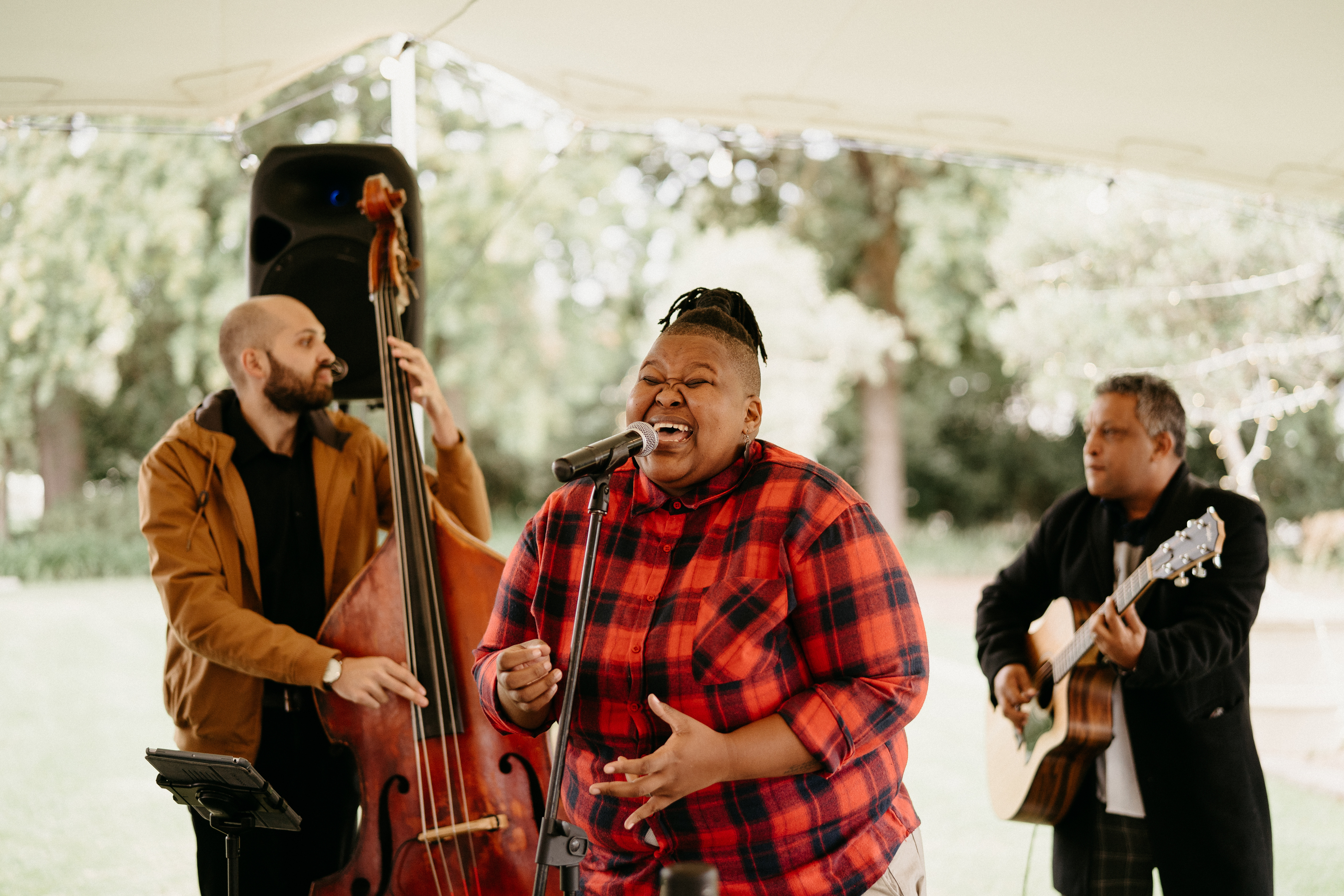
In this episode, co-hosts Christiana Figueres, Tom Rivett-Carnac, and Paul Dickinson share their reflections on COP27. We also have music from South Africa’s Daily Maverick, featuring the brilliant vocalist, Anneli Kamfer.
Tom is back from Sharm El Sheikh, Egypt, where he spent several days at COP27, the UN’s annual climate conference. The trio discusses whether the international commitment to contain global warming to 1.5°C一now that the target seems to be moving out of reach一is as robust as it should be. Is conference messaging, such as “[We are] resolved to pursue efforts,” as strong as it should be?
Next, there’s good and bad news on “Loss and Damage.” This refers to the responsibility of industrialized nations for the climate crisis and the moral case for compensating poorer countries suffering disproportionately from its consequences. Hear the breakdown and where the group stands on the progress of this critical issue.
Other COP27 discussions cover balancing collective global action with internal political realities, strides in reversing deforestation, and Tom’s birthday!
You won’t want to miss this engaging conversation!
Before we go to the music, hear our incredible ‘pass the mic’ segment where Zoe, our roving reporter, spent an afternoon capturing diverse voices from COP 27 delegates in the halls and corridors of the conference.
Finally, we finish with our musical selection: “20Twenties: Eve of Destruction,” by the Daily Maverick, featuring the celebrated vocalist Anneli Kamfer.
Enjoy the show!
NOTES AND RESOURCES
To learn more about our planet’s climate emergency and how you can transform outrage into optimistic action subscribe to the podcast here.
Explore more about COP27.
It’s official, we’re a TED Audio Collective Podcast - Proof!
Check out more podcasts from The TED Audio Collective.
MUSIC
Listen to the full track “20Twenties: Eve of Destruction” from the Daily Maverick featuring acclaimed vocalist, Anneli Kamfer.
Learn more about the Daily Maverick and the Our Burning Planet initiative.
Here’s a well-known version of Eve of Destruction, written by 19-year-old PF Sloan in 1965 and recorded soon after by Barry McGuire.
Follow us on Social Media:
Full Transcript
Transcript generated by AI. While we aim for accuracy, errors may still occur. Please refer to the episode’s audio for the definitive version
00:00:12.715 --> 00:00:14.315
Tom Rivett-Carnac: Hello, and welcome to Outrage and Optimism. I'm Tom Rivett-Carnac.
00:00:15.635 --> 00:00:17.255
Christiana Figueres: I'm Christiana Figueres.
00:00:17.255 --> 00:00:18.715
Paul Dickinson: And I'm Paul Dickinson.
00:00:18.715 --> 00:00:26.095
Tom Rivett-Carnac: This week, we bring you an update on the geopolitics around climate change from Sharm el-Sheikh, COP27, and from Bali with the G20. Plus, we have music from the Daily Maverick featuring Anneli Kamfer. Thanks for being here. Hey, friends, so I'm home. I made it back from Sharm at the weekend after a very interesting and enlightening time at COP27. I've got to say, it was a vast COP, and very confusingly laid out for those who weren't there. For some reason, everybody kept getting confused about the different locations where the places were. I've never seen more people wandering around, wondering where the room is that they're looking for, although that's always a feature of these things. So let's sort of unpick where we are thus far. We're recording this on Wednesday the 16th. We'll probably do another one of these next week, but there's been a lot going on, both in Sharm and also, of course, the G20 is now meeting, interestingly, during the COP in Bali, and there's a lot happening there too. So where should we start?
00:01:31.640 --> 00:01:39.060
Christiana Figueres: Let's start with 1.5 degrees centigrade, the heart of our efforts. Yeah.
00:01:39.580 --> 00:01:40.780
Tom Rivett-Carnac: That's right.
00:01:40.780 --> 00:01:58.620
Christiana Figueres: So there has been a lot in the press and certainly at the COP itself about whether countries are backsliding from 1.5, are they actually not willing to reiterate a commitment to 1.5? And interestingly, that responsibility was, for a little while, delegated or exported over to the G20 in Bali, hoping that there would be some clarity there before it was bounced back to COP 27. So I'm interested in how you took that text to the two of you. I'm a little bit concerned because it's not a clear, absolutely clear commitment to 1.5. The text that I read said, resolved to pursue efforts, which sounds extraordinarily like the sort of ambitious, but still timid language that we got in 2015 out of the Paris Agreement. And I thought that we were actually beyond that with the 1.5 degree report that we had later on. So, some people were saying, okay, Bali has now clarified that we are back on track. And that has to be incorporated into the covered decision that everyone is working on. But I didn't read it quite as clear as that. How did you all read it?
00:03:17.580 --> 00:03:18.540
Tom Rivett-Carnac: Paul?
00:03:18.540 --> 00:03:24.340
Paul Dickinson: Well, I mean, look, Christiana, I'm not able to interpret a text the way you can. But I think I understand the principle here. And ultimately, it boils down to whether we accept this is a global emergency or not. Because if the language isn't as strong, then we just kind of carry on. But if the language is strong, we halt a large number of activities and we change the way we live. I'm going to offer just one reflection here, which is that about our grandparents, actually, and our great-grandparents. I knew my grandparents. I never knew any of my great-grandparents. CO2 in the atmosphere, as you know, has been between 180 and 280 parts per million for 800,000 years. And we've increased it 50% in one lifetime. We've done more in one lifetime than 10,000 lifetimes. It's an absolute global emergency right now. And 1.5 and the focus on a firm belief in 1.5 is the correct response to that explosion. We're actually in the middle of an explosion in geophysical terms, which is why that language must be so intense and demanding. One lifetime.
00:04:42.560 --> 00:04:44.400
Tom Rivett-Carnac: Hours, that's the problem, isn't it? We've done this, most of us, those who are here now. Anyway, no, I completely agree with that, Paul. And Christiana, I had the same thought, and I did look it up and it is rough. It is basically the same wording of the G20 from last year that they've copy-pasted over. That in itself is slightly concerning that they're sort of not re-examining these principles and strengthening commitments. They're just taking chunks of text and how much consideration did that really have? I mean, I'm sure everyone looked at it, but that's different to negotiating something new. But nevertheless, I was pleased to see it there. I mean, one thing that I have picked up a lot of is that there are groups of countries in Charm who are trying to soften that number and to try to say, well, look, 1.5 is now out of reach. We don't think it's credible. And bizarrely, the arguments that I've seen in some of these documents are that they are sort of referencing activists and scientists as their mandate for saying this. They're saying, scientists are saying it's impossible, activists are saying, tell the truth. So therefore, let's abandon 1.5. Of course, that logic, nobody wants them to abandon 1.5, least of all scientists and activists. That is a logic that has been utilized and manipulated for political ends, whereby those narratives have been utilized to be more convenient for countries that don't want more ambition. So I was pleased to see it in the G20. And I'm assuming that that now means it will have to be reiterated in the cover text of the Charm Declaration that comes at the end of the week. But I agree with you, it was pretty soft.
00:06:20.060 --> 00:06:22.100
Christiana Figueres: Yeah, it will be reiterated. But in this rather soft version, which, as we said, we were hoping to strengthen the language around. But at least, at least, yes, sticking to the 1.5 rather than slipping beyond that. So let's see what happens. And just for listeners to know that, yes, there are many decisions that come out of the COP, but perhaps from a political perspective, the most important always is what is some people call the cover decision, which is the decision that comes first. It will be the first decision of the COP. And that usually is led by the COP presidency. And what the COP presidency has done up until now is circulate some bullet points of issues that they might want to include. And the work over the next few days is to actually begin to put some text onto those bullet points. So stay tuned for what comes out of that. Should we move over to Loss and Damage?
00:07:26.720 --> 00:07:38.520
Tom Rivett-Carnac: Just one more point before we leave that is I have to give a nod to the infrastructure and the brilliant people in the progressive business community who are so good at mobilizing in support of these things when they're under risk. So when it became known that 1.5 was under threat, Hala Thomas-Dotter, who is the CEO of the B Team, known to many of us and no doubt work known to many listeners, a completely brilliant individual, was we have to mobilize in response to this. So she was able to lead a group with very much with you, Christiana, so you should comment on this too, to create this statement 1.5 is a limit, not a target. Do you want to just say a word about that?
00:08:03.600 --> 00:08:05.460
Christiana Figueres: Yeah, it is. I don't know, Tom. I mean, for me, if you're a hammer, everything looks like a nail, right? That wisdom. But for me, this was so reminiscent of the support that we got in Paris from the forward leaning private sector representatives and really all credit here to Hala for that initiative. She got, of course, immediate support from many of us to put that forward. But it is important for governments to know that there is a sizable chunk of the private sector, not everyone, as we know, and we'll talk about that also. But there's a sizable chunk of corporations that need that certainty of environmental responsibility long term in order to make their short term investments. And they are very, very clear about that. So kudos to Hala. Very, very good support. Very broad support was able to bring quite a few signatures together very quickly to put out a very clear statement in support of 1.5.
00:09:16.640 --> 00:09:18.780
Paul Dickinson: And just a little bit of context during the COP. Not exactly the COP related, but we passed eight billion humans on Earth during the COP. The eight billionth human got just a bit of context here. The stakes are very, very high.
00:09:31.820 --> 00:09:32.380
Tom Rivett-Carnac: Yeah. And my daughter is 11 years old. And I remember she had already been born when we passed seven billion humans on Earth. So that's not very long ago.
00:09:40.020 --> 00:09:41.100
Christiana Figueres: We're multiplying.
00:09:41.100 --> 00:09:42.100
Tom Rivett-Carnac: We're multiplying.
00:09:42.100 --> 00:09:45.020
Paul Dickinson: And what do you want to look out for is just to bring this down. In ponds or something, the algae, they kind of bloom and then they take up all the oxygen and then they decay. And we don't want that to happen to us. So let's just pay real good attention.
00:09:53.980 --> 00:09:55.300
Tom Rivett-Carnac: Let's stop taking up all the oxygen.
00:09:55.300 --> 00:09:57.160
Paul Dickinson: That's OK.
00:09:57.200 --> 00:09:57.740
Christiana Figueres: Exactly.
00:09:57.740 --> 00:09:58.880
Paul Dickinson: I was laughing. A happy and slightly nervous laugh.
00:10:01.000 --> 00:10:02.060
Christiana Figueres: Loss and damage, folks?
00:10:02.060 --> 00:10:03.220
Tom Rivett-Carnac: Let's do it.
00:10:03.220 --> 00:10:05.640
Christiana Figueres: Tom, you want to introduce what that is all about?
00:10:05.640 --> 00:10:14.520
Tom Rivett-Carnac: Well, I mean, as we touched on last year, the loss and damage negotiations are one of the key issues under discussion happening at Sharm. And there is a collective appreciation, I hope I can say, for the very strong moral case that can be made for the fact that climate change has largely been caused by one group of people, those in the industrialized countries, and its worst impacts thus far are being experienced by another group. Those are in developing countries and emerging economies. So therefore, it is only right that industrialized countries should help those countries to cover the costs, not only of adaptation, but also loss and damage to provide reparations of a kind for things that are irreparably lost. Now, this is obviously a hot button issue and it continues to be a major issue in the negotiations. And we will have to wait until the end of this week to see how it's really landed. So far, the major emitters, the G7 certainly, no one has come forward and said, we will put money into this. They're terrified of starting and creating this principle because they don't know how far it will go in terms of money. The UK and the US certainly haven't put any money into this, but we are seeing some shifts. Some loss and damage donations have been made by Austria, by New Zealand, by Ireland, by Scotland, a range of others who are coming forward to provide funds to what's called the Santiago Network, which is a UN scheme that provides technical assistance to countries faced with damages from climate-fuelled natural disasters. So it's a first step towards this. There's also something called the Global Shield, which is launched by the G7 rich countries and the Climate Vunderable Forum to help those countries who are on the front line of climate impacts. So these are the sort of first steps in this direction to try to identify how we as a global society will deal with it. I don't feel like this issue is fully resolved yet, where, as I said, we're recording on Wednesday. I think we'll probably know more by the weekend. And this might be something we go into in more depth next week.
00:12:11.460 --> 00:12:15.240
Christiana Figueres: What is astonishing to me is how slowly this topic has moved. It was, as we know, a sizable discussion in the Paris Agreement itself and in the lead up to Paris. So it's not a new issue. It has been on the table for as long as I can remember. And with very, very little advance, very little progress. Why?
00:12:34.640 --> 00:12:36.100
Tom Rivett-Carnac: Why is it so slow?
00:12:36.100 --> 00:12:59.640
Christiana Figueres: But I think it's so slow because industrialized countries, who would be the ones who would have to pony up some money for this, are very concerned that this is a bottomless pit because it is completely impossible to foresee or to estimate how much, in quantitative terms, in money terms, how much is loss and damage actually going to represent. And so I think they're just very concerned about signing basically, you know, a blank check, so to speak, from their perspective. Now, of course, from developing countries' perspective, it's like, excuse me, you're the ones that caused this, so you should be assuming some responsibility here. Now, as we know, and as we have already mentioned on the podcast, the developing countries were able to put loss and damage as a separate agenda item at this COP, which in COP procedure is quite a success. And interestingly enough, I was just interviewed by some press that is sitting at the COP, and they pointed out to me that it is women who are on the lead on this. The two ministers, Chile and Germany, they're both female ministers, Mia Motley, the PM who is very much behind this from the Caribbean, and many, many of the ones who are negotiating are women. So very interesting that here again, we see women with their long-term awareness really trying to fight for this issue. Now, I think where this is going to come down by the end of this week is whether developing countries are able to negotiate the creation of a new institution, a fund, a facility that would begin to harvest some of the money that is beginning to trickle in, or whether the only thing they're going to get out of this week is yet again a procedural decision of we shall consider this next year, which is basically where we've been for years. And so that's the big fight right now. Are we actually going to get something established or not? And it reminds me, if I may say so, of the moment of the creation of the Green Climate Fund, which was also a huge discussion about whether that's going to be procedural or finally a new institution. Interestingly enough, it seems to me to bring in another topic that is very important here at the COP, is what I would call the country-specific packages that are being put together. The one for South Africa that emerged from last year, and then the one that has just emerged now for Indonesia to move out of coal, and others in preparation for Vietnam, Senegal, India, etc. It seems to me that there is more willingness on the part of industrialized countries to do country-specific packages than there is to create an institution that would harvest funds and then disperse those funds multilaterally. And I wonder whether, because that is the model that we have seen, certainly on mitigation, whether that's going to also be true for adaptation loss and damage. Whether, we're not there yet, but can we fast forward, and this is more of a question, more of a statement, can we fast forward five years from now that we would begin to see region specific packages, let's say, for the Pacific Islands or the Caribbean Islands, region specific packages for loss and damage that there would be more political support for than for the creation of a new institution? Question mark, question mark.
Load More00:16:38.180 --> 00:16:43.720
Paul Dickinson: Christiana, I want to particularly salute your observations about feminine leadership. The two aspects of it here I think are important. One is not seeing a zero sum game, so not seeing somebody else's advantage as your own disadvantage, which I think is a key point here. You also mentioned long-term thinking. I want to particularly draw attention to the issue of refugees here, because if you essentially say, well, what happens outside of the borders of my country is I don't care about, I've got my own political issues here in my rich OECD country, so I'm not going to worry about anywhere else in the world. As other countries, unfortunately and tragically, outrageously may face collapse, millions of people have to leave. They're just going to stay somewhere and suffer death. They're going to have to move. So the only way to really help support people, the security of the world is to help people where they are. And just like some specifics, I picked up from Edie, the media that various nations in the continent of Africa are already seeing 10% of GDP equivalents being spent on adaptation and damage repair annually. These are crazy numbers.
00:17:54.080 --> 00:17:55.780
Christiana Figueres: Crazy numbers.
00:17:55.780 --> 00:18:14.440
Paul Dickinson: So just like, just building on this, I wanted to observe that inside countries, we're all familiar with this idea of inequalities and we've got really huge problems with wealth inequalities in our countries, you know, the people will, you know, Bernie Sanders talks about the 50 richest people in the US having wealth equivalent to the 170 million poorest people in the US. So you've obviously got massive wealth inequalities within countries that are being kind of managed and causing strains in certain ways. But of course, it's playing out internationally here. We're having to look at the world as an integrated system. And that's the only way you can really address the world and its problems in, you know, we now realize. And that's the test climate change is teaching us, I think.
00:18:35.360 --> 00:18:38.100
Tom Rivett-Carnac: So I think that's true, Paul. And I would connect what you just said to one of the reasons why I agree with what Christiana just said about the fact that we're probably going to see adaptation and loss and damage finance being regional. And then after that, let's come to the very interesting Indonesia deal. A couple of groups that I know have been at COP27 are right of center communication strategists from the US and the UK, who are there following the loss and damage negotiations. And the conversations I've had with people are that one of their objectives there is to understand it sufficiently, to weaponize it politically in their domestic countries. And you can understand how appealing this would be to Republicans. Democrats are trying to like make you feel guilty and pay reparations around the world. And the same, sadly, would be true in many European countries, that that would be a powerful political message. Now, none of this is new. But to just point out what you just said, which is very admirable, in which I agree with Paul, this has to be a moment of global solidarity and economic solidarity around the world to deal with our issues is at odds with some really toxic politics that are arriving as a result of national inequality. So the role of leadership is to thread the needle between those two and be able to be good global citizens while doing enough to keep your political mandate at home. But there's plenty of people trying to chuck rocks to bring that down politically. It's very hard to hold those pieces together.
00:20:04.160 --> 00:20:10.020
Christiana Figueres: Especially right now with the crazy fuel and food prices around the world. It is just, it's tinder, right? For that kind of argument.
00:20:16.100 --> 00:20:18.500
Tom Rivett-Carnac: And it's cheap shots and it's easy to land them, right?
00:20:19.460 --> 00:20:30.180
Paul Dickinson: But if you just take the US., with 40 to 50 million people below the poverty line, it's very easy for any politician to say, look, we can't give money away to other countries. But I think that back to this kind of zero sum game idea, it turns out actually that a healthy world economy is good for everybody. There's no economic advantage for a whole bunch of people being kind of flooded and starving. That shows a kind of complete misunderstanding of how the world economy can support everybody. So threading that needle is about drawing a distinction between inequality within countries and the broader best interests of our global community.
00:21:01.040 --> 00:21:01.800
Tom Rivett-Carnac: I agree with that. And I think what that looks like in the end is what Christiana said. It's not big, easily attacked global financing packages that can be recast as reparations packages. It's a deal for Indonesia. It's a deal for South Africa that end up being more about implementation. I mean, just to pivot to that for a sec, that Just Energy Transition Partnership process, as it's been called, to do big deals for countries one by one, actually looks like it's really landed a bit of a coup de grace in Indonesia. This was a big deal last year in South Africa. Now, a $20 billion deal pulled together by the US, Japan and Indonesia with lots of partners, half of that being public money, half being private. That's very exciting, particularly when you consider that there are more in the pipeline to come out looking at Vietnam and other different countries. So I think that's a real cause for celebration that there's so much momentum behind those deals now.
00:21:56.160 --> 00:21:57.380
Christiana Figueres: Yeah. And it is support for those countries that are so coal dependent to actually close their coal, which is inefficient anyway and no longer competitive, but still very much a part of the economy. So it's very interesting because these country-specific packages are now, as I said, being put on the table for mitigation or for phasing down, not phasing out, yikes, should be phasing out, phasing down coal and other fossil fuels, which by the way is yet another discussion, very, very vibrant discussion at COP27, whether the cover decision is going to include a phasing down, not a phasing out, of all fossil fuels and not just coal. So that would be building on last year's decision. But yes, sorry, just to close that loop, that model that we're seeing of specific packages for mitigation, that is my question whether five years from now, we'll be seeing things that are similar for loss and damage. But to move to positive things that are coming out of the COP, on the margins of the G20, Biden and Xi Jinping met for, I think, four hours and came out again saying, yes, they are willing to ring fence climate change from all of their other discussions. You know, the fact that Nancy Pelosi went to Taiwan and all of those problems have been sort of put on one side of the ledger and on the other side of the ledger is the fact that the two of them will again collaborate. And as we know, this has been absolutely key to progress. When those two largest emitters actually agree, then it tends to be the direction that is set for the multilateral discussions. And so much more is possible. So, quite exciting. And then to know that John Kerry and Minister Xi Xinhua, who have been there for years as the US and China number one negotiators are now having been given authority on the part of their heads of state, respective heads of state, to have more in-depth discussions between the two of them at COP27. So, very, very exciting that that has happened just in the nick of time, just before they closed.
00:24:31.360 --> 00:24:38.840
Tom Rivett-Carnac: And on that, I mean, you know them better than I do, Christiana, but it was an open secret among certain people at COP that they were meeting last week and having dinner and connecting. So, no doubt, they engineered this to a certain degree, right? And tried to find a way.
00:24:42.320 --> 00:24:46.800
Christiana Figueres: Yes, but they weren't allowed to come out with anything because their heads of state hadn't met. So, they were, you know, working behind the scenes and still needed their bosses to give them the green light. So, exciting.
00:24:55.960 --> 00:25:01.460
Tom Rivett-Carnac: Speaking of working behind the scenes, and this is in a slightly more lighthearted tone, it was my birthday at COP last week. So, it was my birthday on Friday. Thank you very much. Thank you. And I talked to my good friend and colleague, Christiana, the night before, and I said, oh, you know, it's always my birthday at COP. And this year, I'm not going to tell anyone. I'm just going to have a really quiet one. And she said, oh, okay, fine. Fine. No problem.
00:25:16.340 --> 00:25:17.060
Paul Dickinson: Oh, good luck with that. I think you might have told the wrong person.
00:25:18.380 --> 00:25:22.140
Tom Rivett-Carnac: She told everybody that she knows at COP that it was my birthday. I have never had more restaurants burst into spontaneous applause as I walked in. The Bezos Earth Fund drinks event that I was at that had heads of stay and heads of delegation. I was called up on the stage. Everyone sang me happy birthday. I got cakes given to me in restaurants. So thank you very much, Christiana. I will be considering an appropriate revenge for that little trick you played on me from 6000 Wires.
00:25:42.780 --> 00:25:43.780
Christiana Figueres: Yeah, well, no worries. Your secret is safe with me.
00:25:45.220 --> 00:25:46.880
Paul Dickinson: I can see that. As if, as if.
00:25:51.120 --> 00:25:57.560
Tom Rivett-Carnac: There's one or two other quick things I just want to mention in terms of things that have struck me from the week, principally on Forrest. So as we all remember, last year, there was this big commitment on Forrest that came out of Glasgow, and there was a lot of skepticism that met it because there had previously been the New York Declaration on Forrest that had been created with great fanfare in 2014 and had failed to deliver its objectives. So when the world came back together and made a new commitment on ending deforestation in Glasgow, there was a lot of skepticism as to whether it was going to continue. And there's been huge work behind the scenes, led in large part by Zach Goldsmith in the UK government and many others that led to multiple political forums happening in Sharm under the title of the Forrest Climate Leadership Partnership. And actually that now looks like it has the infrastructure and the momentum behind it to really turn into an exciting forum, to really implement the commitments from Glasgow and ensure that this is the turning point on deforestation. So that was a really good thing that I went to a few events and saw happen along the margins.
00:26:51.580 --> 00:26:58.140
Christiana Figueres: And then big question, what is going to happen at the COP15 of biodiversity that is meeting in Montreal? Whether they will be able to reach a global goal agreement there or not. But we will have a whole episode dedicated to that as the time comes near. I just wanted to mention one more thing now about COP27. And that is a slightly sobering thought, or maybe it's a happy thought, depending on where you sit. Which is that, again, my sense is that the multilateral political negotiations, frantic and frenzied as they are, are still lagging behind the progress in the real economy. Because demand destruction of fossil fuels is absolutely here. It's not going to be reversed. It is only going to be accelerated. And so it seems sort of a little bit anticlimactic if the decision that comes out, the cover decision says that, yes, we all agree to phase down fossil fuels. Well, of course, because demand is being destroyed and there is no extra investment in fossil fuels. In fact, 25% of the investment into new energy that went in this year has actually been into renewable energy and storage, which is the transition package. And it's reached 700 billion this year. So it's a little bit anticlimactic to know that eventually governments do get the memo that there is less interest in fossil fuels and then with huge fanfare, they come out saying that they are going to phase down and they don't even step up to saying phase out fossil fuels. In any event, the good news is that the real economy is moving forward. That is not surprising since 80% of the population of the Global South lives in countries that are importers of fossil fuels. Hence, all of those people are benefited by substituting those completely crazily expensive fuels and developing their own domestic clean sources.
00:29:25.580 --> 00:29:43.240
Paul Dickinson: How inspiring, Christiana, that it turns out that if everybody in the cold countries puts on a big thick jumper in the wintertime and if everybody in the really hot countries takes off their jacket and turns the aircon down, we can kind of solve this problem together. The unity makes the force and that ability for people to recognise that in the end, the many, many hands make light work and we can combine to really do something about this. So I'm very excited by Demand Destruction, which is another name for everyone coming together and just doing the right thing.
00:29:58.360 --> 00:30:01.600
Tom Rivett-Carnac: Can I say something quickly about the COP, which relates to what you just said, then we'll come back to you, Paul. I mean, I think it's a great point, Christiana, and I think I've been reflecting a bit on what COP27 was like and what it felt like coming back. And it was interesting because in the old days, there was this dynamo of energy, which was the negotiations that had to deliver a specific outcome. We've talked about this before. And there was a range of things outside that provided the mood music for that to be successful. Now it feels like there's this vast swirl of activity that goes on around something in the center, which is less and less consequential, important though it is because the real economy has taken over and is moving us forward. There's been great work done, particularly by Nigel Topping, our friend in the Climate Champions Team, to try to make sense of that and put your arms around it and say, what does all of this mean? And we should get him on, actually, because he's out of office now for a sort of exit interview in terms of where he thought he got to.
00:30:51.360 --> 00:30:52.460
Christiana Figueres: Yes, let's do that.
00:30:52.460 --> 00:30:53.220
Tom Rivett-Carnac: That should be good. But I still had a sense that it was like lots of activity and it was really hard to identify what the there there was, what the outcome was. Did it all add up to enough? Was it really solving the problem? I left a bit conflicted about how important it is that we can do that. There's two schools of thought, isn't there? One is we just need as much activity and let's go and let's trust that we get there. And the other is we need to slice up the universe and work out, is it enough and what else needs to be done in different sectors? And I suppose that the answer is a balance. But at the moment, it felt like a lot of noise, a lot of momentum. Is it enough? We don't really know. And that's a bit dissatisfying.
00:31:33.160 --> 00:31:46.420
Christiana Figueres: Well, but that is the whole purpose of the famous or infamous global stock take that is due to take place next year, where countries are supposed to be self-reporting their emissions and emission reductions. And that will lead to one global stock take, which is self-reported by governments. But even more exciting, I think, is, and Tom, I don't know what news you have for us on that one, is the independent global stock take, which is not a top-down, but rather a bottom-up exercise, where companies and cities and provinces will nest up, so to speak. Their self-reporting and come up with a different number, so that we can know whether we're actually making progress or not. Well, were you able to find out anything about the progress of the independent global stock take?
00:32:21.860 --> 00:32:29.720
Tom Rivett-Carnac: I mean, I know enough to know that I don't understand the remarkable level of technical capabilities that are required to understand and draw boundaries all over those things. And there's amazing people working on that. We should delve into that with some guests. Cool sentence, that was. Yeah, going forward. I also think, just to cover that off, the global stock take itself has to have a lot more political power to it than it currently has. It's likely that at some point in the next six years, we're going to have an official report of is the process put in place by the Paris agreement and the successive cops solving our problems. And I suspect the answer is going to be no, it's not. And that moment has to have sufficient political weight to create the platform and the mandate to make the evolutions and the changes that we need to make it fit for purpose. So that's a whole interesting political unfolding that will happen in the next year that we need to stay on top of.
00:33:17.300 --> 00:33:25.120
Paul Dickinson: Well, just one more thing that is simply not going to go into this broadcast if Christiana or Tom tell Clay to cut it out, but I'm going to just record it now.
00:33:25.120 --> 00:33:29.020
Christiana Figueres: Oh no, I'm getting very nervous already.
00:33:29.020 --> 00:33:33.760
Paul Dickinson: It's an absolutely, I don't think I've done this before, but it's a simply shameless salute to colleagues of mine. Christiana, in 2010, you gave a speech at a CDP launch event and you may remember, you probably don't, that you spoke alongside somebody from the General Services Administration, which is the US government's purchasing department. We've been in business for them for 10 years and it turns out that President Biden announced that all federal contractors who have received more than $50 million a year from the US government will have to report their greenhouse gas emissions through CDP. Amazing that that has been announced. But what I want to draw attention to is alongside brilliant colleagues of mine, and also wonderful people in the US government who've made this happen. It's a partnership between the government with its purchasing authority, an NGO and the private sector. And I think that that's a great model and would encourage other governments to follow it. So just wanted to kind of salute that particular slightly self-serving non-commercial message from the charity I work for.
00:34:24.620 --> 00:34:27.020
Christiana Figueres: I don't think we need to ask Clay to cut that out. What do you think, Tom?
00:34:27.640 --> 00:34:46.860
Tom Rivett-Carnac: No, I don't think we have to, although there is one piece we need to amend, which is that when, before all this started, before there was a public sector practice at CDP at all, I was dispatched to the United States knowing nothing and used to go and sit in the halls of the Senate trying to meet people that eventually led to a relationship with the General Services Agreement that obviously many people took on.
00:34:46.860 --> 00:34:47.440
Christiana Figueres: It was you, Tom.
00:34:47.440 --> 00:34:48.220
Paul Dickinson: You made this happen.
00:34:48.220 --> 00:34:50.600
Tom Rivett-Carnac: And you just told that story without mentioning that, Paul. It's outrageous. Tom, I am so sorry.
00:34:52.740 --> 00:34:53.780
Paul Dickinson: I am so sorry. You know what? It's lots and lots of people.
00:34:56.620 --> 00:34:57.800
Christiana Figueres: You stand corrected.
00:34:58.160 --> 00:35:05.060
Paul Dickinson: I am not at all surprised that, you know, all the sunlight and everything makes the tree and all the water and their wonderful leaves. But you have the look of a seed about you, Tom.
00:35:08.340 --> 00:35:11.120
Tom Rivett-Carnac: Well, I would never claim the outcome. I have to say, Betty Kremens, who used to work for me in that team and is now sitting in the White House, is the one who really made that happen.
00:35:16.820 --> 00:35:18.760
Paul Dickinson: I believe she may have had no small role in this. Thank you, Betty.
00:35:19.480 --> 00:35:20.780
Tom Rivett-Carnac: Yeah. I actually think it would be fun to do a whole episode on that story and what happened there. So let's think about whether we can do that in due course, and listeners can look forward to a long conversation on public procurement, which I know is right at the top of everyone's interest lists.
00:35:33.560 --> 00:35:34.500
Paul Dickinson: It's your money, you know? When the government buys things, they're using your money. So you should have an interest in how they spend it.
00:35:40.200 --> 00:35:41.260
Christiana Figueres: For US citizens.
00:35:41.260 --> 00:35:42.380
Tom Rivett-Carnac: We're going to wrap up now. I have one last thing to share from Cop, which is, have you listened to the bonus that we put out on The Future of Food? I would encourage you to put it out, to listen to it. Paul, it happened in this amazing place that made me just think of you all the time. This completely brilliant organization, the UNLive, which is the Museum for the United Nations, they were given money to create a huge museum in Copenhagen, and then they decided not to do it, but instead to put these shipping containers all the way around the world with state of the art, eye contact, video conferencing technology at the end of each of them. So you walk in and you share a room with people. And the last episode, which everyone can go back and listen to, there's a table in the middle that butts up against the screen. We had our side, where we had our breakfast of croissants. The other side was Kigali in Rwanda, where there was a bunch of activists who had mangoes and avocados. And we shared a room and had a conversation. You can high five, you can chat to each other. It's just like being around a table. And they also were connecting to the high Arctic, to different places in Latin America, to the Amazon. It's an amazing concept. And even in today's world of Zoom and Skype, it still felt fresh and new.
00:36:50.480 --> 00:36:53.880
Paul Dickinson: And would it stop, is it a substitute for Flying Places, Tom?
00:36:53.880 --> 00:36:54.980
Tom Rivett-Carnac: Yeah, I think so.
00:36:54.980 --> 00:36:55.820
Paul Dickinson: Isn't that amazing? Think about that everybody. Let's get together, let's invest in these amazing technologies. That's the most optimistic note we've ever ended on because I completely love video communication with all my heart and soul.
00:37:07.540 --> 00:37:09.360
Tom Rivett-Carnac: We will get Molly on the podcast, he runs that. All right, lovely to talk to you both. Now we have a bit more last order of business, don't we?
00:37:15.300 --> 00:37:19.240
Christiana Figueres: Yes, we should announce that we're going to do a midterm election conversation.
00:37:19.240 --> 00:37:20.380
Paul Dickinson: Well, I think you just have, Christiana.
00:37:20.380 --> 00:37:20.700
Tom Rivett-Carnac: Oh, yes.
00:37:20.700 --> 00:37:21.480
Paul Dickinson: Tom's going to do it again.
00:37:21.480 --> 00:37:21.860
Tom Rivett-Carnac: That's true.
00:37:21.860 --> 00:37:22.680
Paul Dickinson: So guys got to choose.
00:37:22.680 --> 00:37:23.940
Tom Rivett-Carnac: So Christiana, you're absolutely right. We will do a midterm special and in fact, Jennifer Granholm, Secretary of Energy, who was one of our panel that I moderated at the Clinton Global Initiative a few weeks ago, has set your comment and talk about it. So I think that if not next week, it's going to be pretty soon. After this conversation, we'll be playing a special Pass the Mic segment recorded by our wonderful colleague Zoe in the halls and corridors of COP27. Stick around to hear fascinating interviews shared by the diverse COP27 attendees that Zoe managed to capture. Right, so last order of business is to introduce the music. Today we have a classic from the past which has been reimagined. Paul, you know that you know and rather love this song. Do you want to introduce it?
00:38:05.460 --> 00:38:11.180
UNIDENTIFIED SPEAKER — please verify (quoting song lyrics while introducing the track): Tell me over and over and over and over again, my friend.
00:38:11.180 --> 00:38:15.100
Paul Dickinson: We all don't believe we're on the eve of destruction.
00:38:15.260 --> 00:38:15.680
Tom Rivett-Carnac: They must be. It would be great.
00:38:16.280 --> 00:38:23.200
Paul Dickinson: That's not my favorite song, but it's a very iconic song from back in the day and it's been reimagined quite brilliantly by this artist.
00:38:23.200 --> 00:38:28.020
Tom Rivett-Carnac: By The Daily Maverick featuring Anneli Kamfer, 2020's Eve of Destruction. Thanks for joining us. We'll see you next week.
00:38:30.320 --> 00:38:31.200
UNIDENTIFIED SPEAKER — please verify (host sign-off before Pass the Mic segment): Bye. Bye.
00:38:34.660 --> 00:38:37.020
Gideon Komi (Pass the Mic guest, environmental activist, Ghana): My name is Gideon Komi. I am an environmental activist from Ghana and a food systems doctoral researcher based in the UK. I'm very angry because the president of Ghana was a cop. And I personally believe he doesn't have the moral authority. He didn't have the moral authority to be here. Because illegal mining, which is locally called Galamsey, is the biggest challenge and threat to the environment and climate in Ghana. And his own political people have been implicated to be carrying out illegal mining that is destroying forests and water bodies in Ghana. And he hasn't done anything about it, yet has come to cop to make fresh promises. And that is really outrageous and that angers me. And that is why I am here this afternoon. Now what I'm very much optimistic about is the environmental movement. The tradition of struggle has been key and central to climate and environmental justice. So I believe that the environmental movement has the strength, has the power and has the courage to confront both businesses and government to address the crisis and also to work outside the political framework, which is not taking us anywhere, to work with local communities, to build up resilience and adaptation, to respond to the crisis of nature and the climate emergency. And that is why I'm here this afternoon.
00:40:14.900 --> 00:40:16.440
Zoe (colleague, conducting Pass the Mic interviews at COP27): Okay.
00:40:16.440 --> 00:40:19.700
Ewi Lama (Pass the Mic guest, climate justice advocate, Cameroon): Hello, I am Ewi Lama. I am an environmental and climate justice advocate from Cameroon. I'm also a climate reality leader with the African Climate Reality Project. One of the issues and our reach about at COP27 is the fact that we have policies that have been put on paper for so long and we don't see them being put in place. And Africans should be given the platform to solve their own problems, to identify their problems and solve them at this point in COP. It is a privilege that we have COP in Africa this time, and we think this should not just go without it being noted. That COP27 brought a change to Africa. And to round up, I think, when we take care of our environment, we are taking care of ourselves. And that is what we in Africa have been trying to do in our little ways. But we lack the capacity to do so. We are causing the least climate problems, but we are having the greatest impact. And we need to be in the position where we can solve our problems by ourselves and not be told which problems we have to solve because we know the problems ourselves and we want to handle them.
00:41:38.040 --> 00:41:39.140
Collins Gameli-Hodoli (Pass the Mic guest, University of Environment and Sustainable Development, Ghana): So, great. I am Collins Gameli-Hodoli from the University of Environment and Sustainable Development in Ghana. I'm very outraged about how African governments cannot take action to protect their citizens from air pollution. What we need to do is that African governments should scale up air quality monitoring within our jurisdiction. They should make the data open source. They should educate folks on air pollution and its impact on our health and how that can influence behavioural changes. We have the tools we can use to be able to do this. So, I'm encouraging and saying that governments of Africa should take the needed steps to do that. Thank you.
00:42:12.040 --> 00:42:14.000
Zoe (colleague, conducting Pass the Mic interviews at COP27): And what are you optimistic about?
00:42:15.360 --> 00:42:21.540
Collins Gameli-Hodoli (Pass the Mic guest, University of Environment and Sustainable Development, Ghana): I'm just very hopeful that the youth of this generation will take action for a better world. Thank you.
00:42:52.240 --> 00:43:02.260
UNIDENTIFIED SPEAKER — please verify (Pass the Mic guest, name not captured in transcript before this segment): But I'm still optimistic about the understanding of all sectors of agriculture, energy and the environment. I see that it's the theme of this year and that everyone in Africa understands that. And especially that Africa, when they made the decision to produce food only in Africa, I'm very happy about that.
00:43:19.860 --> 00:43:21.180
Ousmane Aliyu (Pass the Mic guest, journalist, News Agency of Nigeria): Yeah, thank you. My name is Ousmane Aliyu. I'm an Nijan journalist. I report for the Nisu Agency of Nigeria. And what I'm outraged about this conference is the fact that the kind of commitment, the kind of pledges that I'm expecting from the developed world, my expectation has not been met. I expected that the developed world would have come up with more commitment in terms of resources to help this developing world that are facing the consequence of this climate change. But nevertheless, I'm still happy that for the first time, Loss and Damage got itself into the agenda of CUP. So that's just what I'm happy about, about this CUP. But I still believe that before the end of this event, we still have to, we are going to get more commitment from the industrialized country of the world. Thank you.
00:44:26.040 --> 00:44:29.380
Rashida Ferdinand (Pass the Mic guest, Climate Justice Pavilion, New Orleans): Rashida Ferdinand, I'm from New Orleans, Louisiana. I'm here with the Climate Justice Pavilion. And I'm a partner with the cohort, HBCU Partnership, the Deep South Center for Environmental Justice, TSU, and WEACT. I am outraged about not hearing more about how we're going to really include climate justice in all of the work that's being done globally. Developing countries do need resources. They do need more money. And they do need more equity on the grassroots level. What I'm optimistic about is the work that I'm seeing people doing around wetlands restoration and reforesting. I'm optimistic about something that President Biden stated in his speech about how simple solutions are in planting trees and doing reforesting. And I hope that people pick up on that and start to do more of that. I do that type of work in New Orleans. We're doing coastal restoration work and wetlands restoration work. And I really enjoy meeting people from Zimbabwe and South Africa and other places who are doing this type of work globally in their communities with people taking the leadership and sustaining their spaces to restore their land and water spaces.
00:45:44.100 --> 00:45:46.500
Dari Akogun (Pass the Mic guest, Nigerian broadcast journalist): My name is Dari Akogun. I'm a Nigerian broadcast journalist. One of the things that I was outraged about this cup, one is the discussion about the loss and damage. The amounts that is being donated, fine, countries are actually putting up money, but it's a little bit small compared to what is being done for wars, to fight wars. Like the US yesterday dropped $150 million. Fine, perfect. But compared to what was dropped for the Ukrainian war, it's in billions of dollars. So the damages that is in Africa and the entire world cannot be taken care of by millions. Then what's the thing that I'm optimistic about is countries are actually willing to donate for the loss of enemy before it actually got to the agenda of this year's COP. It's a wonderful development and it's been talked about. The US president yesterday also came down here to talk about the UK has dropped, the Belgians and some other countries too in Europe. I think it's a welcome development. I think all other countries too, especially in the Euro and developed countries, should look for a way to give back to Africa and also Asia that have actually suffered more of these effects of climate change, which unfortunately they are not the most people that are contributing to it.
00:47:11.880 --> 00:47:18.320
Pass the Mic guest, President of the Indigenous Institute of Tocantins (name uncertain in source transcript): I'm Naurube Oerreria, Inam from the island of Bananal, Tocantins, I'm the president of the Indigenous Institute of Tocantins. What I see that makes me very angry, being in this Climate Conference, is that the real climatic authorities are not actually being heard, which are the indigenous peoples. We want to be at the negotiating table. Our people cry for climate justice. We are the guardians of the forests that remain in the world. Therefore, our voices must be heard in fact. We want to be part of this negotiation. We want our lands to be demarcated, our forests protected and our women to be heard. We, indigenous women, know what Mother Earth is suffering from. Because we also suffer from the abuses of this conception of death, of a policy, of the necropolitics of death, not of life. And we generate life as the land generates life. And we need to bring this essence to the world. Not only of conception of thought, but of essence, a conception of meaning that is much bigger and much more broad than what science is saying, but that it corroborates what we are saying. Science today proves that we, indigenous peoples, are the guardians of the forests. I am optimistic in the sense that we, indigenous peoples, are taking care of this space. Even though we are not priorities, we see here, we are articulating ourselves, we are fighting, especially the indigenous women. You will see a large amount of leaders, indigenous women participating, that we are not seeing with other peoples. If we look at the leaders of the world, we are not seeing the women as the majority, but we are the majority of the planet. And our voices as women should be heard. So, it makes me very optimistic to see many women as leaders of the Amazonian Brazil here.
00:49:20.100 --> 00:49:24.300
Pass the Mic guest, Zimbabwe (name uncertain in source transcript): Hi, I am Nusantlhekumere and I am from Zimbabwe. I am outraged by the fact that they aren't putting Loss and Damage at top priority. We have tried pleading with them, but then there's really nothing that they're going to do. And it seems like Loss and Damage will be put on hold for the next coming few years, but then the climate crisis isn't on hold. But then I'm also optimistic about the older generation letting the youth take over. There are a lot of youths at this COP, and I feel like COP 28, there'll be even more youth. So I think that it's going to be better.
00:50:02.600 --> 00:50:06.580
Goli Fuyani (Pass the Mic guest, Cape Town, South Africa): Hi, my name is Goli Fuyani from Cape Town in South Africa. I represent our kids' climate, also Black Girls Rising. What I'm most outraged about this COP 27 is actually saying that currently, now at this present, there are still fossil food lobbyists amongst us. While we are fighting for the future of our children, there are companies out here who are climate criminals, who are giving front sits. You know, and it's just so painful to know that there's a lot of kids and families, especially in the Global South, who are feeling the brunt of climate change, who are being displaced. We're struggling to breathe. But yet, you know, our leaders are prioritizing the fossil fuel industry because it brings money, it brings profits. So it's always like profit against humanity. But I'm also very hopeful because we are seeing really the voices of the marginalized being given spaces, but also kids. I mean, it's the first year where we have a youth children in a youth pavilion. And it just makes me feel very hopeful that one day we will win this fight and really put forward the needs of the kids so that they could have a better, healthy, liveable planet to grow up in.
00:51:32.640 --> 00:51:39.400
Anneli Kamfer (musician guest): Hi, my name is Anneli Kamfer, coming to you all the way from the southern tip of Africa. The name of the song is 20Twenties Eve of Destruction. It is a reworking of a song originally from the 1960s, written by PF Sloan and performed by Barry McGuire. The lyrics were rewritten by journalists at Daily Maverick to focus on the biggest crisis looming over humanity today, the climate crisis. It was written to be the strongest messenger of the calamity coming away and the need for humanity to agree and fight together. We cannot have a solution until we all agree on a common reality. The reason for me recording the song with Daily Maverick was just for me to do my part. Small individual actions add up and we need a super butterfly to flap its wings and take us into another direction. Please share our song and music video far and wide. This is a readying cry of our generation.
00:56:05.801 --> 00:56:10.641
Clay (podcast producer): So there you go, another episode of Outrage and Optimism. Hello, I'm Clay, producer of Outrage and Optimism, and this is the end of the podcast, where I wrap things up in a nice bow, hand it to you on your way out. The song you just heard was 20Twenties, Eve of Destruction by Daily Maverick, featuring Anneli Kamfer. What a great re-imagining of the tune. Anneli mentioned it very briefly before the song played, but there is a music video for this song where the song plays. You can see Anneli singing and then footage pulled from every corner of the Earth, showing the devastating effects of drought, flooding, melting ice, forced migration of species, you know, everything all exponentially exacerbated by climate change happening. It's really powerful. Link in the show notes to go watch that and share. I actually saw the video right before Cop started on the Covering Climate Now newsletter and I was so moved by the video and the performance and I actually reached out to Anneli and Daily Maverick and asked if we could play the song on the show. And we are so privileged to be able to play it here. So seriously, go watch the music video. It's truly, truly moving. Anneli is an active musician and singer. And so she has more music you can check out in the show notes. I know we have listeners from South Africa. So please, if you're listening, be sure to go see her perform. She's incredible. And on top of that, Daily Maverick is publishing high end journalism that addresses humanity's greatest challenge. Their climate crisis reporting is published under the title Our Burning Planet. And Our Burning Planet launched out of a once in 628 years drought that threatened Cape Town, South Africa's water supply. When that happened, a few journalists got together. They concluded that it was irresponsible to report on human generated global warming with circumspection. So there it is. On an eve of destruction, something beautiful and active was born. So I just think that's so cool. Um, linked to Our Burning Planet in the show notes. We love a publication that does music journalism to engage more people about the urgency of responding to the climate crisis. So let's go. All right, I'm fired up. I think you can tell. Thank you so much to all of the Pass the Mic guests that we had the privilege of passing the mic to on this week's episode. I don't know when it's going on our socials yet, but I just talked with our social media manager, and at some point over the next week, we're going to share some of those voices on our social media channels. So it'll be an opportunity for you to check that out and then also push their messages even further out and pass the mic in your own way. So you'll be able to see that on Twitter, Facebook, Instagram, LinkedIn, at Outrage Optimism. Pass the mic.
00:59:21.781 --> 00:59:22.921
Christiana Figueres: All right.
00:59:24.201 --> 00:59:27.101
Clay (podcast producer): Busy week, two episodes. Did you catch our episode yesterday with the magical shipping container with video communications technology, and Tom's conversation with Pea from the IKEA Foundation? Well, it's right there. It's one episode back in our podcast feed. Go check that out. It's waiting for you. And thank you all for the kind messages coming in about our new partnership with TED. We're a TED podcast. It's fantastic to be seeing more people joining us to listen. And of course, where would we be without all the people who have been with us along the way? So a quick message to all of you. If you like this podcast, please leave a rating and review on Apple Podcasts for us. It's that little rating with the stars next to our name on Apple Podcasts. And we read every single review that comes our way. So thank you for that. Wow, next week's Thanksgiving here in the US. OK, that's all from us here at Outrage and Optimism today. Thanks for listening. We have another episode coming your way next week right here. Same time, same place. We'll see you then.