









198: Dancing on Two Dancefloors



About this episode
Welcome to another episode of Outrage + Optimism, where we examine issues at the forefront of the climate crisis, interview change-makers, and transform our anger into productive dialogue about building a sustainable future.
With our very own 'durational piece of art' Paul Dickinson away this week, Christiana and Tom take a sobering look at the heatwaves affecting so much of the global community right now; and analyse Dr. Sultan Ahmed Al Jaber's speech at the 14th Petersberg Climate Dialogue.
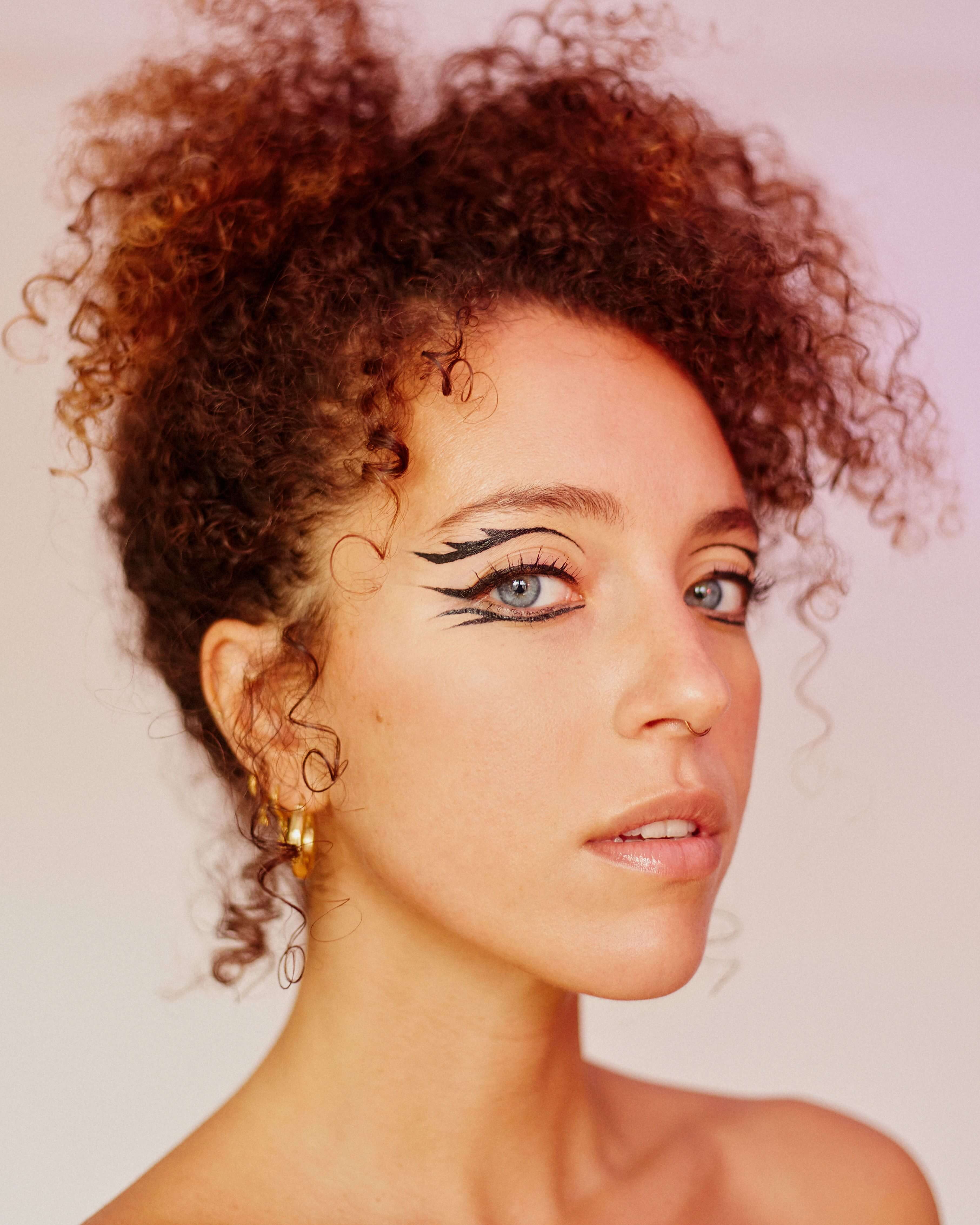
We also have music this week from Stella Talpo with her track Tarantino.
Clay is sadly away this week spending some time with the monastics of Plum Village - we are expecting him to be very Zen upon his return! Huge thanks as ever to Airaphon for helping with the edit.
Stella Talpo - Tarantino
For those interested in Tom and Christiana's reference to The Ministry of the Future, check out our episode with author Kim Stanley Robinson Here
Learn more about the Paris Agreement.
It’s official, we’re a TED Audio Collective Podcast - Proof!
Check out more podcasts from The TED Audio Collective
Please follow us on social media!
Twitter | Instagram | LinkedIn
Full Transcript
Transcript generated by AI. While we aim for accuracy, errors may still occur. Please refer to the episode’s audio for the definitive version
00:00:12.935 --> 00:00:14.455
Tom Rivett-Carnac: Hello, and welcome to Outrage and Optimism. I'm Tom Rivett-Carnac.
00:00:15.255 --> 00:00:19.115
Christiana Figueres: I'm Christiana Figueres, and there is no Paul Dickinson today.
00:00:19.115 --> 00:00:26.675
Tom Rivett-Carnac: It is very rare not to have Paul Dickinson, and we're glad about that, because we love Paul, and we're going to miss him this week, but we're going to have to struggle on, Christiana, you and me. Today, we're going to discuss recent heat waves in Europe and Asia. We touch on the Petersburg dialogue and what did and didn't happen there, and we have music from Stella Talpo. Okay, Christiana, we're going to push on, just you and me here, in the absence of Paul, and we don't have long until our guest is-
00:00:45.915 --> 00:00:47.795
Christiana Figueres: Wait, do you think we will survive?
00:00:49.595 --> 00:00:57.435
Tom Rivett-Carnac: Well, I think Paul will be very happy to hear that we wouldn't, and of course we miss him terribly, but the truth is we probably will roughly manage, but it won't be the same.
00:00:57.435 --> 00:01:00.575
Christiana Figueres: Yeah, we will squeeze our way through here.
00:01:01.015 --> 00:01:02.475
Tom Rivett-Carnac: We will soldier on, as they say.
00:01:02.475 --> 00:01:07.815
Christiana Figueres: No singing, you know, no in-depth research. I mean, honestly, I'm already feeling the loss here.
00:01:10.615 --> 00:01:11.555
Tom Rivett-Carnac: It's a relief, isn't it? I mean, it's terrible, isn't it? No, no, not a relief.
00:01:13.995 --> 00:01:15.835
Christiana Figueres: I'm feeling the loss.
00:01:18.515 --> 00:01:27.315
Tom Rivett-Carnac: When we started this podcast, we sort of knew that Paul was the star, that one day he'd sort of leave us for an anchor position at CNN, but I think he'd be open to offers, wouldn't he?
00:01:27.775 --> 00:01:31.495
Christiana Figueres: It seems like the anchor positions these days are open at Fox News. Do you think he might go for that?
00:01:34.175 --> 00:01:38.995
Tom Rivett-Carnac: You know, as a sort of a durational piece of art, I think that would be amazing, don't you think? Okay, so a couple of things for us to delve into now. The first is, it is only the beginning of May, but we are already seeing astonishing heatwaves all across Europe. Spain has recorded its hottest ever temperatures for spring from April, nearly 40 degrees, because of a mass of very hot air from Africa and slow moving weather. This has been described as absolutely extreme unprecedented with temperatures never seen before. This has been picked up all around the world. There's wildfire fighting troops and water carrying aircraft already on alert. I mean, this is unbelievable that it's happening so early and it's not just in Europe. Asia is also experiencing weeks of endless record heat with sweltering temperatures, calling school closures. This is happening in Thailand, Myanmar, Laos, Vietnam, as well as China. These are not even early warning signs. These are the indicators of a rapidly unfolding emergency. And the fact that they're happening so early in the year is just devastating. So we thought we had to open with that and these awful impacts that people are already enduring around the world.
00:02:49.795 --> 00:02:50.575
Christiana Figueres: Absolutely. Yes. And just to not fall into the simplicity of Europe-centeredness, as you point out, Tom, also very, very deeply affecting Asia, India, Bangladesh, China, Thailand, Vietnam. As I see these temperatures and sustained, it's one thing to have these temperatures over 100 degrees Fahrenheit. It's one thing to see them over one or two days, but sustained over a week, two weeks, is that sweltering heat. You know, it reminds me of that book.
00:03:33.475 --> 00:03:34.895
Tom Rivett-Carnac: Ministry for the Future.
00:03:34.895 --> 00:03:37.275
Christiana Figueres: The Ministry for the Future. That opening chapter, if our listeners have not read or listened to that book, I really recommend that right now, in the face of this heat, that you do go and at least listen, if not read, to that very first chapter that depicts in the most painful ways a wet bulb event in India. And we're not very far from it, Tom.
00:04:05.275 --> 00:04:05.795
Tom Rivett-Carnac: No. And it's, I mean, it's a hard read, that, but it's going to be a harder reality as it emerges. So I completely concur Kim Stanley Robinson, of course, former guest on this podcast. And it's not science fiction, it's happening in real life. We're getting closer. Now, not to move swiftly through that, but to try to pivot also to the efforts the world is making to deal with this. Regular observers of the world of climate negotiations will understand the unique importance of what is called the Petersburg Dialogue that happens every year. And we're just going to get into a couple of things that have happened because it's going on this week. Christiana, do you want to just explain why the Petersburg Dialogue is important in the climate calendar?
00:04:48.055 --> 00:04:49.735
Christiana Figueres: Oh, it's such a good question. And, you know, as you say that, I'm trying to Google, when did it start? Because it hasn't always been with us.
00:04:58.415 --> 00:05:00.395
Tom Rivett-Carnac: Wasn't it Angela Merkel who started it?
00:05:00.395 --> 00:05:01.435
Christiana Figueres: I think so. I think it was Angela Merkel. And some listeners may or may not remember that she was co-president for COP1 in Berlin. Yes, you're absolutely right. So it was launched in 2010 by the then-Chancellor Angela Merkel. And it's a very interesting event, A, because it was outside of the other formal events where countries came together, such as the Major Economies Forum that already has its own dynamic. And this one, which is called the Petersberg Dialogue, is always very helpful because it's a very open conversation. There is a very important cross-sectional representation of countries that are there. And she started it, as I say, in 2010 with the intent of having another but very open, in that case, not repetitive, conversation for the lead up to Paris. And of course, everyone thought that that would be it after 2015, then no more. But it has continued, and has proven to be very helpful in allowing countries to listen to each other and to begin to assess where countries are with respect to all of the different issues that are coming up at the upcoming COP, in this case COP 28.
Load More00:06:48.315 --> 00:06:53.775
Tom Rivett-Carnac: So it's sort of helpful because it's sort of you're slightly outside the glare of being expected to deliver a negotiated outcome. But I remember when you used to go to those, and it was always an important moment for the COP presidencies to kind of set out their agenda as well, wasn't it? Because it's then you're far enough into the year, the COP is well and truly on the horizon. And honestly, a lot of people have been waiting for this moment to see Dr Sultan Al Jaber set out his agenda for COP 28. And that's been important because COP presidents can't change their position all the time. They need to say one thing and then be stable on that. Then they pick their moment to change. And this week, Dr Sultan gave a speech at the Pettersburg Dialogue. And I think that it would be useful to spend a few minutes on that speech. So do you want to start or how should we begin?
00:07:35.895 --> 00:07:51.615
Christiana Figueres: Yes, this is the moment that COP president Dr Sultan Al Jaber had chosen to ostensibly put out what his priorities were going to be or are going to be for COP 28. And I would say, Tom, that his speech does not denote his priorities or if the priorities are there, they are well disguised, let's say. So I would pick up, let me pick up the first issue of concern to me. The first is that he's not clear about what his priorities or breakthroughs are going to be. And let's look at that. But also, the fact that he says that we must be, and I quote, focused on phasing out fossil fuel emissions. The fact that emissions is in that sentence is very worrisome. And not only it's in that sentence, but then after emissions, there's a comma, while phasing up viable, affordable zero carbon alternatives. So he is trying to dance on two dance floors at the same time. He is trying to say, look, those of us who are producers of fossil fuels will be responsible for our emissions through enhanced carbon capture and storage. And we, we or the COP Presidency will also support the zero carbon alternatives. So it's honestly very difficult to do that. The fact that he thinks, you know, the energies used today will continue to be part of the global energy mix for the foreseeable future. I can see that from a UAE perspective. But from a COP President perspective, it's very dangerous. I just don't see most countries, and certainly not the vulnerable countries, being willing to support the COP President on this, because it is a direct threat on their survival. Simple as that.
00:09:56.135 --> 00:09:58.075
Tom Rivett-Carnac: I mean, it's, it's interesting, isn't it? Because the speech, as you say, I like your expression, he wants to be on two dance floors. I mean, before the phrase you just came up against, there are a few lines in there where he says, this is a moment of clarity, one of us face it with total honesty. We are seeing the impacts, rising seas, failed harvest, food and water and energy insecurity. It's time for us to come to terms with reality and our collective responsibility is clear. We have no choice but to unite. And then less than a minute later, he says, we know that the energies used today will continue to be part of the global energy mix for the foreseeable future. So I could sort of see, he could say, look, you know, this can't be done instantly, but it needs to be done quickly. But to say the foreseeable future, that's a long time to sort of say we can't, we can't foresee the end of these energies. I mean, how those two statements fit together of being clear about the impacts. But then it's, I mean, we've always known it's a difficult position that they're in to try to stand across these two things. But it does feel like it's been stretched pretty hard in this speech.
00:10:59.475 --> 00:10:59.855
Christiana Figueres: Yes. And you can see how he's, you know, trying to be the voice for UAE and the voice for the COP. But that's the problem. That's exactly the problem. And, you know, I've been saying this now for months, Tom, that when you are the president of the COP, you cannot put forward the position of the country that you're coming from. You have to be able to be neutral and not indifferent to outcome. Those are the two things. You have to be neutral so that you accept all positions, including your countries, but not sticking to your countries. You have to be able to be very respectful of other countries' positions. But you cannot be indifferent to outcome. The outcome has to be decarbonization. And that is not what he is putting forward here. He puts into the same sentence just to pick his speech apart. Poor speech writers, I feel sorry for them. But he also puts the following two things into the same sentence. We will encourage smart government regulation to jumpstart the hydrogen value chain. Okay? Check mark. Second part of the sentence. And make carbon capture commercially available. I mean, the hydrogen industry is precisely to substitute fossil fuels in energy-intensive sectors. What some sectors call, or some people call, hard-to-abate sectors, what I call, have-to-abate sectors. Different than hard-to-abate. But that's what hydrogen is all about. And then, for the second part of the sentence, to say, and make carbon capture commercially viable, is because he's saying, we will continue to use fossil fuels for the, in that case, for the hard-to-abate sectors. And we will capture the CO2 emissions. Now, I will grant that the problem with fossil fuels is not the fuels themselves, it's the CO2 emissions and the methane emissions. I will grant that. That is absolutely true. And, however, if we had carbon capture storage now, commercially available now, deployed across the world, we would have one scenario, but we do not have carbon capture commercially available and viable over the next five to seven years. It's just not going to happen. So you cannot bank on it. We have an issue of timing here in addition to a moral issue. So just from the timing issue, this just cannot be where you put your eggs into that basket. It just cannot be. So that's why I say he's trying to dance on two dance floors at the same time. It's going to make his presidency very difficult.
00:14:05.495 --> 00:14:06.915
Tom Rivett-Carnac: You also mentioned the outcomes. So let's just talk about that for a sec, because the other thing which I think many people are hoping for from this speech is it would be crystal clear. So we're going to focus on the energy transition in this way, and we're going to focus on the food sector in this way. And many of those things are in there. I mean, he talks about expecting transparent, accountable commitments from countries and businesses. Great. That's fine. And then he talks about renewables, government regulation, as you've said, and climate finance, as well as reform of the multilateral development banks. But it's sort of all in this slightly high level way that is fine. And I can see it's a political speech, and he's talking about the importance of all these different elements. But at a certain point in the year, you need to really get down to brass tacks. You need to say, we're going to do this on energy transition. We're going to do this on food. And we're not going to do all these other things because we can't do everything in order to allow us to focus. Do you think this speech does enough to go in that direction? Because he needs to prioritize for himself, but also to tell the world what he needs help on as well.
00:15:09.335 --> 00:15:10.035
Christiana Figueres: No, exactly. It doesn't prioritize. It's all the candies in the same bag. Some of these candies cancel each other out. And he does not... I was honestly expecting something that said, here is my priority list. One, two, three, four, four, five. Five things that he really wants everyone to focus on and to achieve. And I don't see that. I see a speech that is trying to bring everyone on to the same dance floor, to use the metaphor again. And, you know, it's just not going to help him focus. It's not going to help the world focus. It's going to be very confusing. And I hope, Tom, that it's not going to foster more conflict. More conflict.
00:16:15.775 --> 00:16:23.355
Tom Rivett-Carnac: So, I mean, now, what would be interesting, I hope that the team comes out with some follow-ups that sort of clarify. Because it might be that they didn't want to put all that detail on the speech, but they're using this moment as a reset. So let's watch and see what happens in the next week or two.
00:16:31.075 --> 00:16:34.875
Christiana Figueres: Now on the positive, just because we do have to have some positive. Yes. He does announce in that speech that they will dedicate a day to help. I think that's really helpful.
00:16:41.055 --> 00:16:41.435
Tom Rivett-Carnac: That's true.
00:16:41.435 --> 00:16:49.955
Christiana Figueres: Because, you know, CO2 emissions are really difficult to conceive and climate change seems like as far away. Although, as we know, it is not from the heatwaves that we're having everywhere. But public health, my health, my children's health in cities that are where the population is breathing these local pollutants that come from the same fossil fuels that produce the global pollutants. That's much more tangible. And so I think that is great that he's going to have a day dedicated to health and is going to host a health and climate ministerial. That is excellent. He's the first cop president to officially designate not just a climate change champion, which we know has been in the works for a couple of cops, but a youth climate champion, Shama Al-Mazri. She will be mobilizing outcomes for young people. So that is definitely a plus.
00:17:48.175 --> 00:17:49.635
Tom Rivett-Carnac: OK, so I think that's it. Wrapped up for this week. Anything you want to say before we go? Apart from we love you, Paul, and we miss you.
00:17:54.035 --> 00:17:55.855
Christiana Figueres: We love you, Paul, we miss you. We hope to have you back very soon.
00:17:58.915 --> 00:17:59.375
Tom Rivett-Carnac: Great. All right. So we are leaving you as ever with some music. This week we have music from Stella Talpo. Hope you enjoy it and we will see you as ever next week. Bye. Bye.
00:18:25.344 --> 00:18:26.964
Stella Talpo (artist statement): Hello, my name is Stella Talpo. I'm a artist and songwriter based in South London. My track Tarantino from my last EP, Fine, is about many issues we're facing as a society and as individuals such as disconnection, overconsumption, desensitization, and the consequences that those things can have when they go unchecked, including complacency when it comes to the environment. I think our modern world demands so much of our attention. It's really easy to overlook how important the Earth is and how connected we are to the planet because we're living very insularly, looking at our phones, watching TV, you know, we're watching disaster movies for breakfast, basically. So it's really easy to separate ourselves from the fact that climate change is a very real thing. It's not just in the movies anymore. I think what outrages me the most right now is the profit that big oil companies still make, considering the damage that is continuing to be done. I find it so wild that there are people working for these companies that feel entitled to profit from something so harrowing and so undeniable now as climate change. I genuinely don't know how they sleep at night. On the flip side, I feel really optimistic about technology and young people and the way those things are coming together to make a difference. One thing I'm very passionate about is the ocean. So seeing how technology now is being developed to clear the ocean of the plastic problem is incredibly inspiring and fills me with a lot of hope for the things we can overcome and obstacles we can overcome in future when it comes to climate change.
00:20:47.764 --> 00:20:53.704
Stella Talpo (song excerpt): In self-defense, I self-neglect, I'm sorry for the intrusion.