









66: Embracing Radical Uncertainty with Rebecca Solnit
With the US election less than 75 days away, the entire world is watching because the future of the planet is on the ballot.



About this episode
With the US election less than 75 days away, the entire world is watching because the future of the planet is on the ballot. How do we rise in moments like this to be the people this moment needs us to be? How can we face the uncertainty of our future with stubborn optimism to address our greatest challenge, climate change?
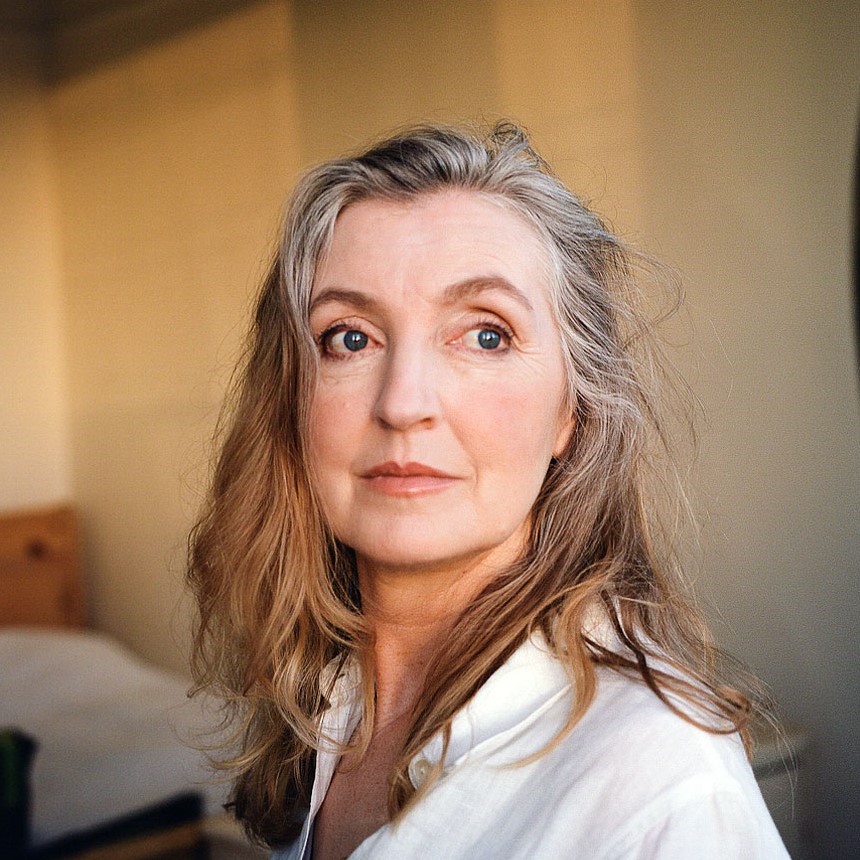
This week we have a special guest that heavily influenced the idea of “Stubborn Optimism” and the optimistic basis of Christiana and Tom Rivett-Carnac’s book, “The Future We Choose.” Our guest this week is writer, historian, and activist, Rebecca Solnit. She has authored more than 20+ books on feminism, western and urban history, popular power, social change and insurrection, and hope and catastrophe. Including titles such as “Men Explain Things to Me” and “Hope in the Dark,” her non-dualistic mindset and unmatched word-smithing expands our minds and creativity when approaching climate change and the consequential moment we live in. She is quoted as saying, “Hope is embracing radical uncertainty.” Yeah. She’s good.
—
Our musical guest this week is Baaba Maal!
Full Transcript
Transcript generated by AI. While we aim for accuracy, errors may still occur. Please refer to the episode’s audio for the definitive version
00:00:12.985 --> 00:00:14.825
Tom Rivett-Carnac: Hello, and welcome to Outrage and Optimism. My name is Tom Rivett-Carnac.
00:00:16.385 --> 00:00:17.865
Christiana Figueres: I'm Christiana Figueres.
00:00:17.865 --> 00:00:19.185
Paul Dickinson: And I'm Paul Dickinson.
00:00:19.185 --> 00:00:25.085
Tom Rivett-Carnac: This week, we speak about the upcoming US election and how the future of the planet is on the ballot. Plus, we speak to author Rebecca Solnit, and we have music from Baaba Maal. Thanks for being here. All right, guys, I'm going to have to jump into something straight away this time, and let me read you just a few lines. Okay, here we go.
00:00:44.998 --> 00:00:46.018
Paul Dickinson: I can't wait, what's it going to be? Oh my God.
00:00:46.378 --> 00:00:47.618
Tom Rivett-Carnac: Okay, you ready?
00:00:47.618 --> 00:00:48.498
Paul Dickinson: Yep.
00:00:48.498 --> 00:00:50.818
Tom Rivett-Carnac: The outcome appears binary. On the one hand is the status quo of Donald Trump, who as president has proclaimed an era of American energy dominance, torn up the rules, hindering drilling, weakened environmental oversight. On the other, the Green Revolution proposed by Mr. Biden, who has also committed to decarbonizing the electricity sector by 2035 and reaching net zero by unleashing $2 trillion in spending plan that would create millions of jobs. Mr. Biden has a plan more ambitious than any US state, and he would, of course, immediately rejoin the Paris Agreement. Has there ever been a more consequential pivotal moment than the one that the United States is facing in the next 90 days?
00:01:33.038 --> 00:01:44.658
Paul Dickinson: It's time to switch off from your kind of movie blockbuster and recognize that real life is far, far more intense and potentially consequential than your asteroid movie. Yeah, yeah, yeah. Earth at risk from itself. Christiana's looking a little bit serious.
00:01:50.958 --> 00:01:53.018
Tom Rivett-Carnac: It's half-nourished, serious, or very tense.
00:01:53.318 --> 00:01:54.558
Christiana Figueres: I agree with you, Tom. I think the result of the US election is either a turning point toward saving humanity's chance or condemning us. And it's not just about climate change. It is about every issue that certainly we hold near and dear to us. It's about everything to do with human rights. It's about everything to do with respect of nature. It has to do with racism. It has to do with women's rights and respect of women. It has to do with soul. It has to do with the role of force, the role of police enforcement. I mean, I can barely think of an issue that is not on the voting table right now. And here is what is daunting. It is not just that this is going to have a completely binary, and you know me, I don't usually like to get into binary conversations. But this is. And it is not just going to be binarily consequential for the United States. It is for the entire world. It is for the entire world. Because the effect of the Trump administration on the rest of the world has taken so much of that world into conflicts, into isolationism, into hate. That the thought that we would have four more years of that is just, frankly, harrowing to me. Harrowing.
00:03:39.738 --> 00:03:48.578
Tom Rivett-Carnac: It's sort of, I suppose, it's a function, I'd never quite thought about it in this way, but it's a function of leaving it so late that these individual moments become so consequential. We should never be at the point where it feels so binary, right? We should have dealt with it so long ago that it wouldn't feel like there could be this devastating consequence with going down one of these routes. But we're here now and it's just a massive rolling bet. It's, I mean, to some very significant degree, it's pretty terrifying.
00:04:06.238 --> 00:04:07.158
Christiana Figueres: It is terrifying.
00:04:07.158 --> 00:04:08.618
Paul Dickinson: Yeah, you're both right. I don't disagree with you at all, not one bit, but there is...
00:04:12.258 --> 00:04:15.058
Tom Rivett-Carnac: That's normally the pre-caster of someone who does disagree with you.
00:04:15.058 --> 00:04:21.998
Paul Dickinson: But, what's that lovely song, Steve Winters says, but is another way of saying, you know, something difficult. But I'm going to say something difficult. We have the privilege to be interviewing later, Rebecca Solnit. I'm incredibly excited. And she said Trump is the consequence of a dysfunctional system, not the cause of it. So, I do agree with all you say about the importance of this election. But I do think we have to hark back to the fact that a dysfunctional system under, frankly, Republican and Democratic administrations over some decades has been pretty tough on, you know, tens, hundreds of millions of US citizens. And, you know, yes, this election has the opportunity to push that back in the right direction. But you take my point, Christiana.
00:05:10.278 --> 00:05:16.638
Christiana Figueres: Yeah, but I wouldn't actually, I usually agree 150% with Rebecca Solnit. But on this one, depending on the context, and I haven't seen the context of that sentence of hers that you're quoting, I just have a very hard time thinking that this is a linear relationship of cause and effect. I think this is much more a spiral rather than a linear consequence. This is leadership does matter. Leadership does matter. And the leadership, the direction in which leadership has taken the US society and the world society is very grave. And, yes, he was democratically elected. And, yes, there is a dysfunction and especially an inequality that is at the basis of US society. And, frankly, every other society, let's not only think that it's the US. But there are ways to deal with that. And there are ways to deal with it. To take a reality that is breaking down and further break it with hate and with conflict and with confrontation, that's not the only way to deal with it. You can take a situation that is breaking down and do everything you can to bring it back together again, to heal it, to bring it back into who we know ourselves to be and to our higher selves in the same spirit that Rebecca Solnit would do it. So it's not just that the society produced this leadership. This is a mutually reinforcing situation. It's much more cyclical than linear.
00:07:06.778 --> 00:07:20.838
Paul Dickinson: I totally hear you, Christiana, and I'm sorry to interrupt, but I just wanted to ask you about the tens of millions of people, many of them good people who voted for Trump and maybe what the message is for them. Look at his performance, I guess, or has he delivered on those promises? Or is he using this language of fear and division? I mean, so many people have said that we can't divide the electorate into the bad people who vote the wrong way. We've got to try and reach through that. Tom is going to resolve this.
00:07:47.898 --> 00:07:48.678
Tom Rivett-Carnac: That's a big ask. I mean, I do think you're right on that last point, Paul, where you can't blame the voters, right? I mean, that's the worst possible outcome in any of these scenarios, whether it's Brexit, whether it's Trump, et cetera. But what I would reflect on is just the timing. The issue is, yes, of course, there are systemic challenges with the whole system of governance and with the whole way in which we manage our societies that have created all of these problems. And Rebecca is such a deep thinker. I'm sure that's what she was pointing at. But of course, as time runs on and the issue gets more and more critical and more and more at breaking point, you know, changes that maybe could have been sustained at an earlier point become terminal or very much more consequential than they would have been. So Trump being re-elected now in 2020, with climate being as bad as it is, with societal breakdown being as bad as it is, with the pandemic raging, with income inequality, with racial injustice, you just get to a point where it just cooks to the point where that could be a, you know, just the final piece that really creates major, major breakdown that becomes more and more difficult to recover from. So, yes, it's true that you can look back and look systemically, but you also get to the point in these long arcs of these binary choices that you've just got to win. And let's remember, you know, we're all terrified, but the tea leaves aren't looking too bad at the moment. And I don't want to jinx it by saying that.
00:09:15.158 --> 00:09:18.178
Paul Dickinson: They weren't looking too bad when the Access Hollywood tape came out.
00:09:18.358 --> 00:09:20.638
Tom Rivett-Carnac: No, no, I know, I know, I know. And of course we need to look at polls with skepticism, and we've all been burned here before. But it is looking like people have seen through the hate mongering, you know, devastating showman that is Trump, and they're understanding that something different is needed. Now, there is no need for complacency. Don't look at the polls. And this is three non-U.S. citizens speaking, but it speaks to the power of the US even today, that this occupies our minds, and Christiana is so concerned about it.
00:09:49.578 --> 00:09:50.758
Paul Dickinson: With very good reason. And, you know, I do feel the passion and sense the conviction of the warning that Christiana issues to us all, and our hearts are with our friends in the United States at this moment.
00:10:03.418 --> 00:10:06.538
Tom Rivett-Carnac: We're all, we're counting on you, United States friends. Anything we can do, I know we can't do much, but we're all behind you.
00:10:09.738 --> 00:10:09.918
Paul Dickinson: 100%. Well, Christiana, didn't you tell me a little bit earlier today, before we started recording, that there was a certain amount of paradoxical behavior going on in the oil industry right now to do with the United States? Is that right?
00:10:23.198 --> 00:10:41.818
Christiana Figueres: Yeah, I mean, it really is quite, hmm, quite sobering to read that the Trump administration has just finalized its plan to open up part of the Arctic National Wildlife Refuge in Alaska to oil and gas development. It is, you, I really had to look at the date of that piece of news, right? Because didn't we just read that, I think on August 4th, which is barely 10 days ago, BP decided that they're going to leave 40% of their resources in the ground, and that they're going to devote a sizable chunk of their risk capital to investing into renewable energies and other energy solutions. And so, the discrepancy in these realities, what is the Trump administration reading, thinking, assuming, that is so contradictory to what one of the major oil and gas companies is reading, thinking, assuming? I would say probably those in the industry have a better read into their future than someone sitting in the White House. And it's just, honestly, it's just pathetic. It's pathetic, it's irresponsible, it's not pardonable. Of course, the reaction is see you in court, right? There's just going to be a heck of a lot of litigation against this. But do we really have to invest litigation, effort, money, time into something that should be completely off of our thinking table? It's just, I'm just totally taken aback.
00:12:29.018 --> 00:12:31.478
Tom Rivett-Carnac: We're on the fence, I think is the conclusion there. I also, I mean, I think that what it shows, one thing it shows is that the Trump administration is not driven by economics and jobs in the way that it might claim to be. It's driven by ideology, right? It's driven by a story and a narrative. And of course, that's what...
00:12:45.638 --> 00:12:53.318
Christiana Figueres: Of the past century, Tom, I don't mind if they read children's books, but let's have at least the 21st century, we have, right, children's tales.
00:12:53.318 --> 00:12:54.998
Tom Rivett-Carnac: This is true across the board, right? I mean, Trump with a hat on, Trump digs coal, all this stuff. You know, actually, it's cruel. I've been to West Virginia and I've seen the coal miners there that say, it's coming back, Trump's bringing it back. You know, our families are going to have money again. And you look at the hope in their eyes and you realize that they've been duped by a political charlatan who has tried to use them for a political outcome and actually not delivered more jobs in that way. And the same is true of these other things. He's just using these people that he claims to be representing in order to get political power.
00:13:26.118 --> 00:13:29.698
Christiana Figueres: He is duping these coal workers. Nothing to do with climate. Nothing to do with climate. He's duping them because coal is no longer competitive, cost-competitive. And because for the few mines that are left, they've actually been automated. So there is no space for human labor there anymore. It's just too expensive, too inefficient. And so it's just completely irresponsible. And the worst part is he knows it.
00:13:56.778 --> 00:14:05.918
Tom Rivett-Carnac: One thing I learned by going to West Virginia and going down coal mines and meeting these people is that in some part of their minds, they kind of know that. But they also want a story that can help them feel powerful again. And it's heartbreaking, right? They kind of, if you have a few beers and like, we kind of know, but we want someone who says the language where they feel on our side. And that's really hard, right? Because actually they're facing really difficult economic situation, and we should be compassionate and empathetic towards them. And that's what they feel they're getting from him. So that is also a self-reflection moment for anyone who feels that they are concerned about climate change and see coal mining as the enemy.
00:14:40.358 --> 00:14:50.618
Paul Dickinson: The leader of the Republicans in the Senate that they control, Mitch McConnell, that's his famous bumper sticker, Coal Guns Freedom. It may not make a whole bunch of sense, but it does sort of...
00:14:53.478 --> 00:14:57.278
Tom Rivett-Carnac: It makes a lot of sense if you're there, if you're from Kentucky. That makes sense.
00:14:59.338 --> 00:15:04.798
Paul Dickinson: Well we have, I think, got a little bit into some of the complexities of that voting. But Christiana, thank you so much for your passion at this moment. It's deeply felt.
00:15:09.338 --> 00:15:10.458
Tom Rivett-Carnac: Now how are you guys? Where are you? I assume you haven't moved. I've moved. I'm down in Devon, staying with my mum, having a lovely holiday with my family, but delighted to still be with you. How are you guys?
00:15:19.518 --> 00:15:20.998
Paul Dickinson: Well, I'm good. I'm here by the seacoast of England, the big flat blue thing, as I like to call it. And Christiana, where are you?
00:15:28.978 --> 00:15:44.558
Christiana Figueres: I'm also in front of the big flat blue thing, which Paul, you should be ashamed of yourself to think or describe an absolutely gorgeous element of this planet, the oceans, that way. I mean, you really have to meditate on that, Paul, and come up with a better definition.
00:15:49.258 --> 00:15:56.558
Paul Dickinson: I want you to try and imagine that you are large and blue and flat, and I want you to meditate on the perfection of that state. Now, I'm going to...
00:15:57.778 --> 00:15:58.118
Tom Rivett-Carnac: Hang on. I have to say one thing about big flat blue things, which is I was on a conference call with Christiana the other day, and she was sitting on her deck outside her wonderful house, and we were in the middle of a conversation, and she goes, Oh my god, whales! And grabbed her computer and just ran across the garden and then tried to show me through the medium of Zoom the whales breaching in the distance, which was one of the most disappointing experiences of my life, because she kept squealing with excitement as the whales would breach. But of course, on Zoom, all you could see was a sort of slightly pixelated blue mess.
00:16:26.358 --> 00:16:28.098
Paul Dickinson: Yeah, but wait a minute. The Zoom world is quite new. I mean, who's to say that in Zoom 2021 or Zoom 2022, there isn't going to be some fantastic telephoto Zoom lens, and Christy Allen is going to be webcasting whales to the world?
00:16:42.098 --> 00:16:46.658
Tom Rivett-Carnac: I mean, I would say there are stubborn optimists, and then there's Paul's view of the future of video conferencing. And I think that's somewhere in between reality and, you know, everything's the biggest of all.
00:16:50.858 --> 00:16:54.138
Paul Dickinson: There's a whole podcast subsection we're going to do about video conferencing.
00:16:54.138 --> 00:16:55.378
Christiana Figueres: I would love that. Paul, keep meditating in that direction, will you?
00:16:58.038 --> 00:16:58.918
Paul Dickinson: I'm meditating deeply. Now, listen, I have to tell you a tiny story. I was in the bath and I kind of worked out the solution to climate change. So I immediately got on the WhatsApp and I kind of thought, this is, I shouldn't send this to the whole WhatsApp, the Outrage and Optimism group, because I don't know what people would think.
00:17:13.318 --> 00:17:15.538
Tom Rivett-Carnac: No, you should have tweeted it, Paul.
00:17:15.538 --> 00:17:16.298
Paul Dickinson: Tweet? Tweet? But I sent it to Tom because, well, I know, I sent Tom a question about something else, but I said I found the solution to climate change. And Tom didn't respond, which I thought, what was like missing a trick when you've been working on something for a long time. But I'm going to put it to you now. Here is the solution to climate change. We're all wandering around and we're saying like it's terribly difficult and blah, blah, blah. But we all kind of say, but we've got the technology and blah, blah, blah. And I'm going to suggest that a problem might be kind of luxury and an extreme wealth. Extreme wealth and luxury might be the problem. And what I mean by that is if we sort of devoted some of the money we spend on extreme wealth and luxury to solving climate change, we'd get over it. Now, I was bought up by atheists who don't believe in God. And by the way, if you do believe in God, you should believe there of any gender. You should not presume the gender of God. But I'm going to read you something from the King James Bible. Because as an atheist growing up with atheist parents, the little bits of the Bible I picked up were pretty good. It says, it is easier for a camel to go through the eye of a needle than for a rich man to go, or a rich person, I should say, than for a rich person to enter the kingdom of God. And I thought that was, I thought you just couldn't get a camel through a needle because they're very small needles. But then later I discovered that maybe it was a reference to a narrow passageway. But the point of my story is, yeah, like duh. I mean, if you've got like unbelievably crazy amounts of money and you're not spending it to stop climate change now, then you're making a huge mistake. And that's the solution to climate change. And I just had to share it with you. Do you agree or disagree?
00:18:52.618 --> 00:19:02.918
Tom Rivett-Carnac: I have had a profound insight, which is that you should never start a story with saying, I was in the bath, because I haven't really made it past that point where I'm just imagining you in the bath, having this thought as we go further forward. So, Christiana, over to you.
00:19:04.498 --> 00:19:08.518
Christiana Figueres: I lost track of where Paul was going. I also stayed in the bath. And then after he cascaded on and on, I just lost, like, where is he? How does he go from the bath to the Bible?
00:19:16.538 --> 00:19:23.138
Tom Rivett-Carnac: I mean, it was a spiral that went from the bath to atheist parents through the King James Bible. And then we were at Camel's, something to do with needles.
00:19:26.398 --> 00:19:32.378
Clay (podcast producer, live in studio): Well, I think, Paul, I think you should bring that up to Catherine Hayhoe when we have her on the podcast and see what she thinks. You might get a better response.
00:19:33.898 --> 00:19:35.218
Paul Dickinson: Okay, that's a good idea. Thank you, Clay. I mean, I cannot believe the degree to which I'm not being taken seriously by people I take seriously. Have you any idea what that does to somebody?
00:19:42.898 --> 00:19:44.178
Christiana Figueres: What does it do to you, Paul?
00:19:44.178 --> 00:19:46.718
Clay (podcast producer, live in studio): I think we're about to find out.
00:19:46.718 --> 00:19:48.478
Paul Dickinson: It makes me want to truncate my story. Okay, will you two agree that one of the main problems with climate change is that a whole bunch of people who got a whole bunch of money that could solve the problem are just not spending it? It's a half nod on Zoom for those listening, a half nod from Christiana. It was so angular, but it was a sort of nod.
00:20:06.298 --> 00:20:08.438
Christiana Figueres: Paul, it's not just people, right? Institutional investors have a huge role to play here. So I think in order to get a full nod from me, I would have to reword, restate your statement saying that finance as a whole, whether it comes from private individuals or from institutional investors, is not flowing in the right direction quickly enough. It's beginning to move, but not quickly enough. And certainly not at scale.
00:20:38.518 --> 00:20:42.538
Tom Rivett-Carnac: I would also though stand behind my decision not to reply to your WhatsApp, actually thinking about it now. Because if I was in the bath and had the thought the solution to climate change is that some people have got some money and they're not spending it, I'm not sure I would email my WhatsApp, my co-host saying I figured out the solution.
00:20:52.238 --> 00:20:52.958
Paul Dickinson: Well, it is that.
00:20:52.958 --> 00:20:54.338
Tom Rivett-Carnac: It's just that simple.
00:20:54.338 --> 00:20:58.358
Paul Dickinson: I mean, yes, the people and the corporate, if they just spent the money, then we're all safe. And we can go to the theater or whatever is the most appropriate thing to do. But Christiana, you're right about institutional investors. And I've been a loyal servant of institutional investors and have been trying to do their bidding as best I can for 20 years. So I agree with you. But I do also think that there is something about concentrations of wealth. And I'm going to ask Rebecca Solnit about this, because let's see what she's got to say. That's my plan.
00:21:22.838 --> 00:21:28.778
Tom Rivett-Carnac: So Rebecca Solnit, of course, is a remarkable human being who has been an inspiration to all of us for so many years. And not least because I think she's really nailed many of the concepts that we've grappled with so much around hope and around optimism and around how you deal with these things, as I think the listeners will hear as we go to this conversation. She's written 20 books. She's always been involved in activism, human rights and feminist issues and climate issues. She's been very active as a vocal commentator. She's got a column in The Guardian. And she really has played a remarkable role in shaping the cultural narrative in response to many of these things. And I don't know if listeners remember, but on our very first episode, when we interviewed David Attenborough, we quoted her and we talked about the role of Hope as an axe to break a door down in an emergency and how that equated to what we call stubborn optimism. So we're going to unpack all of those different issues in the conversation with her.
00:22:20.158 --> 00:22:20.658
Christiana Figueres: Let's listen. Well, Rebecca, what a total delight to have you on Outrage and Optimism. To be totally honest, we have been really, really wanting to have you on because Tom and I wrote a book a while ago, and you are one of the most influential thinkers in that book. We absolutely loved your Hope in the Dark and the way that you define and contextualize hope and how you give it the power that it has of changing our current reality and certainly our future world. But today for our listeners, I just wanted to read a little bit more of the quote that we use in our book of you, just to situate our listeners into your thinking. So I quote Rebecca Solnit, Hope is not like a lottery ticket. You can sit on the sofa and clutch. Hope is an axe you break down doors with in an emergency. Hope should shove you out the door because it will take everything you have to steer the future away from endless war, from the annihilation of the earth's treasures and the grinding down of the poor and marginal. Hope just means another world might be possible. Not promised. Hope calls for action. Action is impossible without hope. Rebecca, just unpack that for us a little bit. There's just, it's, in and of itself, it is a treasure trove of wisdom. And we would love to hear you speak about how you see hope as a lever for change, personal, national, global. Where is the power in hope?
00:24:39.010 --> 00:24:43.950
Rebecca Solnit (guest): I just read somebody saying hope is a discipline which I loved and want to explore further. But I feel like what I've learned from the Americans around me, I think Latin Americans can be more radically hopeful sometimes, but the Americans around me have often suggested a kind of binary thinking. Either we're confident everything will turn out fine, in which case we don't need to do anything, or everything is going to hell and there's nothing we can do about it. And they're both justifications for passivity. And so, there's a tendency to think hope means that you don't have to do anything. And for me, hope is an engagement with radical uncertainty. We don't know what's going to happen. We may be able to participate in shaping what can happen. There's a line in Terminator 2 I keep going back to, where one of the heroic characters says, the future is not yet written. There's a real tendency to believe that the future is written. And I run into that often around climate change, in particular people who are not very informed, who say, oh, it's all over. Which, when I'm hearing that from middle class and affluent white people in the first world, sounds like I don't actually have to do anything. And I have long described this project of hope of mine as snatching the teddy bear of despair away from the loving arms of the left. A lot of people are attached to cynicism and despair, both because it's a bit more stylish and affectation and because it requires very little of you if you're already comfortable. What's been profound to me is encountering people who are desperate and marginal. Indigenous people, the Zapatistas, a huge influence on me, the Coalition of Emocle workers who are immigrant farm workers in Florida who've achieved miraculous things and other people for whom surrender means surrendering to their children's lives being destroyed, to death, to dire poverty forever, to torture. Seeing that they are more hopeful is such a lesson to those of us who are more comfortable, more privileged, that despair sometimes is a luxury good and an excuse. So hope is a kind of mechanism of engagement often. And that engagement itself feeds hope. And that's the tricky thing is that it's a feedback loop. You know, action without hope is difficult. Hope without action will starve itself. And so how do you do those two things? At the same time that you can't say, oh, now I'm going to be active and I expect results. The other thing Hope in the Dark and a lot of my work has been written against is something that I think may also be very American, although you and other countries may have other positions, which is what I call instant results guaranteed or your money back. A kind of simple arithmetic where people want to do something today that has effects, notably victory tomorrow and the victory exactly the way you expected it to look. Otherwise, if you haven't won in this simple, obvious, immediate way, they assume that you've lost. And so much of Hope which looks forward for me comes from looking backward and seeing all these extraordinary histories of transformation that were not predictable, arithmetical, immediate, direct, were often very complex and tangential where people doing something in one country inspired people in another country or on another front. And so often you have something that's very effective, but not always in the way you expect it and not always on the timeline you can measure.
00:28:29.470 --> 00:28:31.010
Christiana Figueres: So true. And Rebecca, let me just take you to another extreme, because what you call hope is what we have termed optimism, but we totally agree on your premise and on the power of hope or optimism. However, I have just recently come across a scientific American article entitled, and everybody please hang on to your seats. Does Optimism on Climate Change Make You Pro Trump? Now, there's an interesting title, very provocative. And what I discovered when I read this is that in that case, what they term optimism is what I would call ignorance of the facts, ignorance of the science, because they're saying, you know, there's too much alarmism on climate change. Alarmism and scientific facts are not going to make us change our mind and certainly are not going to inspire any action. And if you actually understand that climate is not so bad, i.e. for them being optimistic on climate change, i.e. it's not going to be so bad, then you're pro Trump because you support the fact that he's stepping away from any responsible action. Well, that kind of thinking just turns everything around. And I had to really read that article a couple of times until I understood what the logic was behind that article. But I'm wondering, how do you react to that kind of a logic?
Load More00:30:14.270 --> 00:30:20.210
Rebecca Solnit (guest): And first of all, it's so bizarre in pretending that climate change is maybe a bad thing that will maybe happen. It's like saying some Americans might die in the pandemic, but don't get alarmed when we're already at 165,000 to 200,000 deaths. Climate change has already happened. It's already bad. It's already massively destroyed and disrupted. So I totally agree that this is not optimism about what might happen. It's delusion about what's both already happened and locked into place to happen. We do get to choose if we act in this decade, the better rather than the worst scenario, I like to think. But yeah, and so just to address the terminology, I talk about optimism and pessimism as two sides of the same coin, the sense that we know what's going to happen and we can't make a difference in it since we already know what's going to happen. Both of them inculcate a kind of passivity. I know you use optimism in the same way I use hope, which is actually a beautiful radical uncertainty. We don't know what's going to happen. Things may be better or worse than we know, but we know.
00:31:24.650 --> 00:31:25.350
Christiana Figueres: No guarantee.
00:31:25.350 --> 00:31:26.850
Rebecca Solnit (guest): First of all, go ahead.
00:31:26.850 --> 00:31:37.610
Christiana Figueres: No, I was just going to say we have no guarantee of the outcome, but we do have control about our attitude and our approach to the current challenge.
00:31:37.610 --> 00:31:38.650
Rebecca Solnit (guest): Absolutely. Hope for me is recognizing that uncertainty, the future is not written. The future is dark in the sense that the night is dark. You can't see very far in it. The past history is the daytime in which we can learn so much to go plunge into that dark and try and navigate wisely, but we don't know what's going to happen. We know within some parameters, the ocean is not magically going to deacidify because of prayer or something like that, but there are still so many ways that things can't, so many choices yet to make about what will happen. And also so many ways that feedback loops and natural systems can turn out to be better or worse for climate than we anticipated.
00:32:27.090 --> 00:32:28.690
Christiana Figueres: Exactly.
00:32:28.690 --> 00:32:41.690
Tom Rivett-Carnac: Rebecca, I have to say I love that definition of hope or stubborn optimism as this recognizing or embracing this radical uncertainty and being prepared to face that and do what's necessary at this moment. You wrote a piece for The Guardian several months ago, prior to the COVID pandemic, around the time of the last UN negotiations, that really struck me. And a lot of things you write strike me. But in this particular one, you talked about humanity as a child that has, for much of our history, had this limited capacity to harm itself. And that we've now entered this kind of wild adolescence where that's changed, but we're sort of not ready for that. And that until now, environmentalism has kind of been about shouting, don't break that or clean up your room. And that we're now on the cusp of moving beyond this adolescence into what comes next, right? Which is a responsible, grown up way of living on and with this earth. And I just wonder, you're such a deep student of how stories animate our lives with meaning. And I wonder, as we step through this threshold, what sorts of stories or what would the role of those stories be, as we try to? Because in part what you're talking about is a change of our story, in terms of our role on this planet. How can you unpack that a bit for us and talk about what you, how you think that might unfold if we're able to face that radical uncertainty?
00:34:02.990 --> 00:34:05.070
Rebecca Solnit (guest): Oh my, that's a lot of questions. And the childhood of humanity, I think, was because like children, we didn't have a lot of power, therefore we couldn't do a lot of harm. A peasant 500 years ago might be a little bit casual, but had very few resources with which to damage anything anyway. And there was lead and mercury and overgrazing and deforestation, but still carbon in the atmosphere was around 300. Individuals and even collectives weren't going to make such a terrible impact. And adolescence has suddenly become so much more powerful. You see babies hit their mother and the mothers absorb the blows. An adolescent can no longer hit her mother because she would hurt her mother. We are now that adolescent who is not yet disciplined and we as a whole. But I see in young people particularly, and it is this funny thing where Greta Thunberg is like a wise old woman and the oil barons are like drunken teenagers even though they're in their 60s and 70s. But when they're in difference to the future, their lack of responsibility. I don't want to oversell adulthood because I think children and adolescents can be so creative and imaginative. But I think humanity has to transition. But I also think that has transitioned in many ways. So many studies from economics, the first woman to get back Nobel for economics, to psychology, neurobiology, etc. that are telling us everything is systemic rather than individuals. Each of us is a collective of life forms. And I think that understanding is something that the young actually have more inherently and the old, some of us have learned often from younger people. And so we're leaving behind a kind of world of isolated fragments and entering a world that's systemic. And that's the great demand climate change makes of us that we understand that everything is connected to everything else. And of course, the fascinatingly horrific thing about conservatives, particularly maybe in the US is what I call the ideology of isolation. They regard the idea that everything is connected, that I need to wear a mask to protect you from getting sick because disease is spread with indignation. And they have rejected climate change as science because it demands that we respond on the basis that everything is connected. And that's an affront to libertarian free market, every man for himself, rugged individualism. So we're really watching, I think, the supernova dying of an old system with a lot of pandemonium and destruction, and the birth of a new system that is an understanding of intersectionality, interconnectedness, and a kind of systems thinking that has always been what ecology is, but is also, I think, a moral and social universe that is more beautiful, more loving, more generous. And this is another piece of the story I think we need to tell. What climate change demands of us is a better world, a less consumption production driven world, a more egalitarian world, a more engaged world, a world that imagines the deep future and the bottom of the ocean and the top of the poles and the depths of the forests, a world that is better in how we use energy. And so I think the pandemic has been terrible, but there is a wonderful side of climate change. What if we break down this capitalist monster that commodifies everyone and everything and sells us all down the river and alienates us because alienated, isolated, insecure people make such good consumers, connected, grounded, rooted, soulful people make terrible consumers, but great citizens. So I think there's so many ways the story is changing. And one more thing I'll say, and my very long answer to your very good question is, one of my favorite banners in the 2014 Climate March in New York City, the one with 400,000 people trying to amp us up for Paris, was we have the solutions. We have the stories, the models, the technologies, the visions. We just need to expand them and make them the dominant culture, the way we do things. And that factor also, I think, is very hopeful. And that we, you know, we're not bereft of what we need. We just need to transition to it.
00:38:57.890 --> 00:39:23.070
Christiana Figueres: You speak about that, Rebecca, also in a related context, where in Paradise Built in Hell, you speak about how we as human beings have this incredible resurgence of purpose and solidarity every time that we're hit by some disaster, a hurricane, an earthquake, a terrorist attack, COVID. And with COVID-19, we saw, especially in the first two months, we saw these amazing demonstrations of solidarity with older people who couldn't go into the market or people singing from the balconies or younger people bringing food to the doorstep of the older people who couldn't go out. I mean, so many different fantastic stories. But as you point out, what has happened in the past is that we rise to these better selves of us during the moment of crisis, during the moment in which we are at that very raw level of experiencing danger or vulnerability, and then we tend to fall back into our old ways. And you point out that the recovery of this or the stickiness, to use my word, not yours, the stickiness of us living out of our better selves, of our higher selves, that is something that is our call right now. It is, as you put it, the great contemporary task of being human. And I would love to know, are you seeing that kind of a stickiness, of what humanity is really about as we begin to emerge out of COVID, keeping in mind that climate is so much worse than COVID? Are we actually strengthening the muscle of solidarity and caring and love through the COVID crisis?
00:41:12.490 --> 00:41:15.150
Rebecca Solnit (guest): Speaking again as an American, it's so divided. We have these people going back into the ideology of isolation with even more aggression. And we have people reaching out with empathy and compassion from the medical workers who keep showing up to do their job. That has become so much more dangerous to all improvisational projects. I joined something called the Anti-Sewing Squad, which is mostly women, mostly women of color, mostly Asian American women who have sewn more than 70,000 masks by hand to distribute to marginal, vulnerable, and neglected populations. And so I do see that happening. But I also think something almost even more significant in the pandemic is that what we've been told all along with climate is we can't make gigantic changes. We don't have the money to make the transition. We can't stop living the way we live. That's kind of the status quo must go on. We can't change the status quo. And then as we saw, the status quo basically stopped abruptly in March. And in the US, they pulled $3 trillion out of their hat to throw at the wrong things mostly. But still, it turns out you can pull out $3 trillion out of nowhere if you're a major nation. You know, it turns out you can almost stop air travel. You can completely change the way we do things. And I feel like that kind of means they can never tell us, oh, we can't make the changes climate requires of us again because we've seen that. But then back to the Paradise Built in Hell question, what happens in the moment of a disaster? It feels to me like it shakes people awake. And of course, an earthquake is the great model which sometimes literally shakes people awake. And a lot of people have these incredible experiences. They find a sense of agency, connection, immediacy, meaningful work, solidarity in the moment as they take care of themselves and the people around them, often find a kind of meaning and purpose and connection that was missing from everyday life, which in consumer culture and kind of capitalist isolation is another kind of disaster.
00:43:20.710 --> 00:43:24.550
Paul Dickinson: So Rebecca, could I ask you on that specific point? I mean, you've written so beautifully about how those kinds of events can bring forth a sense of community love, public love, we understand our shared humanity, we have solidarity with each other, mutual aid and altruism. I was going to ask you, we have these incredible wealth disparities. We were talking earlier about billionaires with just incredible money. And I just wondered to what degree do you think those wealth disparities are maybe even distorting some of our sense of right and wrong?
00:43:55.910 --> 00:43:57.050
Rebecca Solnit (guest): I think they do. And I think one of the things we've seen with a number of recent American disasters is the way you can buy your way out of trouble, which has always been true of wealthy people. You get the bailout money because you're good at bureaucracy. And when people care about you, you get rescued. Hurricane Katrina, which I was very deeply involved in studying, poor people, mostly black people got left behind. Wealthy people had the capacity to evacuate people with lots of documentation and literacy and internet connections and phones with unlimited minutes. We're very good at getting aid to rebuild and restore people without those things weren't. And of course, there was a whole racist dimension because this was a deep south to violence from the police and vigilantes as well. But so yeah, I think that there is a way in a just society, a sense that we're all in this together and that when you have people who are, you know, rather than trying to stop climate change or nuclear war, just feel like I'll just have the most luxurious bunker. I'll just get New Zealand citizenship. And here, Silicon Valley billionaire libertarians wanted to build artificial islands to get out of paying taxes. And one of the gross things about the billionaires who haunt the Bay Area is that they're mostly tax cheats who make ostentatious publicity-minded donations but refuse to contribute local, state and federal taxes that actually support the system. So yeah, I think that economic inequality, you know, the more grotesque the disparity, the more desperate at the bottom, the more kind of Louis Couture's at the top, the more it destroys solidarity, that there is in the kind of European social welfare, Scandinavian model, a certain kind of solidarity, partly because nobody's so low and nobody's so high, which is to not dismiss the problems they have. So yeah, I am deeply against billionaires. I think that they are often themselves a kind of social and ecological catastrophe that should be dismantled and easily could be. And there were very few of them 25 or 30 years ago. There are a great many of them now. Yeah.
00:46:25.890 --> 00:46:27.970
Tom Rivett-Carnac: So Rebecca, thank you so much. It's been such a privilege for us to be able to spend this time with you and have this conversation. We really appreciate, as Christiana said at the beginning, it's been really instrumental actually in much of our journey and our thinking around the book and the podcast and the Paris Agreement. So standing here talking to you is really wonderful. We like to close these conversations by asking our guests whether they feel more outraged or optimistic. And I hope you will define optimistic in the way that we have defined it around this, which I'm going to use, this embracing of a radical uncertainty, such as you've used so many times over your career and talking about hope. So with that caveat, how do you see the future?
00:47:08.490 --> 00:47:12.290
Rebecca Solnit (guest): The answer to most either or questions for me is so often both. My friend Jamie Hinn, who is the communications guy at 350.org, once replied when I asked him around the time of Paris about how he thought things were going, he said, everything's coming together while everything's falling apart. Yeah, the permanent demand destruction for fossil fuel, the terrible quarterly returns for the major oil companies, the way that renewables keep getting more cost effective and more implemented and et cetera. And there are a lot of beautiful and exciting things happening. But it is with climate, unlike any other issue, such a race against the clock around how do we change everything? How do we get there? And I do feel nervous about the COVID crisis. In a sense, it's created a lot of openings for a world that can be very different than it ever has been. And I don't believe the world of March 1st, 2020 will be a world we'll ever live in again. But it's also very hard to get people back to climate and their urgency of this and the scale of it. Although I think people in a way have been loosened up. There was an attachment to the status quo. And there is no status quo now. We live in chaos and disruption and improvisation and desperation. And those are good circumstances, terrible though they are, for ending up someplace other than the straight road ahead. So I am not an optimist, not a pessimist. I'm hopeful and I'm in it to see what we can do.
00:48:53.010 --> 00:48:55.690
Tom Rivett-Carnac: Well, if that's not the best answer we've had is close to it. And there's a reason why the podcast is called Outrage and Optimism. So thank you very much for that. And thank you so much for joining us today. It's a privilege to talk to you. And we hope to stay in touch with you as we go forward.
00:49:07.170 --> 00:49:08.510
Rebecca Solnit (guest): Thank you for all your work.
00:49:08.510 --> 00:49:09.530
Christiana Figueres: Thank you, Rebecca. Thank you so much for sharing with us today.
00:49:12.350 --> 00:49:15.010
Rebecca Solnit (guest): I'm so glad we didn't end on billionaires.
00:49:17.590 --> 00:49:18.610
Christiana Figueres: Thank you, Rebecca.
00:49:18.610 --> 00:49:19.690
Rebecca Solnit (guest): My pleasure. Thank you all.
00:49:27.588 --> 00:49:38.108
Tom Rivett-Carnac: So how wonderful to finally get the chance to sit down and talk with Rebecca, whose work and whose thinking has inspired us for such a long time, right back to the beginning of the podcast and the book as well, of course. What did you guys leave that discussion with?
00:49:40.588 --> 00:49:43.628
Paul Dickinson: She's a fantastic thinker. I've heard her speak so eloquently on many different subjects, and she's clearly got an enormous amount of kind of care and empathy, but I also was delighted actually meeting her to see her optimism, which is very idiosyncratic to her, but it comes across. I do believe she has a clear sense of right and wrong, and I think you could just detect it in her speech. And I love that sensitivity and that ambition and that will to good. I found it quite inspiring.
00:50:14.568 --> 00:50:23.848
Christiana Figueres: What I took from this conversation with her is her very moving faith in mankind. The fact that she looks back, and she concludes that we are progressing, that we are moving toward a better human race, despite the fact that we have all of so much proof of terrible things that we're doing to each other and terrible decisions that we're taking. And despite all of that, she sees it from a higher point of view, and can recognize that at a meta level, perhaps, at a meta level, we are a race that is moving forward. I was very impressed because, well, it speaks to my own conviction. But when I hear someone who is so thoughtful, and who has explored these topics from so many different perspectives, and who concludes, as she concludes, it just warms my soul.
00:51:33.568 --> 00:51:33.948
Tom Rivett-Carnac: Yeah. No, totally. I mean, that compassion and that empathy is very evident in her. And I found myself, as we were talking to her, wondering if it was a function of her very non-dualistic view of the world. You know, she sort of has an instinctive rejection of kind of easy conclusions that take you down one path or the other, and she always has a broad mind that takes in both. And it seems that that's fundamentally connected to a really deep empathy, was one of my impressions of her, like standing there talking to her. I also think, what an amazing wordsmith. I mean, language is something that we sort of tend to forget. I mean, just, and it just spills out of her, right? I mean, a personal favourite was that part of her life has been about taking the teddy bear of despair from the loving arms of the left. I mean, that's just a sort of shining nugget, isn't it? In terms of how she encapsulates it. And Christiana, for all the years we've spent sort of talking about stubborn optimism, I don't know that we've ever come up with a better pithy description of it than the courage to embrace radical uncertainty and still keep moving forward.
00:52:45.088 --> 00:52:45.748
Christiana Figueres: Yeah, yeah, yeah.
00:52:45.748 --> 00:52:46.948
Tom Rivett-Carnac: I mean, it's just beautiful. Beautiful.
00:52:47.628 --> 00:52:49.628
Christiana Figueres: Can you say the teddy bear thing again? And the way it all cascades out of her is so beautiful.
00:52:54.168 --> 00:52:54.968
Tom Rivett-Carnac: Totally.
00:52:54.968 --> 00:53:14.608
Paul Dickinson: No, no, no, that teddy bear thing is like really, she absolutely nails it because it drives me completely crazy when people try, like, you know, I've been in conversations like this a million times, and I bet you all have, where somebody tries to show that they know more about a subject by being sort of darker and more despairing. You know what I mean?
00:53:15.228 --> 00:53:18.568
Tom Rivett-Carnac: You know, it's worse than you think.
00:53:18.568 --> 00:53:23.088
Paul Dickinson: Survivors will envy the dead as we look across the cracked and pitted surface of the earth. It's over. We're finished. I'm going to go to the Black Mountain. I mean, yes, but, you know.
00:53:27.468 --> 00:53:37.128
Tom Rivett-Carnac: And it becomes an identity, no, so Christiana, to your point, what she said is much of her life has been about taking the teddy bear of despair from the loving arms of the left. And I love that it's also, I mean, to speak to the empathetic non-dualistic part, the loving arms, right? That's not judgmental.
00:53:43.648 --> 00:53:45.568
Christiana Figueres: She does it with such love. Yeah, she doesn't, you know, put them down.
00:53:48.148 --> 00:53:50.648
Paul Dickinson: No, no, yeah, no, I was trying to be a smart ass. And you're right, we have to be compassionate in our observations.
00:53:55.468 --> 00:53:58.648
Tom Rivett-Carnac: So how wonderful to get a chance to have a conversation with her. Now, I think-
00:54:00.188 --> 00:54:04.168
Paul Dickinson: More culture, Tom, more literature to music.
00:54:04.168 --> 00:54:09.548
Tom Rivett-Carnac: Now, we have so enjoyed bringing you these brilliant artists every week, but we have a real treat for you this week. His name is Baaba Maal, and I'm sure many of you know him already. And we have a song called Lekke. Now, Baaba Maal is from the Sahel. And he said that he wrote this song because he was born there. And growing up, it used to be more green than it is now. He wants to spend a significant amount of his time and his energies getting people to re-green that part of the planet. And he has a deep belief that it's possible to fundamentally transform that part of the world. He's also deeply thoughtful about the role of the artist in this moment of a climate emergency. And although of course it depends on an individual's belief, the role of the artist is to communicate difficult issues and help people understand them in a transformative way. That's what he's always done through his music. I'm sure you'll feel that and hear that through this piece as well. We really hope you enjoy it. Thank you so much for joining us this week. We'll see you next week. Enjoy the music. Thanks for being here. Bye. Bye.
00:55:04.608 --> 00:55:04.708
Rebecca Solnit (guest): Bye.
00:56:31.435 --> 00:56:32.595
Tom Rivett-Carnac: Bye-bye.
00:57:59.738 --> 00:58:04.438
Clay (podcast producer, live in studio): So there you go, another episode of Outrage and Optimism. The track you just heard is Leki by Baaba Maal. This week, when I got the music track, I was playing with my son. So I hit play on my phone, and we had the most peaceful two minutes and 50 seconds just listening to the song. It was amazing. So thank you, Baaba Maal. There's actually this great live performance he did with Mumford and Sons in South Africa that I've watched a few times this week. I put a link to his music and that performance in the show notes. Go check it out. Outrage and Optimism is a Global Optimism production and is executive produced by Marina Manzileherman and produced by Clay Carnel. We're spread out across the world and there's at least one of us awake at all times. Sarah Law, Katie Bradford, Lara Richardson, Sophie McDonald, Fran Newman, Sarah Thomas, and Sharon Johnson. Our hosts are Tom Rivett-Carnac, Christiana Figueres, and Paul Dickinson. Thank you to our guest this week, Rebecca Solnit. I have a fun story. We met on Zoom this week to go over some microphone tech set up stuff, and I asked her for a microphone check like, microphone check, one, two, one, two, check, check, check, one, two. And instead, she just started reciting me the most beautiful poem for memory. And when she was tired of that poem, she picked up a poetry book and began reading from that. It was top three microphone checks of my life, and she has set a new standard. So future guests on this podcast, you know what I will be expecting going forward. The bar has been set. Only the best. But what's even more amazing than that is that she has written like 20 plus books and even more essays. You can finish out your summer reading list with some Stubborn Optimism by picking up one of her books at rebeccasolnit.net. I've put a link directly to her books in the show notes. So I've said it before, but the podcasting fun doesn't end here. You can join us at Global Optimism on Instagram, Twitter, and Facebook and LinkedIn. If you love the podcast, please hit the subscribe button and leave us a rating. There was a review this month that had a personal message for Christiana, so when I saw it, I screenshot it and I WhatsApp-ed it to her. I think she responded back with a bunch of emojis. It made her very happy. So not only do ratings help promote our podcast, but they warm our hearts. It's a win-win. All right, next week, we're going to talk about something big, something flat, and something blue. We'll see you then.