









67: Longing for the Endless Immensity of the Sea with Philippe Cousteau Jr.
How can we get people to take action on climate, sustained and long-term?



About this episode
With the US election less than 75 days away, the entire world is watching because the future of the planet is on the ballot. How do we rise in moments like this to be the people this moment needs us to be? How can we face the uncertainty of our future with stubborn optimism to address our greatest challenge, climate change?
This week we have a special guest that heavily influenced the idea of “Stubborn Optimism” and the optimistic basis of Christiana and Tom Rivett-Carnac’s book, “The Future We Choose.” Our guest this week is writer, historian, and activist, Rebecca Solnit. She has authored more than 20+ books on feminism, western and urban history, popular power, social change and insurrection, and hope and catastrophe. Including titles such as “Men Explain Things to Me” and “Hope in the Dark,” her non-dualistic mindset and unmatched word-smithing expands our minds and creativity when approaching climate change and the consequential moment we live in. She is quoted as saying, “Hope is embracing radical uncertainty.” Yeah. She’s good.
—
Our musical guest this week is Baaba Maal!
Full Transcript
Transcript generated by AI. While we aim for accuracy, errors may still occur. Please refer to the episode’s audio for the definitive version
00:00:01.160 --> 00:00:03.680
Clay (podcast producer): Everyone was very sharp today. Very sharp today.
00:00:04.760 --> 00:00:05.620
Paul Dickinson: It's because I had a nap.
00:00:18.557 --> 00:00:20.497
Tom Rivett-Carnac: Hello and welcome to Outrage and Optimism. My name's Tom Rivett-Carnac.
00:00:22.037 --> 00:00:23.437
Christiana Figueres: I'm Christiana Figueres.
00:00:23.437 --> 00:00:24.977
Paul Dickinson: And I'm Paul Dickinson.
00:00:24.977 --> 00:00:27.837
Tom Rivett-Carnac: This week, we fall in love with the ocean. We realize that Costa Rica isn't perfect. We speak to ocean explorer and educator, Philippe Cousteau, and we have music from Nick Mulvey. Thanks for being here. Christiana, any comment on my opening introduction?
00:00:54.773 --> 00:00:56.073
Paul Dickinson: Yeah, what was that about, Tom? There must be something serious.
00:00:56.913 --> 00:00:58.173
Christiana Figueres: What was that about, Tom? I would really like to know.
00:00:59.873 --> 00:01:01.993
UNIDENTIFIED SPEAKER — please verify: I have heard things.
00:01:01.993 --> 00:01:09.473
Tom Rivett-Carnac: I've heard a rumor that despite the overwhelming beauty of that country, there are creatures that can hide in your closet and sting you.
00:01:09.473 --> 00:01:11.893
Christiana Figueres: Yes, but they're beautiful creatures. They are scorpions. They are absolutely fantastic.
00:01:15.373 --> 00:01:17.213
Paul Dickinson: Did you say scorpions?
00:01:17.213 --> 00:01:19.553
Christiana Figueres: Yeah, well, I'm collecting them for you, Paul, when you come. They're beautiful creatures. They do sting you and you do undergo quite a bit of pain for a while. And it depends on the species and the size of the scorpion. But A, you survive and B, it does not detract from the beauty of these animals.
00:01:39.313 --> 00:01:40.533
Tom Rivett-Carnac: That all feels very abstract. Tell us specifically what happened.
00:01:42.313 --> 00:01:44.253
Paul Dickinson: You know, Christiana, you're not top of the food chain. And you just have to accept that. In Costa Rica, the stuff that we've sorted out in Europe, in Costa Rica, it's still a contest. That's my view.
00:01:51.773 --> 00:01:54.713
Tom Rivett-Carnac: That's just the ecological ignorance of that statement. It's just quite difficult to have a response. I'm not sure we've sorted it out.
00:02:01.593 --> 00:02:03.893
Christiana Figueres: Why am I not top of the food chain, sir?
00:02:03.893 --> 00:02:11.053
Paul Dickinson: Well, like, you know, I mean, probably if I was here, you know, a few thousand years ago, like a bear might come and eat me as opposed to me eating the bear. The scorpion came and ate you. I mean, you know, it didn't eat me.
00:02:15.313 --> 00:02:22.353
Christiana Figueres: No, no, it just stung me because I was imprudent enough to walk into my closet with bare feet and not put the light on. All my own fault.
00:02:23.793 --> 00:02:25.313
Tom Rivett-Carnac: What sort of size was this scorpion?
00:02:25.313 --> 00:02:26.153
Paul Dickinson: Yeah, that's the question. That's the question that's on my mind. What is a scorpion but a kind of land lobster? That's the way I look at it.
00:02:31.693 --> 00:02:32.533
Tom Rivett-Carnac: How big?
00:02:32.533 --> 00:02:33.393
Christiana Figueres: Yeah, it is. It is a small lobster. You're right. If that's the way you would like to think about it, I'm not sure.
00:02:38.233 --> 00:02:39.333
Paul Dickinson: Whether the claw at the back or... Small stinging lobsters. I'm on the limit of my natural world here, but how long?
00:02:45.313 --> 00:02:50.673
Christiana Figueres: I would say the scorpion was about the length of a small iPhone. How's that? That's pretty big.
00:02:53.253 --> 00:02:55.553
Paul Dickinson: The seven or the six or the five? The old ones or the new ones?
00:02:59.173 --> 00:03:05.233
Christiana Figueres: In any event, I shall send you a photograph so that you can appreciate the beauty of this thing.
00:03:05.233 --> 00:03:06.973
Tom Rivett-Carnac: Well, not only that, we should share with our viewers. So when this episode comes out, Christiana will tweet a picture of the scorpion that stung her, correct?
00:03:12.733 --> 00:03:13.873
Paul Dickinson: Is the scorpion still well? Are you cohabiting still? Is there like been issues? Because I would have found that if that's my flatmate, I would have found that like bad behavior.
00:03:19.653 --> 00:03:24.993
Christiana Figueres: No, I'm afraid the scorpion is now gone onto greener pastures or blueer pastures.
00:03:25.573 --> 00:03:27.593
Tom Rivett-Carnac: Because you trod on it?
00:03:27.593 --> 00:03:29.893
Christiana Figueres: Yes, unfortunately.
00:03:29.953 --> 00:03:33.073
Tom Rivett-Carnac: However, is this the only scorpion you've ever found in your house?
00:03:33.073 --> 00:03:38.653
Christiana Figueres: No, no, no, I've actually had to sadly kill three exactly in the same spot. So there's something in my closet that they love. I don't know what it is. And I've now learned my lesson. I now turn on the light and I check the floor and I shake out my shoes before I put them on. But let's remember, let's remember I'm in scorpion territory. I'm the intruder here. So if they're protecting themselves from me walking around, it's actually they're totally right.
00:04:06.793 --> 00:04:12.313
Paul Dickinson: I've seen this before in Australia where a shark at somebody and there were people on the beach immediately saying the shark's just doing what it's meant to do. Mind you, we shouldn't probably play this clay because I know that Philippe Cousteau Jr. does indeed say that Steven Spielberg's Jaws sent oceans back 40 years, cut the whole segment.
00:04:22.393 --> 00:04:23.593
Tom Rivett-Carnac: We should definitely keep that in clay. So we discovered that Costa Rica isn't perfect, or maybe it is perfect with its beautiful scorpions that you need to be careful not to step on.
00:04:32.533 --> 00:04:32.953
Christiana Figueres: Exactly.
00:04:32.953 --> 00:04:41.513
Tom Rivett-Carnac: But there are other elements, and this week we will be talking, of course, in great detail about the ocean and how it is possible to really fall in love with the ocean. And indeed, we have done so. But Christiana, when I first met you and I first joined you at the UN, and it was the lead up to Paris, it was this incredibly intense, difficult process. And I remember you used to keep a blue marble with you wherever you went. Why did you do that?
00:04:56.913 --> 00:05:06.153
Christiana Figueres: Yeah, I kept a blue marble in my computer briefcase because it was given to me by NGOs that work on ocean issues. And their request was always remember the oceans. And they were absolutely true in that, so correct in that request. Because those of us who work on climate tend to, and I definitely did, so, you know, that's why I carried the blue margill to correct myself. We tend to think of terrestrial impacts of climate and terrestrial causes of climate change. And somehow, other than sea level rise, which is always part of our discourse and our thinking, we don't really think about the fact that the oceans have given us enormous, enormous respite, and that they have been absorbing, what, 80, 90% of the heat that we have produced and that they're paying a huge...
00:05:56.413 --> 00:05:57.213
Tom Rivett-Carnac: And the CO2, right?
00:05:57.213 --> 00:06:02.493
Christiana Figueres: And the CO2, and that that has had a huge price on the oceans. So we're not grateful enough, A, for the atmospheric and environmental role that the oceans have been playing while we have been completely irresponsible. And we don't think of the impact, i.e. the price that they are paying. And ultimately, the price that we will pay because we're losing so much of the ocean because of heat and CO2.
00:06:27.033 --> 00:06:32.593
Tom Rivett-Carnac: So can you just set out very quickly for listeners, because many people will be familiar with this, but others may not be. What is the role of the ocean in climate stabilization?
00:06:36.233 --> 00:06:38.373
Christiana Figueres: So the oceans have been absorbing, as we said. They have been, all the time that we have been spewing out much more CO2 than we should, and certainly much more than we ever did in the past. The oceans are, let's think of the oceans as a huge sponge, okay, a liquid sponge that has been absorbing CO2 and absorbing heat, and that translates into acidification of the oceans, it translates into coral reef dieback, it translates into species migrating to colder waters away from the waters that are warming much quicker, and if you add to that overfishing and you add to that pollution of the oceans, well, we are definitely not being responsible with the oceans that surround all of us, and so while the reason why, and everybody asks me, why are oceans not mentioned in the United Nations Convention on Climate Change? The issue why that is so is because the convention itself and the Kyoto Protocol and the Paris Agreement, they're all based on what is causing climate change. The oceans do not cause climate change. They're protecting us from climate change. So there's a very much of a causality argument and logic to the convention and the protocol and the Paris Agreement. But if you step away from causality and you look at impacts, oceans are definitely there front and center.
00:08:20.473 --> 00:08:21.453
Paul Dickinson: Paul? Just a word on sea level rise. We know about the glaciers melting, but we also know that polar ice caps are melting. People talking about the northern ice cap could be gone in 15 years. It was brilliantly put to me by somebody saying, say you make a cup of tea and you want to leave the house and you're in a hurry. If you put a little bit of water in the tea, it's not cold enough to drink. You put an ice cube in the tea and it's immediately cold enough to drink. The melting of ice is absorbing the most incredible amount of energy, but unfortunately when that ice is gone, we're suddenly going to get hit by this massive energy burden. It's just another way of looking at these services that were being provided, giving us temporary respite, time to act, but we must act.
00:09:03.253 --> 00:09:10.293
Tom Rivett-Carnac: And given that, I mean, the role of the ocean in the world economy and in the response to everything that we're kind of facing at the moment is fundamental, right? I mean, I was kind of shocked to discover recently just the role that the ocean plays, not only in climate stabilization, but also in the global economy, which has been brought into sharp relief by COVID. Christiana, I think you had some statistics on that.
00:09:22.533 --> 00:09:31.493
Christiana Figueres: Yeah, so amazing statistics we just looked at recently, because we don't think of the oceans as being their own economy. We think of terrestrial economy, right? Everything that we do on land. But the fact is that if you want to call it the blue economy, which I think is a beautiful term, the collection of formal and informal marine jobs, products and services are valued at $2.5 trillion a year, which means if the ocean were a nation, it would rank as the 7th largest economy in the world, in the world. And the oceans and all of the ocean-based industries contribute 31 million full-time jobs. So there's a huge economy, you know, call it the blue economy, call it the liquid economy, whatever you want to call it. But just a huge part of the global economy that we tend to not be very cognizant of.
00:10:25.973 --> 00:10:28.113
Tom Rivett-Carnac: Yeah, totally.
00:10:28.113 --> 00:10:33.653
Paul Dickinson: I'll tell you something I picked up this week, which I think is interesting and will lead me on to just a little tiny ocean story. It is actually that Bloomberg reported Greta Thunberg is back. And she's told Angela Merkel to declare a climate emergency in Germany, which I think is incredibly exciting, reported on 20th of August. And she's delivered a letter to the German Chancellor signed by 125,000 people and I mentioned this because I am endlessly inspired by Greta's leadership and that of many other youth. And actually I was just talking to a friend about, she was on a demonstration last spring. I think the time she said of Greta, of the Attenborough's documentary of Extinction Rebellion, when things were very much in the air about a time and need for change. And her 10 year old niece, I think it was, was wearing a t-shirt and had a placard about the oceans. And I said, why was that? And she says, well, this 10 year old loves dolphins and whales. And I think can probably sense in a sense, some of their vulnerability. She goes to a very switched on primary school. They were on a student strike march. But the preciousness of the oceans and keeping things in balance and seeing plastic and the visible damage it can do to fish and sea creatures and, you know, recognizing systemically that could be my rubbish. I could have done that. That's, I think, one of the things that's been most powerful and maybe where younger people actually have a great advantage over older people, that they have more of an intuitive sense of something like the oceans, which can appear to dinosaurs like a big flat blue thing.
00:12:08.113 --> 00:12:09.833
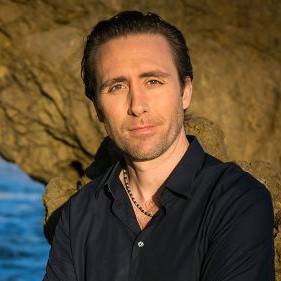
Tom Rivett-Carnac: We'll hear more about that. So let's turn to this conversation that we had just a couple of days ago with Philippe Cousteau, which I think goes in more detail than we ever could to the oceans and the role that they play in the world. Philippe Cousteau Jr. is of course the son of Philippe Cousteau and the grandson of Jacques Cousteau, the famed oceanographer. He's continued the work of his father and grandfather by educating the public about environmental and conservation issues. He's received an Emmy for his hosting of the syndicated science series Awesome Planet. He's a very inspiring person who fell in love with the ocean at an early age and can really inspire and help us to do so. We love this conversation with him. So let's listen to it and we'll be back afterwards. Sounds great. Let's go.
00:13:00.993 --> 00:13:04.233
Paul Dickinson: Philippe, what a joy to have you on Outrage and Optimism. Thank you so much for taking the time to spend some time with us. We've been enormously impressed by your work, bringing to life a kind of an awareness of the oceans, of the water that is basically our planet. Can you help me out here a little bit? Because I want to start off with a question. I've been working for 20 years in climate change. I understand what's a forest fire. I understand about land degradation. I know all this stuff. I see the photos. And I live by the sea. I live by the ocean actually on the south of England. And it's a big, flat, blue thing. And I know nothing about it. And so it's a big...
00:13:48.013 --> 00:13:49.173
Christiana Figueres: What did you just say?
00:13:49.173 --> 00:13:50.173
Paul Dickinson: It's a big, flat, blue thing?
00:13:50.173 --> 00:13:52.473
Tom Rivett-Carnac: Everybody catches the scope and beauty, doesn't it?
00:13:53.273 --> 00:13:55.493
Philippe Cousteau (guest): It's very eloquent. I appreciate that. Well, first of all, I just want to say, interrupt real quick and tell you how honored I am to be a part of this. What a fan I am of all your work and Outrage and Optimism as well. But the work that you've engaged in going back years, all three of you is really inspiring. And I'm really honored to be a part of this. So thank you for having me.
00:14:16.173 --> 00:14:21.393
Paul Dickinson: Well, also thank you for rescuing me from getting seriously beaten up by Christiana because it was beginning to happen.
00:14:21.393 --> 00:14:23.333
Philippe Cousteau (guest): I saw that it was pending.
00:14:23.373 --> 00:14:25.113
Tom Rivett-Carnac: It was Bill that got your back.
00:14:25.113 --> 00:14:26.493
Philippe Cousteau (guest): I got your back, Paul.
00:14:27.233 --> 00:14:32.093
Christiana Figueres: I wonder, Paul, if you really want to stay on this team or if you would like to be relieved. A big, flat, blue thing. Okay, Philippe, I think you have to rescue him.
00:14:38.493 --> 00:14:45.613
Philippe Cousteau (guest): Well, listen, but I think actually, Christiana, that the way he's describing it is the way that a lot of people would describe it. So in that sense, I think it's an apt description and it is the big challenge that we face, I think, in global conservation and have faced for decades. You know, it was 76 years ago that my grandfather invented scuba diving. And prior to that, the only way we really explore the ocean was what we pulled out in seafood and what we dumped in in trash. And so for most of history, our perspective of the ocean has been as a big, flat blue thing, full of mysterious, weird, scary creatures.
00:15:13.353 --> 00:15:16.153
Christiana Figueres: Uh-huh, now Paul is getting very excited. That's exactly what he thinks.
00:15:17.913 --> 00:15:23.333
Paul Dickinson: Yeah, and I did see Jaws when I was about 14 and found the ocean very difficult afterwards, but look.
00:15:23.333 --> 00:15:26.733
Philippe Cousteau (guest): I tell you, Steven Spielberg has a lot to answer for, for the oceans. Let me tell you, that was a set our work back. My grandfather, I remember, said at the time, it set our work back 40 years. Wow. Unfortunately. But, yeah, so, you know, out of sight, out of mind, I think is the big challenge when it comes to the ocean. And that's what we battle every day.
00:15:43.053 --> 00:15:53.393
Paul Dickinson: And so, but let's just assume that, I mean, I know now, I actually was listening to you, Philippe, and you were talking about how two of every three breaths I take come from the ocean. Okay, I've spent long enough working with very smart experts like Christiana, who box my ears when I say it's a big blap. But how can, you know, our listeners who maybe know quite a lot about climate change and greenhouse gas emissions and stuff, how can they grasp the essential scale and meaning of our oceans?
00:16:16.773 --> 00:16:24.293
Philippe Cousteau (guest): Well, when we talk about climate change in particular, what I like to tell people is climate change is an ocean problem. Fundamentally, when we look at how our climate is regulated on this planet, it's regulated by the ocean. And there is only one ocean, truly. It's all connected, right? We call it the oceans, but it's really one system. And as we look at that system and how it transfers heat throughout the globe, that's really what regulates our climate and thus our weather and thus our crops and our rainfall and all these other things that all of us depend on for survival. So unfortunately, the ocean gets overlooked far too much, but it has a critical role not only in how it's impacted by climate, but how it impacts climate and has a critical role that I think is all too often overlooked in helping us to combat climate change. As we look at concepts like blue carbon, as we look at the ecosystems like mangroves and seagrass that are vital carbon sinks, and we talk about rainforests all the time. We talk about the Amazon and rightfully so. It's an enormously impactful, critical ecosystem and yet, as you pointed out, Paul, the majority of our oxygen comes from the ocean, from plankton in the ocean and indeed, a square acre of healthy mangrove can absorb more carbon than a square acre of rainforest. And so we overlook these ocean-based ecosystems, but they are a critical tool in the arsenal. And as I said, we're losing mangroves faster than rainforests around the world, that gets very little attention. But as we do so, we continue to impede our ability to absorb carbon and combat climate change. So the ocean plays an underappreciated but vital role.
00:18:03.673 --> 00:18:04.873
Paul Dickinson: And just a tiny follow-up question. What is the main driver of the cause of the loss of the mangrove?
00:18:08.273 --> 00:18:11.053
Philippe Cousteau (guest): So one of the big drivers is coastal development. Because unfortunately, mangroves tend to be in tropical places. And another big driver is shrimp farms, believe it or not. In Central America, in Asia, Southeast Asia, shrimp farms are chosen to be along the coast, typically, historically. They clear-cut these mangroves, dig these big pits, dump a bunch of shrimp in. And then over the course of a couple of years, these pits of water that are outflowing onto the reef, this putrid wastewater coming from these shrimp farms, kills the reef, destroys the ecosystem. It was very scandalous in India several years ago. This was brought to light. And there was some legislation around trying to prevent this from happening. But still, there's clear-cutting of mangroves for development and predominantly shrimp farms still going on around the world. People love their shrimp cocktail, their prawn cocktail. But it is both historically from an aquaculture perspective and also from a fishing perspective, one of, if not the most unsustainable seafood in the world.
00:19:08.853 --> 00:19:15.293
Christiana Figueres: I have to say, Philippe, you answered Paul's question beautifully from your head. I would love to hear the answer from your heart. How did you fall in love with the big, what did you call it? Big, flat, blue thing?
00:19:24.573 --> 00:19:25.753
Paul Dickinson: Big, blue, flat thing, yeah.
00:19:25.753 --> 00:19:31.153
Christiana Figueres: People would have seen it from the train window or something, if you're in an aeroplane, sometimes you can. I would love to know how did you fall in love with it? Because I'm in love with it. I live, you know, looking over the Pacific Ocean. But how did you fall in love with it? And how can everyone else fall in love with it? Because honestly, if we don't fall in love, all the data that you've just given us just goes into some kind of a mental closet. And then we close the door on that. So I would love to hear your answer from your heart.
00:19:58.653 --> 00:20:02.153
Philippe Cousteau (guest): It's such a great point, Christiana, that... And I remember growing up, my grandfather and mother always told me that the information that we remember and care about passes through the heart, not through the mind. So you're absolutely correct. My journey with the ocean started, since I can remember, perhaps somewhat of a unique journey in many ways, in that my grandfather Jacques Cousteau was such a pioneer of ocean exploration. And that my father was also a pioneer, really the one who advocated for, you know, when my grandfather started out, a lot of people don't recognize that when he was a young man, all the things we take for granted, that the coral reefs and sharks and the images that we are common today were mysteries for people. And it really wasn't until he engineered a valve that he could put on a tank and swim freely underwater and essentially invented scuba diving that that changed. And then he created underwater cameras and he started filming all these things and images. So I grew up with those images. My father then really helped to pioneer the concept of ocean conservation, not just exploration. Unfortunately, my father died six months before I was born in an airplane accident. And so for me, the ocean always represented a way to connect with him, a way to understand where I came from because I never knew him personally. I could see his films and hear the stories from my mother who spent 13 years on expedition. But for me, the ocean represented a connection to my father. But I think universally, every time that I visit the ocean, I see the ocean, and imagine the wonder and the potential that exists. So often, people are obsessed with this idea of looking up in space. And we're investing so much money. I won't go on a rant. I could go on a rant forever on this. But we spent so much money to find out if there was ever water on Mars, which actually has zero bearing on our survival on this planet. It has nothing to do with that. I'm sure this topic has come up. And yet we look at the ocean and there's still so much we don't know about our own planet. There are aliens living amongst us and we don't know it. Only a handful of people have been to the deepest part of the ocean. All the statistics that we've all heard. And so for me, it captures the imagination. I wonder how much there is to explore, how much there is to see, what incredible creatures exist beyond those shores, beneath that flat blue landscape that can capture all of our imaginations. The ocean feeds our spirits. We come from the ocean. Our salt water, our blood is like salt water. And we are connected in the ocean to the ocean. I think the ocean throughout history has represented something that's united us and brought us together. And I think it still can.
00:22:40.953 --> 00:22:42.233
Paul Dickinson: That's a good answer.
00:22:42.233 --> 00:22:43.453
Tom Rivett-Carnac: That's beautiful. It strikes me just listening to you talk that we sort of have similar, we face similar challenges and we come at them in different ways, you know, from climate and from ocean. And of course it's all connected as well. But when I hear you talk there, you have to talk both about what we have and what we could lose as tools to motivate people to get engaged in this issue. And we sort of go back and forth. That's what the name of the podcast is, Outrage and Optimism. Like the optimism of what we have and what we could do in the world we could create and the outrage about what we're facing and what's collapsing and what's falling apart. What have you learned as, I mean, your grandfather was one of the world's best ever storytellers. I mean, you're a storyteller as well as much as anything. What have you learned about that dynamic and sort of talking about risk and talking about that love of this, you know, of the ocean or of the climate or of the natural environment?
Load More00:23:34.853 --> 00:23:47.493
Philippe Cousteau (guest): Well, you know, I think the idea of hope and optimism is one that is all too often drowned out in the current conversation, which is, I do love the title of your podcast for that reason. It starts with optimism and it has to. If we want to capture people's hearts, then we have to give them a world to believe in, something to fight for. When I think of the stories and watch the films, The Silent World, for example, the famous Oscar-winning film my grandfather did, which was really people's first glimpse under the ocean back in the 1940s. And you see him diving on the reefs in the south of France and the Mediterranean. And there are beautiful coral and schools of fish and sharks. And there's this one scene where he dances with Jojo, an enormous grouper, as big as a German shepherd. I've been diving in those places through the course of my life. And you go back and they're just seaweed and nothing, essentially, a barren wasteland in that period of time. So we've already lost so much. So it's not really about sustainability. That's another term that I'm increasingly getting frustrated with, because we don't want to sustain the way the world is. We want to return it to abundance and enhancement. We've lost 50% of the biodiversity on earth in my lifetime. And I have a 14-month-old daughter and I look at her and I think to myself, my God, she was born into a world that has half the natural riches that I was born into. And what a crime against humanity, frankly. And so, but then I go to a place like the Marshall Islands out in the far Pacific where we did it. My wife, Ashland and I co-hosted a show for Discovery several years ago. And this is a place where the United States conducted the devastating nuclear testing in the 1950s and 1960s. We dropped dozens of bombs, including the largest bomb, Castle Bravo that we ever dropped. It was a thousand times stronger than the bomb we dropped in Hiroshima. And it was the entire region was to everything was killed, vaporized, devastated. And it became a de facto marine reserve. And we heard rumors just a few years ago that this ecosystem somehow had defying logic, had bounced back, was flourishing. And that gray reef sharks, which we didn't believe would migrate over long distances were back on these atolls coming clearly from, they would have to come from hundreds of miles away. And which defied everything we knew about these shark species and how quickly coral reefs could recover. So we went there and we filmed and it was absolutely extraordinary. The abundance and an explosion of life. We dove in the actual Castle Bravo crater. There was still nothing there, but right on the outside of that crater, the reefs were abundant and beautiful, breathtaking. The sharks were schooling in the hundreds. And it was a testament to the hope that I believe exists, that the resilience that nature has, that is so powerful. We go to a place like the Mediterranean, it's devastated. It's devastating to see it. We go to a place like the Marshall Islands that saw the worst fire and brimstone humanity can engineer thrown at it for decades. And now it's a flourishing oasis. So there is hope. And I think the good news is we know, we know that's possible. We have the tools in our arsenal to solve the problems. And that's what I tell. We focus on youth education, probably more than anything else. And that's the message that we always try and share with people.
00:27:03.333 --> 00:27:21.933
Christiana Figueres: Philippe, one thing that is on the other side of the spectrum of actionable for most individuals, if not all, is the damage caused by oil and gas either polluting the air or polluting the water. You were probably the first person to ever dive into an oil spill way back in 2010, you dove, I think one or two times, please correct me, into the deep horizon oil spill, so that all the rest of us who wouldn't be as bold could really understand what was happening. And today we're dealing with this oil spill in Mauritius, which as we understand it, is not the size of it, is not quite as concerning as deep horizon, but the location is, because it is very, very close to very delicate protected marine ecosystems. Can you, first of all, walk us through that when you decided to dive into an oil spill? Not exactly what I wake up every morning thinking of. And what does that mean? How is it possible that still in 2020, we have not only the oil and gas industry, which admittedly is moving forward, but that we still have such unsafe transportation of oil, that we still have these accidents? How is that possible? But more than that, when are we gonna give up on oil?
00:28:53.093 --> 00:28:54.253
Paul Dickinson: Nine questions there.
00:28:54.393 --> 00:28:56.773
Philippe Cousteau (guest): Yeah, I'm straight. All good ones. The BP oil spill was an incredible experience, heart-wrenching experience. I remember watching the news about a couple months after the initial reports about the Deepwater Horizon blowout preventer leaking and failing. And remember watching on the news, in across all the news agencies, that the EPA had authorized the application of what's dispersant, right? It's surfactant and a solvent to the surface of the water to make the oil go away. And I'm watching this. I'm flipping through news channels. I'm like, make the oil go away.
00:29:39.233 --> 00:29:40.593
Christiana Figueres: To make the oil go away. Go where?
00:29:41.453 --> 00:29:42.433
Philippe Cousteau (guest): Oh, it doesn't just go.
00:29:42.433 --> 00:29:42.733
Christiana Figueres: Go where?
00:29:42.753 --> 00:29:43.933
Philippe Cousteau (guest): Exactly. And so I called Sam Champion at Good Morning America and ABC and said, you know, Sam, I don't think anyone's ever on camera been diving into an oil spill. This is nonsense. This talk about oil going away, they were pulling straight from the kind of the press releases from BP. And we need to go and demonstrate to people that's not the case. So fast forward a couple of weeks, we managed to get all the hazmat equipment that we needed and hard helmets, et cetera. And we dove into the spill and we demonstrated that it's far from making the oil just magically go away somehow. It simply broke the surface tension and allowed the oil to then just get out of sight and sink into the water column. So we went down 30 or 40 feet and showed the whole water column, as far as we could see, was just this red muck, like descending into hell, I believe is what I said at the time. And you saw dead fish with globs of oil sticking to them and seaweed and jelly. I mean, it was awful. And that was transformational in the conversation around the surfactant or the dispersant and the true nature of these oil spills. Prior to that, people could only see the oil slick at the surface. And then subsequently, what I did, and this is important, this is one of the reasons that I still think that the environmental movement has failed to make as much progress as we would like to make on these issues, is people were covering the dolphins and the turtles and the natural devastation that was happening from this oil spill. And I was watching this coverage unfold and after my experience, my initial experience there, and I said, you know what I'm not seeing? I'm not seeing people going down and talking to the people whose lives are being impacted. I always tell folks that, you know, one of the biggest problems with climate change and what environmental groups have focused on is that when people think about climate change, they think about polar bears. And most people don't, let's face it, really, really, really care about polar bears. They care in theory, they're this nice, fuzzy creature, but really care enough to change their life and their world? No. Why isn't a baby the face of climate change? Why aren't human beings more the face of this?
00:31:37.913 --> 00:31:40.733
Christiana Figueres: Human, put a human face on, yeah.
00:31:40.733 --> 00:31:41.653
Philippe Cousteau (guest): That's the challenge. And so when we went down to the Gulf oil spill, I started interviewing fishermen, I started interviewing oystermen, I started interviewing the people with tourism operations that were going out of business, started talking about how when we degrade the environment and people lose their jobs, rates of domestic violence and suicide start going up. What is the human toll of this environmental disaster? And I think we still fail to do that effectively in the environmental movement. We still kind of fall on the old images of sea turtles, which I love a sea turtle, let me tell you, I love polar bears, but how do we grow the audience of people that care about these issues to create the political change that we need? We've got to start thinking about how we relate to people. And I think it's the same issue in Mauritius. I'm hearing a lot about the coral reefs, which are beautiful. And to your earlier question, Christiana, one drop of oil in an area the size of an Olympic swimming pool is deadly toxic to coral larvae and fish larvae, just one drop of oil. So even 4,000 gallons of diesel bunker, heavy diesel bunker fuel that's leaking out of that ship in Mauritius is devastating to countless miles of these coral reefs, of which, as you know, you know, half of them have disappeared around the world and many of them are under stress.
00:32:50.053 --> 00:33:35.593
Christiana Figueres: So, Philippe, with that awareness that you have, the deep awareness of the devastation that we have caused and that we can potentially further deepen, we would love to hear your answer to the final question that we always ask our guests, and that is on a spectrum of being outraged at the devastation that we have caused and the irresponsibility with which we continue to act on one side of the spectrum and on the other side of the spectrum of optimism about what we can do if we rise to our individual and collective responsibility. Where do you situate yourself in that spectrum?
00:33:42.693 --> 00:33:44.073
Philippe Cousteau (guest): Christiana, that's a great question. I situate myself at many points along that spectrum, depending on the time of day and what day of the week it is. Honestly, my soul weeps and oftentimes I shed tears when I hold my little girl and think of the kind of world that she's going to inherit. It makes me very emotional. So at those times, outrage and sadness perhaps prevail. But then I am filled with optimism. I run a nonprofit called EarthEcho International and we are focused on youth education. And we just ran our annual Youth Leadership Summit. We had 500 environmental youth leaders from around the world participate in three days of workshops all digitally, remotely from 44 countries and territories. Whenever I walk into a classroom pre-COVID or see a interview or a Zoom call with a couple hundred youth leaders, I am filled with hope and optimism. As I'm sure you all, three of you have seen in your historic work in the Paris Climate Accords, and all the work over the years that you've done, young people are full of determination. They are full of optimism. They're itching to fight and they are fighting, as we're seeing with Greta and her peers is becoming a symbol of that youth power. But there are thousands and hundreds of thousands of Greta's around the world. There's a whole generation that is so fired up, that is so passionate about these issues that, when I see it, I am filled with hope and it rejuvenates and renews my spirit and my soul. So sometimes I think about what we've lost and it fills me with sadness, but then I need, I spent just a moment with these young people and I'm filled with optimism. And I do have incredible hope for the future. I do believe that we can overcome anything and that we have a new generation that is united together for a better world and they will achieve that world. And it's our job to help them as much as we can and then get out of the way, so.
00:35:47.993 --> 00:35:50.313
Tom Rivett-Carnac: Exactly.
00:35:50.313 --> 00:35:53.933
Philippe Cousteau (guest): I vote optimism with moments of outrage.
00:35:54.053 --> 00:35:55.413
Tom Rivett-Carnac: That's a good balance.
00:35:56.493 --> 00:35:57.913
Christiana Figueres: We like that combination. We like that combination.
00:35:59.553 --> 00:36:00.133
Tom Rivett-Carnac: And that passion.
00:36:00.133 --> 00:36:01.193
Christiana Figueres: Thank you so much. Yes, and the passion, yes. Thank you so, so much. Really appreciate it. Very much appreciate that you brought your daughter into the conversation because honestly for all of us, that's what this is all about, right? I think this is our battle for them. So thank you very much for that.
00:36:18.853 --> 00:36:24.733
Philippe Cousteau (guest): Christiana, Tom, Paul, my honor to participate in this and spend a little bit of time with you all. I really appreciate it.
00:36:25.993 --> 00:36:27.753
Paul Dickinson: I shall never look at the sea the same way again. Thank you so much.
00:36:28.273 --> 00:36:29.313
Tom Rivett-Carnac: The big blue flat thing.
00:36:29.313 --> 00:36:30.293
Christiana Figueres: Thank you, Paul.
00:36:30.293 --> 00:36:30.953
Paul Dickinson: Big blue flat thing.
00:36:30.953 --> 00:36:32.393
UNIDENTIFIED SPEAKER — please verify: Thank you.
00:36:32.393 --> 00:36:36.313
Christiana Figueres: Philippe, you have done what none of us have been able to do in years. Thank heavens.
00:36:38.053 --> 00:36:39.033
Paul Dickinson: That's completely wrong. I grew up watching your grandfather and I have a deep love. But thank you. Honestly, your passion, your way of expressing is completely infectious and I now have been made optimistic by your energy.
00:36:48.773 --> 00:36:49.873
Tom Rivett-Carnac: Thank you so much.
00:36:49.873 --> 00:36:50.573
Philippe Cousteau (guest): Paul, thank you. Thank you all.
00:36:58.267 --> 00:37:02.347
Tom Rivett-Carnac: So, what a pleasure to get a chance to speak to Philippe Cousteau. What did you guys leave that conversation with?
00:37:04.627 --> 00:37:19.807
Paul Dickinson: Well, I was just struck by his energy and his enthusiasm, and I actually found myself getting transformed myself and becoming fascinated and delighted by the ocean in a way that I hadn't felt before. And I actually found a little quote of his, which I thought was very beautiful, where he speaks to the extraordinary power of his name, and he says, I'll never be able to fill my father's or my grandfather's shoes, but hopefully I can stand on their shoulders and reach father. And that, I think, sums up exactly his enormous gift, and I felt him reach a very, very long way into my heart and soul.
00:37:43.247 --> 00:37:45.087
Clay (podcast producer): Wow.
00:37:45.147 --> 00:37:46.627
Christiana Figueres: Nice, nice, Paul. You know, I've been thinking lately about what we inherit from our parents. And I'm sure one of you is going to remind me that I did not know that Stella McCartney was Paul.
00:38:02.807 --> 00:38:05.787
Tom Rivett-Carnac: Did you know that Philippe Cousteau was Jacques Cousteau's grandson?
00:38:05.787 --> 00:38:06.647
Christiana Figueres: Well, I did.
00:38:06.727 --> 00:38:08.407
Clay (podcast producer): You see, that's exactly...
00:38:08.407 --> 00:38:11.627
Paul Dickinson: I forgot that Stella McCartney was Paul McCartney's son.
00:38:11.627 --> 00:38:15.907
Christiana Figueres: So, yeah, I did know where Philippe Cousteau comes from. But I was actually quite taken by the fact that his father passed on before he was born. And I was trying to muse on what was the effect of that on him? Would he have had a different profession, a different relationship, deeper, not so deep with the oceans, if he had been able to dive alongside his father? Did he become so much more committed because his father was no longer there? I mean, we will never know the answer to those counterfactual questions. But I just think it's so beautiful that this is the third generation that is so totally committed, that Philippe's wife actually is also committed. It's a whole clan thing. And honestly, the world would just be a sadder place without the Cousteau clan. It's so moving that they have decided, one generation after the other, after the other, to devote their life, A, to explore the oceans, which takes a heck of a lot of courage, and then not only to explore, but to be educators, to raise the awareness, to make us all, you know, for using the words that you've used, make us all fall in love with the oceans. It's just a beautiful job that they're doing for all of us.
00:39:52.087 --> 00:40:02.047
Tom Rivett-Carnac: Yeah, and it's so inspiring to see how that family legacy can be so nourishing, and how, I mean, he's a deeply inspirational person in his own right, right? I mean, we had him on, not because he's Jacques Cousteau's grandson, but because he's who he is, and because of what he's able to do. And the comment you made, Paul, about him saying that you can stand on the shoulders of those who came before and reached faster, reminded me, I'm sure you remember when we had one Jira Matai on, and we asked her about her mother, and she said, I don't stand in her shoes, I bask in her sunlight. And I just thought, you know, it's all to do with perspective and how we respond to these things. And I thought his comments were amazing. I mean, the fact that the ocean connects him to his father is just sort of hauntingly beautiful and very impactful, I thought. But also some of the data that he provided, like I was kind of blown away by the fact that an acre of mangroves can absorb more carbon dioxide than an acre of rainforest. I had no idea that that was the case. I don't know if it's as biodiverse, but I thought that was amazing. And I was also really struck by his comments about this film that he sees his grandfather diving on a reef in the Mediterranean in the French waters. And what it was, if you go there now, it's kind of a desert. And I mean, you know, this is hard, this stuff, but it made me think about places that I've been and what they'll be like, or could be like when my children or grandchildren go there, which is heartbreaking, right? I mean, of course, that's not our, this is the whole point of what we're talking about. That's not a predetermined destiny that it will be like that. They might go back to where Jacques Cousteau was five generations ago and find the reef has been regenerated if we do our jobs right.
00:41:34.707 --> 00:41:35.607
Christiana Figueres: Hopefully.
00:41:35.607 --> 00:41:38.327
Tom Rivett-Carnac: Hopefully, but there's a lot at stake.
00:41:38.327 --> 00:41:59.927
Christiana Figueres: You know, on the data piece, before we all get carried away with our emotions, on the data piece, one piece about the oceans that is not often talked about and that actually he didn't refer to is the huge potential that we have for maritime or marine energy. Yes, we talk a lot about offshore wind and definitely the UK has taken a fantastic leadership position there as well as many other countries harvesting, if I may say, offshore wind, but the oceans themselves have so, so much kinetic energy that can be harvested as well. And this morning on my beach walk, I was noticing the beautiful combination of tides that come in and out and waves that come in and out and how they actually work so beautifully with each other. But then I realized, oh my god, so there is energy here that can be harvested from the difference in the tides, i.e. tidal energy, as well as energy that can be harvested from the difference in the waves, i.e. wave energy. And it's just amazing to know that we have all of these oceans around the world that are still there, lapping on our shores and waiting for us to develop the technology that has to be commercial in order to be used. But just enormous amounts of energy there. And I did a quick search on Wikipedia, which is Paul Dickinson's absolute authority on everything. And Wikipedia says there's a potential to develop somewhere between 20,000 and 80,000 terawatt hours per year of electricity generated by something related to ocean and water. It's just beyond belief how much there is there, because we know we have to move away from fossil fuels, we know we have to go to the renewables. So there we are, a huge treasure trove of energy waiting on the sides for us to develop the technology that is going to be able to harvest it and distribute it at a commercially competitive price.
00:44:04.867 --> 00:44:18.847
Paul Dickinson: Yeah, I mean, even slightly more modest, but using the IRENA methodology, we found a calculation showing that just 1,400 gigawatts of offshore wind energy by 2050, that would create 24 million full-time jobs. And if that seems fanciful, let me just tell you that in the little town I live in on the south of England, Brighton, we have a 1.3 billion pound wind farm just offshore, powers the entire town, thank you very much indeed, is very beautiful, winks at us at night, and is a perfect compliment. So, yeah, I mean, we're blessed a little bit with the shallow coasts, but I think that other nations can develop these technologies, and they're so obviously the future. At the same time as great companies like Rio Tinto are selling their coal divisions, and the oil companies are stopping capital expenditure, we can harvest the ocean resources, whether they're wind or tidal, to make significant power and hopefully not disturb marine ecosystems in the process. That's a very positive outcome.
00:45:09.387 --> 00:45:09.807
Tom Rivett-Carnac: Yeah. And I mean, it's interesting you've had that thought, Christiana, working on the beach. I'm currently still in Devon, where I'm staying at my mom's house because my mom has taken my daughter to stay in a beach hut for a week. And I drive down and see them once a day. And I said to my daughter, Zoe, I said, I'll walk down with you to the waterfront when I come down. And depending on the time of day I go, it is literally, and I have a Fitbit so I can determine this, up to a mile different, the tide goes out that far on Dunstown.
00:45:37.307 --> 00:45:39.007
Christiana Figueres: Wow, a mile?
00:45:39.007 --> 00:45:45.027
Tom Rivett-Carnac: A mile, whether you're up on the stones and the tide is fully in or this incredibly flat beach. So I'm now much more mindful of the tides in terms of when I go down there and whether I can actually afford to take the time.
00:45:51.987 --> 00:45:54.307
Paul Dickinson: But I think I've mentioned this before on the broadcast. We have to be a little bit careful with tidal energy because we will slow the moon down.
00:45:59.307 --> 00:46:01.347
Christiana Figueres: Okay.
00:46:01.347 --> 00:46:02.847
Paul Dickinson: I've not read this in any scientific papers. This was developed entirely by me on a little one afternoon.
00:46:08.787 --> 00:46:10.847
Christiana Figueres: Next to the flat blue thing.
00:46:10.847 --> 00:46:12.567
Tom Rivett-Carnac: That is the statement of 2020, isn't it? Look at social media. I've not read this in a scientific paper, but I still thought it was worth sharing on social media.
00:46:17.867 --> 00:46:18.907
Clay (podcast producer): Absolutely.
00:46:18.907 --> 00:46:20.867
Paul Dickinson: I have hundreds of these other theories.
00:46:20.867 --> 00:46:22.887
Christiana Figueres: I think I hear a tweet coming from you.
00:46:23.207 --> 00:46:23.967
Tom Rivett-Carnac: Oh my god.
00:46:23.967 --> 00:46:24.907
Paul Dickinson: The third tweet.
00:46:24.907 --> 00:46:30.187
Tom Rivett-Carnac: The third tweet has to be, slow down on tidal energy or we're going to stop the moon turning. It's going to go crazy. Right. As ever, we're bringing you an amazing piece of music to end the episode.
00:46:37.727 --> 00:46:38.887
Paul Dickinson: What have we got?
00:46:38.887 --> 00:46:43.547
Tom Rivett-Carnac: This week, we have a beautiful piece of music from Nick Mulvey. Now, usually when we bring you these songs, we invite the artists to submit to us responses to a couple of inquiries about how they see the climate crisis and what the role of the artist is in this moment of emergency. But instead of sending us something written, Nick actually recorded his response. So we'd like to play that to you. I'm going to hand over now to Nick Mulvey, who's going to explain the song before he plays it. Really hope you enjoy it. Thank you so much for joining us this week. We look forward to seeing you with another conversation next week.
00:47:13.567 --> 00:47:14.227
Nick Mulvey (musician guest): Bye.
00:47:14.267 --> 00:47:14.387
Tom Rivett-Carnac: Bye!
00:47:17.007 --> 00:47:24.607
Nick Mulvey (musician guest): I think this song relates to the kind of climate crisis in its grief and also in its wonder. I think this moment is full of both. I once heard someone say that the question is not about the survival of humanity, but more about the presence of eternity.
00:47:39.247 --> 00:47:39.307
Christiana Figueres: Bye.
00:47:39.367 --> 00:47:41.707
Nick Mulvey (musician guest): Very beautiful, very interesting. So the song has these passages sung from the higher self. I am in the living. I'm in the dying too. I'm in the city, in the forest and the field. I'm in the bounty, know me as I yield. I'm in the Falcon, in the otter and the stoat. I'm in the turtle dove with nowhere left to go. And it goes on. I wanted these cascading images just to get the point across. This is the I am, this is consciousness before preference. It's in the city and the field. It's not just in nature. Where is not nature? So this song kind of is bound up with grief for what's falling away and kind of space perhaps for what's coming through in this time. And finally, just to say that I remember hearing Thich Nhat Khan, the Buddhist teacher, saying that when we look at the word environment, if we stop and really reflect on what that means, environment really means in English means everything other than me, the environment of this room or the environment of the whole planet and its climate and in doing so our conception of the environment there perpetuates the seed of separation that is perhaps at the heart of a lot of all this is everything other than me and that we need to evolve at that very intimate point. Yeah, that's this song.
00:54:08.655 --> 00:54:13.435
Clay (podcast producer): So there you go, another episode of Outrage and Optimism. The track you just heard is Begin Again by Nick Mulvey. I've put a link to his music in the show notes. Begin Again is available now wherever you get your music, and be sure to check out the Begin Again EP. There's this awesome, awesome remix by Little Dragon that you can spin, so it's so good. You have to check it out. Outrage and Optimism is a Global Optimism production and is executive produced by Marina Manzillier-Germann, and produced by Clay Carnel. But it's not just Marina and I, the rest of the team is Sarah Law, Katie Bradford, Lara Richardson, Sophie MacDonald, Fran Newman, Sarah Thomas, and Sharon Johnson. And our hosts are Tom Rivett-Carnac, Christiana Figueres, and Paul Dickinson. And special thanks this week to Kelsey Hurwell and Molly Schoeneveld from the Storied Group for working with us and coordinating our interview with Philippe, they made it possible. And of course, a huge thank you to our guest this week, Philippe Cousteau Jr. During the setup for our interview this week, I mentioned to Philippe that my son was teething and Philippe being a new father, just like me, but a little bit further down the road, he recommended frozen peas. So I went and got some frozen peas. They are a hit with embers. I've never seen a child happily eat so many peas in my life. On a somewhat related note, I have also been finding peas all around the house. Not sure how they get there, but we couldn't be happier. So thank you, Philippe. Oh, actually, we're going to run out in like two days. So I got to go. I'm going to add the peas to my grocery list for this week. The Cousteau clan is doing incredible things. And through their organization, EarthEcho International, they are equipping youth to identify and solve environmental challenges starting in their own communities. I put a link in the show notes to EarthEcho's website and Philippe's website and social media where you can see all the films and TV shows he is on. One series in particular that I loved is The Aquatic World with Philippe Cousteau. It's a tongue-in-cheek tribute to the movie The Life Aquatic. Great movie. But the series is playful, imaginative, educational, and hilarious. So click the link in the show notes to go on that adventure and many more with the Cousteaus. Now we know you're on the internet in search of great memes and up to the minute climate news. And so are we. You can find us at Global Optimism on Instagram, Twitter, and Facebook and LinkedIn, the slightly more business approach to wasting time on social media. If you love the podcast, please hit the subscribe button and leave us a rating. Thank you to everyone who is writing reviews. It makes all the difference. Those are my notes. That's it. Thanks for listening and we'll see you next week.