









271: Getting Nature on the Balance Sheet
With Tony Goldner



About this episode
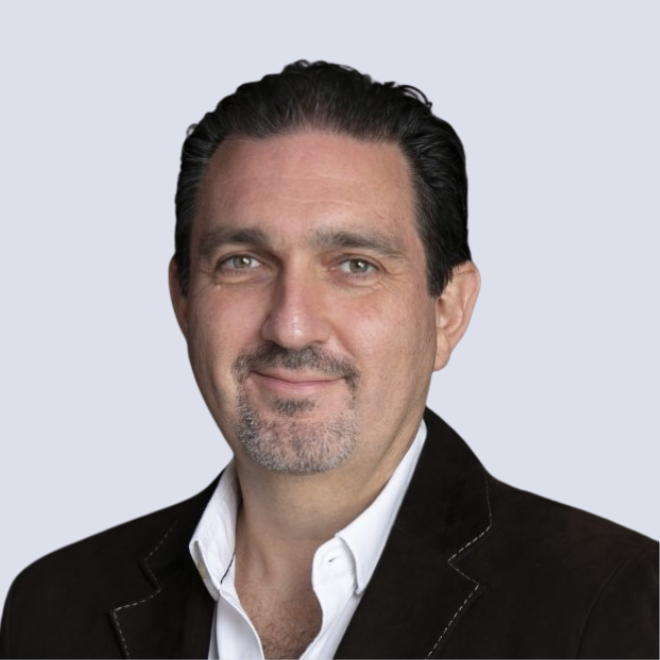
This week, Paul and Tom are joined by Tony Goldner, from the Taskforce on Nature-related Financial Disclosures.
Tony helps make sense of what happened at the recent Biodiversity COP in Colombia and discusses the many ways that nature is starting to appear on business’ and regulators’ agendas. Companies are waking up to the fact that their resilience depends on the resilience of nature.
Many companies are in the process of developing and setting long-term transition plans to net-zero. Tony explains that as biodiversity and nature-loss risks mount, businesses need to also consider that nature-based dependencies, risks, and mitigations should be put in place.
NOTES AND RESOURCES
GUEST
Tony Goldner, TNFD Executive Director
TNFD Website | LinkedIn
Q&A The clock is ticking: finance sector deforestation action must now go mainstream with Stephanie Kimball, Senior Director of Climate Strategy at Conservation International and Sue Reid, Climate Finance Advisor to Christiana Figueres at Global Optimism
Learn more about the Paris Agreement.
It’s official, we’re a TED Audio Collective Podcast - Proof!
Check out more podcasts from The TED Audio Collective
Please follow us on social media!
Twitter | Instagram | LinkedIn
Full Transcript
Transcript generated by AI. While we aim for accuracy, errors may still occur. Please refer to the episode’s audio for the definitive version
00:00:12.648 --> 00:00:13.748
Paul Dickinson: Hello, listeners. Welcome to this Outrage and Optimism bonus episode with me, Paul Dickinson. Today, we'd like to share with you a brilliant conversation we had last week with Tony Goldner, the Executive Director of the Taskforce on Nature-related Financial Disclosures. Sorry, that's a bit of a mouthful. Tony helps us make sense of what was agreed at the recent Biodiversity Cop in Columbia, and we look at how much it's dawning on people who are on boards or in companies that the resilience of their companies depends on the resilience of nature. The gods of podcast recording have not smiled on our previous interviews with Tony. Firstly, Christiana had a conversation with him in the rainforest of Costa Rica that failed to record. And then, during this recording last week, Christiana was sadly unwell, and Tom was here on Zoom at the beginning, and then suffered a power cut and disappeared halfway through. In spite of those technical hiccups, it is a fascinating conversation, and we hope you enjoy it. Here is Tony Goldner.
00:01:19.428 --> 00:01:21.588
Tom Rivett-Carnac: Tony Goldner, Executive Director of TNFD. We're thrilled to have you on the podcast. This has been a long time in coming, and believe that Christiana has interviewed you before, but there was a mishap, and so sadly the listeners didn't actually hear your wisdom, but we are gonna correct that today, and we're thrilled to talk to you. So thank you very much for joining Paul and I. I'd like to just kick off by asking you, listeners to our podcast are pretty used to acronyms, and many will have heard TNFD, others may not. Can we just kick off with you explaining what does it stand for and what does it do?
00:01:51.288 --> 00:01:51.548
Tony Goldner (guest, Executive Director of TNFD): Great. Well, nice to see you, Tom. So TNFD, named after our big sister initiative TCFD, so Taskforce on Nature-related Financial Disclosures, obviously following the work of our big sister TCFD on climate. And essentially, our job is to bring nature onto the balance sheet and into the risk registry of companies and financial institutions around the world as TCFD did with climate reporting. So it's backed by the G20. We were launched in 2021 with the support of the G20. We are funded by governments and philanthropy, and we have 40 Taskforce members all drawn from the private sector. And so we're about three years in, and we announced last week at Cali that we've now got 500 companies globally, companies and financial institutions globally, adopting the TNFD recommendations much similar to the way they have taken up the climate-related financial disclosures produced by TCFD many years ago.
00:02:52.948 --> 00:02:54.048
Tom Rivett-Carnac: Amazing.
00:02:54.048 --> 00:02:56.388
Paul Dickinson: So, let me jump in, Tony. So good to be with you and share the platform with you in Climate Week in New York, and so great that CDP, where I work, is in business with TNFD. You've said some wonderful things. You've said that people can decarbonize their portfolios, but they can't denature them. I think that's a brilliant way of recognizing what we're trying to do here. You've also talked about being on the front foot and not just an inch away from regulation. But I wanted to pick up on something particularly you ran in a joint article with our CEO, Sherry Medeira. She said that actually, well, you both said that nature may be arguably, for example, more important than something like cybersecurity risk. You asked if boards are really recognizing their fiduciary duty to attend to this. Can you talk a little bit more about how you think maybe people listening to this podcast who are on boards of big companies should be thinking about nature?
00:03:49.148 --> 00:03:59.048
Tony Goldner (guest, Executive Director of TNFD): Well, I think the point that I make with the analogy to cyber, Paul, is that we really haven't had an extended conversation around why boards and companies should take cyber risk seriously. We're living in the digital world. All businesses are dependent on digital technologies. And essentially, companies have already now mobilized. Not many boards would want to be caught short not taking cyber risk seriously these days. And many companies have now mobilized millions of dollars to build up their resilience to cyber risk because they appreciate that it's fundamental to their business. My argument is nature is essentially the same. We all have dependencies on nature. The resilience of a business depends on the resilience of nature. And I often put this in terms that speak to a chief financial officer. The future cash flows of the business depend on the future flows of nature's ecosystem services is the technical term, but the flow of benefits that we get from nature into our business models. And sometimes people think, well, this is really only an issue for agriculture, forestry, mining, et cetera. But every business has dependencies on nature. I often use the example of technology. So, you know, technology sector often thinks, well, that's not really an issue for us. Well, semiconductors have a critical dependence on two things. Huge amounts of electricity and a huge amount of very clean water as part of the production process. So you have this critical dependence in the semiconductor chip manufacturing process on water. And I think it's radically underappreciated. And in fact, semiconductor manufacturing, just as an example, is concentrated in a very few areas of the world, Taiwan, Korea, Japan, et cetera. And only 18 months ago, the dam levels in Taiwan, from which the plants were drawing their water, were at 7% capacity. So, you know, if there was a major nature-related disruption to the global supply chain of semiconductor chips, we would all be suddenly paying a lot more attention to dam levels in places like Taiwan. So, it really comes back to this crucial notion of dependencies. We all appreciate we have digital dependencies, and companies have dependencies on digital technologies. Well, we all have dependencies on nature. And so, that's why I think the mindset of cyber and appreciating cyber as a strategic risk management issue is a good analog for the way in which we should be thinking about nature. I think what's been really interesting since we started the Taskforce, if I go back to 26 in Glasgow when we first launched, the conversation around nature was really just starting. But now three years on, I think there is an appreciation that nature is no longer a corporate social responsibility issue. It's now fundamentally a strategic risk management one.
00:06:39.008 --> 00:06:39.788
Paul Dickinson: So thank you. And that's an incredibly clear and sort of like sobering answer I would say about the potential for something like water to show up actually at the enterprise level. Can I ask you about the value chain because I mean, is TNFD starting to show up in supply chains and how should companies be thinking about the sort of vision of TNFD with regard to their supply chains?
00:07:03.088 --> 00:07:03.408
Tony Goldner (guest, Executive Director of TNFD): Yeah. So this is coming up a lot. And obviously it depends on your business model. I mean, obviously there are companies right at the beginning of the supply chain like forestry or agricultural mining where they've got asset based businesses on the ground. It's a very site asset intensive business model. So it's fairly easy for them to understand where they're interfacing with nature and what their nature related issues are. And so encouragingly, we've seen quite a lot of forestry companies and mining companies are now really digging in to understand what their nature related dependencies and impacts are and the corresponding risks and opportunities to the business. But obviously if you're in retail or if you're in construction, real estates, technology, then you're part of these very long extended supply chains that often go back many, many steps to where you're drawing out resources from nature. And so in a way, this is quite similar to the conversation that's now upon us on the climate side, where companies are really struggling to understand their scope through emissions, the emissions through their supply chains. On the nature side, we don't really use the notion of scopes because it doesn't really work in the nature context. So we just talk about upstream and downstream. And so not surprisingly, we're seeing a lot of companies now focusing on what their direct impacts and dependencies might be, but also starting to figure out, well, how are we going to come to terms with the nature-related issues through our supply chains? If you're, for example, a food producer, obviously you're depending on agricultural production. It may be happening many, many steps further up the supply chain, but you may have a critical dependence on pollinators, for example, to pollinate crops that are critical ingredients into the products that you're offering to your consumers. And that can be complicated work to work with your supply chain partners, figure out what those nature-related issues are. One company, for example, producing healthcare products, discovered it has a critical dependence on a moth that pollinates the single biggest ingredient into their biggest revenue-earning products. And so we're seeing companies come to these realizations as they start to dig in and do this work. But we're not pretending it's easy, but we're seeing companies starting to work with their T1 suppliers and going back up their supply chain to start figuring out what those nature-related issues might be.
00:09:31.128 --> 00:09:33.488
Paul Dickinson: And we just got a message that Tom has lost power. Hopefully, he will return to us. One thing that's come up so much in the climate change reporting and that whole world of climate disclosure, greenhouse gas disclosure and strategy and stuff, is a move towards thinking about policy and both the people who are asking for the information and the companies who are responding to these requests are kind of contextualizing both what they're reporting, what they're measuring, what they're reporting with like, well, what does this really mean for our organization, for our shareholders, but maybe also for the rules of the game, for want of a better word. Are you seeing that kind of thinking turn up or is it too early in the area of nature disclosure?
00:10:24.108 --> 00:10:43.288
Tony Goldner (guest, Executive Director of TNFD): Well, what was interesting two years ago at the Montreal COP, which defined the global biodiversity framework, which is a sort of Paris Agreement for Nature, is that even before TNFD or anybody else, frankly, had developed recommendations around corporate reporting, there was this movement around what was called Make It Mandatory. So we had 400 companies turn up in Montreal two years ago saying, we want mandatory reporting. Now, I've been working at the intersection of business, finance and politics for 25 years. I've never seen the business community call for something to be mandated, and they don't actually know what it is yet. So it was quite a remarkable moment. And I think what it really speaks to is a desire to have a global baseline and a sort of common approach. What business likes even less than regulation is uncertainty. And so I think the reason why we saw that momentum building over two years ago was a recognition that regulation was going to be coming. What they wanted was a common level playing field, not 200 different approaches to regulation of nature. So I do think there's a growing recognition that regulators are moving. But you mentioned my comment before about decarbonizing and denaturing portfolios. That came from a fascinating comment from one of our Taskforce members when I asked him, why did you sign up to be part of the TNFD? And he said, because we recognized very early on that there's nowhere to hide from nature risk. And so, you know, hence the need to walk towards it, because as a universal asset owner invested across sectors and geographies and asset classes, every sector is dependent on nature. And so there is no way to avoid nature risk. So we've got to walk towards this problem. And I think a lot of people in business and finance are watching what's happening on the regulatory and policy space as they should be. But what's really been interesting in the last two years is a growing realization amongst asset owners and asset managers that they're the ones holding nature risk. And so they're the ones asking the questions and companies increasingly are telling me yes, at our annual general meeting on an analyst call in discussions with our major shareholders, we're seeing more and more questions being asked about nature. And so the dynamics at play here are not just coming from government and policy makers, it's also coming from investors who realize that they're holding nature risk and they increasingly want the companies that they're providing capital to be on top of this issue and able to explain how they're managing those impacts and dependencies.
00:13:09.668 --> 00:13:10.708
Paul Dickinson: I'm super impressed. I think you're the only person, only guest we've ever had who's mentioned universal ownership, which I think is just such a wonderful way to look at the world where asset owners or asset managers even will look at the entire portfolio of the economy and think about what's in the best interest of the economy, rather than individual stocks. And this is a very mature perspective. But whilst we're a little bit technical, Tony, can I ask you about, you know, there is a sort of evolution, I guess, you could call from disclosure through to sort of setting targets. And then now people are talking about transition plans. I know it's probably early for companies to be thinking about how their nature-related financial disclosure fits into transition plans. But as they sort of think through from disclosure to sort of insight to action, how would you help them think about how to sort of frame nature as an actor, I guess, that's going to make its way into their transition planning over the decade ahead?
Load More00:14:11.188 --> 00:14:19.928
Tony Goldner (guest, Executive Director of TNFD): Well, I'm just back from COP16 in Cully, which of course saw unprecedented levels of business engagement. I don't know the exact number of delegates, but I'm told it was around 3,000, which is probably three or four times the number that were at Montreal just two years ago. And at Cully, we released a discussion paper on transition, nature transition planning. We've also been working with our friends at GFANCE on the climate side about making sure nature is part of Net Zero transition planning. So nature has definitely arrived on the agenda, both in terms of nature helping to get to your Net Zero goals, but nature beyond climate as well. And so I think ultimately these things should converge into one integrated climate and nature transition plan for a company. And so I do think what was interesting being in Cully for 10 days is a real sense amongst business and finance that they're moving from awareness to implementation and wanting to take concrete action. I think a lot of people are still trying to figure out what to do, but I think the transition planning piece is coming just at the right time because we're already seeing companies doing their internal assessment work of what their issues are. They're now feeling more pressure to disclose. And of course, corporate reporting is really, as someone described in Cully, the mirror that you hold up and look at your current issues. Transition planning is about committing to concrete actions, hopefully based on science-based targets as well. So I think this is coming at the right time. And I think ultimately, as with Net Zero and Climate Transition Planning anchored around the Paris Agreement, companies should be looking to the global biodiversity framework and the goals and targets set in Montreal two years ago as a global construct providing that high-level policy ambition and set of targets that they should be aligning to and contributing to. And I think what's really important here is that while a lot of companies have said about figuring out how they can be Net Zero, you can't really be nature-positive as an organization. What's important is to think about contributing to the overall societal goal of nature-positive outcomes as a planet. And so I think the logic needs to be slightly different, but the ambition and the goalposts from a policy setting are now very clear in light of the global biodiversity frameworks, goals and targets from two years ago.
00:16:38.248 --> 00:16:52.488
Paul Dickinson: And the unique thing that we're learning is that we're thinking about things geographically rather than like one ton of CO2e going up into this great ocean that we're actually measuring on a place-based basis. It would have fallen to me to ask our final question, but I could even leave it to Tom, but I'll ask it anyway. Tony, thank you so much for what has been an absolutely fascinating interview. And I think I can speak on behalf of all of our listeners when I say how enthusiastic we are that the kind of enormous missing link in the whole climate change piece nature has been brought forward so effectively by your institution. But I have to ask, because it's in my contract, what are you outraged about and what are you optimistic about?
00:17:27.448 --> 00:17:34.968
Tony Goldner (guest, Executive Director of TNFD): Well, I came away from Cali a bit disappointed about the speed and scale of change that everyone's signing up to. So I put this in the outrage column. I think we're just not moving fast enough, and the action is clearly not joined up enough across the government, business, finance, and civil society. In the optimism column, I would say it was amazing to see so many Indigenous leaders in Cali. I mean, their presence was everywhere, and I think that was entirely appropriate. And in fact, we had a number of sessions with Indigenous colleagues that we've been working with over the last two years to listen to their perspective. And we've also in fact seen Indigenous community enterprises using our tools to strengthen the resilience of their own community enterprises, which has been fascinating. So I think, you know, the issue is we saw some signs of positive momentum around Indigenous community engagement in Kali. We've also I think seen this new Kali fund around paying for what's called DSI. I think you had this on your last podcast with Monica. So the idea that we've got to pay back nature for the intellectual property that we get from it. And I think what's really interesting about that fund, of course, it's voluntary. But what's really interesting is the fact that we've got the broad scale agreement around the model, the method of paying for it, which is essentially a slice of profits or a slice of revenue. And I think that's a really interesting new model that I think has broken some ground. But I think, you know, clearly we were left short on resource mobilization, which is kind of cop speak for the money. And, you know, I guess in my outrage column is the sense that the penny hasn't really dropped about the science and the scale at which we have to move. I think it's interesting that in some cases business is now moving faster than the intergovernmental system. And so I think really the burden is on all of us to find ways to not get stuck in the intergovernmental negotiation process, whether it's climate or nature, and find ways to accelerate progress, because the science is abundantly clear, but the sense of urgency is just not commensurate with what the science is telling us. So that's what I'm most concerned about.
00:19:51.588 --> 00:19:54.928
Paul Dickinson: Well, respect to the wisdom and the power of indigenous people. Thank you so much. Great to spend time with you today. Thank you.
00:19:57.568 --> 00:20:00.248
Tony Goldner (guest, Executive Director of TNFD): It's great to reconnect with you and thanks for the opportunity.
00:20:07.030 --> 00:20:09.050
Paul Dickinson: Thanks again to Tony Goldner. We hope you enjoyed it, and we'll be back later this week for a live podcast recording from COP29 in Baku. See you then. Bye bye.