









65: Hope, Rage and What We’re Going to Do About It with Jonathon Porritt and Lily Cole
This week! 2 Authors, 1 Crisis. Do we have a “Hope In Hell” to survive the climate crisis, or do we have “Reasons To Be Optimistic” in the face of it?



About this episode
This week! 2 Authors, 1 Crisis. Do we have a “Hope In Hell” to survive the climate crisis, or do we have “Reasons To Be Optimistic” in the face of it? We talk with longtime activist Jonathon Porritt and famous model and actress Lily Cole about their brand new books, and find out the role that both rage and hope play in pushing us to ask ourselves in light of the climate emergency, “What are you going to do about it?”
—
Lily Cole’s Book “Who Cares Wins”
Jonathon Porritt’s Book “Hope In Hell”
—
Our musical guest this week is James Hersey!
Full Transcript
Transcript generated by AI. While we aim for accuracy, errors may still occur. Please refer to the episode’s audio for the definitive version
00:00:00.720 --> 00:00:03.560
Clay (podcast producer): Hey, everyone, Clay here, producer of the podcast. I have some exciting news. We asked you a couple of weeks ago to nominate us for the podcast awards, and I'm here to report back that thanks to all of you, we've officially made it to the final round in not one but two categories, news and politics and government and organizations. It's amazing. We gave you all like two days notice before the voting deadline. I almost didn't say please, it was close. And you went online and made it happen. So thank you. Okay, so we got nominated, made it to the final round. What is next? The final round of judging is happening soon by a select panel. And so now we wait for the final results on September 30th. So there you go. That's my update. Thank you again. Here's the show.
00:01:01.251 --> 00:01:03.171
Tom Rivett-Carnac: Hello and welcome to Outrage and Optimism. My name's Tom Rivett-Carnac.
00:01:04.711 --> 00:01:06.211
Christiana Figueres: I'm Christiana Figueres.
00:01:06.211 --> 00:01:07.691
Paul Dickinson: And I'm Paul Dickinson.
00:01:07.691 --> 00:01:12.391
Tom Rivett-Carnac: This week, we talk about rage, hope, and what we're gonna do about it. Plus we speak to authors Jonathon Porritt and Lily Cole. Thanks for being here. So guys, so good to see you. How's life been? I haven't seen you in a full week. Normally, we catch up many times during the week between these podcast episodes, but this time for some bizarre reason. I don't think I've seen you since we recorded last week. Christiana, is it actually warmer in Costa Rica than it is? It is very hot in England at the moment. What's the temperature where you are?
00:01:42.980 --> 00:01:49.640
Christiana Figueres: Well, first of all, Costa Rican coastlines are meant to be warm. So yes, it is warm, but we're also in the middle of a rainy season or the rainy season.
00:01:56.360 --> 00:01:57.640
Tom Rivett-Carnac: How very nice.
00:01:57.640 --> 00:02:03.260
Christiana Figueres: Getting to the height of the rainy season in October, but heading straight into it. So we do alternate our days with heat and then pouring rain. Sometimes storms.
00:02:10.940 --> 00:02:12.800
Paul Dickinson: It can't be hot if it's raining, Christiana. You must be confused.
00:02:14.420 --> 00:02:15.100
Christiana Figueres: Well, I'm sorry. Welcome to the tropics. It is warm when it's raining.
00:02:18.540 --> 00:02:19.800
Paul Dickinson: It's very strange.
00:02:19.840 --> 00:02:23.500
Christiana Figueres: That's why we go out and dance in the rain, because it's warm.
00:02:23.500 --> 00:02:27.060
Tom Rivett-Carnac: I've got to say warm rain is about the most heavenly thing. You can just walk around.
00:02:27.940 --> 00:02:28.720
Christiana Figueres: Well, there you go. Thank you.
00:02:29.000 --> 00:02:30.820
Tom Rivett-Carnac: The smell of warm rain. It's amazing.
00:02:32.460 --> 00:02:34.040
Paul Dickinson: How are you doing, Tom?
00:02:34.040 --> 00:02:39.040
Tom Rivett-Carnac: I'm doing very, I'm a bit hot, if I'm honest, but I live in a little village in Somerset and it is very hot. But I go and jump in the river with my kids, which is lovely. Although I'm actually a little bit of pain today because, you know, trying to keep up with the seven-year-olds. I climbed a tree to, you know, be cool and jump in. And I slipped and landed very ungraciously on my stomach. And I have managed to bruise myself all down my side. So a personal, you know, entirely my fault. And I do get to jump in the river. So I'm not looking for sympathy, but I'm fine.
00:03:06.380 --> 00:03:07.900
Paul Dickinson: How about yourself? Well, I've got a little story. But Christiana, how are you?
00:03:10.280 --> 00:03:12.300
Christiana Figueres: Well, I'm wonderful. What can I say? I'm in wonderful conditions. I have wonderful animals all around me. I mean, you know, I have my family clan here. It's just fantastic. All right.
00:03:24.900 --> 00:03:25.480
Paul Dickinson: Well, that's good. I mean, I'm just completely impressed. That's just top draw. I'm wonderful. Okay. Well, look, here's the thing. I wanted to share with you that I'm in a bit of a cosmic mellow mood, partially because I've been listening to some fantastic ambient music by Brian Eno. Also, because, well, let's just think for a minute about the most powerful economy, whatever that means in the world, democracy, geopolitical force, the United States. I was getting a bit wound up by the current president talking about, you know, in a very unreasonable way, about Democrats opposing fracking. And I was a little bit negative about, you know, the way he was talking about health care and blah, blah, blah. And then, and then, do you know what happened? I remembered that Kamala Harris has been selected as the vice presidential candidate in the United, in the US election.
00:04:16.140 --> 00:04:16.720
Christiana Figueres: Wait, wait, wait. Can we hear a little hurrah for that?
00:04:19.180 --> 00:04:19.760
Tom Rivett-Carnac: Hurray!
00:04:20.320 --> 00:04:20.880
Christiana Figueres: Absolutely! Thank God! We've been waiting for this news forever, it seems. She is such a good pick for so many different reasons. It's just really very exciting. So hurrah, hurrah.
00:04:34.000 --> 00:04:39.000
Tom Rivett-Carnac: Although I have to say, I did like Stephen Colbert's tweet when he said, thank God he's picked Kamala Harris. If he'd picked someone else, I might have voted for him anyway, as I was always going to.
00:04:44.740 --> 00:04:47.020
Christiana Figueres: Well, this is true.
00:04:47.020 --> 00:04:47.800
Paul Dickinson: That's a really good tweet. No, but here's the thing, right? She is super cool. She's a co-sponsor of the Green New Deal. And when you think of the incumbent of the office at the moment, and the fossil fuel lobbyists being put in the Environmental Protection Agency, and just this kind of nightmare situation, and she's an African-American woman who also has an Indian parent, and yeah, she's a woman. She's a woman. She's a woman. Female leadership is just so much what's needed, and I just am so pleased about the changes in the world. We even have a fossil fuel company like BP that's changing, and we're hopeful of getting the CEO on at some point in the future. And I'm just feeling deeply positive and deeply mellow, so I just wanted to share that great sense with you before we go any further.
00:05:41.440 --> 00:05:45.080
Tom Rivett-Carnac: So I'm delighted that you're feeling deeply positive and deeply mellow, Paul. That's a huge sucker to me. I would just point out, so we've got two great conversations for you today, completely different people that we're going to talk to, two friends who've written books recently, and we thought it would be fun to bring them on together and sort of provide a bit of counterpoint between the two, both of which are brilliant. And you'll see as we get to the conversations with first Jonathon Porritt and then Lily Cole. But just to sort of puncture your sense of mellow confidence, Paul, I'm just going to drop in a couple of other additional types of realities about what we're facing at the moment, because I don't know, many of our listeners are from Northern Europe, they're from North America, and I think what people have realized throughout this year is they've experienced very tangibly, unlike the Costa Rican coast, which is supposed to be very hot, much of those continents are well above the average for this time of year in terms of temperature, and I was just digging in to some of this data. So July 2019 to June 2020 was tied as the warmest 12 months on record, and the global surface temperatures have been exceptionally warm for the first half of 2020, tying with the record warmth seen in 2016, and June 2020 was the warmest June since records began in 1850. Now, there have been a number of extreme heat events characterised in the first six months of 2020. We saw Australia, of course, earlier in the year. Siberia has experienced staggering heat for the first six months, with northern Siberia seven degrees centigrade warmer than the pre-industrial period, and this level of extreme heat would have been almost impossible in the absence of human cause global warming, scientists have recently concluded. And arctic sea ice has been at record low levels for most of the month of July. So while it's too early to know for sure whether there will be a summer minimum this year, 2020 is almost certain to see one of the lowest arctic sea ice extents on record. So the reason I bring all of this up, partly before we get to our two author interviews, is where on earth has all the media reports of this been? This is an unfolding emergency that is unfolding at an unprecedented rate, with all of that data, with all of that experience that's happening right now, there has been almost no coverage in national media, both in the US, in the UK, and in large parts of Europe from the analysis I've seen. So why have we all of a sudden dropped the ball on communicating the urgency of this, despite Paul's very reassuring, mellow feeling?
00:08:14.400 --> 00:08:18.900
Christiana Figueres: Well, because we've been obsessing about COVID and about the US election. Now, Paul brought in the US election with the very good news of Kamala Harris as VP candidate. But to bridge those two conversations between Paul speaking about the US election and Tom speaking about breaking records, here is the data on the hottest, hottest July in Washington, DC because there is no doubt that Washington, DC is a hot topic right now, especially who are going to be the residents in a certain large house in DC. But here is the weather data for July in DC, the third hottest July on record, most 90 degree days ever, i.e. 28 days, of over 90 degree weather. It is the ongoing record streak of 36 days above 70. And if you look back, five of DC's seven hottest Julys have occurred since 2010. So you know, the occupants of a certain house in DC don't have to look very far other than the local weather to figure out that something is actually very, very wrong.
00:09:48.520 --> 00:09:51.400
Tom Rivett-Carnac: My God, 20, say 28 days above 90 degrees. Those days are miserable.
00:09:52.240 --> 00:09:53.140
Christiana Figueres: Above 90 degrees.
00:09:53.140 --> 00:09:54.840
Tom Rivett-Carnac: But those days are miserable in DC. Those poor people who have been enduring that. Muggy, hot days. Muggy, hot, terrible. I mean, I have to say, just back to the US election momentarily, did you see Biden's election campaign about electric vehicles where he got into a classic car and talked about his dad in the past, then talked about electric vehicles in the history and the future? It really gave me a lot of confidence that he really gets it on that issue. But you're absolutely right. That's really interesting. That data on Washington DC as this epicenter of the global media moment. But everybody is ignoring what's happening on climate change. It's bizarre, isn't it?
00:10:28.220 --> 00:10:29.380
Christiana Figueres: It's very bizarre.
00:10:29.380 --> 00:10:39.100
Paul Dickinson: Well, I'm going to bridge these two topics by referencing the very brilliant Mark Twain, who said, everybody talks about the weather, but nobody does anything about it. And I think the key here is that we actually can do something about it. We can't do something about this July or next July. But actually, this is all, you know this, but I'm going to repeat it. This is a warm up for 2050 when it's going to be too hot to work outdoors in many cities in the Northern Hemisphere in the summer, or play football in London, New York, Paris, whatever. And then just, you know, I'm sorry, but we have to think that following 2050 will be 2100. And people then, you know, maybe we're doing some kind of geoengineering thing, or I don't know, but you know, what an unbelievable responsibility we must feel and embed and turn into action to achieve change to secure the the mellowness, which I spoke of briefly at the start and has been shattered with your weather hammer, Tom.
00:11:30.260 --> 00:11:34.840
Clay (podcast producer): Can I quote the future vice president of the United States about action? In the video she released when she accepted the nomination, she said, I was raised to take action. My mother knew she was raising two black daughters who would be treated different because of how they looked. Growing up, whenever I got upset about something, my mother would look me in the eye and ask, so what are you going to do about it? Yay.
00:11:55.480 --> 00:11:56.580
Tom Rivett-Carnac: Wow.
00:11:56.580 --> 00:11:57.080
Clay (podcast producer): Yay.
00:11:57.080 --> 00:11:58.200
Tom Rivett-Carnac: Love that. Okay. So should we go now? We've got two great conversations with you this week. We thought it'd be fun to have two recent authors and have them on the podcast in the same week. The first is Jonathon Porritt, will be known to many listeners, particularly in the UK. This book is called Hope In Hell. And Jonathon really has had many, many years in the sustainability in climate space. He actually got involved in environmental issues in 1974. He became a teacher in a West London comprehensive. And then 10 years later, became involved in the Green Party and became director of Friends of the Earth where he stayed until the early 90s. In 1996, he set up Forum for the Future, which is an NGO that brings together companies to try to accelerate action on climate change. He then became chair of the UK Sustainable Development Commission between 2000 and 2009. His new book, as I said, is called Hope In Hell. He has a memory of nearly 50 years in the climate and sustainability space, longer than many people. He's worked hard on this for a long time. So let's go to the conversation and hear what he's learned and how he sees the world today.
00:13:13.143 --> 00:13:17.803
Christiana Figueres: Jonathon, thank you very much for joining us on Outrage and Optimism. Now, you have just put out a book with an incredibly provocative title, Hope In Hell. And we just thought that we have a couple of questions about it that we would like to discuss. But first, we would love you to share with us a little bit about the book in particular, because you have said that it was one of the most difficult things that you've ever done. So, we would love to know, why did you decide to write it? Why was it so difficult? And what golden kernels do you want your readers to walk away with?
00:13:51.743 --> 00:13:56.303
Jonathon Porritt (guest): I made a decision in the middle of 2019 that I had to write this book. And that's because I was spending a lot of time with young people. I'm very tied up with the higher education sector here in the UK. And I was listening to their testimonies, people involved in the youth climate actions, Strikes For Friday, Extinction Rebellion. And honestly, their anger was so compelling and upsetting. And I suppose it reminded me that I hadn't spent much time doing really deep analysis of what the science of climate change was all about. As with all of you, I see stuff about climate change on a daily basis, in and out of my inbox, just regularly. But it's different if you have to do a really deep dive into it. And I spent the best part of two months finding out just what was going on around the world. And neatly summarized, I have to say, by one eminent climate scientist breaking out of his usual straight jacket of scientific rigor by saying, everything is getting worse everywhere in the world, far faster than we ever thought possible. And that's basically my summary of the science. And having come to that conclusion through that analysis, then you have to look at the gap between what the science tells us and what the politicians are doing. And I'm afraid, my dear colleagues, when you look at that gap, optimism is completely unavailable to you. There is...
00:15:23.603 --> 00:15:26.263
Christiana Figueres: Well, to you, yes, correct. Not to us, but to you.
00:15:28.103 --> 00:15:37.643
Jonathon Porritt (guest): No, only because, and I want to make an important distinction at the start of our conversation here, I see both optimism and pessimism as two charlatans. They encourage people to see the world. In, I think, illusory ways. Because if you're an optimist, it means you're denying not only what the science is saying, but the fact that the political odds are stacked against us. And if you're a pessimist, it means that you're denying how many brilliant things there are out there in the world, both in terms of technology and in terms of civil society, organization and all the rest of it. So pessimism and optimism for me, both to be avoided equally. And I think I would like to press the case, if you like, for stubborn hopefulness. Bit of an alternative, Christiana, but it might just work, you never know.
00:16:14.903 --> 00:16:19.803
Christiana Figueres: Well, it's very much a question of semantics and how you define that, right? How you define optimism and hopefulness. I think that bottom line, we agree with your sentiment and with your rationale. It's just that we have a different name for it. So for us, optimism is not a guarantee that we can just sit back and assume everything is going to happen without us. It's also not denying the science at all. It's very much informed by science. But it is for us a very clear conviction that if we get our act together, if we get our act together, we can actually be able to address climate change in a timely fashion. So I have a very important question for you. Because your book is extraordinarily well-researched as all of your writing always is. However, I was quite surprised, Jonathon, that your research had not uncovered the fact that the Paris Agreement has something called the Ratchet Mechanism. And you put out an argument there that I would love to understand from you because you put out the argument that it was a surprise to anyone or to everyone that the Paris Agreement as adopted would only get us to 3.7 degrees. And we have to get to 1.5. The fact is that we knew the whole time that the sum total of all of these efforts that are called Nationally Determined Contributions as registered in Paris in 2015 would definitely not get us on track, which is why the Ratchet Mechanism is embedded in the Paris Agreement. Because the Ratchet Mechanism says, thank you very much. That's a good first effort for all countries. But two problems with it. A, you actually have to implement what you're registering here. And B, every five years, you have to come back together, review what you've done, and increase your ambition. And you cannot get off of that Ratchet Mechanism of increased ambition until we're at carbon neutrality. So I was just stunned, frankly, that your research didn't uncover the real structure and the logic of the Paris Agreement, and what happened there?
00:18:48.643 --> 00:18:54.023
Jonathon Porritt (guest): I think that's a complete misrepresentation of the book, if you don't mind me saying, but good to be compative about it, Christiana. I actually refer explicitly to the Ratchet in two occasions. You might need to go back and review that chapter. I think what I was talking about there was the perception of the Paris Agreement when it was announced. And the perception was that this is the breakthrough agreement that we needed, and it will get us to the prospect of a safe and stable climate at some point this century. And it wasn't until other people were able to share in the more detailed analysis that in fact the Paris Agreement was so woefully short of what was needed. I mean, unbelievably short of what was needed. In what sense?
00:19:27.343 --> 00:19:28.043
Christiana Figueres: In what sense, Jonathon?
00:19:28.043 --> 00:19:32.503
Jonathon Porritt (guest): In the sense that it would take us to 3.2 degrees centigrade rather than guarantee the prospect.
00:19:32.503 --> 00:19:34.503
Christiana Figueres: No, but then you're denying the Ratchet mechanism.
00:19:34.503 --> 00:19:35.223
Jonathon Porritt (guest): That's the point. Let me just finish. The Ratchet mechanism is built into it, but it's also a rather formulaic, bureaucratic approach to this stuff. And who knows whether your Ratchet is actually going to work at the end of 2021? You might well now reflect on the degree to which the Ratchet might not quite be the mechanism that you hope that it would be, particularly when you look at the positioning of some countries today. There's no guarantee that the Ratchet is going to get us to a set of policy positions which would enable us to stay below 1.5 degrees centigrade by the end of this century. There's no guarantee at all. All the politics for that still has to be fought out.
00:20:14.783 --> 00:20:17.483
Christiana Figueres: Yeah, we definitely take that. But the Paris Agreement, what it does is it actually constructs a path towards stabilizing the climate.
00:20:26.723 --> 00:20:28.303
Jonathon Porritt (guest): It gives you a mechanism.
00:20:28.583 --> 00:20:39.023
Christiana Figueres: What the reality is and what technology does and what policy does and what economics do and what, you know, all of that remains to be seen. But we definitely needed a path and a journey toward climate stabilization.
00:20:45.543 --> 00:20:46.383
Jonathon Porritt (guest): Of course.
00:20:46.383 --> 00:20:54.423
Paul Dickinson: No, I mean, I think that I've heard a fascinating exposition there of Paris and also observations regarding it. And I think that the hope must be with things like the Race To Zero campaign, that the world and by that I mean the nations and the non-state actors can combine and focus on achieving that through the ratchet process. All our hopes are there.
00:21:11.643 --> 00:21:15.903
Jonathon Porritt (guest): But Paul, isn't that the problem? You see, in your summary of what people will need to do to rise to that challenge, you were a bit nervous about including governments. And you know as well as anybody that this pathway can only be delivered if governments around the world commit to it and make it happen. It doesn't really matter how progressive companies are, and they continue to get more and more progressive. And thank God for that. I really welcome it. Different representations of civil society continue to get more and more radical and understanding about the nature of the crisis. And obviously, I welcome all of that. But when you look at government positioning, which is what this entire pathway still depends on, you would be hard put to point me in the direction of really progressive, intelligent decision making that has taken place since Paris. I'm sorry. The evidence just ain't there.
00:22:11.243 --> 00:22:14.623
Tom Rivett-Carnac: I think the issue of government inaction is really interesting. And I can sort of hear and feel the rage in your voice, Jonathon, as you look back over kind of decades of trying and engaging and pushing and giving the right arguments, and it never quite landing politically in the way to create the kind of transformative change that we knew was needed then, and we still know is needed now, and that governments have kind of given indications on, they've tiptoed towards and then they've kind of pulled back from on multiple different occasions. I mean, looking at the landscape now, we have the Paris Agreement, imperfect as it is, with its ratchet mechanism. We have a year until COP26. We have an unbelievably difficult political landscape when you look across the range of countries, far more difficult than we had before Paris, notwithstanding what happens in the US in the upcoming election. What do you think, what's the pathway through that? How do we get this back on track? Yes, we need to go to the streets. Yes, we need to be outraged. Of course we do. But beyond that, we have this limited time period, this accelerating narrow window to try to be successful. Very few people in our movement have been so close to the heart of government. How do we use the levers that we can reach? Because one of the benefits of this movement growing up is we're better positioned around the world. People who want this to happen are in all sorts of positions of authority. How do we use those assets to actually get this back on track, given the reality of where we are? Because we can all lament it, but we need to face that reality as much as we need to face the reality of climate change.
00:23:43.543 --> 00:23:48.763
Jonathon Porritt (guest): I think the first thing is we have to tip what I would call vested interests in government. One of the reasons why government has been so reluctant to move is basically because they have been in the pockets of the fossil fuel industries for throughout the period of time where we've been debating climate change. And that now is tipping. And we're beginning to see that the insurgent, renewable and alternative energy systems are now not just competing on a level playing field, but are actually becoming a much more important source of net wealth creation in the rich world and the poor world. So we have to tip the political leverage associated with the way in which the energy sector actually works. And I think that's going to be critical because in the end politicians will follow what people think is going to bring the greater net in terms of prosperity, whether that is innovation or jobs or technology or new skills or opportunities, whatever it may be. That is a very exciting agenda because frankly we're winning that. I almost said we have won that frankly. If you look at the implosion in the fossil fuel industries and you look at the absolute surging dynamism in alternative energy systems today, the commitment, for instance, recently by India to ensure that 60% of its electricity generation comes from renewables by 2030. That is a massive, you know, this is a serious story going on.
00:25:14.563 --> 00:25:25.383
Christiana Figueres: And Jonathon, to give recently in India, to give a contract for 8 gigawatts of solar to a traditionally coal company, to Adani, right?
00:25:25.383 --> 00:25:25.863
Jonathon Porritt (guest): Adani, exactly.
00:25:25.863 --> 00:25:29.303
Christiana Figueres: I mean, talk about change of history here. Talk about change of history.
00:25:31.363 --> 00:25:32.383
Jonathon Porritt (guest): So that's the first thing. And I think that's going to be very powerful, particularly for younger politicians, because they don't suffer from that incumbency, that dependency on the fossil fuel industry. So if they can play their cards right, and they can turn this whole support for this transformation, this just transition into a story about jobs and innovation, all the rest of it, then they're in with a real chance. And you only have to look at what Alexandria Ocasio-Cortez is doing in the USA to demonstrate what young politicians have available to them. The second thing, however, and I want to come back to this, is that politicians will still be slow to move. Not enough politicians have ever taken the time to fully research what is happening with climate change. They don't do enough digging. And one of the reasons why I love Greta Thunberg, and whenever any politician says, what should I do, as if she had a sort of magic answer, she just reminds me, why don't you bloody well go and find out what is really happening in terms of the science of climate change? So they're intellectually lazy, in my opinion. And that means that we're going to have to have a lot more pressure coming through the system to make the solutions agenda really work a great deal harder than it's working at the moment.
00:26:45.543 --> 00:26:50.663
Tom Rivett-Carnac: So Jonathon, we always close with asking whether people, whether they're more optimistic or more outraged. And I'm thrilled to answer this question. We're aware that our definition of optimism is contra-definitional in a way. But in the lead up to Paris, we just noticed how we couldn't avoid the reality that we were facing. We had to be grounded in what we were already facing and the challenge of it. But that was the starting point of the narrative that went into the possibility of what we could achieve if we came together. So what I'm going to ask you is the definition of whether you feel more hopeful or outraged.
00:27:22.103 --> 00:27:23.783
Christiana Figueres: Nicely done, Tom.
00:27:23.783 --> 00:27:29.643
Tom Rivett-Carnac: And this week we're going to turn it to hope and outrage, for the, for the, especially for you, especially for you.
00:27:29.703 --> 00:27:31.563
Jonathon Porritt (guest): I bet. That's interesting. I'm sort of through the outrage bit in its raw, naked form, because I've obviously lived with that for the best part of 45 years, frankly, at the constant presence in my life of politicians who refuse to act on the data available to them in ways that would be so demonstrably beneficial to their constituencies, the interests in their life and so on. So I'm sort of through the outrage bit. I'm now into intense rage, which I guess is almost the same thing. But it does mean that every morning I get up, just reminding myself that we still have an extraordinary challenge on our hands. And my rage now is felt not on behalf of our generation, but on behalf of young people. So literally everything I am doing, apart from the work I do through Forum for the Future and stuff like that, all of my work now is working with young people. Because for me, this is the story, the intergenerational injustice of what we have inflicted on young people now is completely staggering. The moral consequences of that will play out over the next two, three, well, indefinitely through the rest of this century. So that's where I draw, I guess that's where my rage factor gets met. On the hopefulness side of things...
00:28:50.223 --> 00:28:52.103
Christiana Figueres: We are so with you on that one, Jonathon.
00:28:52.103 --> 00:28:53.583
UNIDENTIFIED SPEAKER — please verify (one instance directly echoes Christiana's preceding line almost verbatim, suggesting an audio overlap/echo artifact rather than a distinct 6th speaker): We are so with you on that.
00:28:53.583 --> 00:28:57.043
Jonathon Porritt (guest): I think on the hopefulness side of it very quickly, I have a... I am one of those people who subscribed to the possibility that COVID-19 will actually accelerate the opportunities for change that are working their way through the system, both socioeconomic and technological and investment opportunities. And I think that story... And Christiana, I'm completely at one with you on this. That story will play out in the next year, maybe 18 months. And we will know... This is a pretty extraordinary story. We will know at the end of the next 18 months whether or not we've done what we had to do in the 18 months to enable us to do what we have to do in the next decade, which is the only thing which will then make it possible to do what we need to do by 2050. So that's a pretty extraordinary kind of call to arms for everybody today.
00:29:39.043 --> 00:29:39.703
Christiana Figueres: It is a call to arms. And honestly, it's on a time scale that we never thought. We never thought that we were going to be crunched into 18 months, but we are.
00:29:46.283 --> 00:29:47.683
Jonathon Porritt (guest): Exactly, exactly.
00:29:47.683 --> 00:29:48.763
Christiana Figueres: Yep. Jonathon, thank you. Thank you so much. Thank you for joining us. Thank you for your rage. You're out of outrage and into rage. I love it. I totally love it. We will definitely have to change the name of this podcast, or at least the title.
Load More00:30:04.103 --> 00:30:04.903
Tom Rivett-Carnac: Rage and hope. I like it.
00:30:05.743 --> 00:30:07.683
Christiana Figueres: Rage and hope.
00:30:07.683 --> 00:30:08.643
Paul Dickinson: Rage and hope. Rage and hope.
00:30:09.763 --> 00:30:10.383
Tom Rivett-Carnac: Thank you, Jonathon. And I would just add that, you know, I've been into sustainability 15 years, a lot less than you. But one of the things that got me into it was your books and seeing you speak somewhere in Bristol. So thank you for your many years of service to our shared issue.
00:30:22.483 --> 00:30:22.943
Jonathon Porritt (guest): Thanks, Tom.
00:30:24.023 --> 00:30:24.983
Tom Rivett-Carnac: No, I appreciate that. Thank you.
00:30:25.343 --> 00:30:26.063
Christiana Figueres: Thank you, Jonathon.
00:30:33.197 --> 00:30:37.497
Tom Rivett-Carnac: So Jonathon Porritt has been around in this space for such a long time. Interesting to hear his perspective on all of these things. I mean, he's come out of this time with a lot of rage and a lot of sense that we can make a lot of progress now. What did you guys leave that with?
00:30:50.437 --> 00:31:01.637
Christiana Figueres: I thought it was very interesting that Jonathon has basically absorbed the rage, to use the word that he so appropriately used, the rage of so many young people. I think it's a service that he is providing by using his platform and his microphone to voice through the book and through his presentations such as this interview, to really voice that rage because there are so many people on the streets, so many young people and not so young people on the streets, at least in pre-COVID times and hopefully soon again. But we don't often hear the rage expressed quite clearly. So I thought it is a very welcome service that he is providing to civil disobedience. At the same time, I was quite taken by the fact that he expresses the rage, but that's where he stops. That he doesn't go further into exactly what Kamala Harris' mother would have asked, which is, and what are you going to do about it? Because that's the question, right? Yes, we feel the rage. Yes, we're angry. Yes, yes, yes. And the critical question is, what are we going to do about it?
00:32:27.177 --> 00:32:35.397
Paul Dickinson: I mean, I very much admire the consistent work that he's done in so many different fora over such a long period of time. And his sense of outrage at the state of things, I think, is kind of justified. And that can give strength. But I also believe that hope strengthens. There's that famous saying, if you think you're going to succeed or if you think you're going to fail, you're probably right. And I think there's something to that here. I mean, this is, it feels to me like the end of the beginning of climate change. However many generations it's going to go on for. We're living with permanent crisis and how we do that is complicated. And I'll just give you one crazy example. My partner in the installation business, Max McDermitchell said to me once, I said like, what about, you know, do you worry about the end of the world? And he said, if all the humans are killed, he said, if most of the animals are killed, there'll still be something in a pond somewhere. And each ton of CO2 we take out the atmosphere gives it more chance. Now, I'm not suggesting that's a particularly bright outlook.
00:33:33.977 --> 00:33:36.037
Tom Rivett-Carnac: What a weirdly depressing, hopeful message, Paul. That's lovely.
00:33:37.957 --> 00:33:40.017
Paul Dickinson: It is a weirdly depressing, hopeful message. Maybe I'm going to dig myself any deeper by saying any more on this topic. What did you think, Tom?
00:33:44.477 --> 00:33:47.177
Tom Rivett-Carnac: Well, I mean, you know, I mean, I've admired Jonathon Porritt for a long time. So great to talk to him and interesting to read his recent book. I mean, I think that the only bit that I'd pull out was where he said, you know, the ratchet mechanism doesn't give you any assurance of progress. Sure, there's no assurance of anything in life. You know, you've got to have a go. You've got to jump in and innovate and try. And, you know, there is no assurance of any progress under any of these mechanisms. And it's down to us what we're going to do, how we're going to show up, what attitude we're going to bring, how much energy we're going to bring, how much determination we're going to bring. And I thought that was a bit, a little bit defeated, to be honest with you, where he said that.
00:34:25.077 --> 00:34:26.017
Christiana Figueres: Well, there you go. Mrs. Harris's question, and what are you going to do about it? That really is the bottom line question. Because if we take in the reality that we have and we totally understand what is going on, but if that is the end of our journey, then it is defeatist. We have to push through and we have to garner our determination and our stubbornness, to use at least my favorite word, to really push through and figure out what are we going to do about it? And what mindset do we adopt in order to be able to be effective about bringing a change about?
00:35:07.077 --> 00:35:07.477
Tom Rivett-Carnac: Yeah. In the face of great peril, for sure.
00:35:09.597 --> 00:35:10.397
Paul Dickinson: Salute to Mrs. Harris, 100%.
00:35:12.417 --> 00:35:13.277
Christiana Figueres: Salute to Mrs. Harris.
00:35:15.617 --> 00:35:16.157
Tom Rivett-Carnac: Right. So we don't bring you one interview this week, we bring you two. And the other is from Lily Cole, the other end of the generation spectrum to a certain degree. She is an English model, actress and entrepreneur. She pursued a modeling career as a teenager, was listed by Vogue Paris as one of the top 30 models of the 2000. She was booked for her first British Vogue cover at 16 and named Model of the Year in 2004. In addition to that, she's always used her platform for social and environmental purpose in all kinds of ways. She founded impossible.com, an innovation group and incubator, now renamed Impossible People. She's a very thoughtful leader. She just wrote a great book which is called Who Cares Wins, Reasons For Optimism In Our Changing World. Let's go to the conversation. Lily, thank you so much for joining us. We really appreciate you taking the time, and congratulations on your book, which we love, and we'll get into in a minute. And we're curious to start by asking you, you're part of a generation that has become known and really defined in the climate world by its outrage and by taking it to the streets and by really pointing out the injustice that has been visited on younger people by the fact that they have done very little to cause this issue and will live through the worst effects. And so while I'm sure you take your moments to be on the streets with others, you've also written a book, the subtitle of which is about Reasons For Optimism in a Changing World. So can you just take us inside why you decided to write this book, what you hope to achieve by and introduce some of the concepts that you talk about in the book as well?
00:37:01.260 --> 00:37:03.180
Lily Cole (guest): Yeah, sure. I mean, I've been a fan of your podcast for a while because as the book might be lie, I think that focusing on optimism, choosing optimism and understanding outrage as being a necessary kind of component in a way, a driving force behind the optimistic choice is really important. I guess my journey began with outrage. It began by starting to see what was wrong with the world as I opened my eyes and tried to understand supply chains, looked into the work of different NGOs, and basically just try to understand problems and feeling like there are a lot of problems that we need to deal with was the reason why I started doing more kind of what might be called kind of environmental or social work. But I didn't ever really want to only focus on the negative and only focus on the problems because that felt like that wouldn't really take us very far. And so from the very beginning, I really tried to actually focus on solutions and what are alternative ideas. It's very easy to point out what's wrong, but it's perhaps harder to say how we solve that and what are the alternatives that we can propose. And so I guess I spent a lot of my career, much of it invisibly trying to understand solutions, trying to work on some solutions. And this book is the outcome of that journey, and where I've tried to collect together the different ideas and movements that give me hope that I have seen grown, many of them in the last 10, 15 years, and I think have the potential to grow much further. So yeah, I want to kind of catalog different reasons for optimism. Bearing in mind that some of them are quite contradictory because I think there are many ways to think about solving problems, and sometimes people with the same goal in mind will take different routes to try and get there. And I'm quite interested in the diversity of voices that we can listen to.
00:38:57.980 --> 00:39:13.620
Christiana Figueres: And this journey is a journey, as you say, that you've had ever since you were even younger than you are now, Lily, because is it not true that your Cambridge University thesis was titled Impossible Utopias? And you argue there that Utopia may seem like an impossibility, but that is not a strong enough reason to not strive for it and to not devote all our conviction to make the impossible possible. Isn't that something that sort of runs in your veins?
00:39:32.480 --> 00:39:33.400
Lily Cole (guest): Yeah, certainly. And you've obviously done your homework. I should send you a copy of it.
00:39:36.700 --> 00:39:38.360
UNIDENTIFIED SPEAKER — please verify (one instance directly echoes Christiana's preceding line almost verbatim, suggesting an audio overlap/echo artifact rather than a distinct 6th speaker): There you go.
00:39:38.360 --> 00:39:40.380
Lily Cole (guest): Yeah, I am too. Please do. So yeah, I wrote my university thesis on that title, and I was exploring the concept of Utopia, which for hundreds of years has been kind of almost written off as this impossible naive thing. But actually, the concept of Utopia is a driving force. The idea that we can improve things, the idea that we can progress is so important. What I was exploring is that actually, I mean, this is going to get a bit academic, but the etymology of Utopia is the good place and no place. If you're feeling cynical, you could say that the good place is no place, it doesn't exist. But my spin on it is actually that the good place is no place because we can't make a perfect place. Like the idea of a perfect society cannot be fully realized. Like as soon as you build a Utopian building, it will start crumbling. As soon as you build a Utopian society, it might start having issues. But actually, so Utopia can't be made physical, but that doesn't mean it's not super important as an instinct in the present moment that moves us towards progress, that moves us towards change.
00:40:52.900 --> 00:40:56.120
Christiana Figueres: As an aspirational goal toward which we move.
00:40:56.120 --> 00:40:56.780
Lily Cole (guest): Yeah, exactly. There's a beautiful Oscar Wilde quote where he says, Utopia is an island for which humanity sets sail, and having reached it, sets sail again. This idea that we'll never get there, but by virtue of believing we can get to a more Utopic space, we will keep improving our reality.
00:41:12.780 --> 00:41:16.140
Paul Dickinson: Could you call it the struggle without end?
00:41:16.140 --> 00:41:17.760
Lily Cole (guest): I was also debunking the impossible, right? And I do have a company called Impossible I founded since then. How we frame what we consider possible and impossible is largely a human construct, and that actually so much is possible if we open our minds to it.
00:41:30.460 --> 00:41:33.660
Christiana Figueres: Well, you're definitely singing out of our hymn book here. I just totally love it. Totally love it. We're very impressed with the depth of how you have thought about these issues, both environmental issues, social justice issues, clearly something that has moved you throughout your life. And at the same time, you are a true celebrity. And we've had conversations on this podcast with Jane Fonda, with Aurora, with several other celebrities, particularly those in the artistic world. The dilemma that celebrities in the artistic world have is that they are, their legitimacy, their authority to talk about environmental and social justice issues is constantly questioned. You yourself have faced some pretty harsh criticism about your very earnest and deep involvement with these issues. And I would love for you to share with us your journey on that. Because if you were a climate scientist or if you were a biologist, you wouldn't have faced this harsh criticism, right? It's because you so creatively bring these two facets of you together. So we would love to hear from you that journey. And I'm sure it's a journey that has not finished. It will always be with you. But how do you deal with it?
00:43:03.940 --> 00:43:05.520
Lily Cole (guest): Hmm. It's an interesting question. When I finished writing this book last summer, I had a complete meltdown about putting it out. And I would think I had the flu as well, so it didn't help. But I just suddenly thought, Lily, you're going to put this book into the world. You're talking about heavy topics, and you're probably going to get hate from like a whole bunch of people, because I have had those experiences in the past. And is it worth it? You know, like, you know, you've put so much energy into this. Is it worth bringing hate into your life? And I went to such a kind of self-conflicted space that I ended up calling up my agent and the publisher and asking if I could stop the publication, and if I could get out of it at like the 11th. Wow. At 11.59.
00:43:50.180 --> 00:43:51.920
Paul Dickinson: The publisher said, yeah, that's fine. Forget it, you know.
00:43:52.980 --> 00:43:54.300
Lily Cole (guest): And I was really serious. And I have a wonderful agent who's very wise, and she was just like, Lily, you're not feeling well, you know, take take a few months off, think about it and come back and make a decision. But interestingly, what happened that week is I was on a family holiday in Dorset, and I was sitting next to my cousin who was 12 at the time, and chatting to her, and she had no idea what was going on in my head, but chatting to her about the climate crisis because she'd recently gone on one of the youth school strikes and asking how she felt about it. And she just said this line that just struck me so hard and is what made me feel like, okay, I've got to put this book out, which was she just said, I wish that politicians would stop caring so much what people think about them and just do the right thing.
00:44:37.100 --> 00:44:37.500
Christiana Figueres: Wow. The universe speaking to you through the voice of your cousin.
00:44:42.200 --> 00:44:43.160
Lily Cole (guest): Yeah. And I realized she didn't know it. I've told her since, but that like that, it just kind of put a mirror to the fact that actually myself, my worry was quite egocentric in a way, because I was worrying about how I was going to be perceived or if I was going to be attacked for it. And actually the issues we're talking about are way too important to worry about that.
00:45:00.500 --> 00:45:01.580
Christiana Figueres: Yeah. Well, we have to very sadly, Lily, bring this to a close. But the title of this podcast is Outrage and Optimism, because we think that both are important. Just like you said at the beginning, they're basically components of each other as driving forces, complementary driving forces forward. And so we would love to, if you imagine in your mind's eye that this is, you know, a linear relationship here, a gamut, where do you place yourself in those two extremes between outrage or in fact even rage, which is typical for your generation, and optimism or hope?
00:45:41.560 --> 00:45:45.880
Lily Cole (guest): I think I have a mix of both, and I think it also depends on the day. I think some days I'm more optimistic, and some days I'm more outraged. I think that optimism is a choice, and it's a kind of active choice that I try to keep making, and that I have to almost remake every day. It's not something I just wake up and feel naturally optimistic about the state of affairs, especially if you read the news and you open the news. But my response to the fact that things are really worrying, and there are a lot of reasons for outrage, my response to that is to choose optimism, i.e. to choose to believe that we can change things, to believe that things can get better, to believe that most people care, to believe that actually humanity is a pretty innovative, interesting species that has managed to overcome lots of massive challenges in the past. And actually if you look at the trajectory of history over the last few hundred years, we've made extraordinary progress, and we have to keep moving that. And so yeah, optimism is a choice that I try to make, and I'm more successful at it some days than others.
00:46:52.060 --> 00:46:54.640
Christiana Figueres: Wonderful, totally wonderful. So aligned. Thank you very much, Lily. And we wish you all the best with your book. What news do you have from the book just on numbers? And of course you release it in the middle of a pandemic.
00:47:07.620 --> 00:47:08.400
Lily Cole (guest): I know. I actually don't know numbers. Today's the last day of the first week, so I don't know if they're going to send me numbers tomorrow.
00:47:13.580 --> 00:47:14.140
Christiana Figueres: Okay. Well, we wish you all the best with the book. Everybody should buy it.
00:47:16.480 --> 00:47:17.160
Tom Rivett-Carnac: It's brilliant.
00:47:17.320 --> 00:47:23.060
Christiana Figueres: Everybody buy the book, read the book, buy the book, read the book, live the book.
00:47:23.060 --> 00:47:23.900
Lily Cole (guest): That's a good one.
00:47:23.900 --> 00:47:26.080
UNIDENTIFIED SPEAKER — please verify (one instance directly echoes Christiana's preceding line almost verbatim, suggesting an audio overlap/echo artifact rather than a distinct 6th speaker): Yeah.
00:47:26.080 --> 00:47:27.360
Tom Rivett-Carnac: Thank you so much.
00:47:27.360 --> 00:47:28.260
Christiana Figueres: Thank you, Lily.
00:47:28.280 --> 00:47:29.280
Tom Rivett-Carnac: Bye.
00:47:29.280 --> 00:47:30.420
Lily Cole (guest): Thank you guys.
00:47:37.728 --> 00:47:45.808
Tom Rivett-Carnac: So I've got to say, before we had Lily on the podcast, I didn't know a huge amount about her, but I was just so impressed with her in that discussion. What did you guys leave that conversation with?
00:47:48.188 --> 00:47:50.388
Christiana Figueres: I was also very impressed. And I was very taken with her story about her family get together and her cousin speaking directly to her conscience, right? And saying, no, you better put that book out. How delightful, how delightful that she garnered the courage to put it out. But, but you know, as I compare these two conversations, what strikes me is that Jonathon emphasized for us quite clearly that he was speaking on behalf of or working for young people. And he very clearly puts himself in the rage, in the rage space. And Lily Cole is a young person herself. And she's speaking for herself and has a very different message. So how interesting, you know, we sort of come back to our title of this podcast. How interesting to see that truly, truly we need both the outrage and the optimism, or in Jonathon's words, the rage and the hope. But it was just, I think, so educational and so humbling to hear two very different views, one right next to the other and totally complementary to each other.
00:49:24.828 --> 00:49:25.728
Tom Rivett-Carnac: Totally. Mr. Dickinson?
00:49:27.368 --> 00:49:30.988
Paul Dickinson: Yeah, I mean, I totally love that story also. Particularly, she's nervous about publishing the book, and then she's told, you know, we just wish people wouldn't worry about what others think. And I always remember, I used to work years ago in a lesbian and gay rights organization called the Stonewall Group. And there was, so I picked up on all these different stories of people presenting themselves and not being afraid. And there was one of the first MPs to kind of come out, was this guy called Chris Smith. And someone said to him, you know, were you nervous about coming out as a gay, as an MP? And he said, well, you know, my majority when I was not out was 12,000, and then I came out and my majority rose to 18,000. So, you know, that's the people speaking. That's the way I look at it. It's, if you, what is it, Shakespeare says it so well, you know, to thine own self be true. It follows then is night, follows day. You can't be forced to anyone.
00:50:27.148 --> 00:50:27.488
Tom Rivett-Carnac: Nice. I've missed Paul's poetry corner. I'm glad it made a cameo appearance.
00:50:32.948 --> 00:50:34.608
Paul Dickinson: What did you think, Tom?
00:50:34.868 --> 00:50:35.888
Tom Rivett-Carnac: I think she's great. I mean, you know, she said, optimism demands action. Optimism is an active choice. It's not naive and it's not impossible. You know, she's making a choice to live a life.
00:50:44.348 --> 00:50:45.728
Christiana Figueres: And it's a daily choice. That's what I love about it. Right. It's not like you choose at once and then you sit back and just see what happens. No, it's a daily choice.
00:50:54.348 --> 00:51:04.748
Tom Rivett-Carnac: And she's making a decision to live a life that is full of meaning and purpose and action and determination and, you know, creative constructivism with lots of different people. I just thought she was brilliant. And I think that, you know, God bless her for deciding to use a platform that at the end of the day, she could have used in any way she wanted. She could have just decided to pursue fame and fortune. But actually, she's written a very meaningful book. She has, you know, she's been very brave. She's been subject to a lot of prejudice, really, because of who she is. And she's decided to use that platform and be brave and push through. So I thought she was very inspiring. And I really hope she'll go on to be very successful in everything she tries to achieve.
00:51:33.608 --> 00:51:35.668
Christiana Figueres: An inspiring answer to Mrs. Harris' question.
00:51:37.048 --> 00:51:37.428
Tom Rivett-Carnac: Right. What am I going to do?
00:51:38.288 --> 00:51:40.548
Paul Dickinson: Quite so, quite so.
00:51:40.548 --> 00:51:40.908
Tom Rivett-Carnac: Okay. So this has been a great conversation. How nice, what a privilege to have two such different, inspiring guests. And we are very grateful to them both for coming on and sharing their books, which you should read. Paul, you have a point?
00:51:51.728 --> 00:51:57.508
Paul Dickinson: Yeah, I have one more thing, which is I wanted to, just like a little postcard from the glorious seaside where people dance in the rain. Christiana, what's happening in coastal paradise?
00:52:02.788 --> 00:52:03.828
Christiana Figueres: What's happening? You mean you want to know how many whales are migrating through Costa Rica and how many of them are coming here actually to birth their calves, as well as the dolphins out there frolicking. Is that what you wanted to know?
00:52:20.828 --> 00:52:22.188
Paul Dickinson: I was thinking turtles. Yeah, okay.
00:52:22.828 --> 00:52:23.508
Christiana Figueres: So tell me about the turtles. The turtles are coming up the beach to nest. However, because we had a very, very bad storm last week that Medina can tell us long stories about, there is a lot of natural debris on the beach. And we have noticed that the turtles have not been able to come up over the past few nights because they can't get through the debris. So major action on the beach to clear some areas for the turtles to come up and nest.
00:52:51.148 --> 00:52:57.368
Tom Rivett-Carnac: Can I actually just ask that Marina maybe doesn't share a long story about the storm last week, but it is kind of fascinating Marina. Now listeners, the audio quality will not be as good as you're used to because Marina is in a very remote location. Marina, why don't you tell us what's going on where you are in Costa Rica?
00:53:07.328 --> 00:53:13.608
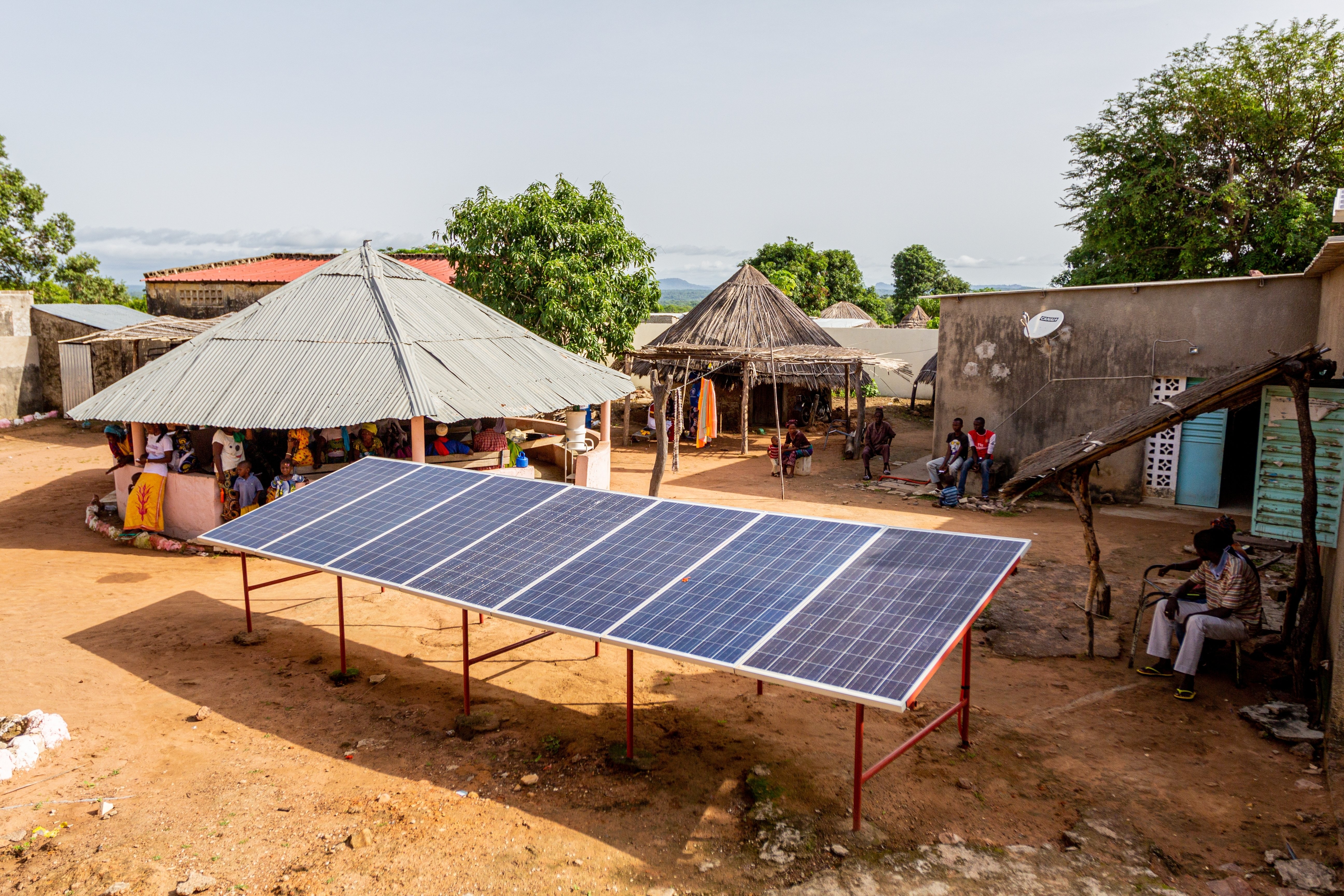
UNIDENTIFIED SPEAKER — please verify (one instance directly echoes Christiana's preceding line almost verbatim, suggesting an audio overlap/echo artifact rather than a distinct 6th speaker): So I have experienced the first 10 consecutive day power cut of my life. The longest power cut they had was seven days long, many, many years ago when they had a hurricane named Juana, which at the time was bringing dead cows floating down the rivers into the sea. That's how bad it was. But this time around, we had a mini tornado, which actually scared me for the first time, and after that, a 10 days power cut. So everything in the fridge, out of the window. Then, yeah, forced me to improvise and learn how to install solar panels and connect them to batteries and still manage to get internet through a router and charge computers with a generator. I mean, gosh, it's been quite an adventure. But nothing like this has been seen before. There were like trees fallen all over the place. Most of the areas around here had also no water access because without power, they couldn't turn on the engines to pump up the water. Luckily, where I am, we did have water, but no power whatsoever. So already in an area that's struggling with shortage of work, because Costa Rica really depends on tourism. There's no tourists coming these days, so people are already struggling and suddenly there's very little food that they might have in their fridge all gone bad because there's no refrigeration in a very humid and tropical weather. So yeah, luckily we are all well and it was not bad, but they anticipate that the rainy season is going to get much worse. That wasn't that short, Tom.
00:54:43.488 --> 00:54:44.208
Tom Rivett-Carnac: No, that's very good. And that is heartbreaking as to what's happening to the people and the landscape in Costa Rica. But I would just say to other podcasts, if your executive producer can't survive a 10-day power cut and rig up solar panels to their laptop and charge their router, then you know why Outrage and Optimism is doing so well. So thank you very much.
00:55:01.808 --> 00:55:04.988
Christiana Figueres: Costa Rica!
00:55:04.988 --> 00:55:13.588
UNIDENTIFIED SPEAKER — please verify (one instance directly echoes Christiana's preceding line almost verbatim, suggesting an audio overlap/echo artifact rather than a distinct 6th speaker): I mean, I had no idea of basic electricity from like high school and suddenly I had to learn all about the positives and negatives and like cables, red and black and all that. You did it. I am so proud of it.
00:55:16.888 --> 00:55:26.788
Christiana Figueres: Yeah, the photographs that Marina has sent of her contraption, I mean, excuse me, of her power plant, are really quite impressive.
00:55:26.788 --> 00:55:30.448
Tom Rivett-Carnac: We'll tweet them out from Outrage and Optimism when this podcast drops. Right. Thank you very much, everybody. Now, we have one more thing for you, which is we're going to end this episode with an amazing piece of music. And we've been so enjoying bringing you these artists and this music over the last few weeks. And this one is no different. This is by an artist called James Hersey. And the song is called My People. So we wrote to James and we asked him about this piece of music. And he said he wanted to write this to encourage appreciation and mindfulness within the community. And there was the phrase soul of my people that he heard and kind of couldn't get out of his head. So he did his best to express what that meant to him and the other person that he wrote the song with, Jeremy Loops. And he also wrote to us that he believed that an artist's role is always to heighten the awareness of the listener for a specific cause. With regards to the climate crisis, it's important to acknowledge our individual responsibility for change. And with that awareness, we can better highlight the systemic neglect by corporations for the health of our atmosphere and the lives of its inhabitants. So this is a beautiful piece of music. Really hope you enjoy it. Thank you again so much for listening this week. Hope you enjoyed the different conversations we have with Lily and Jonathon. They're both brilliant books. I do hope you go out and buy them and read them and enjoy them. We will be back as ever next week. Thanks for listening. Thanks for joining us. We'll see you next week.
00:56:52.868 --> 00:56:53.568
Paul Dickinson: Bye.
00:56:53.568 --> 00:56:54.148
Christiana Figueres: Bye. See you next week.
00:56:55.228 --> 00:56:56.028
Tom Rivett-Carnac: Bye.
00:56:56.028 --> 00:56:56.428
Paul Dickinson: Till then. Nothing compares to the soul of my people.
00:57:29.188 --> 00:57:31.548
Clay (podcast producer): My people, oh my people.
00:57:31.548 --> 00:57:33.228
Paul Dickinson: Nothing compares to you.
00:57:45.458 --> 00:57:50.838
Clay (podcast producer): I try to find my place out there to start with something new. So there you go, another episode of Rage and Hope. Rage and Hope. Rage and Hope. Trying to get it down. The song you just heard was My People by James Hersey. Go give him a follow on social media. I've put the links in the show notes. And if I can mention a really good reason, you're gonna wanna follow James, because I just learned that this year, for his debut album, he's teaming up with Grammy Award-winning producer, Will Hicks, who produced people you might have heard of, like Ed Sheeran and Beyoncé. You definitely don't wanna sleep on this record when it comes out. So go give him a follow. I have a question. Do people outside the US like Beyoncé like we like Beyoncé? Like in a similar way like we like Beyoncé, like we love Beyoncé? That's not a good question. Everybody likes Beyoncé. Outrage and Optimism is a production of Global Optimism and is produced by Clay Carnil, an executive produced by Marina Mancilla-Germann. You know their names. Say it with me. The team is Sarah Law, Katie Bradford, Laura Richardson, Sophie McDonald, Freya Newman, Sarah Thomas and Sharon Johnson. And our hosts are Paul Dickinson, Christiana Figueres and Tom Rivett-Carnac. It's the team. A special thanks this week to Corinna Bolino and Paynton and Joanna Layton for making this week's interviews possible. And a quick special thank you to Joanna for Jonathon's interview. We had some technical difficulties getting the audio files across the ocean, but with a little persistence and some technical genius, Joanna made it happen. So thank you, Joanna. And yes, a big thank you to our guests this week. Jonathon Porritt and Lily Cole. I've put links to purchase both of their books in the show notes. So as I said at the top of the episode, we've been nominated in two categories for the podcast awards. Thank you. Thank you. Thank you. And yeah, it's all thanks to our incredible audience. That's you who retweeted, nominated, and made it happen with less than a day or two's notice. That's amazing. So you are all incredible. Can't thank you enough, but we're going to say it anyway. Thank you. And great news, the podcasting fun doesn't end here. You can join us at Global Optimism on Instagram, Twitter, and Facebook. And with our professional friend LinkedIn that I forget all the time, but didn't two weeks in a row. It's a success. If you love the podcast, please hit the subscribe button and leave us a rating. Five stars takes five seconds, but the positive impact lasts a lifetime. Thank you. Next week, another episode, right here. See you then.