









321 : Inside the Earthshot Prize 2025: Royal Vision, Real Change
This week, we take you behind the scenes of the Earthshot Prize 2025 in Rio de Janeiro, where the fifteen finalists are bringing proof of incredible climate progress across the globe.



About this episode
In a year when climate news can feel relentlessly bleak, the Earthshot Prize offers something vital - proof of progress. And in this year’s fifteen finalists, that proof is taking many forms, across many corners of the globe.
This week, Christiana Figueres, Tom Rivett-Carnac and Fiona McRaith bring us behind the scenes of the Earthshot Prize. Recorded in Rio de Janeiro as the world’s attention turned to the 2025 ceremony.
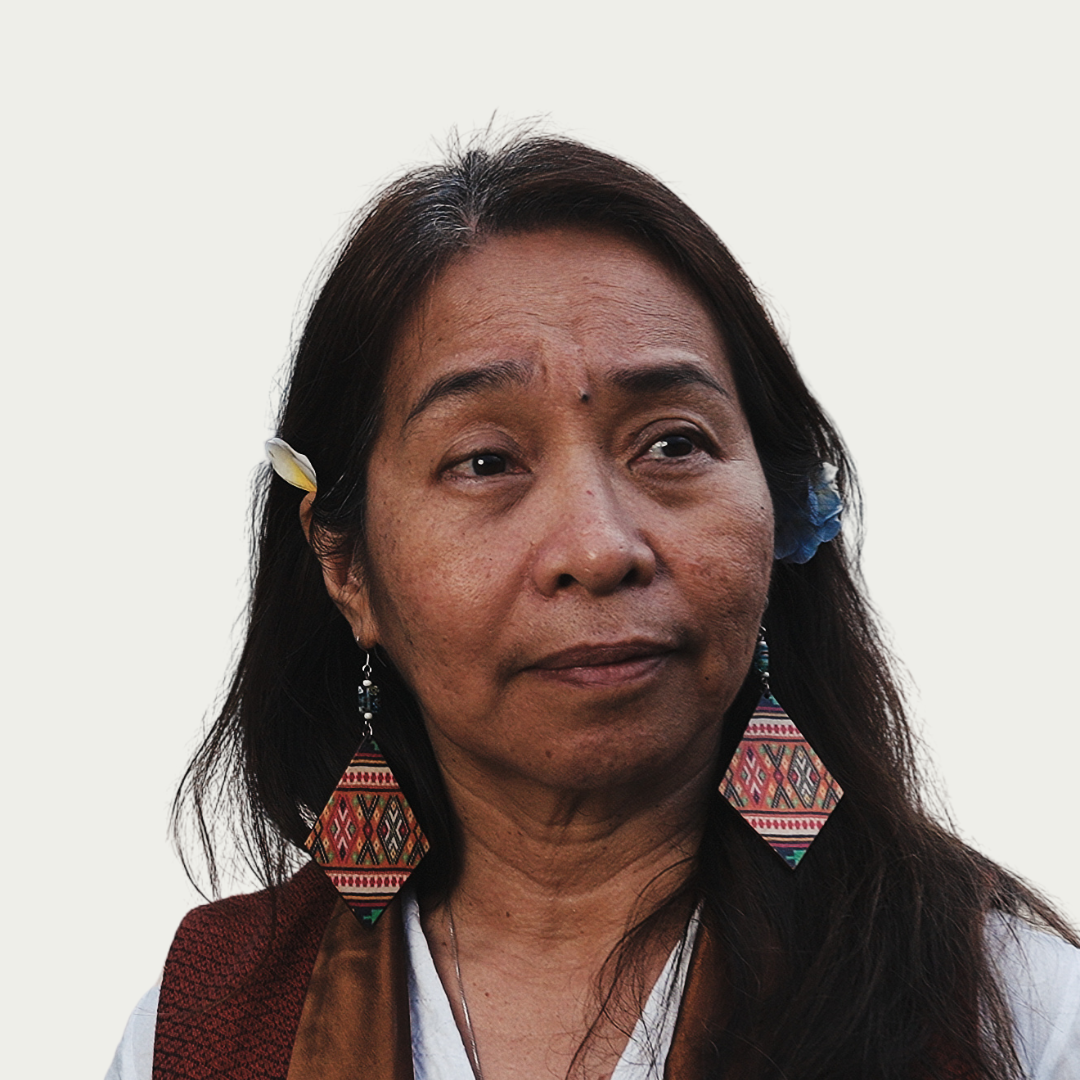
As Chair of the Earthshot Prize, Christiana reflects on Prince William’s vision to turn his platform into a catalyst for global good, and how the Prize has evolved into one of the most visible platforms for environmental innovation. Tom and Christiana sit down with Jason Knauf, CEO of The Earthshot Prize, who shares how the idea first took shape during a trip to Africa and what it means to inject “a big dent of optimism” into the climate story. Christiana also speaks with Nonette Royo of the Tenure Facility - one of this year’s finalists - about empowering Indigenous communities to protect forests and secure land rights.
Later, Fiona takes us inside the Earthshot hub in Rio to speak with more of this year’s finalists. Omoyemi Akerele of Lagos Fashion Week, Runa Khan of Friendship in Bangladesh, and Fred Holt of Key Quarter Tower in Sydney share what this recognition means for their work and the change they hope to spark in their fields.
From floating hospitals to circular fashion, from forest protection to upcycled skyscrapers, hear the extraordinary creativity driving climate action around the world - and the energy building as the Earthshot movement looks toward its next chapter.
Learn more:
⚡Explore all this year’s Earthshot Prize finalists and winners
📜 Read Christiana in the Economist on the innovation driving climate action
🌍Join the global citizens demanding faster action on climate change
🎤 Leave us your voice notes and questions for upcoming episodes on SpeakPipe
Follow us on social media for behind the scenes moments and to watch our videos:
Instagram @outrageoptimism
LinkedIn @outrageoptimism
Or get in touch with us via this form.
Producer: Ben Weaver-Hincks
Edited by: Miles Martignoni
Video Producer: Caitlin Hanrahan
Exec Producer: Ellie Clifford
This is a Persephonica production for Global Optimism and is part of the Acast Creator Network.
Full Transcript
Transcript generated by AI. While we aim for accuracy, errors may still occur. Please refer to the episode’s audio for the definitive version
Tom Rivett-Carnac: [00:00:01] Okay, so this is so exciting. We're here at the launch of the Earthshot Prize. The award winners are going to be on that stage in about 15 minutes time, together with some incredible music performances. I've run into my old friend Leah Seligman, who runs the B team. So, Leah, what do you feel? Is this the first one you've been to?Leah Seligman: [00:00:16] This is my first shot and it's amazing to see the energy. You really feel like things are actually happening here, and it's positive and courageous and exciting.
Tom Rivett-Carnac: [00:00:24] Amazing. All right, let's do it.
Earth Shot Prize Announcer: [00:00:28] Welcome. The founder and president of the Earthshot Prize. His royal highness, Prince William.
Prince William: [00:00:38] The choices we make during this decade will define us, but more importantly, they will define the lives of young. The future belongs to them. They are ones who will continue to drive on and progress. So tonight, it is only fitting we should hear about their vision.
Child: [00:01:01] Why should I not be? Here.
Tom Rivett-Carnac: [00:01:10] Hello and welcome to Outrage and Optimism. I'm Tom Rivett-carnac.
Christiana: [00:01:13] And I'm Christiana Figueres.
Tom Rivett-Carnac: [00:01:14] Welcome to our special episode on the Earthshot Prize. Thanks for being here. So, Christiana, we are now actually a few days in the past from the audio that our listeners will have just heard. It's Monday morning. You have an incredibly busy few days ahead of you.
Christiana: [00:01:31] Wait a second. How are we in the past? We're actually recording this.
Tom Rivett-Carnac: [00:01:34] Yeah, we're recording it in the past. It's nice, isn't it?
Christiana: [00:01:37] It's time warp.
Tom Rivett-Carnac: [00:01:38] You have an incredibly busy few days ahead of you as chair of the Earthshot Prize. This is the Earthshot week here in Rio. And it's going to culminate on Wednesday night with the award ceremony, where the winners of this year's five categories will be announced. So what we want to do here is to give our listeners a bit of a sense of the context and the background of the Earthshot Prize as well as your role, and then we will go into the winners. So how does that sound?
Christiana: [00:02:03] Okay. Sounds good.
Tom Rivett-Carnac: [00:02:04] Maybe just to kick off, I expect most of our listeners have heard of the Earthshot Prize, but maybe not everybody knows all of the detail of what it is. And you have been the chair for the last five years. How would you describe the Earthshot Prize?
Christiana: [00:02:18] Well, first, I think we have to give credit to the founder. And the founder is Prince William, who even before he came up with this idea, supported by Zoe Ware and Jason Knauf, who were at that time at his side. Even before that, he had already decided that he wants to use his platform to address global issues, which he doesn't have to because he could certainly stay within the boundaries of the United Kingdom. Right. But he realizes that he has a pretty unique platform and wanted from a very long time ago to use it for global good. So I think that is that is truly laudable and I think deserves huge recognition for that.
Tom Rivett-Carnac: [00:03:18] And not only that, but I think one of the things that's interesting about what he chose to do with his platform is many people who get into these issues around climate and nature and big issues. It can be on the negative side, right? We should stop doing this. We should stop doing that. But Prince William chose to create a platform that is all about what we should be doing. It's about the beacon of possibility and hope.
Christiana: [00:03:36] Yeah, and the beacon is exactly why the name is the Earthshot. Right. So he's he was inspired by John Kennedy's moonshot idea. Um, and he said, well, we did get to the moon, but have we actually done what we need to do for this planet. And so that's where the Earthshot idea came from. And then he divided it up into five categories. One has to do with restoration of land. The other one has to do with air quality. The third has to do with ocean protection. The fourth has to do with waste and recycling. And the fifth, of course, is climate. So you see, there are all intricately interrelated because you can't work on any of those issues without positively affecting the others. But there was a decision made to build these five categories. And the idea of making it a prize is because he thought that a prize, that is presided and founded by a prince would naturally attract a lot of attention.
Tom Rivett-Carnac: [00:04:58] Right. And it has.
Christiana: [00:05:00] And it has. Yeah. And it's an unusual approach, I would say, but one that is truly beginning to make a mark, because it is attracting a lot of media attention to the fact that he is the centerpiece and, and the main voice of this, but that he is building around the prize a group of innovators around the world in all of these five categories and in each category, very diverse, who all are in common about doing the utmost, using the most cutting edge social Innovation, technological innovation, political innovation, regulatory innovation to advance the objectives of the category that they're being considered in. And so what the Earthshot Prize does is it actually scours the world for innovators, whether they are for profit or not, for profit, whether they are private or public, for innovators that are truly giving their lives to being disruptive.
Tom Rivett-Carnac: [00:06:23] I'd love to just ask you about one thing that is, I think I'm sure that you have thought about this as part of a board and with the founder. Um, obviously those five categories you just set out are huge systemic challenges that require everybody. And a prize by nature has to have one winner. So how do you manage that tension between there being one winner and actually needing a systemic solution in each of these different areas? Is that how you think about it as part of the.
Christiana: [00:06:48] Well, it is it is a difficult tension, right? Because it is absolutely true, Tom, that what we need here is not one or 5 or 60 winners. What we need is systems change. So if you think about this as a structure sort of Russian dolls.
Tom Rivett-Carnac: [00:07:07] Right. So so.
Christiana: [00:07:09] Dolls. Yeah. Matryoshka dolls. So the biggest doll. The fattest doll. Yeah. Um, is the systems change that we need for which many things have to happen. Finance regulation, technological innovation.
Tom Rivett-Carnac: [00:07:24] Citizen engagement.
Christiana: [00:07:25] Citizen engagement. You know, everything. But what the prize does is it looks at that biggest doll and then it says, okay, what is nested inside of that doll? And can we go to the very specific, in this case almost the smallest doll, if you will.
Tom Rivett-Carnac: [00:07:46] It's interesting because I remember a few years ago there was one that particularly caught my attention Coral Vitae, that one in the Restore Our Oceans example. Right. And growing corals and replacing them. And obviously their work is amazing and they deserve to win and they're incredible. But when I saw that, it just opened my mind to think about the ecosystem of things that need to happen and all of the other different entrants and other types of players in that space. So that's interesting that the strategy is to use the specific example of an amazing project or individual or company as a way of focusing attention on this enormous suite of activities in that.
Christiana: [00:08:20] Area, and of which each of those is only a microcosm, right? Yeah. Right. And so there's no.
Tom Rivett-Carnac: [00:08:26] Whole is present in the parts.
Christiana: [00:08:27] Exactly. What is present at one level of the system is present.
Tom Rivett-Carnac: [00:08:31] I think I heard you say that before.
Christiana: [00:08:32] I think so too. But that is the particular contribution of the Earthshot Prize, right? Because all of us who work on systems change, we do so at a global scale, and we do you know global data? The kind of global interventions that we know are necessary. But the Earthshot Prize takes that to the ground. On the ground? What? Where is the difference being made? Who is actually putting themselves out for that? Yeah. It's important to understand that the Earthshot Prize is not an accelerator. It is not a fund.
Tom Rivett-Carnac: [00:09:07] It's a venture.
Christiana: [00:09:08] Capital. It's not.
Tom Rivett-Carnac: [00:09:09] Venture.
Christiana: [00:09:09] Capital. No, it's not looking for companies that are going to become unicorns. I mean, maybe some will, but that's not the purpose. The purpose is to find compelling, inspiring illustrations of the kind of system disruption and change that needs to occur. And sometimes the finalists and the winners are already having a huge impact across a whole region, across a whole province, across a whole ecosystem. Sometimes not. Sometimes it is a very specific technical innovation that is just getting started, but that we know that if that flourishes, it will have a huge impact. So it's not easy to come up with an easy equation, a simple equation of what an Earth shot prize finalist or winner is. Unless you understand that what is being done is the illustration of the kind of transformation that is necessary.
Tom Rivett-Carnac: [00:10:26] So I think in this hotel, we're in your hotel in Rio Christiana, and everyone associated with the Earthshot Prize is here. So I think it's possible that Jason Knauf, the CEO, is here in this hotel. Should we see if we can?
Christiana: [00:10:36] Let's grab.
Tom Rivett-Carnac: [00:10:36] Him. Grab him to come and talk to us.
Christiana: [00:10:39] He is incredibly busy, but I think.
Tom Rivett-Carnac: [00:10:40] You want to. You want to interview him or should I talk? Otherwise it's him talking to his boss.
Christiana: [00:10:44] So. Yeah.
Tom Rivett-Carnac: [00:10:45] All right, I'll interview him and see if we can get him.
Jason Knauf: [00:10:48] Hey. Oh.
Christiana: [00:10:52] Jason, this is your hot seat.
Speaker9: [00:10:54] Great.
Tom Rivett-Carnac: [00:10:57] Jason Knauf is so nice to see you. Congratulations on getting here in Rio. The Earthshot Prize is going to be launched in a couple of days. It's Christiana applauding in the background. We know how much time and effort this has taken you and the whole team. I'd love to ask you. How are you feeling? How's it feel to be here?
Jason Knauf: [00:11:10] I'm feeling great. Thank you very much for having me. It's great to be on my boss's podcast. You know, Christiana, as chair of the Earthshot Prize. It's wonderful to be here. And I'll get my review out afterwards.
Tom Rivett-Carnac: [00:11:20] Yeah. Yeah. Exactly.
Jason Knauf: [00:11:21] Yeah. But both both of you from day one, I don't know how how many people know this, but both of you were such a huge support and inspiration before we even really had a name for Earthshot of actually saying, this is what you should think about, this is who you should talk to. So yeah, halfway through the decade, we are delighted to be in Rio and it's great to be with you.
Tom Rivett-Carnac: [00:11:37] Where did the idea come from? It's an innovative idea.
Jason Knauf: [00:11:40] Yeah. So we were on a trip with Prince William back in 2018. And you know him a little bit. Um, and one of the things that he was seeing, we were in Tanzania and Namibia and Kenya and in his job, he gets to meet amazing people doing incredible things, whether it's wildlife conservation, community climate resilience projects, um, great tech breakthroughs. He sees all this stuff and gets to travel and knows how much momentum there is out there. But then we got home and I can't remember where the cop was. Maybe in Poland that year where the talks had sort of collapsed and all the headlines were really negative. And he called a couple of the team together. And it's like, how can we be always out on the ground seeing that people on the front lines are actually responding with great ingenuity? Um, I get to meet all these incredible innovators and leaders doing great things, but then people at home are seeing this story every day about, you know, real hard things happening, diplomacy or businesses not meeting the standards we'd like them to or whatever. But the message that most people are getting is that we're not going to be able to get this right. We're not going to be able to rise to this challenge. Um, and he's like that pessimism and despondency is actually as great a threat to climate action as anything else out there. So what are the things that or the tools that he had at his disposal to do something about that one, to back the people who he really believed in, that were doing incredible things to mobilize a network, which is something that with his responsibilities and his job, he can do, but also to try to put a big dent of optimism into that prevailing pessimism with a huge global platform that he and his partners have. So we put all those things together, started talking to people like you and Christiana, and the Earthshot Prize was born.
Tom Rivett-Carnac: [00:13:19] Amazing. And I have to say, arriving last night in Rio and this huge banners up, optimism plus urgency equals impact. Which is exactly where I know that's urgency.
Jason Knauf: [00:13:26] Plus optimism equals action.
Jason Knauf: [00:13:28] You're not you're not paying attention enough.
Tom Rivett-Carnac: [00:13:31] I got the I got the spirit. Even if I didn't get the details. Exactly.
Jason Knauf: [00:13:35] It's all good.
Jason Knauf: [00:13:36] It's all good. Yeah.
Tom Rivett-Carnac: [00:13:38] And so there's two things I'd love to ask you quickly about. One is the Earthshot Prize is about systemic impact. It's about identifying all of the thousands of of innovators and opportunities around the world. As you say, when you speak to the people that are really doing this on the ground, you cannot help but be inspired. But, but, but the nature of a prize is one person has to win. So how do you manage that tension between having to have a winner but wanting to focus attention on the systemic?
Jason Knauf: [00:14:02] I think the first thing I want to say is that we've got to have a degree of humility about all of this, whether they're leaders arriving at Cop from big important countries or Prince William and the Earthshot Prize, arriving here in Rio trying to do our bit. We're one part of a much bigger movement. And our finalists 15 this year. We're up to 75 so far this decade. They're absolutely amazing. But we know they're just exemplars. You know, they're a symbol of what this wider action is. And we're going to do everything we can to back them. But it's not just about Earthshot or about them. It's about what our movement is contributing to this overall mission. So what I think everyone really feels that, and I hope that leaders showing up at Cop are also going to not get too ahead of themselves like they're an important part, but not the the only part or even the most important thing. What we have seen over the course of the last five years, and especially with this year's group of finalists who have been kind of inspired by the previous years and, you know, working together.
Jason Knauf: [00:15:00] And the message we want to send is really that this momentum is unstoppable. Yeah. You know, the transition is going to happen by the end of this decade. We are going to put it beyond question. Our our progress and our success is inevitable. And again, you know, pick up the papers. It doesn't feel that way. Yeah. And it's not that the science isn't telling us hard things. It's not that they're not some scary tipping points that we're facing, but we're going to show people over the course of the next few days. And I hope everyone who shows up to Belgium as well is going to show that Actually, one way or another, this is going to happen. We are going to succeed. It's going to be hard. There's going to be a lot of roadblocks in our way. We don't have all the solutions we need, but we have a lot of them. So that's the message we're going to send and that's the responsibility we feel we have.
Tom Rivett-Carnac: [00:15:46] Love that. Love that. Jason. Amazing message. Thank you for talking to us. Thanks for being here. So excited about Wednesday.
Jason Knauf: [00:15:52] Thanks.
Jason Knauf: [00:15:53] Looking forward to it.
Tom Rivett-Carnac: [00:15:53] Looking forward to it.
Tom Rivett-Carnac: [00:16:00] So in this episode we're going to speak to some of the different finalists. And as you said earlier, these are systemic indicators of the remarkable change happening everywhere in the world. And they're all amazing. But we can't bring you conversations with all of them. And we're going to start, I think, Cristiana, with your discussion with Nanette Royo from the ten year facility. Um, do you want to set that one up for us?
Christiana: [00:16:18] Yeah. Nanette is the executive director of this initiative called The Tenure Facility, and it is a global organization that supports indigenous peoples and local communities to secure the legal rights to their lands.
Tom Rivett-Carnac: [00:16:36] Great. Well, let's hear your discussion with Nanette Royer.
Christiana: [00:16:39] Tom, I should warn you that she was kind enough to take my call when she was at an airport on her way to Rio. So there's a lot of noise as background to the interview, but that's going to be part of the of the specialty of this episode, that we will have a lot of background noise because it's a big event.
Nanette Royo: [00:16:59] Thank you. Um, Christiana. Indigenous peoples occupy two thirds of the world's last remaining forests, and they occupy the land passed on to them from generations. They treat the land as mother. And, uh, so they've been protecting the land and forests and nature around for very many, many years. What's happening, though, is that there is no title or tenure instrument that secure their position to these lands. And increasingly, many have gone interior into their territories to take the land away for other purposes. And they're being asked, what is your proof that you own this land? This has been going on for a long time. And so now they've worked hard to push for laws that support them. And so ten year facility now ensures that they have the support and get a secure government recognition.
Christiana: [00:18:07] It seems to me that what you are doing, the important work that tenure facility is doing, is closing the gap between what I would say is legacy law, or maybe custom law among these indigenous peoples who for hundreds if not thousands of years have taken care of these lands, have had the legal right according to their own custom law. And now the problem is not that they don't have the right and the tenure to that land, but that we in the West, in the white West don't recognize that. I think that's the problem. And so what you're trying to do is to give recognition from our legal system to something that has already existed. You're not introducing new rights. Is is that correct?
Nanette Royo: [00:19:15] It is correct. Yes. In the Western, uh, and very, uh, colonial laws that we generally have in our countries, these customary rights are not seen. They don't show up on paper.
Christiana: [00:19:29] And hence not respected. Yes, because whatever is not on paper has no no validation.
Nanette Royo: [00:19:35] Yes. And, uh, and uh, it is painful for many of our indigenous leaders who have gone through these negotiations to show a paper telling them the government that they own this land because this is a parent, this is their their ancestor. The land is what who birthed them, right? But then they had to essentially understand that that's the language of that law.
Christiana: [00:20:01] Yeah. Nanette. And, um, one of the reasons why we are chatting here today is not just because of the intrinsic value of your work, but because you're an Earthshot finalist. What has it meant for you and your team to have been recognized as as an Earthshot finalist.
Nanette Royo: [00:20:25] It's really deeply and honor. And our team are, more than anything, received this very precious affirmation of the work that we do. And for our donors, it has become also an affirmation of of their decision to commit, uh, and to, to, to expand not just with us, but many other organizations that do similar things. I am really honored by that here.
Tom Rivett-Carnac: [00:21:02] Okay, so we thought it would be nice at this point.
Tom Rivett-Carnac: [00:21:04] To hear directly from some of the finalists.
Tom Rivett-Carnac: [00:21:06] And Fiona Mcraith.
Tom Rivett-Carnac: [00:21:07] Well known to listeners of this podcast, co-host of our Inside Cop series, is down at one of the events that the Earthshot team are laying on, and she's been speaking to some of the finalists.
Fiona McRaith: [00:21:20] Hey everyone, it's Fiona. I'm in downtown Rio, just where the Earthshot Prize has taken over a old warehouse in the port area and made it into an event space. They've just hosted a round table. I'm here to chat with three of the finalists. Omoyemi of Lagos, fashion week Runa of friendship and Fred of the Key Quarter building. Let's go on in and see what they have to say about being finalists. Let's learn a bit about their projects and hear about what's to come this week with Earthshot Prize. Tell us about the transformative project that you are here with.
Omoyemi Akerele : [00:21:54] Thank you so much. It's such an honor to be here. I mean, being nominated as a finalist for the Earthshot Prize is what I describe as an honor. It's a privilege, but it's also a responsibility. And this naturally brings me, you know, to tell you a little bit more about us. We know that the fashion industry in general is very extractive when it comes to, you know, the work. It depletes resources, it impacts the environment and currently contributes between 2 to 8% of greenhouse gas emissions, which is quite huge when we think about our consumption patterns as well, which is currently up by about 60% in the last 20 years.
Fiona McRaith: [00:22:30] six Zero. Load More
Fiona McRaith: [00:22:39] So up by 60% and only 1% is recycled.
Omoyemi Akerele : [00:22:42] Yeah. In terms of how much people buy like our shopping habits and patterns. And a lot of that is fast fashion. Yes. And listen this is where we come in, you know, Lagos Fashion Week. We are part of a global movement that believes that culture is the ultimate regenerative tool. What does that even mean? Yes, we believe that, you know, the process of design, sourcing materials and, you know, making garments should be through a process that, um, should restore resources, not deplete.
Fiona McRaith: [00:23:07] So you're wrapping that all up in one week where it really showcases that. But obviously it must continue beyond just the one fashion week right yes.
Omoyemi Akerele : [00:23:14] Off the high of Lagos Fashion Week where people are, you know, you see the glitz, the glamour, the glamorous, you see the sexy. Then in April, we take you behind the scenes to look at the art of making what actually, you know, where do the materials come from? Where are they sourced from? What communities do these designers work with? You know, are they recycling? Are they upcycling? You know what exactly is happening through the lens of culture?
Fiona McRaith: [00:23:37] So this is the transparency. This is where the artisans come in the supply chain, the cultural element. Oh, that is so amazing. And so we are in Rio. In fact, the award ceremony will be in this building right behind us. Tell us a little bit about Urshot and what it's helping unlock for you and for Lagos Fashion Week.
Omoyemi Akerele : [00:23:55] What is going to unlock for us is that ability to be able to house, you know, some house. Our approach, you know, to design our approach to creativity through the lens of designers, to be able to take it from something that's completely theoretical to a proof of concept.
Fiona McRaith: [00:24:09] Yes. Amazing.
Omoyemi Akerele : [00:24:10] And then expand that across Africa. And then guess what? This is the best part. Imagine all you know, fashion weeks within the Global South who are already working like this. We're here in Rio. There's a huge fashion week here. Yes. You know, imagine all of us being able to buy into this vision because people are already working like this. But like us, they probably don't even voice it out because there's nowhere on Lagos fashion weeks, you know, uh, manifesto or platform that you see this, you know, it's something we do by by highlighting designers and, you know, showcasing the work they do. But imagine if there's a coalition of fashion weeks across the global South.
Fiona McRaith: [00:24:44] That has this added.
Omoyemi Akerele : [00:24:45] Center. Yeah, from 20 between now and 2030. That's huge.
Fiona McRaith: [00:24:50] We are here with Runa of Friendship, an Earthshot finalist. Tell us a little bit about this incredible project.
Runa Khan : [00:24:58] So I started working with climate migrants 23 years ago, not knowing that they were climate migrants. They were just the most underserved communities in the country. And there were millions And we started off with ship hospitals. Actually, these were the first ship hospitals and ship hospitals. Yes.
Fiona McRaith: [00:25:19] So a hospital on a boat.
Runa Khan : [00:25:21] On a ship?
Fiona McRaith: [00:25:22] On a ship. Okay.
Runa Khan : [00:25:24] Because people could not reach health care. We had my goodness, them.
Fiona McRaith: [00:25:29] That is brilliant. Oh my gosh. So this was 23 years ago before climate migrants because that's just not what we were calling it.
Runa Khan : [00:25:36] Absolutely.
Fiona McRaith: [00:25:37] And where have you come in those 23 years since? It's not only hospitals but also schools. Is that right?
Runa Khan : [00:25:43] That's correct. We also have schools. And these schools are in the community because, you know, the river Brahmaputra is 30km broad and land is built on silt. So continuously people are migrating. 42, 68 times in their lifetime and mostly over the last 20 years. So and every time they move, they become poorer. So the schools are in the community and you get no teachers. So we take community. People train them as teachers, and they have the best, uh, and the school can be put onto a boat.
Fiona McRaith: [00:26:19] For.
Runa Khan : [00:26:20] Three hours, dismantled, put on a boat and taken to a safe place. So there's continuity of education.
Fiona McRaith: [00:26:26] Wow. That is amazing.
Runa Khan : [00:26:27] They have the best results in the country, I tell you.
Fiona McRaith: [00:26:30] That is so cool. I would love to see that. I would as a kid. I would have loved to study there. Oh my goodness. Um, so tell us a little bit about what does being an Earthshot finalist mean for you and for friendship? I mean, we're here in Rio the week of the Earthshot Prize awards. Tell us a little bit about what that has meant for you and for friendship.
Runa Khan : [00:26:49] You know, um, the Earthshot Prize has been the first entity who has actually recognized our work as being special, climate related and impactful because it's holistic.
Fiona McRaith: [00:27:05] Yes.
Runa Khan : [00:27:06] And this for me, was what was needed for scaling our work with impact. Because everything you know, you have to give the right thing in the right time, in the right amount, in the right way for development to happen, and for people to get a platform on which they can stand and jump start in life.
Fiona McRaith: [00:27:25] Yes, yes.
Runa Khan : [00:27:26] And providing it holistically means that they are working not only for themselves, but sustainably for the future, because they're also recognising the biodiversity, the environment and the whole ecosystem in which they live.
Fiona McRaith: [00:27:45] Fred, hello. It's great to meet you.
Fred Holt: [00:27:47] Nice to meet you.
Fiona McRaith: [00:27:48] It's great to have you here.
Fred Holt: [00:27:49] Thank you.
Fiona McRaith: [00:27:50] You are here representing a truly innovative building. Tell us about it.
Fred Holt: [00:27:56] Well, Quay Quarter Tower, which is in Sydney, Australia, probably one of the most recognisable harbours in the world. Our building is brand new, but it's also 50 years old at the same time. So Quay Quarter Tower is the first upcycled high rise in the world.
Fiona McRaith: [00:28:13] Wow. What does that mean?
Fred Holt: [00:28:15] So Quay Quarter Tower was essentially in. It was at the end of its commercial life, so to speak. As I say in the industry, however, the bones of the structure were still really good. Cool. So what what we've done is we essentially stripped the tower, took the facade off, took all of the underperforming services out. We shaved a bit of part of the tower off and then grafted on additional floor plate. Cool. And that essentially was breathing new life into an ageing, unloved asset. And in doing that, we save 98% of the core 65% of the structure.
Fiona McRaith: [00:28:55] Wow.
Fred Holt: [00:28:56] And that saved about 12,000 metric tons of embodied carbon. And our industry embodied carbon is what we need to focus on operational carbon. We've got a great handle on that. Got it. Renewable energies are coming online more and more every year. So it's the embodied carbon that becomes the huge contributor to carbon emissions.
Fiona McRaith: [00:29:17] I mean, the buildings industry is a huge emitter and a huge part of that comes from carbon in the infrastructure, in like the infrastructure. So the steel, the cement, the concrete, and it sounds like you're able to save a lot of that. You didn't have to tear it down as would typically happen in a building.
Fred Holt: [00:29:32] It's real legacy is what it's doing for the building industry. Yeah, it's a watershed moment. It's a paradigm shift. Our industry is typically a demolished and rebuilt, and industry is hard to change. But Quay Quarter, Quay Quarter Tower is actually creating a blueprint for change.
Fiona McRaith: [00:29:51] Sweet. Okay, last thing in one sentence. What is Earthshot unlocking for you?
Fred Holt: [00:29:57] Earthshot is unlocking. Not so much for me, but potential to change an industry, um, from within. And I think that's, um, that's that's one of the key features and beauty is what the earth shots actually producing.
Fiona McRaith: [00:30:13] Showcasing something right when it's poised to be at that tipping point that can absolutely scale.
Fred Holt: [00:30:17] And we're at a tipping point.
Fiona McRaith: [00:30:18] Amazing. Thank you Fred.
Fred Holt: [00:30:20] Thanks thanks thank you.
Speaker18: [00:30:21] Thank you.
Fiona McRaith: [00:30:23] So amazing. I am deeply inspired by a building, um, communities, creating fashion and culture so much more than just the clothing, but community and culture and then friendship. Floating hospitals, floating schools, um, all for and by local communities. All right, let's go back to Tom and Christiana with more on our shot.
Tom Rivett-Carnac: [00:30:50] Okay, so I think that wraps us up for our pre-chat about the Earthshot Prize, the amazing momentum that it's built over the previous years. And, um, and I think the next thing we're going to do is the next thing listeners will hear is Wednesday night at the awards ceremony where we're going to we're going to try and capture some of the audio. And if we get a chance, you and I might then sit down after the award ceremony that night and actually share with the listeners who won the night.
Announcer: [00:31:20] Yeah.
Tom Rivett-Carnac: [00:31:24] So, Christiana.
Tom Rivett-Carnac: [00:31:25] What an amazing.
Christiana: [00:31:26] Okay. Tom, how was that? Oh my God.
Tom Rivett-Carnac: [00:31:29] I've only ever been to one of these before, which was the very first one in Alexandra Palace. And this was just blew me away. Just like night and day. Different.
Speaker20: [00:31:35] Well, leave it to leave it to the Brazilians to put on a show, right? What a.
Tom Rivett-Carnac: [00:31:40] Incredible performances, amazing winners. So I think we're going to try and record this reasonably quickly, because poor old Ben has to get this out by. Tomorrow morning.
Christiana: [00:31:48] Yes yes yes.
Tom Rivett-Carnac: [00:31:49] Yes. But what we thought we'd do is go through the categories and let the listeners know who won.
Christiana: [00:31:53] Okay.
Tom Rivett-Carnac: [00:31:54] So should we start with cleaner air?
Christiana: [00:31:56] No, we should start with the category that we've already gone into a little bit a few days ago. Yes. Right. Which was? Protect and restore our land.
Tom Rivett-Carnac: [00:32:06] Oh, yeah. This one was great. Okay.
Christiana: [00:32:07] And so, as listeners know, the candidates there were the tenure facility, the Tropical Forest Forever facility. And the winner announced tonight was.
Anouncer: [00:32:22] Green, green.
Tom Rivett-Carnac: [00:32:25] Green, green. Loved it. That's the Atlantic rainforest that we talked about.
Christiana: [00:32:28] So critical. Yeah. The Atlantic Forest in Brazil. Yeah. So very exciting.
Tom Rivett-Carnac: [00:32:33] Okay, great. So let's move on to the cleaner air category. That was I think it was three local governments wasn't it.
Christiana: [00:32:38] Yeah, it's three local governments. So all public sector. Yeah. Very interesting because it does require public regulation in order to clean air. And the three nominations there were the Chinese city of Guangzhou because of their cutting edge public transport that has been electrified. Um, and then we have the, the region of Gujarat in India and in Gujarat. What they are aiming to do is to take what is already a very successful emissions market structure, to be able to clean the air in many other cities in, in India.
Tom Rivett-Carnac: [00:33:25] Through this trading system. Right. The particulate emissions trading system, very innovative. But the winner.
Announcer: [00:33:30] The city of Bogota.
Christiana: [00:33:37] The Colombian capital of Bogota. Amazing amazing amazing. And they started this a long, long time ago. I remember in one of my previous lives that they presented TransMilenio, which is the electric bus system that went in, and they were the first city in Latin America to ever do anything like that. And their target is to cut emissions by 50% by 2030 within five years. And so they have gone beyond public transport. They have now gone into mountain reforestation, urban greening, active mobility and of course, clean energy transportation.
Christiana: [00:34:20] Here with the mayor of Bogota, who has just been declared winner at the Earthshot Prize. What are you feeling tonight?
Mayor of Bogota: [00:34:28] Well, this is amazing. This is the work of many, many people in Colombia, in Bogota, many administrations, many people from civil society who have allowed us to work for the city and who have promoted the agenda to clean air in Bogota, to to improve the public transportation system, to have a healthier city. So this is an honor to receive this on behalf of the city that innovates. And with this we have the responsibility to keep innovating and be more ambitious in the future.
Christiana: [00:34:55] Okay, mayor, that's what your head says. What does your heart say?
Mayor of Bogota: [00:34:59] Well, no. This is amazing. I cannot believe it. I cannot believe it. It's amazing. It's amazing to be here.
Christiana: [00:35:05] Felicidades. Bogota.
Tom Rivett-Carnac: [00:35:09] Okay. What's next?
Christiana: [00:35:11] Oceans.
Christiana: [00:35:12] My blue marble.
Tom Rivett-Carnac: [00:35:13] See? Previous episodes. Ben will put it in the show notes for an explanation of what the Blue Marble was.
Christiana: [00:35:20] Okay. Do you want to present them?
Tom Rivett-Carnac: [00:35:23] Okay, so the ocean one was so cool. So let's go through these in turn. First of all, one of them I was really inspired by was on microplastics. This one's called matter. And it's about capturing microplastics from washing machines and textile factories before they reach the ocean. Essentially, the 2030 headline is to prevent 15,000 tons of microfiber pollution from entering our ocean, roughly the output of 400 textile factories. The other is something Uh, bonds for ocean conservation. This is a broad concept that we've talked about for a long time, but seeing it really manifest in this innovative way, essentially, this is using debt for Nature Finance to unlock capital for marine protection. Uh, the headline is to double debt for nature conversions to 16 countries by 2030. Um, this is essentially about sovereign debt for nature swaps. Uh, and it's enabled by a new $1 billion private credit enhancement facility that would have commitments from investors and development finance institutes to enable debt for nature swaps, which is just such an incredible opportunity to unlock capital for places that really need it in order to preserve and conservative nature.
Christiana: [00:36:32] And the winner was.
Tom Rivett-Carnac: [00:36:34] And the winner was actually an incredibly powerful one.
Anouncer: [00:36:37] Categoria. Nossos oceanos vai para right. Sea trials.
Tom Rivett-Carnac: [00:36:47] The High Seas Treaty, the world's first legal framework to protect two thirds of the global ocean. We, of course, talked about this on outrage and optimism when it happened. You, I remember, were incredibly excited, secured universal ratification of the world's first High Seas Treaty, protecting vast ocean areas through launching three new marine protected areas and a financing mechanism. This has been such a long time in coming this treaty. Hugely deserving winner.
Christiana: [00:37:13] Hugely deserving.
Tom Rivett-Carnac: [00:37:14] So do you want to take us through waste free world? This is a great one.
Christiana: [00:37:18] Waste free World. Well, so we had uh, again three nominations. Uh, one was uh, another Chinese, uh, nomination, which is called a renew. And what they're doing is recycling and reusing 100 million electronics in China annually by 2030. So, I mean, just think of the mountains of electronics that are in every country, but especially in China. Can you imagine how many cell phones? And I don't know what else. Just mountains. I mean, they're literally photographs of these mountains of electronics that are just thrown there.
Tom Rivett-Carnac: [00:38:01] Yeah.
Christiana: [00:38:01] Um, and so, you know, God bless them, they are recycling and reusing these electronics in order, uh, in order to put a lot of the material inside to second and third use. So fascinating and and very important. The second one was very unusual. We've never had a building.
Tom Rivett-Carnac: [00:38:25] A building is amazing.
Christiana: [00:38:26] Building having been nominated. And that's the Key Quarter tower in Australia. So critical because most of the buildings that we're going to need for the century have yet to be built if we're going to build them. And what they're saying is maybe we don't have to build all these new buildings. Maybe we repurpose, recycle and reuse buildings that are already there and turn them into 21st century buildings. So it I mean, it is a step in a very important direction in modernizing urbanization in a responsible way. Now, however, neither of those were.
Christiana: [00:39:07] Winners, right? Yeah.
Announcer: [00:39:10] Lagos.
Anouncer: [00:39:13] Lagos fashion week. That's right. Yeah.
Christiana: [00:39:15] In Nigeria, what they're doing is they have built Africa's first circular fashion system and they are reusing, repairing and regenerative design into fashion. So taking recycling into high fashion and they want to inspire the entire fashion industry.
Christiana: [00:39:38] And here we are with the winner of the Lagos Fashion Week. How are you feeling?
Omoyemi Akerele : [00:39:45] I'm in shock but at the same time I'm like, wow, thank you. Thank you so much. This is such an honor. It's a huge responsibility. My brain is going on overdrive. All the things we have to do, you know? So I guess that's part of it. You're supposed to feel that way, and I'm. I'm looking forward to it. I'm confident that we have a lot of support just looking at you here, looking at everyone in the room that, you know, there's a huge community. So it doesn't feel as daunting as it should because there's a community in there and that's what we believe in. It's all about community, co-creation and collaboration to be able to, you know, achieve these goals. Nobody can do it alone.
Christiana: [00:40:22] Absolutely. Congratulations. Welcome to the family.
Omoyemi Akerele : [00:40:26] Thank you. Thank you so much.
Tom Rivett-Carnac: [00:40:29] So climate of course. Obviously they're all connected to climate in many ways. But this was this is the category that specifically looks at climate. The first one I'll cover is based in the US and this is form energy, which is a solution that unlocks multi-day energy storage. So critical, of course, via batteries that make renewable power reliable, affordable and universal. And the other, of course, is one we know super well. Uh, Mia mottley, the prime minister of Barbados. Avinash Prasad, of course, was a big part of this, uh, the Bridgetown initiative.
Christiana: [00:41:01] And was just on our podcast.
Tom Rivett-Carnac: [00:41:02] And was just on our podcast last week, uh, basically leading the global momentum for climate resilient finance and blue economy innovation. Incredible impact they had. Uh, pioneering a global shift for small island states to build a carbon neutral economy with strong institutions and thriving communities.
Christiana: [00:41:19] And the winner was Dada. Dada.
Anouncer: [00:41:22] Because our climate goes to friendship.
Tom Rivett-Carnac: [00:41:28] Friendship from Bangladesh, which is about building climate resilience in vulnerable communities through floating hospitals, clean energy and adaptive Active livelihoods. So, Cristiana, I know you've been the chair of the Earthshot Prize now for five years, but this has been a very special year, hasn't it?
Christiana: [00:41:45] Well, it is, because it's in my region.
Tom Rivett-Carnac: [00:41:47] It's in your region?
Christiana: [00:41:48] Yes.Yeah.Very exciting.Uh, and and and it's coinciding or, uh, being back to back with the cop. So it makes it, you know, even more attractive for people to follow what is happening here and inspire more and more action, whether it is going to be shown at the Cop or anywhere else. But it is very consistent with what the Brazilian presidency has been saying, which is the mucorales. And they're saying this is not about, uh, this is not about national governments taking big decisions and big agreements as it was ten years ago. This really is about action on the ground. This kind of action on the ground, it's about everybody putting their brains to work, about how are we going to make a difference? So little, little did the Brazilians know that the Earthshot Prize has been doing now for five years?
Tom Rivett-Carnac: [00:42:43] Right. And now brings it to Brazil at exactly.
Christiana: [00:42:46] Exactly the right moment.
Tom Rivett-Carnac: [00:42:47] This has been a great episode. Thank you, Christiana, for staying up late after the awards and talking us through all of that. And thanks everyone for listening. Hope you enjoyed this inspiring episode of solutions, optimism and possibility and the Earthshot Prize vaccine by. And we'll actually be back. We're entering into a period where we're going to be releasing podcasts more regularly now, and there'll be another episode drop tomorrow where we're going to go into what happened this week at the Local Leaders Summit and the C40 summit here in Rio.