









339: Kim Stanley Robinson on pre traumatic imagination and the stories that change us
This week, we explore storytelling as a cultural tool for moving from despair to determination in a reflective conversation with Kim Stanley Robinson, the acclaimed author of The Ministry for the Future.



About this episode
This week on Outrage + Optimism, we’re taking a breath.
After two intense weeks of daily updates from COP30 in Belém, we’re returning to weekly programming with something different - a slower, deeper, more reflective conversation that felt too valuable to cut.
While in the Blue Zone, we sat down with Kim Stanley Robinson, the acclaimed author of The Ministry for the Future, 2312, The Mars trilogy, and the Science in the Capital series. His writing has been read by negotiators, ministers, campaigners, and many of you.
In our conversation, Kim Stanley Robinson reflects on why The Ministry for the Future begins with such a devastating opening chapter, a “punch in the gut” designed to reveal the human limits of adaptation. He introduces the idea of “pre-traumatic syndrome,” the unsettling clarity that comes from imagining a catastrophe before it happens, and how this can motivate us rather than paralyse us. We explore storytelling as a cultural tool for moving from despair to determination, and why each of us needs a a unifying purpose that gives shape to our actions in a chaotic world.
At a COP defined by urgency, exhaustion, and flashes of courage, this wide-ranging conversation with Kim Stanley Robinson felt like a necessary exhale, a moment to step back and reflect on why we do this work, and what kind of future we’re choosing to build.
We’re airing the conversation almost exactly as it happened.
🎤 Leave us your voice notes and questions for upcoming episodes on SpeakPipe
Follow us on social media for behind the scenes moments and to watch our videos:
Instagram @outrageoptimism
LinkedIn @outrageoptimism
Or get in touch with us via this form.
Series Producer: Ben Weaver-Hincks
Planning Producer: Caitlin Hanrahan
Edited by: Miles Martignoni
Exec Producer: Ellie Clifford
This is a Persephonica production for Global Optimism and is part of the Acast Creator Network.
Full Transcript
Transcript generated by AI. While we aim for accuracy, errors may still occur. Please refer to the episode’s audio for the definitive version
00:00:03.500 --> 00:00:05.500
Tom Rivett-Carnac: Hello, and welcome back to Outrage and Optimism. I'm Tom Rivett-Carnac.
00:00:07.100 --> 00:00:10.900
Christiana Figueres: Oh my gosh, we're back to Outrage and Optimism.
00:00:10.900 --> 00:00:13.080
Tom Rivett-Carnac: Little old Outrage and Optimism back again.
00:00:13.080 --> 00:00:13.800
Paul Dickinson: Yeah.
00:00:13.800 --> 00:00:14.220
Christiana Figueres: Yeah.
00:00:14.220 --> 00:00:15.780
Paul Dickinson: It's like a comfy old jumper.
00:00:15.780 --> 00:00:17.560
Christiana Figueres: I'm Christiana Figueres.
00:00:17.560 --> 00:00:19.000
Paul Dickinson: And I'm Paul Dickinson.
00:00:19.000 --> 00:00:26.520
Tom Rivett-Carnac: Today, we bring you back to our regular program after Inside COP and we bring you a special conversation with author Kim Stanley Robinson. Thanks for being here. Okay, friends, so just us three this time, and we're back to regular Outrage and Optimism episodes. The Inside COP fever dream is over. The period of doing episodes every day has come to an end. And we're going to bring you something quite different.
00:00:48.095 --> 00:00:50.235
Christiana Figueres: Can I just say, what a relief? I mean, honestly, it is such, such a huge lift to do these daily episodes for all of us, especially for our production team. But my heart goes out to these professional podcasters who record every single day. I am just in total admiration and respect for that. I had never realized how tough it is.
00:01:14.815 --> 00:01:18.415
Paul Dickinson: My afternoon nap went into complete suspension for a whole week, which is shocking. Good Lord, Paul.
00:01:19.235 --> 00:01:20.895
Tom Rivett-Carnac: That's an astonishing deal of commitment.
00:01:20.895 --> 00:01:22.015
Christiana Figueres: Poor you.
00:01:22.015 --> 00:01:22.635
Paul Dickinson: Yeah. It's all right. That's fine. It's fine. I don't want to make a big deal of it. We just move on. We just move on.
00:01:25.775 --> 00:01:26.115
Tom Rivett-Carnac: It's fine. It's fine. One of my favorite podcasts, The Daily, from the New York Times, I now view in a completely different light. Now that I see they put it out, obviously a large team. Very, very impressive.
00:01:34.775 --> 00:01:36.955
Paul Dickinson: I'm wondering around the New York Times offices interviewing each other. It probably can't be that hard, but yes, no, they do a good job.
00:01:39.995 --> 00:01:40.295
Christiana Figueres: All right. Shall we get on with it?
00:01:41.475 --> 00:01:42.395
Tom Rivett-Carnac: Yes, let's get on with it. And today we just want to bring you a sort of palate cleanser, as it were, from thinking very specifically about what's happening minute by minute in the COP to pulling the lens back and thinking more broadly about the moment we're in and who we need to be and how we shape this moment. And there could be no better guest than Kim Stanley Robinson or Stan, as he is known. And Christiana, since we first had him on the podcast, you and he have become good friends. So why don't you give us a bit of background on Stan?
00:02:08.275 --> 00:02:10.035
Christiana Figueres: Well, it's so delightful. And actually, when we met in person there at the COP, which was very weird, by the way, to be in this context of high energy, high intensity, high stress, and then to walk into a room with Kim Stanley Robinson, which brings a completely different energy to the conversation. But we realized, or he realized before I did, that we have been in quite a bit of contact over the years, but had actually never physically met. So it was quite fun to finally physically meet Stan at the COP. And for those who have not read his most famous book, The Ministry for the Future, highly, highly recommended. What are you going to do over the holidays? You're going to read The Ministry for the Future. Not a quick read, not an easy read, but a very important read. That the writing of it was very influenced by the realities that we're living with climate, plus taking them to their consequences if we don't do our job. But also the book has influenced many negotiators and many activists. So this has been a two-way street that the reality influenced the book. The book is influencing the reality. So a very, very interesting dynamic there. It is not his only book. He previously had written the Three Californias Trilogy, 2312 and The Science in the Capital Series. So quite a prolific author and such a thoughtful, profound thinker, human being. It really just takes us to another level of conversation, as Tom, as you said. So I'm delighted that we were able to meet up with him at The COP, close the door to the frenzy outside and have this quality conversation with him that we bring you here.
00:04:26.695 --> 00:04:34.835
Tom Rivett-Carnac: Yeah, I mean, I have to say, obviously, first time I've met him in person too, it's partly, we were all running around in this frenzy. And then when you sit down with him, you realize you're in the presence of a really deep thinker. And just how he would reflect on things, how he would relate and narrate his own experience of the world. There were so many beautiful things he said. One thing that you will hear in a minute in the interview was he said, reading a book is like a dream that you remember. I just thought that was an amazing perspective on what it is to read. And clearly, just such a thoughtful and compassionate person. So I think we're going to let this go long, because we actually took quite a bit of time to interview him. And we thought, after all of the frenzy of the last few weeks, we would just let this sort of stand on its own. So unless either of you have anything else to add, Paul.
00:05:10.455 --> 00:05:11.675
Christiana Figueres: Paul, Paul, Paul.
00:05:11.675 --> 00:05:13.535
Paul Dickinson: I did read the interview transcript. I was gutted not to be there. But he is a beautiful thinker, talking about choice being a technology. And you two wrote a book called The Future We Choose. I think it's really important to remember that sense of agency. And then to hear him kind of reference Sartre in simple terms, whatever you do, you become, is such a story of certainly my engagement with the climate movement over a few decades now. And it's a beautiful story of human passion and purpose. And us all being in the most exciting, slightly terrifying, dramatic real life situation of responding to climate change. I think it's a fantastic interview, very envious. And I'm sure the listeners will enjoy it a lot.
00:06:01.075 --> 00:06:09.515
Christiana Figueres: And we should warn the listeners that we're going to let this interview play out to the end of the interview. We will not come back as co-hosts at the end of the interview because we don't want to spoil the moment. It is just such a beautiful interview and such a beautiful ending. So this is the moment for us to say goodbye. Thank you for listening through the last two weeks on a daily basis. Thank you for being back with us here now on a weekly basis. And we will talk to you next week. See you then.
00:06:38.715 --> 00:06:40.075
Tom Rivett-Carnac: See you next week. Enjoy the interview.
00:06:43.875 --> 00:06:47.755
Christiana Figueres: Kim Stanley Robinson, so, so, so delighted. You're so much a part of my life that I couldn't even believe this morning that we haven't met in person. I'm so thrilled for that opportunity. And, you know, I have a little confession to make. So when many colleagues come to me in despair about the fact that we are so delayed, one of the things that I suggest is read the first chapter of Stan's book. And if you survive that, you survive anything. Yeah, it is such a remarkably painful, excruciatingly clear description of what could happen if we're completely irresponsible. I barely survived it. I have to tell you, it took me a long time to get over it. And I thought it was a very healthy exposure for me. Why did you choose to start with such a chapter?
00:07:47.875 --> 00:07:50.495
Kim Stanley Robinson (guest, author): Well, I was scared it could happen. I had only recently read the medical literature. I mean, this news that wet bulb 35 temperatures cannot be survived by humans is not ancient news. We didn't really know it. The medical community hadn't put together the experiments or the data that they had that showed it was possible until about 2010. And I ran into it shortly thereafter, and I was frightened because there were adaptationists saying, we'll just adapt, that humans are so adaptable. Forever. Humans were so smart, we're so adaptable, we're so clever, we can adapt anything. But you can't adapt to these higher temperatures and humidities and combinations, you simply die. I wanted to write that. And I was known as a comic writer, basically, a utopian science fiction writer. I had my audience, I had my career. All was going well. And then, I wrote Ministry for the Future, and it blew up my life. But the first chapter is certainly part of it, the punch on the nose. You open up a book by a writer that you like, because I had my audience, and known for comedy, and then it's like being punched in the gut.
00:09:02.175 --> 00:09:03.235
Christiana Figueres: It is.
00:09:03.235 --> 00:09:10.695
Kim Stanley Robinson (guest, author): And then you have to go on and read the rest of the book, but I'm still scared that something like that could happen. Although I want to add a little addendum, because I wrote the book six years ago. People in India, and they've read that book, and it's disturbing to them, of course, because this mass death happens in India.
00:09:22.155 --> 00:09:23.135
Christiana Figueres: Yes.
00:09:23.135 --> 00:09:24.235
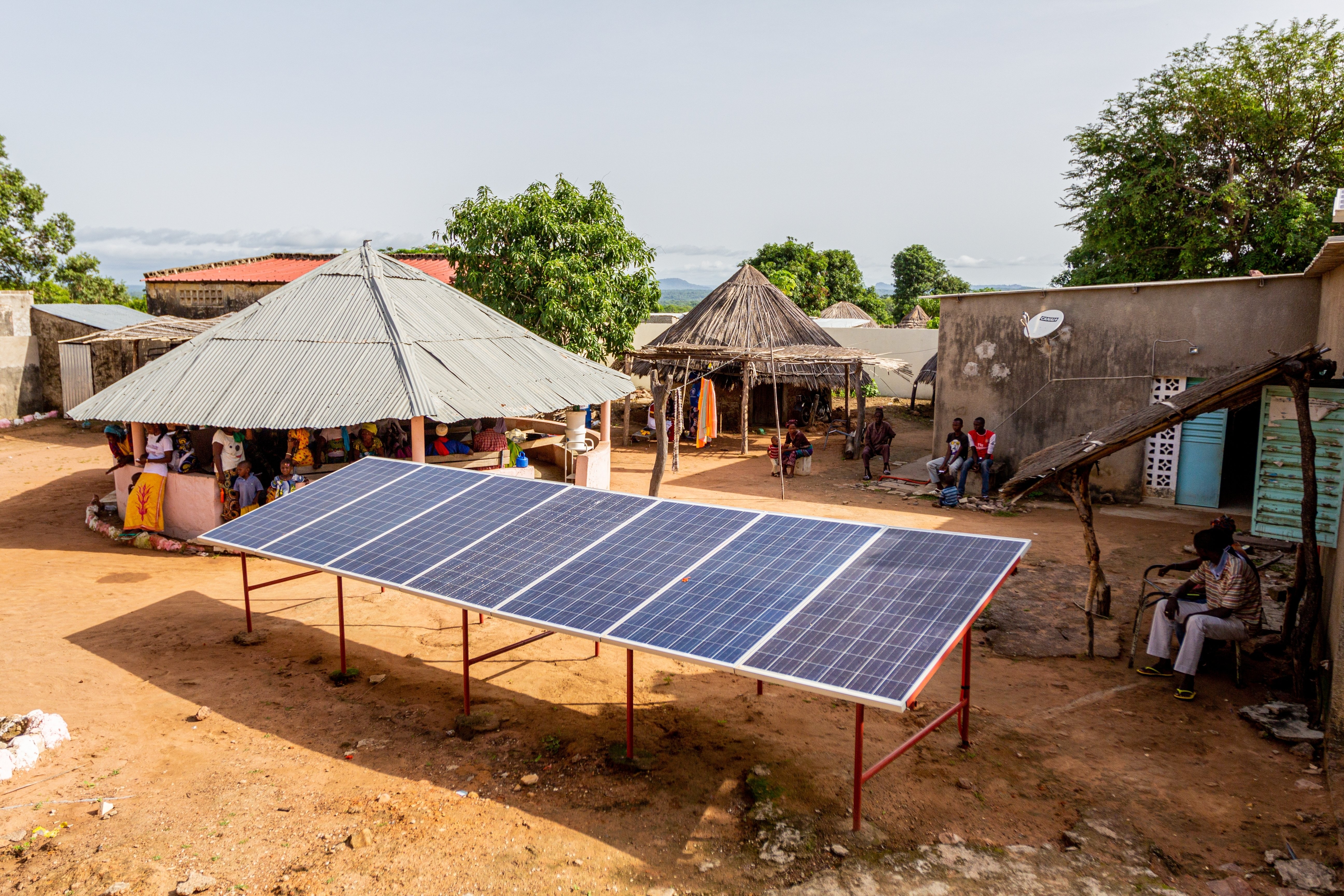
Kim Stanley Robinson (guest, author): In Uttar Pradesh. Well, they're telling me now, Stan, that was bad, we paid attention, and what's very comforting is these small balcony solar power panels that are going up everywhere. Especially, you know, in Pakistan after the big flood, they replaced Pakistan's electricity system with independent solar panels that are rooftop balcony, etc. That means that the kind of catastrophe I described might not happen with the same severity because now there's distributed electrical power and people could get into rooms with fans and air conditioners and they could survive more than wet bulb 35 temperatures and come out of the other side alive. It wouldn't be good, but it wouldn't be mass death. So I like this news. It's a little comforting.
00:10:10.955 --> 00:10:14.215
Christiana Figueres: Is it the kind of impact that you were hoping for? I'm celebrating that impact for sure. But is that the impact that you were hoping for? Or was it more the punch in the gut?
00:10:22.015 --> 00:10:24.195
Kim Stanley Robinson (guest, author): Well, I had no idea. Really, I was at the... I was something like... I can't even count it anymore. I was 40 years into a career that had a certain trajectory and I was in a zone that I liked. So, I didn't hope for more or less. This is just another science fiction novel until it came out and then you and Nigel read it and many, many people in the climate community now have read it. Word of mouth, etc. And I'm glad because it's essentially a novel about this community succeeding along with everybody else on earth. But it takes leadership out of, in this case, my ministry for the future was an informal like press name for a standing committee of the Paris Agreement. Because there are a couple clauses in the Paris Agreement that says if we need to, we can put up a standing committee that lasts through the year to the next COP. So I just seized on that clause because the Paris Agreement, which you know very well having written a lot of it, is relatively short and clear, 16 pages. And the language is more clear and definitive than many an international document. I can say that now having read so many of them. And it's interesting to read the Paris Agreement because it is a roadmap that now is 10 years old and has been executed. And it has some structural problems. The COP system had some structural problems before Paris. And so now those problems are hampering implementation of Paris and everything else. Meanwhile, my books out there, I have never read that first chapter aloud to an audience. People request it and I'm thinking, you don't understand.
00:12:08.555 --> 00:12:09.795
Christiana Figueres: You don't know the impact of that.
00:12:09.795 --> 00:12:12.675
Kim Stanley Robinson (guest, author): I couldn't read it aloud to an audience, but I wouldn't either. It would be improper. It would be an impropriety. It would be a transgression of human norms.
00:12:19.835 --> 00:12:20.375
Christiana Figueres: Yes.
00:12:20.375 --> 00:12:22.575
Kim Stanley Robinson (guest, author): I'm not a horror fiction writer. I don't know what they read at their readings.
00:12:24.875 --> 00:12:27.015
Tom Rivett-Carnac: It's been a couple of years since I read the book, but I loved it. As I thought about it since one of the arcs that I think you described so well in the protagonist is from despair to determination. I think that characterizes much of the journey of the book. But in the world we're in, one of the things we often struggle with is despair to apathy. What kinds of cultural stories do you think take us down the path of despair to determination and commitment rather than despair to apathy?
00:12:53.515 --> 00:13:05.995
Kim Stanley Robinson (guest, author): The working story theory in Ministry for the Future is a maillange of many voices, a lot of protagonists, a lot of defeats. Much later I realized there were three deaths of major characters in the book, one by illness, one by accident, one by murder. I did not plan that. But I think somebody planned that, or the novel planned that for me. So diversity and struggle against defeats, because there are many defeats along the way, and we're living through some of them right now. This shift from dread to giving up or to apathy, well, this is debilitating for the poor person feeling it, and people don't want to feel it. So everybody has to find their own project, really, and to be without a project is indeed a sad situation.
00:13:50.855 --> 00:13:52.735
Christiana Figueres: What would you mean by a project?
00:13:52.735 --> 00:14:01.875
Kim Stanley Robinson (guest, author): Well, I mean it in the existential sense, that okay, life doesn't mean anything, and so humans are in this world of meaninglessness, and so then you have to make up your meaning. So you make up a religion or you make up a program, a philosophy, but the way Sartre put it, and I think it's very apropos because it's action, you have a project, it's a, it's, it orients your life. I'm going to get a degree, then I'm going to get a partner, then I'm going to have a job, then I'm going to have children. But your project is the specific focus of your, of all of your efforts that organizes it. So you aren't just flailing, but are pursuing a program. So you could maybe call it a program, but I call it a project out of this historical, it's a word out of existentialism.
00:14:36.855 --> 00:14:48.895
Christiana Figueres: Does the project, in its many steps, however, have to obey an overall mission, an overall purpose of being here? Or is it simply self-fulfilling?
00:14:51.495 --> 00:14:54.675
Kim Stanley Robinson (guest, author): Well, that's a, I don't know, Christiana. Because there are many-
00:14:56.635 --> 00:15:01.735
Christiana Figueres: I know how you would like to respond, but please feel free to respond the way you would like to.
00:15:01.735 --> 00:15:05.355
Kim Stanley Robinson (guest, author): Many people just are kind of scattered and they're doing lots of good things. And they manage to juggle a lot of balls and that's fine. And I wonder if it's a diffusion of their effort, but everybody's got their own plans. But the way- how did you put it at the end there?
00:15:20.675 --> 00:15:30.795
Christiana Figueres: Is the project with its many steps self-fulfilling in and of itself, or does it obey a larger, higher level mission objective purpose?
00:15:30.795 --> 00:15:35.695
Kim Stanley Robinson (guest, author): Well, I think the latter in that that helps a lot in your feeling that your project is important. Because we have self-actualization, and I think that's important. But we're like bees in a hive. So the bee actually is highly intelligent, has its own project, it does its thing, it has its role in its society. But it's part of the hive. So it's helping. So for humans, as an individual in a society, if your project is actually helping society- so here we have the project of Biosphere Repair, of saving ourselves from a mass extinction event. I've been saying to young people, you're better off than when I was young, because when I was young there was nothing but capital accumulation. In other words, you make money in order to make more money, and you're self-actualized, you have a lot of toys and games and pleasures, but you don't have a project, and you're not doing something for the community. Well now, you have to cope with climate change, so an overriding historical situation has caught you up and you can't avoid it, but you do have a project thrust on you, and you can't, well you can dodge it if you want to, but then you're trying to step out of history itself. Better to step in.
Load More00:16:46.935 --> 00:16:48.095
Tom Rivett-Carnac: It's so interesting what you say. If you look at other moments of great cultural transformation and effort, you can have as many defeats as you want in society if you still have the animating story of agency and getting towards the outcome. But one of the things that we struggle with is we have these apparent defeats and this apparent challenge in the future. But the animating story is so atomized across society. People doubt whether it's worth it. Is it too late? We've come through this stuff around the science, and it feels like we're missing a piece of our cultural world that helps us unify around that shared purpose. I mean, we have your book and a few other things, but in the six years since you published it, there hasn't been this realization of this moment from artists and those who make meaning in our society. Why not?
00:17:30.115 --> 00:17:32.575
Kim Stanley Robinson (guest, author): Well, it's hard. The situation is both complex and quite bad. So there's this phrase that I'm frightened by called hopium, that if you write about hope in this situation, you're merely providing a panacea that we're already doomed, this thought that it's too late. So being frightened by that, I'm looking at the situation quite closely, and what the science is, across the board, what we're being told is, we're in a dangerous situation, a slippery slope. We could heat up too much and get into a runaway greenhouse effect that heads towards hothouse earth. We don't know how close we are to that, but we're not there yet. There's things we can do. So when there's still things you can do, it is definitely not time to give up. So you do them. And then you have a project that's thrust upon you. This historical moment has to be taken up because the next couple decades are really a kind of crux. They're very, very important. If we don't respond well in the next couple decades, it gets exceedingly difficult. And there is a point where if we slip on the slippery slope into a runaway greenhouse effect, nothing humanity can do after that will bring us back. And this I find quite terrifying. And it needs to be spread about as news. Although, if you scare people too much, then you get, especially young people go well. Yeah, it's too late. We're doomed. Because we're not very good at coherent action. But you talked about this mixed success and failure thing. When I wrote New York 2140, which is about New York coping with massive sea level rise and young people getting on with their lives and coping in a changed world, a climate changed world, I studied the American Revolution because the British occupied Manhattan Island for a year or more, and Washington was chased all around the New York Bay area, rowboats at midnight in the fog and stuff like that to keep it. The more I studied it, the story of the American Revolution was lose, lose, lose, lose, lose, lose, lose, lose, win. So where'd the win come from? Because it was nothing but losses along the way, a couple of ties. But no wins until the end at Yorktown. Well, there's a certain stubborn persistence that is admirable in that. We live here. And this is another thing about the American Revolution. Okay, we may be losing, but we live here. We got nowhere else to go. And that's a good analogy for us here now. There is no planet B. I've had to say that a lot being Mr. Mars, because I was most famous for my Mars trilogy. That's right. Which has inspired certain billionaires into a bad thought.
00:20:19.515 --> 00:20:22.075
Tom Rivett-Carnac: Yes. Just one more question on that, because my memory of your books is that some of the characters go through personal transformations when they are faced with societal shifts and senses of what is socially acceptable. And how do we allow what you've just described, this presence of these potential tipping points, how does that lead to personal transformations in response to that? Because we see it in the books, and that clarity of purpose is what brings people towards the outcome. But the world is so confused with those things these days.
00:20:51.075 --> 00:21:00.315
Kim Stanley Robinson (guest, author): Well, I'm thinking back, and I think that every character, which maybe we could say every person, responds to these things differently. What galvanizes you? And I like this word, galvanize, what electrifies you? Sticking your finger in a socket, it's not comfortable, but it often inspires you to act. But in ministry, it's quite specific to Frank and Mary, and to a certain extent, Badeem, the under-the-radar, we don't know what Badeem authorizes, and as far as the black wing of the Ministry for the Future, that's up to the reader to decide, what would I do if I were Badeem? What would I authorize? It's a, that's a dark world and hard to think about, so I left it up to the reader. But Frank and Mary have very different aspects. They both have had traumas in their life. And Frank was the only survivor of that heat death that starts the novel. He has post-traumatic stress syndrome. Right. Stress disorder, PTSD. And PTSD I was interested in because all of us have trauma in our life. Mainly the premature death of people we love. That, I think, is the trauma. But not everybody gets PTSD. A lot of people manage to cope successfully. So, you live long enough, you've had the trauma, you don't have PTSD. That's a certain amount of forgetting, a certain amount of forging on. There's a resiliency there that's very interesting to study or to think about. People do study it. As a novelist, I just think about it and try to feel my way through it, being post-traumatic myself. So, Frank, I think, is interesting because he, because of the crushing nature of what he saw, or because of his own personal character, one can't decide, one can never decide why we end up acting the way we do post-trauma. It's not, it's too complex to describe. You need a novel and then you still don't have the answer.
00:22:57.635 --> 00:23:02.375
Christiana Figueres: I've been thinking a lot about pre-traumatic syndrome. I would say that your first chapter in Ministry can easily lead you to pre-traumatic syndrome. I would say you put out a very credible narrative of that which scientists are actually projecting into the future, and you bring it into the present and you say, this is what could happen very visibly, in a very experiential way, if scientists are correct and if we don't do our job. Now, I would argue that many people, especially many young people, are already being paralyzed by pre-traumatic syndrome. Because they read the scientific projections, and they don't understand that science is saying, this is a scenario. There can be another scenario if we do our job. What scientists are not saying is, you are condemned to these conditions. Scientists are saying, you better hurry up because the window to a different future is closing very rapidly. But there is, at least for now, still the opportunity to avoid that future. In the first chapter, you just dump us into a reality that could easily give us Pre Traumatic Syndrome. So I guess my question for you, Stan, is how do you both recognize that we have enough information now from science for all of us to experience this Pre Traumatic Syndrome because we haven't had the trauma yet? Pre Traumatic Syndrome, how do we both recognize that and use the energies that are liberated by that and focus them into precisely avoiding the scenario that you paint?
00:24:50.735 --> 00:24:52.415
Kim Stanley Robinson (guest, author): Well, I like this very much. I'm going to use it. Pre Traumatic. And it reminds me, you must know him. Zaid Rad Al Hussein was my teacher at the only other COP I've been at, COP26 in Glasgow. And he taught me a lot. And we've stayed in touch since. And Zaid once said to a group that I was in the audience for, you don't need to be in a plane crash to know that it would be bad to be in a plane crash. So, because I often get asked, are we going to have to have a catastrophe before we act? Well, no, because you have pre-traumatic syndrome. If you can see that it would be bad, and really bad. And this is why I wrote that first chapter. Reading is a very active engagement. You are generous. You give time and you give imaginative creativity to making these sentences come alive. You kind of live it, like a dream that you remember. And then you have that experience, except you haven't had to have the real experience. So, indeed, first chapter of ministry and many and many of an event is pre-traumatic. Well, then, you want to avoid it. You know, you might have to make sure that planes work, reliably, all the time. Hard to do, but it can be done, apparently, because we're all flying around. The same with society at large and with this larger project. The biosphere is really resilient. It's really big. It's really strong. It's also really fragile.
00:26:19.755 --> 00:26:21.455
Christiana Figueres: If we remove our pressure from it.
00:26:21.455 --> 00:26:29.775
Kim Stanley Robinson (guest, author): Well, yeah, it's also very small, very sensitive, and capable of being poisoned by humanity's industrial activities. I believe that a permaculture where 8 billion people could all be living well and the biosphere doing well is perfectly possible as a technological achievement, but you have to understand technology to include law and language and customs. Those are all technologies of getting alongness. And I want to take it away from the machinery. I mean, it is great that the machinery is getting clean, and that's something we chose to do. So the choosing is part of the technology. There's human choices in technologies. They aren't just autonomous machinery that appears out of nowhere. We make choices. We want this one rather than that one. So getting away from fossil fuels, burning fossil fuels to drive civilization, which is what we've been doing, shifting over to clean. Yes, why not? I mean, it makes sense in so many different ways that doing it, the only thing that makes it unusual, like it could be said, like you're listening to music. It could change from LPs to cassettes, even to eight-track cassettes and then little cassettes, and then to CDs, and then to streaming. Who cares, right? It's just a more efficient way to give your energy. So there shouldn't be any fight between fossil fuels and clean energy except for everything runs on it, and the people have gotten rich from a concentrated fossil fuel profits, and they're skewing the shift from one to the next. They have to be overwhelmed in this battle of the wills, the battle of technologies.
00:28:00.915 --> 00:28:02.755
Christiana Figueres: They're poisoning the will of information.
00:28:02.755 --> 00:28:04.335
Kim Stanley Robinson (guest, author): Absolutely, they are. It's part of their game, too, because otherwise they've got stranded assets, as they would call it. They've got a poison in the ground they can't sell, and suddenly they're out of business. Well, so what? Move to a different business, Guy. These are mostly men, and they're mostly poorly educated when it comes to ecology and history and reality. If you're rich enough, your reality principle can be very poor. And so they're individually culpable, but they're also part of a pattern in that if you got rid of one of them, someone else would step up and make the same mistakes.
00:28:39.395 --> 00:28:43.915
Tom Rivett-Carnac: I'd love to ask you just one specific question about the way the world has changed since you wrote the book. If you were to write it now with your understanding of where AI is today, how would it be different?
00:28:49.835 --> 00:28:50.615
Christiana Figueres: Would it? Would it be different?
00:28:51.555 --> 00:28:52.315
Tom Rivett-Carnac: Would it be different?
00:28:52.315 --> 00:28:53.895
Kim Stanley Robinson (guest, author): Yeah, it wouldn't be much different. Okay. Luckily, my character, Janus Athena, a very mysterious character that's part of the Ministry for the Future is running the AI programs and it acts like an AI themselves. One thing I did make a mistake that is connected with AI and computers in general is I never should have used the word blockchain. That was a bad mistake because it is associated with Bitcoin, which is a scam and an energy burn and useless because really, the only money is fiat money and the rest of it are various kinds of scams and useless stuff and blockchain isn't even a good code. I have to remember, it was 2019 and I was just- It was a big deal then. Yeah. I would take that out for sure. The only thing that I've found that's interesting and new about AI, even because these chatbots, these large language models, they're just so choose the next likely word and they're so prone to error, they're not interesting except for this. They can summarize and I find that remarkable. I would never trivialize that. That's actually a skill that I'm surprised that they have. I've talked to the computer people who program these AIs and algorithms. How do they do it? As it turns out, because the large language models have taken in all texts, they have taken in summaries and abstracts. It's not like they know how to do it, it's that they have examples that they can crib from, which is their methodology. But AI, because it can summarize, you could go into a conference, and my Janus Athena should have advised this to Mary, but I didn't know it at the time, and no one did, get a group of people in a room, brainstorm how to solve this problem, and then you've got posted notes and it's useless, and you've kind of wasted that day except for it's fun. But then you give it to the AI and say, give us the three most prominent ideas out of this brainstorming session in the form of legislation.
00:30:55.095 --> 00:30:55.795
Christiana Figueres: Click.
00:30:55.795 --> 00:30:56.615
Kim Stanley Robinson (guest, author): Three bills.
00:30:56.615 --> 00:30:56.755
Christiana Figueres: Done.
00:30:56.755 --> 00:30:58.275
Kim Stanley Robinson (guest, author): Five seconds later, done. And in Taiwan, the Taiwanese legislature is actually considering these legislation bills as bills that have been submitted to them by the citizens of Taiwan with AI assistance. I've never heard of AI being used for anything as interesting and useful as that. So I share it as a speculation. And if I'd known about it when I was writing Ministry, I would have put it in for sure.
00:31:24.795 --> 00:31:27.035
Christiana Figueres: Is there a Ministry too in the making?
00:31:27.035 --> 00:31:28.895
Kim Stanley Robinson (guest, author): Well, I hope not. No, I don't like sequels. Having written three trilogies, I shouldn't say that. But I don't.
00:31:34.795 --> 00:31:37.895
Christiana Figueres: Yeah, you don't have too much credibility with that statement.
00:31:37.895 --> 00:31:38.775
UNIDENTIFIED SPEAKER — please verify (content suggests this may be Christiana continuing her own reflection, possibly mistagged due to emotional delivery): Can I say? Yeah.
00:31:40.455 --> 00:31:44.955
Kim Stanley Robinson (guest, author): What I want to do is write more climate fiction that is in a very different modality. I don't want to write Ministry for the Future too. I really don't. But if there's a fast-paced thriller, like the eyewitness accounts in Ministry, those maybe 20 eyewitness accounts where somebody is telling you really fast about something that happened, if one of those was about climate change, then I'd be happy. And I've got an idea now. In fact, one of the pavilions here...
00:32:06.195 --> 00:32:08.075
Christiana Figueres: And you're not going to spill the beans, of course. Or are you?
00:32:09.115 --> 00:32:10.795
Kim Stanley Robinson (guest, author): Well, do you want me to? Yes. I'm thinking about the Arctic. I've never written about the Arctic. The Arctic is in terrible trouble. As it melts, we lose albedo, and then it melts more, and then we lose albedo. The world warms up. And that could be the bad feedback loop that throws us into a runaway greenhouse effect. But stabilizing the sea ice of the Arctic when the world is warming? Hard. So again, you get into this climate intervention thing. Could we add to the snow during the winter up there, essentially by snowmakers? Well, it's a pretty big ocean. Questions are out there, and I don't want to explore them the way ministry explored them. I want to tell a story that just shoots right through it and explicates the situation as it goes. So I've already said too much here, but we'll keep it amongst us.
00:33:02.975 --> 00:33:04.755
Christiana Figueres: And podcast listeners.
00:33:04.755 --> 00:33:06.295
Kim Stanley Robinson (guest, author): That's still us.
00:33:09.155 --> 00:33:09.875
UNIDENTIFIED SPEAKER — please verify (content suggests this may be Christiana continuing her own reflection, possibly mistagged due to emotional delivery): Fantastic.
00:33:09.875 --> 00:33:11.115
Christiana Figueres: Sam, thank you so much. Thank you for being so generous with your time. Just obviously huge fans of your work. And really, let me close with the first chapter because it was, honestly, it was like a dagger to my heart.
00:33:30.115 --> 00:33:32.955
UNIDENTIFIED SPEAKER — please verify (content suggests this may be Christiana continuing her own reflection, possibly mistagged due to emotional delivery): And I go back to the moment now. And I just remember crying for days. For days. And I then decided everything has to be done to avoid that. And I hope that that's what everybody takes from that book. So, thank you for causing me such pain.
00:33:58.455 --> 00:33:59.555
Tom Rivett-Carnac: Cool thing everyone's such pain.
00:33:59.555 --> 00:34:01.215
UNIDENTIFIED SPEAKER — please verify (content suggests this may be Christiana continuing her own reflection, possibly mistagged due to emotional delivery): And such determination.
00:34:01.215 --> 00:34:02.055
Kim Stanley Robinson (guest, author): Well, thank you. As a novelist, I appreciate that deeply because, you know, I sat down one day and said I have to write this. And I wrote it as fast as I could write. And I've rarely looked at it again because I have the same reaction. It's devastating. And I don't know, I mean, I know where it came from. I just read the news and I saw it and I wrote it down. Anybody can imagine it if they put themselves to it. But I can say this, that book, it's not just blown up my life because I have to be talking about it all the time, which is fine, and I don't have time to write anymore, which is not so fine, but it's making a difference. Yes, it is. People do, there's an Oxford Ministry for the Future. There is the UN's Pact for the Future and Summit of the Future. And there's going to be a Parliament for the Future out of Greece. And there's another Ministry for the Future. It's captured people's imaginations as a vision that we could stumble through if we all work hard on it. And it does... It's focused.
00:35:04.035 --> 00:35:05.895
Christiana Figueres: It has focused attention.
00:35:05.895 --> 00:35:07.895
Kim Stanley Robinson (guest, author): Yes, but there doesn't have to be a plan. In other words, we don't have to have some master plan and everybody executes their part of it. We can each follow our own projects and they can mesh or collide in a way that actually works in the end and some minimal level of dodging the mass extinction event. And then, you know, opportunities open up. We get clean energy and human health and we avoid causing the mass extinction event. Things begin to look quite good. So it's not Hopium at this point. It is actually hope that projects work together and that the human effort here since... And COP is inspiring. You've got 64,000 people here in a town that only has 10,000 hotel beds. Great. So everybody sees each other. They're from everywhere. There's every language. There's every possible nationality. There's even Americans here. So it's inspiring that it can work because it's not coherent. It's not really driven by any...
00:36:14.455 --> 00:36:15.375
Christiana Figueres: Mega plan.
00:36:15.435 --> 00:36:16.895
Kim Stanley Robinson (guest, author): Yeah, no mega plan. And yet it may still succeed if we keep pressing. So keep pressing. This is the message.
00:36:25.375 --> 00:36:26.455
Tom Rivett-Carnac: Stan, thank you so much. I really appreciate your time.
00:36:27.735 --> 00:36:28.475
Kim Stanley Robinson (guest, author): Thank you, Tom. Thank you, Christiana.