









253: Mid 2024 Climate Review: How Are We Doing?



About this episode
In our penultimate episode of the season, hosts Christiana, Tom, and Paul delve into a reflection on the year 2024 so far. This episode takes a deep dive into recent events, including London Climate Action Week, the global political landscape, and the clean energy transformation, all viewed through a climate lens.
Optimistic Outlook:
Christiana shares positive news about upcoming trade agreements involving Costa Rica, Switzerland, Iceland, and New Zealand, which aim to eliminate tariffs on environmental goods.
Looking Ahead:
The hosts speculate on what the latter half of the year might bring for climate action and global policies as we anticipate UNGA, New York Climate Week, COP 16 and COP 29 to name but a few.
Upcoming Episode:
We will be back for a short episode early next week, dedicated to understanding the election results in the UK and France.
Farewell for Now:
The hosts and the O+O team wish you a restful summer holiday. Stay connected for announcements and content on our social media channels as we take a brief break from the airwaves.
Thank you for tuning in!
NOTES AND RESOURCES
Dawn of the Solar Age article from the Economist as mentioned by Tom
Details of the Trade Agreement mentioned by Christiana
UK Citizen? Learn How To Vote Here
French Citizen? Learn How To Vote Here
Learn more about the Paris Agreement.
It’s official, we’re a TED Audio Collective Podcast - Proof!
Check out more podcasts from The TED Audio Collective
Please follow us on social media!
Twitter | Instagram | LinkedInFull Transcript
Transcript generated by AI. While we aim for accuracy, errors may still occur. Please refer to the episode’s audio for the definitive version
00:00:01.160 --> 00:00:01.840
Tom Rivett-Carnac: Hi, friends. So those of you who live in the UK, which is a significant proportion of our listeners, will have the opportunity to vote today. And this is a very consequential election, as you've been told and as you've been getting on use from many different places. We at Outrage and Optimism are happy to work with anyone in power if they're serious about dealing with climate. But having lived in this country over the last 14 years and spent a significant proportion of that time defending the policies of the conservative government and when we were getting towards the Glasgow Cop, when we were doing many other things, I actually felt like they made real progress. But the most recent Prime Minister Rishi Sunak has used this campaign to try to create a culture war in the UK on climate, analogous to what has been happening in other parts of the world. Friends, for that, he deserves to lose. There is no way that we can afford the culture war that we've seen in the United States spread to other countries for narrow political reasons. We need a change of government in the UK. I actually believe that Keir Starmer, David Lammy and Ed Miliband will do a great job. I think we will see a labor government. I will be voting tactically. You'll make your own mind up, but voting is one of the most important things you can do on climate and today you get that opportunity. Here's the episode.
00:01:13.380 --> 00:01:14.220
Clay (podcast producer): Woo. Woo.
00:01:14.740 --> 00:01:15.100
Tom Rivett-Carnac: Hell yeah. Hello and welcome to Outrage and Optimism. I'm Tom Rivett-Carnac.
00:01:30.888 --> 00:01:32.288
Christiana Figueres: I'm Christiana Figueres.
00:01:32.288 --> 00:01:33.448
Paul Dickinson: And I'm Paul Dickinson.
00:01:33.448 --> 00:01:37.528
Tom Rivett-Carnac: This week, we reflect on how things are going with climate and nature in 2024. We look forward to the elections next week, and we say goodbye before our summer break. Thanks for being here. So friends, nice to see you. Christiana, it's lovely to be on with you. We missed you the last couple of weeks. In particular, we missed you last week during London Climate Action Week.
00:02:10.837 --> 00:02:13.937
Christiana Figueres: Well, from what I heard, you had way too much fun. That's what I concluded.
00:02:14.917 --> 00:02:17.037
Paul Dickinson: Tom particularly had way too much fun.
00:02:17.037 --> 00:02:18.117
Tom Rivett-Carnac: We did have fun. It was really lovely. It was really lovely. And I mean, running a podcast is a funny thing, right? Because you sort of, the three of us get together, we know there are lots of people listening, but the sort of physical manifestation of that isn't always there. But you weren't there, Christiana, just before we started the recording, I said, to the room of 400 people. So who here listens to Outrage and Optimism? And there was this almighty spontaneous cheer of everybody who listens to this podcast on a regular basis, which was really lovely.
00:02:45.497 --> 00:02:50.617
Christiana Figueres: That's because you only invited listeners to this particular live recording.
00:02:50.757 --> 00:02:52.597
Tom Rivett-Carnac: Quiet, quiet, exactly.
00:02:52.597 --> 00:03:01.917
Paul Dickinson: And that strange sort of sense that people know you incredibly well because of this deep sort of revelation of the inner life of the co-hosts. And then you meet somebody and he says, hello, you're for Outrage and Optimism, and they blush because they know so much about you. And I'm like, what am I saying on this podcast? But anyway, I was very, very glad that it's really reassuring. There is a climate movement for sure, and there are lots of different ways of knowing that. But that's just one way that you would notice it. If you had been there, Christiana.
00:03:21.777 --> 00:03:22.277
Christiana Figueres: Yeah. And I noticed it just from the recording.
00:03:25.697 --> 00:03:26.917
Tom Rivett-Carnac: And thank you to everyone who came. It was really a wonderful evening. Thank you for listening. Thank you for joining us last week. Yeah. So let's kick off today. Regular listeners will remember that we tend to have a bit of a summer break here at Outrage and Optimism. So this is actually the penultimate episode of this season, I suppose. We're going to be reviewing and taking stock of what's been going on, looking through a climate lens, looking forward to the second half of the year, how's everything going? Listeners will also know that we've been playing around with different kinds of formats, with Outrage and Optimistic, but today we're just going to take a broad look at how things are going this year and look forward as well. That's kind of our plan. There will be one more episode in this series, which will come out early next week, because those who are listening to this episode on the day it came out, that is the day of the UK elections, Thursday, the 4th of July. And obviously, we don't yet know the result. It's the 3rd of July today. So we'll do a wrap up on that and on what's happening in France early next week. But before we get to all of that, this is our chance to take stock. And I actually want to start with something related to Outrage and Optimism. And that is that this is the last episode at which we were going to have Sarah Thomas as our executive producer. So rather than putting that at the end, I just wanted to kick off. And maybe we all want to hop in and say, Sarah, we are so grateful to you. The incredible work that you have done to transform this podcast, to support us, to help us. It's been wonderful working with you and we're very sad to lose you. Embarrassing. Sarah's put in the chat.
00:05:03.157 --> 00:05:04.057
Paul Dickinson: No, it's not embarrassing. It's something you should be very, very proud of. And someone will be incredibly lucky to work with Sarah Thomas in the future. And I wish it was us.
00:05:10.357 --> 00:05:12.397
Christiana Figueres: Sarah, it is really so sad. I've been sitting here pretending like this is not happening. When I put on my Zoom screen here and your face popped up, I went like, okay, good. So I'm right. She's still here. So I've been in full denial about you very sadly leaving us. There she is. Yay, she popped up again. Sarah, thank you so much. Thank you, thank you, thank you, thank you. Really. So fantastic. You did such a brilliant job amid a whole bunch of things going on in your life, kids included, plus many other things. So thank you so much for always not just accommodating the podcast, but doing a brilliant job for us despite a thousand things going on. I don't know how you did it. Ultimate multi-tasker. Thank you so much.
00:06:08.397 --> 00:06:10.417
Paul Dickinson: Please say au revoir to the listeners. Au revoir, au revoir. Thank you.
00:06:16.397 --> 00:06:17.797
Tom Rivett-Carnac: It's been an absolute pleasure. You're all wonderful.
00:06:18.777 --> 00:06:20.257
Christiana Figueres: Thank you so much.
00:06:20.257 --> 00:06:20.577
Tom Rivett-Carnac: Yeah.
00:06:20.577 --> 00:06:33.377
Clay (podcast producer): And on behalf of all of our listeners too, listeners should know that the reason why the podcast comes out on time, in your feed, at the level that it does every week is because of Sarah. So from all of our listeners, thank you, Sarah.
00:06:35.717 --> 00:06:35.877
Tom Rivett-Carnac: Yeah. So get ready for the Wild West in the world beyond Sarah. Yeah.
00:06:40.657 --> 00:06:46.037
Paul Dickinson: However, like any great organizer, Sarah has left great systems that we will keep. Christiana, denial is not a river in Egypt. We're going to have to move on.
00:06:49.617 --> 00:06:50.417
Tom Rivett-Carnac: We are going to have to move on. But before we do, Sarah, very quickly, tell us how listeners can continue to follow your amazing work. I don't know. Just give us your Instagram handle.
00:07:00.297 --> 00:07:01.157
Paul Dickinson: Just laughing. Just laughing.
00:07:02.977 --> 00:07:03.537
Tom Rivett-Carnac: I don't know. I haven't thought about that yet.
00:07:04.677 --> 00:07:06.657
Christiana Figueres: She may not want that, Tom. There will just be pictures of my kids.
00:07:10.077 --> 00:07:10.797
Tom Rivett-Carnac: Fair enough.
00:07:11.077 --> 00:07:13.317
Paul Dickinson: There will be something in the show notes.
00:07:13.317 --> 00:07:14.017
Christiana Figueres: How about this? How about this? Sarah, you can think about it and if you want it, we can put it in the show notes either with this episode or anyone in the future. Thank you. That way you can think of. She may actually want a little rest from all of this.
00:07:28.497 --> 00:07:33.217
Tom Rivett-Carnac: Yeah, I was going to say moving to have spent time with your children, but now actually getting flooded by people who want to work with you. So possibly that's not the best approach. All right, brilliant. Well, Sarah, we love you. Thank you for everything. And let's move on and have a look at where things are. So this is a chance for the three of us to kind of reflect. We're like, you know, July already, can you believe? Six months out from the COP that's going to happen in Baku at the end of the year. And there's a lot of consequential things between now and then. The UN General Assembly with the Secretary General Summit. There's going to be COP16, the biodiversity COP happening in Colombia. There's going to be very consequential follow up to what happened last year in Canada. So a lot to come, but let's just look back for a second. How do you both feel the first half of 2024 has gone from a climate perspective?
00:08:11.357 --> 00:08:21.137
Christiana Figueres: I think we have talked about the fact that we have two such contrasting realities here. We have a political reality that is being offered up by so many different countries, and we'll talk more politics next week. But in general, I think it's safe to say that with few exceptions, the policies that are being enacted by governments, current and in fact possibly soon-to-be governments, future governments, are not in line with a rapid decarbonization of the global economy. For reasons honestly that have more to do with dogma than with the data. That's a sad statement. The other reality is the fact that the technologies that contribute to the solution, the renewable energies, certainly solar, wind, batteries, EVs, charging systems, etc., etc., have just come down in price so much. They have increased their performance. They are so competitive now that they really outrank the incumbent dirty fossil fuels. And so from a real economy perspective, there is no doubt that these technologies are galloping ahead, as we like to say, exponentially increasing. But policies are not aligning. So we're sitting here in this very strange space of these two realities competing against each other. At one time, one pulling forward, and the other one a little bit back, and then the other one pulling forward. And here we are, it's almost like we have a race between these two, and we know which one has to win. But it is still a very concerning race.
00:10:26.157 --> 00:10:29.837
Paul Dickinson: Let me offer something into that, Christiana, because it's a perfect description of where we are. So thank you. There's something that I've been, got very excited about recently, which is something that we might have missed in our thinking. And that is, we all respond to extreme weather with a sense of tragedy, with a sense of loss. You know, the whole world is populated pretty much. Where there is extreme weather, there is very often human suffering and loss of life, both human and non-human. And it's a sort of cause of tragedy and concern for us. And so we miss something incredibly important, which is that when there is more and more extreme weather, there is more and more force, energy, logic, and authority to the arguments we are making. So we must remember that every time we see an extreme weather event, whilst our hearts must go out to those who are suffering, we must be hardened and reinforced in our absolute certainty that we are going to win these arguments because if something is true in reality, it must be true in theory. So that was just something I wanted to offer.
00:11:36.977 --> 00:11:46.657
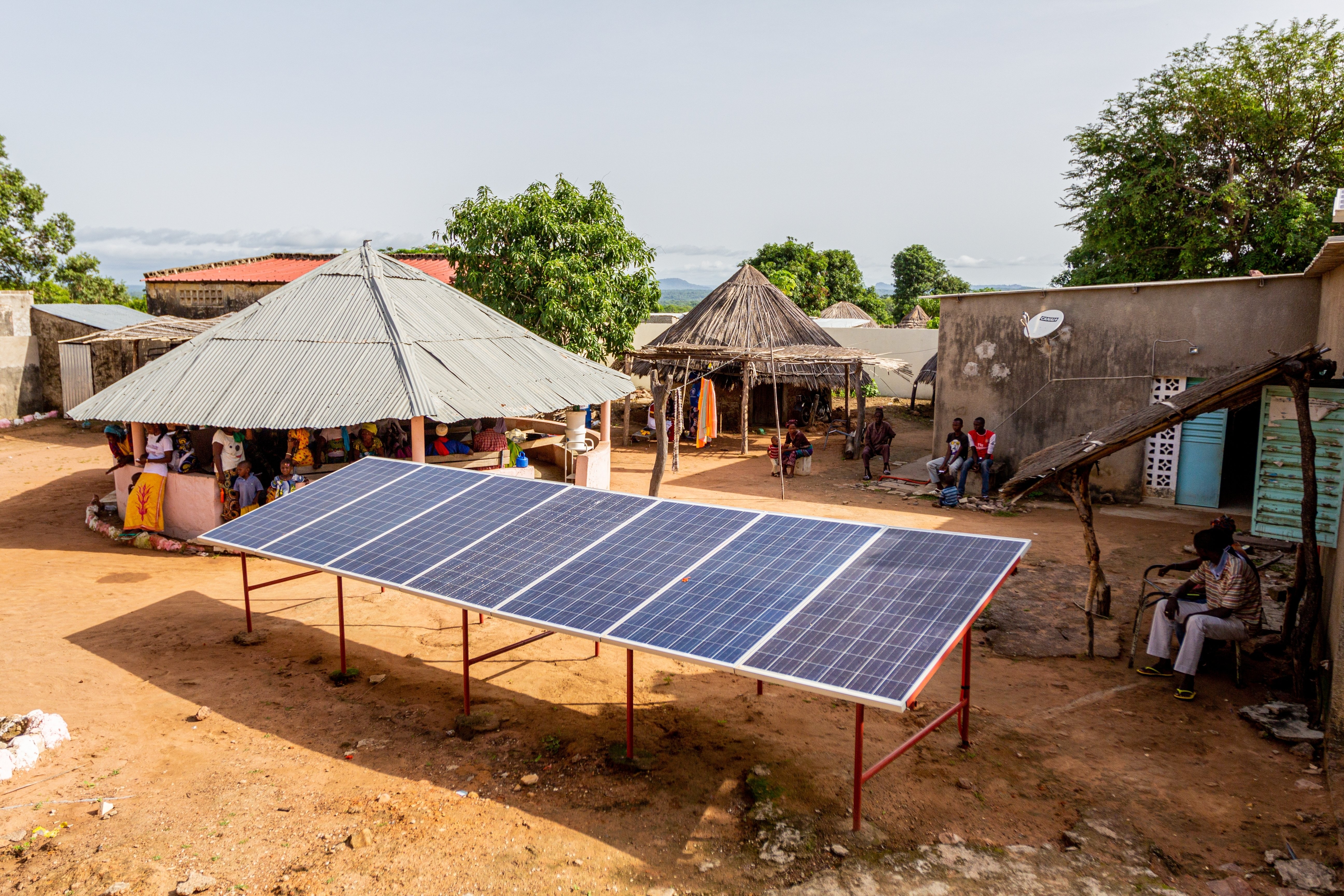
Tom Rivett-Carnac: I definitely agree, as we are seeing more and more extreme weather events, we had John Marshall on the podcast a few months ago and he pointed out that the vast majority of the interest in climate change happens either during extreme weather or heat waves. And we are not yet at the moment taking, it's horrible to say taking advantage of, but leveraging the moment of opportunity that those provide for everyone's benefit to help us realize what we are facing. And I think that is necessary and I also don't believe that there is any evidence that actually as the impacts get worse, our reactions are changing fundamentally in a manner that enables us to, that moves us in direction of putting more policies in place, right? When an extreme heat wave hits you, the instinct is often not to elect better public servants and invest in solar even though that's what it needs to be. So that's more of a kind of nuanced point. But just to go back to what you said earlier, Christiana, our good friend King's Mill Bond has been coming out with some recent data to show this incredibly remarkable exponential trajectory. And there was also a special feature in The Economist last week, which the title on the headline was The Dawn of the Solar Age. And there's an amazing graph in there that we'll put out on social media that shows over the last 20 years the projected price and deployment of solar for the next years and what actually happened. And what you see is a hockey stick curve with all these trails coming off where we have consistently miss, assumed, under assumed what solar is going to do in terms of price reduction and in deployment. So there is enormously good news there. And as we get to the middle of this year, and we'll get to the politics as well, I also think that there are deeper stories that we just need to be really realistic about. I mean, if you look at the production, for example, of electricity generated by fossil fuels, which is what we're talking about here with renewable energy, the share of electricity produced did fall from 67% in 2015 to 61% today. So that's great.
00:13:36.137 --> 00:13:38.197
Paul Dickinson: The share of fossil in electricity generation.
00:13:38.197 --> 00:13:41.517
Tom Rivett-Carnac: Share of electricity, share of fossil electricity generation. But the global output of electricity has jumped 23% in those eight years. So even though the generation from non-fossil fuel sources rose by 44%, from fossil fuels, it also rose by 12%. This is all from a really interesting article from Martin Rolfe.
00:13:58.497 --> 00:14:00.257
Paul Dickinson: Martin Rolfe, I know he put it brilliantly yesterday.
00:14:00.257 --> 00:14:12.637
Tom Rivett-Carnac: So what he pointed out is that, yes, we are seeing exponential change in the energy sector, but we're also seeing exponential demand that's going up just as fast or faster as the world develops. Of course, something we should applaud. So those trajectories of solutions are not even keeping pace with the growth at the moment. And I think that's the place where we have to be really honest about whether we're actually doing what needs to be done at this moment.
Load More00:14:27.537 --> 00:14:59.097
Christiana Figueres: Well, and to that, I would add this very fascinating article from Time, which Sarah brilliantly shared with us, that talks about electoral psychology and what people are doing in this world in which so many more, you know, 60 countries are going to have gone or will go at this year to the polls. And what this article says is that hopelessness is the feeling that is determining where people and how people are going to vote. Because it's not that people, you know, either understand climate change and understand the solutions or are against the solutions. Actually, that's not even what it's all about. It's about feeling so hopeless about so many issues, including climate, but also social justice, income, etc., etc., that they just want change no matter what. And so they just feel that the situation is so desperate that they want change at any cause no matter what the baseline is right now and what they vote for. It's just give me some change, give me some change. And it's somewhat thoughtless. It's just the pain is too great. I just need to relieve the pain and therefore, I'm going to vote for whatever is the non-incumbent. That's, you know, if there's any truth in that, that's pretty scary because that means that we are voting out of hopelessness and desperation rather than out of intention. And sadly, this article in Time coincides somewhat scaringly with a book that I've been reading, a very scary book. It's called The Weight of Nature and it's written by a neuroscientist, Clayton Page Aldrin, who is arguing that climate change itself is causing a kind of amnesia in humanity because we are continually shifting the baseline of our experience of our outward environment. So in other words, we're normalizing the fact that we now have so many of these intense heat waves, these droughts, these floods. He actually, and so that's what he calls shifting the baseline. He actually even goes as far as saying that heat is beginning to produce some of a cognitive decline because the brain is focusing first on reducing our internal heat, i.e. climate change is producing heat, not just out there, but also perhaps somewhat imperceptibly, even in our bodies. And our brain is focused on reducing that internal heat and therefore, there is a cognitive decline. And we're not infinitely adaptable. The higher temperatures are actually causing more aggression, more conflict, more hopelessness. And that is why what we are doing to the environment, to the natural environment, is actually ricocheting on us and we're actually, while we're destroying our natural environment, we're destroying also, ricocheting and destroying our own ability to deal with our destruction of the environment. So there is a very vicious circle that, according to him, we have started. That is very dangerous. If there's any truth in that, it is very dangerous.
00:18:47.877 --> 00:18:55.277
Paul Dickinson: But with the desire to offer the yes and we also are in the business of evolving. That's how we've got to be the ones that are alive now, because our ancestors were the evolvers. I think it was Darwin wasn't so much saying they survived at the fittest. It was more survival of the most adaptable. I noticed that there are many people have talked about sort of stages of grief, starting with denial, going to anger, then bargaining, then depression, then acceptance. Whilst I don't in any way discount what you've said, Christiana, about how we ourselves may be negatively impacted by climate change, you can also see billions of people in a developmental cycle and struggling with that, which is back to the race.
00:19:30.157 --> 00:19:30.777
Christiana Figueres: Yeah.
00:19:30.997 --> 00:19:32.437
Tom Rivett-Carnac: Are you impressed with the... Because it's not a thought I've ever had before that, Christiana, and it sort of makes sense as you're talking about. Are you impressed with the kind of the science and the documentation that sits behind it? We should try and get him on the podcast, if so.
00:19:41.857 --> 00:19:43.477
Christiana Figueres: We should get him on the podcast. It's, for me, a very difficult book to read. I've been taking it with me wherever I go for, actually, I think even two months because I struggle to finish the book. It's a very difficult read. We should get him on the podcast.
00:20:05.877 --> 00:20:08.617
Tom Rivett-Carnac: No, I was going to say we should turn to some political things as well. But before we do, should we just look forward over the next six months and kind of discuss what's happening or, Paul, anything else you want to share from London Climate Action Week or anything that's happening right up to today?
00:20:19.337 --> 00:20:22.717
Paul Dickinson: Well, I had a great time at London Climate Action Week. I have to say I've not normally gone around these events, but I had a sense this time, and it's probably just me inventing this, but give me a chance. I had a sense that there was a different buzz, that there was something different going on. I had a sense that I had the opportunity to be in the room, on at least one occasion, where the cool kids were. What I really realized is that there are no cool kids. It's not a case of there are some kids that are cool and some kids that aren't. When you're in the room where the cool kids are, it's because the room is cool, it's not the kids. The event that I particularly went to, which was incredibly well attended, it was in a very nondescript part of London in Victoria, huge room, about 100 people, every single desk filled, working meeting, and it was set up by the Race to Zero, and it was really around policy advocacy, and you had all sorts of different people from different types of the climate movement, you had all sorts of incredibly enlightened funders, and you had people from trade associations, and there was a wonderful thing. I heard someone from a trade association quote somebody else from a trade association saying, we're three commercial kitchen refits from 2050. Commercial kitchens in hotels or wherever, they're going to have three refits and then it's going to be 2050. It's a way of really thinking about how if you're actually in industry, this stuff is really, really important. What I loved about Climate Week was this notion of super accelerated policy. You framed it at the start, Christiana, perfectly. We haven't got the policy we need. Everyone knows you can't get emissions down at 6 percent a year without all sorts of laws and regulations and subsidies and industrial policy and all the rest of it. But what I felt about Climate Week was that people were really coming together. You had people from government, you had investors with their bird's-eye view, as Tessa Tennant used to say, their bird's-eye view over the whole economy. You had people from real economy, industry, you had people from trade associations, people from lobbying organizations, kind of coming together and saying, OK, if we're going to make this all happen five times faster, to quote Simon Sharp, how do we whiteboard the economy of 2030, 2035, 2040, 2045? It just feels to me like it's all getting very practical, and that filled me with joy. And topped off by the launch of Mission 2025.
00:22:33.357 --> 00:22:35.317
Tom Rivett-Carnac: Absolutely, which we covered last week, which is very good. So yeah, I agree with you. I think the practical element is really where it's at, right? And it's people kind of getting together and trying to work on specific programs to really make things happen. So that was great. There was one other way of thinking about the future that I came across last week that slightly terrified me, but I'm going to share it with you anyway. Every three months is 1% of our journey towards 2050. So I'll just leave that with you.
00:22:58.797 --> 00:23:02.017
Paul Dickinson: A new ratio to terrify you when you wake up in the morning.
00:23:03.037 --> 00:23:03.697
Christiana Figueres: Say that again. Every three months is 1% of the journey to 20.
00:23:07.277 --> 00:23:13.437
Tom Rivett-Carnac: That's how between now and 2050, we get 1% of that amount of time disappears every three months.
00:23:13.437 --> 00:23:23.177
Christiana Figueres: Well, and if I can just add to the terror of that thought, every 1% is not equal.
00:23:23.257 --> 00:23:23.757
Paul Dickinson: Oh yeah.
00:23:23.757 --> 00:23:25.737
Christiana Figueres: Every 1% is not equal. It is the 1% of right now, today's and tomorrow's and tomorrow's, that actually count the most.
00:23:33.817 --> 00:23:34.317
Tom Rivett-Carnac: That's a good point.
00:23:34.317 --> 00:23:37.777
Christiana Figueres: Because this is about concentration of greenhouse gases. So what we do in the immediate is much more important than what we do in the future, close to 2050.
00:23:47.097 --> 00:23:48.577
Tom Rivett-Carnac: Final five years or something. Yeah. Wow. That is a really good point. So just to look forward a bit, we're going to take a bit of a break. We'll be back in August, towards the end of August, and then running through September, New York Climate Week. Should we just cast our minds forward a little bit to that period of time? It's going to be an interesting few months. It includes the UN General Assembly, the EarthShot Prize, the negotiations in Colombia, the negotiations obviously in Baku. Either of you want to kick off with a few thoughts about that period of time?
00:24:20.697 --> 00:24:23.137
Christiana Figueres: Hold on.
00:24:23.137 --> 00:24:23.737
Tom Rivett-Carnac: Okay.
00:24:23.737 --> 00:24:33.477
Christiana Figueres: Before we go into casting our eyes on the future and the rest of this year, can I share something that is very exciting?
00:24:33.477 --> 00:24:35.357
Paul Dickinson: Is this a hold the front page moment? Do we feel a little bit of drumming coming?
00:24:37.497 --> 00:24:38.957
Christiana Figueres: Yes, yes. And I'm going to warn you that this does involve Costa Rica, but not only.
00:24:42.817 --> 00:24:44.617
Tom Rivett-Carnac: You astonish me, okay.
00:24:44.617 --> 00:24:48.797
Paul Dickinson: That's just weird, the coincidence, because it's involved Costa Rica every single episode for the last five years. So it was such a coincidence that would happen today as well.
00:24:52.557 --> 00:24:53.457
Tom Rivett-Carnac: That's pretty rich of me. I just spent 10 minutes talking about policy advocacy, but yes, back to Costa Rica.
00:24:57.217 --> 00:24:57.577
Christiana Figueres: Yes. Thank you. Thank you, Tom. Thank you for rescuing me. So the good news, the very good news of this week or one of the bits of very good news, is the ministers of trade, not the ministers of environment, not the ministers of climate, not the ministers of energy, the ministers of trade from four small countries. And we know that small countries very often take the lead. We have seen that repeatedly along the history of climate policy. So four ministers of trade from Costa Rica, Iceland, New Zealand, and Switzerland have just concluded 15 rounds of virtual negotiations to work out a very innovative and groundbreaking trade agreement focused on climate change, trade and sustainability. And they have made it all consistent with their obligations under the WTO, under the World Trade Organization. That is a first because for such a long time, we thought that these two things could not be brought into harmony with each other. And they have actually done it. And what this trade agreement will do is it's going to deliver very high quality trade commitments that truly contribute to addressing climate as well as biodiversity, pollution and other serious environmental challenges. What they have done under this agreement, they have worked out a list, a very long list of environmental goods with a definition and criteria to guide what tariffs are going to be eliminated. So they have 300 environmental goods, including solar panels, wind, hydraulic turbines, electric vehicles, wool fiber, recycled paper, et cetera, et cetera, et cetera, that are going to actually enjoy tariffs being eliminated across the four countries for entry into the country. They have listed a hundred environmental services that are going to be facilitated and accelerated across all four countries. They have developed a new framework to eliminate harmful fossil fuel subsidies, and they have contributed to the world a very interesting definition of what harmful fossil fuel subsidies are, and we know that that has been one of the problems to eliminate these fossil fuels. And they have developed a voluntary ecolabeling program, I mean, program, a voluntary ecolabel program, to be able to promote trade in sustainable products by using those ecolabels for consumer choice. It is amazing how many barriers prior to this, how many barriers they have actually broken through conceptual regulatory barriers in order to say, look, it is entirely possible. It's entirely possible to bring this kind of momentum, the kind of integration of climate, biodiversity, pollution into WTO. We can bring these things together. And they are, it's only four small countries that have done this, but they're actually inviting and encouraging other countries to join. Now that they've done all the heavy lifting, they have inviting other countries to increase the membership of this alliance and to thereby strengthen and modernize and bring WTO up to where we are, up to speed, so to speak. So, you know, honestly, hooray for small countries that are not afraid of stepping in and leading. Hooray for the courage. Hooray for the incredible amount of work that they have done. And the willingness to say, just because we have had a policy barrier, just because we have had a definitional barrier for such a long time, doesn't mean that we cannot break through an open new ground. So hooray for Costa Rica, Iceland, New Zealand and Switzerland.
00:29:55.997 --> 00:29:57.477
Tom Rivett-Carnac: What a great array of countries. I love it. And you're absolutely right, Christiana, it's the precedent and it's the structure of being able to demonstrate this can be done. It can be compliant with international law. We can think about these things in a different way. That's an amazing story. I love that.
00:30:10.557 --> 00:30:15.597
Paul Dickinson: I'm just going to sort of kick back on you saying they're small countries, Christiana, if I may. First of all, Iceland has a new president, right? The full manager of the B team, so a climate leader as president. New Zealand had Jacinda Ardern as the kind of the sort of leader of the free world in the dark days of Donald Trump, a politician of the most extraordinary capability and skill. Costa Rica, as everyone involved in this program knows, is a pioneer of progressive political solutions that have made it time and again seen the happiest country on earth. And Switzerland, who have actually 10 trillion dollars invested in there or under management in their banking system, so they're able to potentially finance all that superb policies being developed by this extraordinary quartet. So these small countries represent a big vision that can be enacted and I think it's completely inspiring. Thank you.
00:31:14.457 --> 00:31:16.497
Tom Rivett-Carnac: Okay, so thank you for bringing that, Christiana. It's always great to have these examples of how we can actually make progress and the historical excuses for not doing these things just don't add up. It can be done by political leaders who really want to make it happen. As we mentioned at the beginning, we'll talk more about politics in the episode next week, where we will cover off the UK and French elections. But just before we go, just to wrap up, we of course will be back towards the end of the summer. There's then going to be, as ever, this incredibly intense period that leads us through these important international negotiation moments. The backdrop for all of this is what we've talked about already, which is the exponential deployment of solutions, which will be unfolding, we hope, at an ever-increasing rate. In a way, and you've talked about this, Christiana, the role of these political moments that we're going to touch on now is just not to stop that and do everything we can to try to make it move faster and faster. We can talk about the specifics. There's going to be a Summit of the Future in New York, around the UN General Assembly, hosted by Antonio Guterres. Then in October, there will be the implementation negotiations that will happen in Colombia. This is a follow-up from the Convention on Biological Diversity meeting that happened last year to look at really how do we now implement the solutions in order to accelerate conservation of 30 percent of land and sea by 2030. That will then lead us to the EarthShot Prize, which is happening in South Africa. Then finally, to Baku, where we will have a COP negotiation, COP29, that in particular is going to focus on public finance and how we actually need to have a new deal between developed and developing countries, post the 100 billion that was agreed all those years ago in Copenhagen, that can provide the confidence and the clarity for all countries to come together for new national commitments by February next year. But we actually know that that will be an ongoing issue throughout the whole of next year. So, Christiana, anything you want to, what strikes you as you think about those few months?
00:33:19.577 --> 00:33:22.857
Christiana Figueres: Well, honestly, I'm holding my breath. Because of what we just said before, right, that every month from now to 2025 or 2030, you pick your date every month is not the same. These months from now to December are more critical than the same six months, June to December, of 2028, for example, or 2029. And we're just not operating with that sense of urgency. We just continue to think linear. We continue to think and act marginal instead of exponential. You know, we've talked about this so, so much. And it's just, it's not going to cut it. If we go marginal and if we go linear, we're just not going to cut it.
00:34:25.237 --> 00:34:26.637
Paul Dickinson: Yep. And I just want to say a word about the biodiversity implementation. 30 by 30 is absolutely an incredibly powerful target. But there is also a framing of all of this. You know, there are many people on this, who listen to this podcast. I'm definitely one of them. I listen to the podcast. And, you know, we've spent a lot of time measuring tons up the industrial process, delivering tons of CO2 or CO2 equivalent into the atmosphere. We've just begun to measure tons down. We call it nature, we call it biodiversity, but it is the equal and opposite part of our emissions and deserves just as much attention. And that's the big penny that's been dropping in the world. And that's very exciting. You know, those cops are still separate, but they are dealing with the same problem. Yeah. I have a last word. There's so much amazing listening feedback we've had. But I'm going to just give you one from Cameron Saul, who says, thank you for your gracious, courageous leadership at Christiana Figueres. Grounding ourselves in love and optimism is the most powerful and radical tool that we have. I couldn't have put it better myself. Woo.
00:35:34.217 --> 00:35:34.617
Tom Rivett-Carnac: Okay. Thanks, everybody. We will see you next week for a wrap up of the elections. Thanks for joining us this week. See you soon.
00:35:41.057 --> 00:35:42.017
Paul Dickinson: Bye.
00:35:47.177 --> 00:35:48.037
Clay (podcast producer): So there you go. Another episode of Outrage and Optimism. Clay here, producer of this podcast. Thanks for listening. So if you picked up anything from this episode, go vote. As Tom said, voting is one of the most important things you can do on climate. And today in the UK, you have that opportunity. And on July 7th in France, we also have another election that will undoubtedly affect our future. So if you are a voting citizen in that country, go vote. I put links in the show notes for both UK citizens and French citizens to view that shows you how to exercise your right to vote. So thank you on behalf of our entire Outrage and Optimism community. Okay, thank you for that. A massive thank you is in order to our good friends at Earthrise Studio for saving our podcast episode that came out over the weekend. No, like literally, they saved it. Following the Mission 2025 event, I had a tech issue that almost completely upended us being able to put out that episode for our listeners. And so without skipping a beat, Isabella, Alice, Chloe, Hassan, Joy, and the rest of the team offered their gear, their studio, and their expertise to help make that episode possible. So Earthrise, on behalf of all of our team and our listeners, thank you. Seriously, they're great. Go check out the work Earthrise is doing in the show notes. I put a link to their guide on the UK elections that you can check out. And please be sure to like it and give it a share. Thanks, guys. So at the end of Saturday's episode, I mentioned that Outrage and Optimism was going to be at Glastonbury. And so this past weekend on Sunday, Outrage and Optimism was at Glastonbury. We hosted two climate conversations about the intersection of music, climate and creativity with our colleague and Outrage and Optimism alumni Matthew Phillips, who you heard on the Mission 2025 episode. He moderated alongside British musician and friend of the pod, Nabiya Iqbal. I'm happy to report back that it was a moment of real conversation and an opportunity to really transform the conversation around climate and to empower artists, fans, music professionals and scientists to imagine collaborating together in new ways to activate these drivers of culture towards delivering on science and nature-based targets. Listeners of this podcast know that musicians and artists are in the driver seat when it comes to cultural change and this massive revolution in energy, culture and climate that we're living through. And this moment absolutely demands that artists rightfully take hold of the microphone and lead us into the creative and just future that we all want. So, all that to say, it was spectacular. We couldn't be more grateful to help in any way we can, and it was great to host that conversation. A very special thank you to the guests who joined us on stage, and a shout out to Anna Johnson, Luke Howell, Lindsay Frazier, and the team at Hope Solutions for inviting us and for hosting us at Glastonbury. On a content note, we might have some content from the festival that we can share in the future with listeners, so we've got a pin in that. Stay tuned. Oh, and of course, in true Glastonbury form, just moments after our event ended, we walked backstage, and who's standing right there? No one else, but Idris Elba, the man himself, a famous actor, rapper, DJ, and climate activist. He and Greg Jackson from Octopus Energy, who was on one of the conversations as a panelist, they put on this little cool encore conversation, taking questions from the audience and talking about how they've just partnered to build a first of its kind wind farm in Sierra Leone, which would essentially leapfrog a generation of fossil fuel infrastructure in Africa that we've talked about before on the podcast. And it would deliver the benefits of clean energy to the country where Idris' father was born. It was really cool to hear his story on that. So I say all that to say the weekend at Glastonbury was filled with just fun moments like that. Moments where as a community we could really first hand experience the power unleashed when we radically collaborate, when we think in different ways, when we partner with our different skill sets and it was community, it was creative. I left feeling a sense that we can do this together. If we do it together, anything is possible. I'm very tired after late nights and early mornings, and still honestly processing the entire experience. But overall, I'm just so thankful to have been able to attend and to be invited into the community there at the festival. So, thank you to Hope Solutions. Thank you to Outrage and Optimism for having faith in me, and sending Matthew and I there. It was really a wonderful experience, one of a kind. If you get the chance to go, you should definitely go. Okay, and last but certainly not least, you heard it on the episode. Sarah Thomas, our executive producer, is leaving us this month, and this marks her last full episode on the podcast. Now, if you love this podcast, it is because of the tireless blood, sweat, and tears that Sarah has put into making this show a reality week after week after week. From episode inception to production and recording, to editing, to re-editing, to re-recording, to publishing, Sarah has had her hand in everything, which absolutely defies the demanding role of a normal quote unquote executive producer. I've gotten to know her very well, working with her every week and sometimes every day over the past couple years, and her love for people and planet, her creative maladjustment to inequity and inequality, her expertise in communications, and her sense of, let's just f*****g do it is a hallmark on outrage and optimism. How she lives her values to the highest level of purity and also drive the most impact at the same time is a testament to her character, and she has made a lasting impression here that will serve outrage and optimism, its listeners, and the entire climate community forever. Sarah, we're gonna miss you, we love you, we wish you and your family the best as you make your way in the world, and we're always going to be rooting for you. On behalf of all of us on the team and all of our listeners, thank you, Sarah. Okay, I've said it. I'm not crying. You're crying. Okay, all right. UK listeners, go make your voice heard today. We want climate action and we want it now. We will be covering the election next week before our summer break. See you on the other side.