









WEEKEND REWIND: Our Conversation with Nicola Sturgeon



About this episode
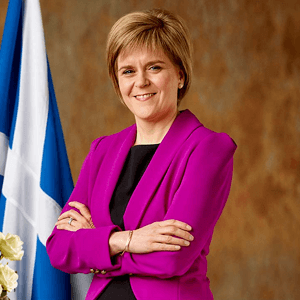
This week in a surprise move, the First Minister of Scotland, Nicola Sturgeon, announced her resignation. So in light of this profoundly ego-less moment, we revisit a stirring conversation we had with her in 2021 when we visited the First Minister at her residence in Edinburgh during the TED Countdown Conference.
Our conversation surrounded this new vision she had brought forth into the world for small countries collaborating on climate action, detailed in the instantly-popular TED Talk she had just delivered earlier that day (immediately followed by a standing ovation). Tom said, “it was one of the best I’ve ever seen.”
This interview is part of a longer episode we published in 2021 titled, ‘Small Countries, Big Vision with Nicola Sturgeon’. You can listen to that full episode and more by visiting the Outrage + Optimism website or by finding us wherever you get your podcasts.
Enjoy the Rewind.
—
NOTES AND RESOURCES
Nicola Sturgeon | First Minister of Scotland
Watch Nicola Sturgeon’s TED Talk referenced in the episode, followed by a short Q+A.
It’s official, we’re a TED Audio Collective Podcast - Proof!
Check out more podcasts from The TED Audio Collective
Please follow us on social media!
Twitter | Instagram | LinkedInFull Transcript
Transcript generated by AI. While we aim for accuracy, errors may still occur. Please refer to the episode’s audio for the definitive version
00:00:00.620 --> 00:00:02.120
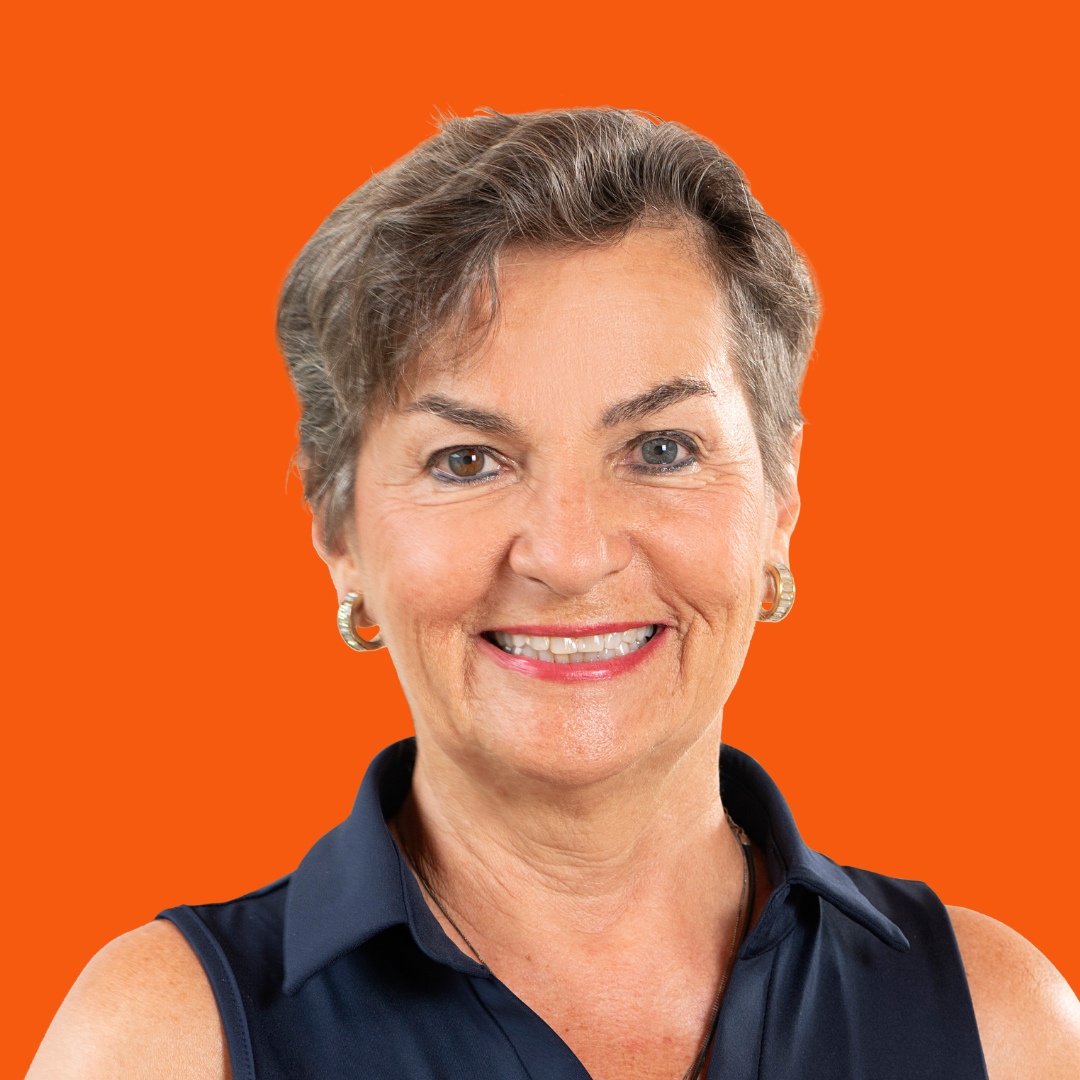
Christiana Figueres: Hello, everyone. You probably have heard that Nicola Sturgeon, First Minister of Scotland, has announced that she will step down after eight years at the helm of the Government of Scotland. It is honestly very sad that yet another brilliant woman is leaving the public arena. But this is such a lesson in ego-less leadership, not very common among politicians. So kudos to her for that. Now on this historical occasion, we thought we would share with you as a little weekend bonus, an in-depth interview we had the honor of having with her in her residence in Edinburgh in 2021, when we were there for the TED Countdown Conference. We start the interview by asking her about a letter that she had just written to the then Prime Minister of the UK, Boris Johnson, about shutting the Campbell oil field. Very interesting, her articulation of the arguments behind that letter. Now, Nicola Sturgeon will go down in history for leadership in many different areas, but just on climate, we have Nicola Sturgeon to thank for Scotland's very ambitious climate change legislation, which sets a target for net zero emissions of all greenhouse gases by 2045. That is the most ambitious policy in the UK and I would dare say, across most of the countries of the world. But even beyond Scotland and beyond the UK, she has been an inspirational leader. She's been an inspirational leader for all small countries. She was one of the founding members of what is called the Under Two Coalition, which is today the largest network of states, regions and provinces. Over 270 governments representing 1.75 billion people and about 50% of the global economy. She has been a guiding light for all of those national and sub-national governments, proving the fact that just because your jurisdiction is small, it doesn't mean that your ambition has to be small. I also fondly remember Nicola Sturgeon because I also in 2021, on the occasion of COP26 in Glasgow, I had the honor to deliver the Macaulay Lecture at the Hutton Institute together with Nicola Sturgeon. I have such a fond memory because after we had both delivered our lectures, some young activists came up to the stage and asked her quite pointed questions, respectful, but definitely critical of her climate performance. And I was so impressed about how she sincerely listened to what they had to say, how she thoughtfully answered without going into the defensive, but rather in deep recognition of her responsibility to steward the future for young generations. So, friends, here is a very thoughtful interview with Nicola Sturgeon, currently still First Minister of Scotland. Enjoy. First Minister, thank you so much for joining us on Outrage and Optimism. It truly is an honor to have you on our podcast. And today, you took the time to join us also in the morning at TED Countdown. I must say, you were brilliant. You got a standing ovation, and you made so many important points. I wanted to pick up one point, and that is the letter that you wrote to Prime Minister about the Campbell oil field. Because it has been a big issue in Scotland, in the UK, and frankly everywhere. And so I just wanted to invite you to summarize for our listeners why you wrote the letter and what you expect to happen, or what invitation did you give out to the Prime Minister to reassess the licensing?
00:04:58.345 --> 00:05:17.365
Nicola Sturgeon (guest, archival interview, First Minister of Scotland): Well, I wrote the letter because I believe that even actually, especially for countries like Scotland, which has been for decades now, very dependent on oil and gas, not just for meeting our energy needs, but also as a really important part of our economy. And therefore these are difficult issues. But even especially for countries like us, we cannot shy away from the tough decisions if we're going to live up to our climate obligations. And we know we're in a transition away from fossil fuels. But the question is, how fast is that transition going to be made? And do we incentivise ourselves to speed it up? Or are we inadvertently disincentivising ourselves? And I think the question many people have, which I think is valid, is while we know we can't switch off oil and gas overnight, because that would be counterproductive and not possible to do, is new exploration consistent with our obligation to the climate. And if we look at Campbell, it's been licensed for I think 20 years or more. It now has to go through a process to have permission to start to develop and explore the field. If it was just applying for a license right now, it would have to go through a process of a climate check.
Load More00:06:22.345 --> 00:06:24.045
Christiana Figueres: Which didn't occur 20 years ago.
00:06:24.045 --> 00:06:25.365
Nicola Sturgeon (guest, archival interview, First Minister of Scotland): Which didn't occur 20 years ago. Now, arguably, the process in the UK is not robust enough. It could be stronger. But it is there for new licenses. So if it's there for new licenses, for a field that has been licensed for many years, but is now, only now, starting to develop, that process now I think should happen as well. I think there are big questions about whether new exploration is consistent with what we need to do on climate. And I suppose my concern moving on from that is, if we tell ourselves, yes, we're in a transition, but we can go on drilling for more oil and gas, do we then do what we have to do quickly enough to develop the alternatives, so to make the transition as speedy as it can be? So that's, I've asked the Prime Minister to apply that assessment before approval is given for Campbell. I am at this stage not optimistic he's going to agree to that, but I'll continue to make that case.
00:07:21.385 --> 00:07:25.625
UNIDENTIFIED SPEAKER — please verify (second interviewer, archival 2021 clip): First Minister, can I just ask you, we're sitting here in Scotland two weeks before COP26. There's a lot of anxiety and kind of hand ringing about what big countries are going to do and is China going to come forward with a commitment. But you just gave this cracking TED Talk this morning, and I have to say it's one of the best I've ever seen, where you talked about the power of small countries coming together. And listening to you, I was just thinking about this kind of this vision of small countries working together in a collaborative way, trying to deliver big things and working, it felt like a new kind of politics. I'd love it if you could sort of set out your vision of how small countries can work together to really change the world.
00:07:53.765 --> 00:08:05.085
Nicola Sturgeon (guest, archival interview, First Minister of Scotland): It's not just small countries, it's states and regions and small countries like Scotland or even bigger countries that are not independent sovereign countries, so therefore members of the UN. And of course, what the big countries do really matters. We're not going to limit global warning without the Americas, the Russians, the Chinas, the Brazils. But if I look at the under two coalition, which is the coalition of I think more than 200 now, states, regions, devolved governments like Scotland's, we collectively represent about 2 billion people. And often, our level is where the powers and the levers lie. So about half, the point I was making at TED this morning, about half of all the reduction in global emissions that we need to see lie with us. It would be down to what laws we pass, what infrastructure we build, how much we invest. So, we've got massive power, and that power is in what we do. If we get our act together, that's going to not take the world of the whole journey, but it's going to take the world a fair bit along that path. We also have power to step in where big countries are not acting. And the best example of this is when Trump took America out of the Paris Agreement. It was states and cities that kept some momentum going. And of course, if we do everything we can do, then we can put pressure on the bigger countries to do more. So I think we've got a huge responsibility and also a huge opportunity to really flex our muscles. Leading up to COP and then coming out of COP, we've just about to publish a revised Memorandum of Understanding for the Under 2 Coalition, which moves from language that talks about keeping temperature warming to under 2 to more specifically talk about 1.5, commit us collectively to net zero by 2050 and individually as fast as possible. And we'll be trying to get as many members of that coalition to sign up to it.
00:09:56.585 --> 00:10:00.445
UNIDENTIFIED SPEAKER — please verify (second interviewer, archival 2021 clip): OK, so Scotland is actually a huge success. You've been very successful. How do you do it? And I mean, can you really just like zero down on tactics, hints? Like, what's the secret of getting climate leadership in a country?
00:10:13.165 --> 00:10:19.485
Nicola Sturgeon (guest, archival interview, First Minister of Scotland): Well, I suppose I should preface my answer by saying we've done a lot, but we've got a lot more still to do. And the next we've halved our emissions if you take the 1990 baseline. So we're halfway to net zero. The next half of the journey is going to be a lot more difficult. But what has been the secret of our success so far? Clear-eyed ambition and being very clear on the targets we set. And that's true now. We have not just a 2045 net zero target, but a 75% reduction target by 2030. 2030 is not that far away, so it really focuses the mind. And trying to make sure that the targets are backed by actions and funded commitments. Our climate change plan is very detailed. We are making lots of investment. We have had massive success in Scotland in decarbonising electricity. Just shy, about 97%, so just shy of 100% of our net electricity consumption is already from renewable sources. We are now trying to apply that same urgency to decarbonising, how we heat our buildings, our transport network. Agriculture, big economic sector for Scotland. So, it's about focusing, being very clear on what we need to do, trying to be open and honest with the population that it won't be easy, but it's important and also, and this is I think a crucial part, not just seeing it as a burden and an obligation, trying and candidly, Scotland has not been good enough at this in past years. If you look at wind energy, we haven't secured enough of the supply chain economic benefit. So, part of our message is if we do this properly, there's massive gains for our own country in terms of being the place where we develop the technology, create the innovations and get the jobs and economic benefit as a result. So, I don't know that there's any secret plan here, but leadership at a national level, I think is really crucial.
00:12:20.445 --> 00:12:38.165
Christiana Figueres: First Minister, everyone knows that young people have taken to the streets in the past 24 months, everywhere, and are pushing us to take much more responsible action and much more responsible policies. Now, I've been thinking for a while, all of this generation is pushing us to think more green. I arrive in Edinburgh, and I am picked up in a car, the driver of whom is older than I am, and I'm 65. And he says to me, the first thing when I get into the car, he had no idea why I was here or anything. He said, you know, I am so delighted that the First Minister went into an alliance with the Green Party, because the fact is we need much more green politics. That is a 70-year-old talking. That is not a 12 or 14-year-old talking. So has the time come for green politics here and everywhere else?
00:13:25.005 --> 00:13:25.765
Nicola Sturgeon (guest, archival interview, First Minister of Scotland): Yes. And I'm glad we've got it in Scotland. My party was already quite green, but having the partnership with the Green Party makes sure we're not being complacent. We have an internal dynamic within government that is pushing us forward faster. And I think that's really important. And the interesting thing about the partnership with the Greens is that it wasn't politically necessary for either of us in the traditional sense that I needed the numbers in parliament or that the Greens really needed the validity and the credibility. We actually chose to come together to do what we think is the right thing for bigger reasons, because we think it will be in the interests of the country. So a candidate of the driver who picked you up is, I think, really important and illustrative of not 100% of public opinion in Scotland or anywhere, but increasingly the public are ahead of politicians. So it is the public that is pushing politicians to go further and faster. And that, it's often an uncomfortable dynamic for people like me and for politicians, but it's a really important one. And the young people, I think, fair play to them, more power to their elbow. That's often very uncomfortable for people like me, because even as somebody who prides herself in being perhaps at the better end of the spectrum when it comes to climate leadership, they don't think I'm doing enough. Exactly. And it's good for me to hear that. And it's good for me to constantly be questioning myself as a result of what they're doing and saying. And I think it makes it really important that we come out. I'm struck by the title of your podcast, Outrage and Optimism. And it sums up, in a sense, the challenge of COP. I hope COP gets further than people might think it's going to at the moment. Is it going to get far enough? I think that's a big question. But it's important we come out of it with enough progress and enough optimism that we're on the right track and can go further. The worst thing would be to come out where people are so outraged that they start to lose faith and lose trust that we can get where we need to be.
00:15:40.205 --> 00:15:42.705
Christiana Figueres: What would be the best result for Scotland?
00:15:43.825 --> 00:15:51.065
Nicola Sturgeon (guest, archival interview, First Minister of Scotland): Obviously, for Scotland, as the country that's hosting COP, we want it to go really well logistically, practically, from a security point of view. From a Scottish perspective, we want to be seen to be leading by example and showcase the country and provide a shot window for investors who are looking for places to invest. But for Scotland, it's important that it's a success for the world. What I would love to think would happen is that we come out, not just with the headline financial commitments met, 100 billion. That's probably where I'm most optimistic that we might see success. But that we would come out with NDCs that add up to commitments with implementation that will deliver 1.5 degrees.
00:16:32.165 --> 00:16:34.125
Christiana Figueres: Or at least keep it alive, as we say.
00:16:34.125 --> 00:16:36.065
Nicola Sturgeon (guest, archival interview, First Minister of Scotland): That's the point I was going to make. That's the ideal. Is that realistic? Possibly not. Therefore, what we need to do is keep it alive. And that's the point I'm making about the need to come out with credibility, because it has been kept alive and in a real sense. And then there is some clarity of where we go from keeping it alive to actually delivering it. And that, I think, is what success looks like in the real world. If you're a young person, though, I'm very aware that looking at world leaders coming together to haggle and negotiate over the future of the planet is not that inspiring for you. So, it's really important that we make sure we're pushing the ambition as far as we can take it.
00:17:21.245 --> 00:17:24.745
Christiana Figueres: And keeping 1.5 alive is not going to be enough for them.
00:17:24.745 --> 00:17:25.085
Nicola Sturgeon (guest, archival interview, First Minister of Scotland): Absolutely. And nor should it. It shouldn't be enough for any of us. But it's better than not keeping it alive.
00:17:28.825 --> 00:17:29.685
Christiana Figueres: Yes.
00:17:29.685 --> 00:17:37.665
Nicola Sturgeon (guest, archival interview, First Minister of Scotland): But it's not enough to keep it alive and then not know where we go so that it dies a couple of years later. Keeping it alive in order to then see a process kick in that gets it to where it needs to be is crucial.
00:17:45.605 --> 00:17:50.125
Christiana Figueres: First Minister, you have named the name of our podcast Outrage and Optimism. And we want to ask you a cheeky question. We have a tradition on our podcast that at the end of our conversation, we always ask our guests to place themselves in a spectrum, because we believe that there is a spectrum between outrage and optimism. And we would love for you to place yourself on a spectrum from outrage at the still lack of 100% sovereignty for Scotland and optimism that Scotland will be an independent nation.
00:18:22.925 --> 00:18:27.065
Nicola Sturgeon (guest, archival interview, First Minister of Scotland): Oh, I'm 100% optimistic that Scotland will be an independent nation.
00:18:27.065 --> 00:18:29.325
UNIDENTIFIED SPEAKER — please verify (second interviewer, archival 2021 clip): Why didn't we already know that?
00:18:31.045 --> 00:18:33.845
Nicola Sturgeon (guest, archival interview, First Minister of Scotland): But you know, I say that because I believe it. I think Scotland is on a path to being independent and we will be an independent nation. I can't name you the date, although I think it will be sooner rather than later. And I shouldn't be complacent in saying that because the only circumstance in which it will happen, and I believe it will, is when a majority of people vote for it. It won't happen because I want it, nor will it be prevented from happening just because Boris Johnson, for example, doesn't want it to happen. And it will happen because people across Scotland want it. And when you look at, we're talking about the passion of young people for tackling climate change. If you look at the opinion poll evidence on views of Scottish independence, massively, massively young people are in support of Scottish independence. So yeah, I believe it will happen. So on that, if not on everything else, I'm very optimistic.
00:19:29.285 --> 00:19:30.685
Christiana Figueres: First Minister, thank you very much. Thank you for taking the time on a very busy day. Thank you for hosting TED Countdown. Thank you for hosting Club26. Thank you for inviting us to your home.
00:19:39.125 --> 00:19:40.485
Nicola Sturgeon (guest, archival interview, First Minister of Scotland): Well, thank you very much for being here. It's a real honor and privilege as always to speak to you.
00:19:43.045 --> 00:19:44.185
Christiana Figueres: Thank you very much.
00:19:44.245 --> 00:19:44.625
UNIDENTIFIED SPEAKER — please verify (second interviewer, archival 2021 clip): Thank you. Thank you.
00:19:53.091 --> 00:19:57.651
Clay (podcast producer): Hello, everyone, this is Clay, producer of Outrage and Optimism. Thank you so much for listening to this special weekend rewind of the podcast. Now, this conversation is part of a longer episode that we released in October 2021, titled Small Countries, Big Vision. You can go listen to the rest of this episode via a link I have put for you in the show notes. I'd like to say thank you again to First Minister of Scotland Nicola Sturgeon for coming on the podcast. And another thank you for welcoming us into your home for our recording. Now, in the conversation, we referenced her TED Talk at TED Countdown. You can watch that TED Talk on ted.com. Be sure to watch all the way to the end because right after she finishes her TED Talk, she does a quick Q&A with TED Global Curator Bruno Gissani. Highly recommend following up listening to this podcast by checking that out. Link is in the show notes. And of course, speaking of TED, Outrage and Optimism is now part of the TED Audio Collective, which is a curation of podcasts for the curious. ted.com/podcasts is the link to check out. Okay, that is everything for this weekend rewind edition of Outrage and Optimism. We will see you back here on Thursday.