384: Life Below Sea Level: Can a Country Survive Losing Its Land?
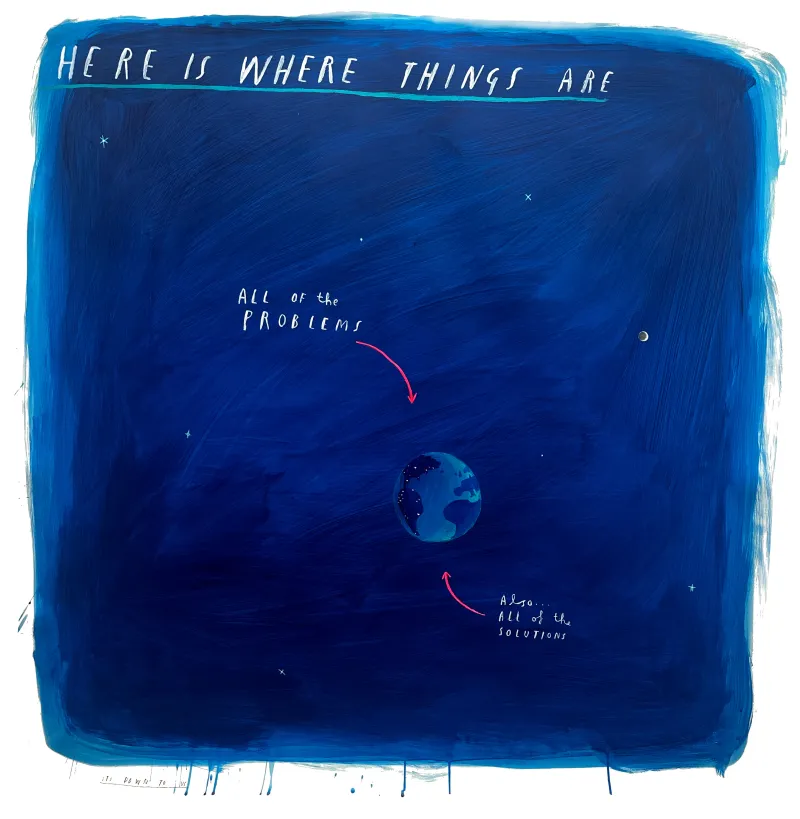
A ship rams a canoe. The canoe starts to sink. The ship's crew lean over the rail and offer a loan to repair it. That is how Surangel Whipps Jr., President of Palau, describes climate finance in the Pacific, a region responsible for around 0.03% of global emissions. He speaks to Christiana Figueres a few weeks into his year as Chair of the Pacific Islands Forum, and as pre-COP talks wrap in in Fiji and Tuvalu ahead of COP31. In Palau, on his islands, high tides are already flooding the taro patches with saltwater, and the main hospital sits at the water's edge.


About this episode
This week, Christiana returns to the fight that wrote 1.5°C into the Paris Agreement, a limit the small island nations won while most of the world's biggest economies pushed for two degrees. A decade on, the UN expects the world to overshoot it. What does this mean for entire countries that sit just a few metres above sea level?
President Whipps explains why diesel power costs his country close to 30 cents a kilowatt hour, when solar is the cheapest energy in the big markets, and what he says to young Palauans who are no longer sure they should have children.
And, Tom Rivett-Carnac joins Christiana to ask what is actually required of the rest of us. Last year, the world's highest court sided with the islands. Last month, the UN agreed that a country does not stop being a country once the sea takes its land. Why hasn't the money followed?
Thanks to our friends at BE HOPE Podcast Takeover, bringing podcasts around the world together to explore the theme of hope and how we can continue to make progress in a rapidly changing world.
Learn More
🎬 Watch All Rise, the documentary narrated by Christiana that follows the Pacific law students who took climate change to the world's highest court
🎟️ Register for our Bath Abbey event livestream on 14 October, Powering the Next Generation to Lead Climate Action
🎧 Listen back to our earlier episodes on the road to the world court: Sovereignty and Survival: A Spotlight on Vanuatu, The Climate Case of the Century, and The ICJ Climate Opinion Explained
⚖️ Read the ICJ advisory opinion on the Obligations of States in respect of Climate Change, the unanimous July 2025 ruling that named 1.5°C the primary temperature goal under the Paris Agreement
🌺 Read the Palau Pledge, the promise every visitor signs to the children of Palau on arrival, and the text that has inspired a movement in Costa Rica to write its own
🌊 Understand the UN's first declaration on sea-level rise, Just Security's analysis of what its presumption of continued statehood means for countries that could lose their land
🛂 Learn more about the Australia-Tuvalu Falepili Union, the treaty behind the climate visa ballot that most of Tuvalu's population entered
🌡️ Read UNEP's Emissions Gap Report 2025, which found the world will very likely pass 1.5°C within the next decade, and why the size of the overshoot still matters
Join the conversation
🎤 Leave us your voice notes and questions for upcoming episodes on SpeakPipe
Instagram @outrageoptimism LinkedIn @outrageoptimism
YouTube @OutrageandOptimism
Or get in touch with us via this form.
Production credits
Senior Producer: Ben Weaver-Hincks
Assistant Producer: Saoirse Wilson
Showrunner: Caitlin Hanrahan
Palau birdsong recorded by JVMoore via xeno-canto
This is a Persephonica production for Global Optimism and is part of the Acast Creator Network.
Full Transcript
Transcript generated by AI. While we aim for accuracy, errors may still occur. Please refer to the episode’s audio for the definitive version
00:02 Christiana Figueres
Hello, and welcome to Outrage and Optimism. I'm Christiana Figueres. Today, we bring you an episode from Palau. We speak to President Whipps about the present and the future of the Pacific Islands. Thanks for being here. So friends, I've carried a single number in my soul for many years. That number is 1.5. Specifically, it is 1.5 degrees centigrade. It actually may prove to be one of the most important numbers in human history. It sounds technical. You might think it's arbitrary why 1.5 could be any other number, but it actually stands for the survival of millions of people. Going into the last negotiation for the Paris Agreement in 2015, most of the big economies wanted the warming limit set at 2 degrees. But the low-lying island nations knew that at 2 degrees, some of them cannot survive.
01:12 News Clip
Lying just 2 meters above sea level in the vast blue expanse of the Pacific, we are literally at the mercy of the rising waves of the wicked storms that are the symptoms of our warming earth.
01:25 Christiana Figueres
I would like to pay tribute to my very good friend, Tony de Brum, Foreign Minister of Marshall Islands at the time. He spent that whole year building a political group of countries that became known as the High Ambition Coalition. By the final days in Paris, the coalition had more than 100 countries, and those included the European Union and the United States. Yes, you heard it right, the United States.
01:58 News Clip
Today, we're formally announcing that we are part of what we are calling the High Ambition Coalition.
02:04 Christiana Figueres
I still remember being in the massive hall where the agreement was eventually adopted and seeing ministers of state from all of these countries marching in arm in arm as a very visible forceful statement that they were behind 1.5 degrees and that that temperature limit had to be included in the text of the Paris Agreement. 1.5 to stay alive was their rallying cry. So, the final text actually does commit countries to keep warming not just well below 2 degrees but to pursue efforts to limit the warming to 1.5 degrees. And despite that, we see that the world has continued to warm and oceans continue to rise. Let's take Palau as an example. Palau has less than 20,000 people who live in that country across hundreds of islands in the Western Pacific. And most homes, roads and businesses sit very close to the shore. The main hospital is right by the sea, linked to the mainland by a causeway. Rising seas and storm surges are already pushing saltwater into the taro patches where families have to grow their staple food. The ocean around Palau is getting warmer too. The reefs underpin the tourism economy and much of the food supply, but scientists expect widespread coral bleaching to become a regular event within two decades. What's happening here is one of the starkest examples of injustice in the story of climate change. The Pacific Islands produce around 0.03 percent of the world's emissions. They have done absolutely nothing to cause climate change. But these countries are quite literally disappearing because of rising temperatures and rising sea levels. In 2023 Tuvalu, an even lower-lying Atoll nation, signed a treaty with Australia.
04:36 News Clip
It's part of an historic deal that gives Tuvaluans facing the impacts of climate change a new pathway to live and work in Australia.
04:45 Christiana Figueres
When the first ballot opened, around 8,700 people registered, counting family members out of a population of roughly 10,000. This is not only heartbreaking. It also raised a question international law had not yet answered. If the land territory of a country ceases to exist, does the country still exist? Would it keep its seat at the UN? Will it still have a voice in the international concert of nations? There is no doubt that island states have shaped climate diplomacy from the very beginning. More recently, they've turned to the courts. Those of you who have listened to past episodes know that in 2019, 27 law students at the University of South Pacific decided to ask the world's highest court, what international law actually requires countries to do about climate change.
05:54 News Clip
What we do now may take a while, but we are working for the ones that come after us. It is them that have the most to lose. What would they want us to say?
06:05 Christiana Figueres
We covered this very exciting case several times last year, as the case was progressing through its various political and legal milestones, with the full backing and leadership of Vanuatu.
06:18 News Clip
When the International Court of Justice finally gave its advisory opinion last July, The Court considers the 1.5 degrees Celsius threshold to be the party's agreed primary temperature goal under the Paris Agreement. All 15 judges unanimously agreed that under international law, the human right to a clean, healthy and sustainable environment is essential for the enjoyment of other human rights.
06:51 Christiana Figueres
The incredible story is told in a recently released documentary titled All Rise. I have the honor of narrating that documentary, and we will put it in the show notes. This May, Vanuatu brought a follow-up resolution to the General Assembly to welcome the opinion. It passed with 141 votes. And just last month, in September, UN member states adopted the first-ever Declaration on Sea Level Rise. It confirms that even if rising seas cover their land, countries do not automatically lose their statehood, or their rights to the surrounding ocean. The leadership and courage of this region has paid off in recent months. But there's also real fear that some of it is coming too late.
07:49 News Clip
Now this report tells us that global temperature rise is set to cross the 1.5 degree centigrade above pre-industrial level, and thereby crossing what the world agreed during the Paris Agreement talks in 2015. A new UN report says humans must now limit the harm, the overshoot, to bring temperatures back down as quickly as possible.
08:11 Christiana Figueres
That is dreadful news for the region that fought so hard for 1.5. Still, these nations are not giving up. At the start of September, leaders of the Pacific Islands Forum, the region's main political body with 18 members, met in Palau and recommitted to keeping 1.5 within reach. They called climate change for what it is, the single greatest threat to Pacific peoples. And the Pacific is once again at the center of climate diplomacy this month. As this episode goes out, the pre-cop is wrapping up in Fiji two days after leaders have gathered in Tuvalu. For decades, these nations have held the rest of the world to account. That job should never have been theirs alone. And the next few weeks are a chance for everyone else to show that they are listening. I had the opportunity to speak with Palau's President Whipps a few weeks into Palau's chairmanship of the Pacific Islands Forum. I wanted to know whether these winds are reaching people on the ground in the Pacific and how he keeps young people in Palau from losing hope. Thank you so much for joining us here on Outrage and Optimism. We are very excited to speak to you for several reasons. The first is that you now chair the Pacific Islands Forum and you just had a leaders meeting the end of August and first days of September. As you closed that meeting, you were saying that the real test is going to be what people see in their communities, not what gets announced in the room. What would that look like? How do we make a real difference at the community level?
10:18 Surangel Whipps Jr.
At the end of the day, it's not just about talking, but what can we do that really makes a meaningful difference? One of the things that we did different at this PIF, is we had two segments, one that focused on oceans, and then another one that focused on renewable energy and energy transition, which now we have a chair's outcome that we will carry those to pre-COP and also on to COP in Turkey. And it's so important that the Pacific voice is heard. And that's really what it means when we say we want those impacts reaching the people that are in need. So I'll just give you an example. You know, through these discussions that we've had over the years, GCCM, the Global Climate Mobility Initiative, came out with grants that could be helping people immediately to adapt. For example, you need a seawall, there's money on the ground to help those people build a seawall to protect that community from the impacts of sea level rise. So that's what people want to see. They want to see, you're going to these meetings, how in the end are we making a difference? Are you fighting for us to make sure that you lower carbon emissions? So therefore, it gives us hope our islands won't disappear. So it's tying what we do at these meetings, what we're sharing with our partners, getting our partners to commit, but not only commit, but to act responsibly, and also provide the resources. I use the other example, which is the UNGA. You know, we often go around the world, we talk about, well, you've promised so much for financing, you're going to help us on this, but at the end of the day, you want to give us loans. And it's kind of interesting to me that first, it's like we're sailing in our canoe, and your ship rammed into us, and now we're sinking. And guess what? We'll give you a loan to repair your boat.
12:18 Christiana Figueres
Such a good way of putting it, President. Such a good way of putting it.
12:24 Surangel Whipps Jr.
That's the Pacific problem. And not only that, we'll make it so complicated that you can't actually get the help. So that's the reality that we face. But I have to say that we have made some progress, and that's getting the world together and fight for the protection of the oceans. The BBNJ treaty ratification earlier this year is just an example of how multilateralism works and how we together can do good for our planet. But it requires all of us working together.
12:56 Christiana Figueres
Let me go into one of your two pillars from the forum, which is renewable energy. I seem to remember that some of the Pacific Islands actually have to invest 20% of GDP into the import of fossil fuels, which is outrageous. That is part of the rising cost of fossil fuels, but also the very expensive transport all the way to the Pacific. All of these islands could actually graduate themselves from fossil fuels. So what is standing in the way?
13:29 Surangel Whipps Jr.
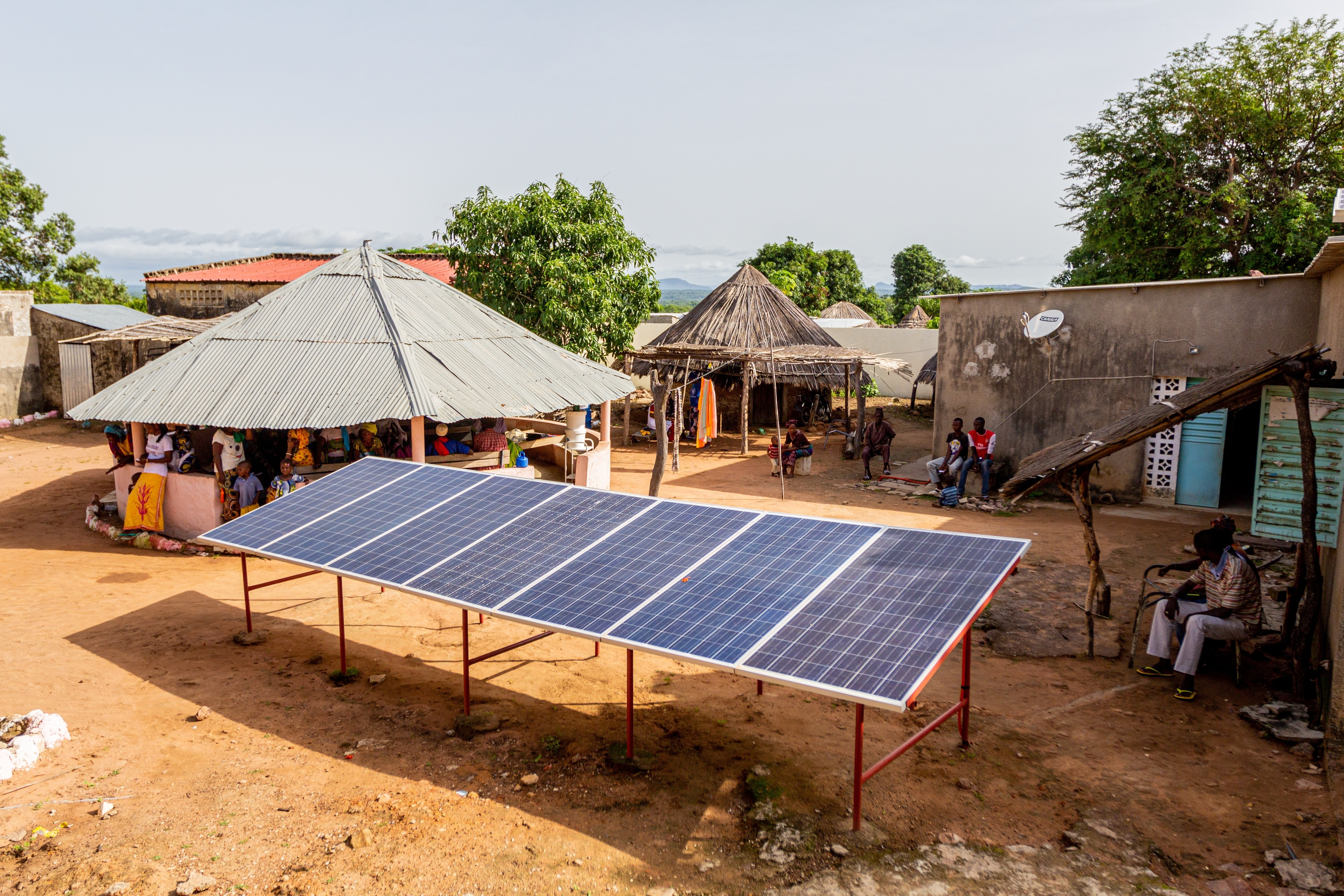
So we have talked about and we all declared that we want 100% renewable Pacific. And the reality is we can achieve that, but it's going to take maybe a little bit of grant funding, but more importantly, I think the creation of the Energy Commissioners Office, sharing information, driving costs down because the cost of renewables in places like India, for example, I understand today, they are providing solar plus battery at three and a half cents a kilowatt. In large countries now, the cost of solar is the cheapest cost of energy. But for us in the Pacific, with the cost of diesel, we're approaching 30 cents a kilowatt just for the cost of the fuel to go into the generator. So it is easy for us to be able to transition, but we've got to bring those costs of solar to be in line with what the big markets play. And the only way we can do that, I think, is as a whole Pacific working together and saying, this is one big market opportunity for these suppliers to look at us as one unit and see how they can drive costs down and really provide that energy that's clean energy, but also affordable energy and gives us that energy independence. Palau was able to put an RFP out. A company out of the Philippines called Solar Pacific with a loan from Australia and AIFFP was able to bid, and their price was 14 cents a kilowatt. Now, right now, that plant produces about 20 to 25 percent of our energy that we consume on the grid, which is really critical right now that the price of fuel is fluctuating somewhat. So now that it's jumped to 30 cents, at least the 25 percent is still fixed at 14. So there's tremendous opportunity. And, you know, Iran crisis may settle tomorrow, and suddenly we're going to have diesel back down at 8 cents or 3 cents or whatever number. But I think the Pacific has learned that we need to be energy resilient. We need to be carbon neutral. We need to provide stable energy at a reasonable cost to our people. So it's very important that people understand that transitioning is also not just saving the planet, but it's actually really helping people. And that's why, once again, you ask at the beginning, how does this get into the people's homes? This is exactly why we have to have these discussions, why we want to talk about, why we're trying to get investors to invest in the Pacific, look at the Pacific. And if you come, don't try to rip us off. Come as sincere partners that want to invest and help us prosper by providing low energy costs that's stable and really help the people.
16:24 Christiana Figueres
Absolutely. I've also been following quite closely since last year the ICJ Advisory Opinion. And we all celebrated when the Advisory Opinion came out and recognized the incredible leadership of Pacific Island, not just the Pacific Islands, but of youth on the Pacific Islands, even more impressive. And I wonder from your perspective, since the Advisory Opinion came out in the summer of last year, have you noticed any impacts, any positive consequences of that? I note that the UN approved a sea level rise resolution just last week. Where are you in relationship to these legal contexts?
17:12 Surangel Whipps Jr.
You know, you need every stick available to help people get in line. And having this legal opinion, our legal declaration by the ICJ is critical because it provides legal clarity under international law what the obligations are.
17:32 Christiana Figueres
Of all states.
17:33 Surangel Whipps Jr.
Of all states. And you know, I think that's so important. It's putting the responsibility and accountability where it belongs. And for us, it reinforces 1.5. Why 1.5 is so important. And staying below 1.5 is so important. And it translates to making, you know, those commitments. I think sometimes countries make them and kind of just, you know, maybe they think it just sounds good. But this is saying, no, they're not just commitments. You need to follow through and deliver on those commitments. And of course, the Sea Level Rise Declaration was so important. And I hope that it's through these strong laws, but more importantly, decisions, they help motivate people to make a change. Because at the end of the day, governments and leaders come and change. But most important, humanity needs to understand their obligations to the rest of humanity.
18:27 Christiana Figueres
Let's talk about the pre-cop. What a battle it was to decide who would preside over COP 31. That argument is now behind us. But one of the consequences, of course, is that the pre-cop is going to be delivered by Fiji, Tuvalu, and Australia all together, and the leaders event will be in Tuvalu. One of the things that is quite exciting there is the Pacific Resilience Facility, which as we understand it, is the first Pacific owned, Pacific led, and Pacific managed regional climate and disaster resilience financing institution. It has a target of $500 million. I'm wondering what you know about the progress of the Pacific Resilience Facility. Do you see good prospects for it to be further funded during the pre-cop, and what are you expecting to have as a benefit from that facility?
19:32 Surangel Whipps Jr.
Well, first of all, it's great that we're able to have a pre-cop in the Pacific. I think one of the things that the whole Pacific was hoping for was to bring the COP to the Pacific.
19:46 Christiana Figueres
Yes.
19:46 Surangel Whipps Jr.
So that the world can understand the challenges that the Pacific has. Now, the pre-cop is a ministerial meaning, but it's still the whole world coming to the Pacific. And I think that's so important because it sets us up for COP. What we want to be able to do is really turn all the talk into action. I think it was Prime Minister Marape that said one year, I'm not going to COP because I'm tired of going to COP and nothing gets done. And one of the challenges that we've been talking about is climate finance and how difficult it is for us to get climate finance. It's a loan, there's a lot of red tape. And even grant financing, it takes us years to be able to be eligible or even to get the funding. And so that's why this facility is so important because it's Pacific-focused, Pacific-designed, Pacific-owned, and you know, our donors, our partners say they want to help us. Well, this is a pathway.
20:41 Christiana Figueres
Here you are. This is how you can help.
20:44 Surangel Whipps Jr.
Yes. So, you know, I just want to share that all the Pacific Islands have committed to put their share into this funding. Right now, there's been 168 million committed out of 500 million.
20:58 Christiana Figueres
Fantastic.
20:59 Surangel Whipps Jr.
In Palau, there was another 20 million total that was announced, just in Palau. The biggest one of that was Great Britain. I think it was 14 million. So the commitments are coming in. There's other countries that have committed that are large countries, but their commitments have been, I would say, miniscule. We'd like to help them raise their ambition.
21:17 Christiana Figueres
I like that statement. We would like to help them raise their ambition. I'm going to borrow that.
21:22 Surangel Whipps Jr.
Yes. You know, and be responsible. I mean, you talk about you want to help. So let's help us get the 500 million.
Load More21:30 Christiana Figueres
President, I would also, if you allow me, like to talk about the Palau Pledge, which I think is so inspiring. It is a stamp that is put into your passport when you enter Palau. And you have to sign this pledge to the children of Palau. And the pledge says, children of Palau, I take this pledge as your guest to preserve and protect your beautiful and unique island home. I vow to tread lightly, act kindly, and explore mindfully. I shall not take what is not given. I shall not harm what does not harm me. The only footprints I shall leave are those that will wash away. An absolutely gorgeous text, a beautiful pledge. And as far as I know, President, the only country to have such a pledge. Now, as I told you before, we started recording, my little country of Costa Rica is very inspired by this pledge. And there's a whole movement in Costa Rica to have something similar for Costa Rica, completely inspired by your pledge. So, would love to know if you have seen an impact from that pledge. Has it really had the effect that you wanted it to have?
22:48 Surangel Whipps Jr.
It's so important that your visitors understand what you value, what you treasure. And I believe the pledge has had a tremendous impact on the way visitors behave. I just want to share, I want to thank you for being one of the early signers of this pledge and being able to visit us. But you know, I think one of the things that the pledge demonstrates is just kind of our value system and the way we have lived and used this land and sea for thousands of years. We always say that the land is our mother and the ocean is our father. And I think that's so important because, you know, when you put it in that context, when it's part of you, when it's family, then you care for it, you take care of it, you don't just take from it, you also give back. We're so blessed with a, we got to say, a pristine paradise, the amazing life under the sea. I mean, 1,300 species of fish, 500 species of coral. But then when you go on the land, it's the same. I was on a kayak trip with my friend, the Prime Minister of Australia, and he made a comment, and I thought it was very profound. He says, you know, I looked at the islands, and from a distance, they look all green. But when we came up close, and then we were just in this one bay, and the guide was saying, there's 36 species of orchid. And then you look, and then you begin to see that there's so much varieties of rainforest. And that's why it's so important that we help our visitors understand that, yes, we know that you love coconut crab, or you want to see the beautiful marine life underwater, but, you know, treat it with care. I think what's happened with the pledge is not only that we've asked our visitors to sign the pledge, but the tour operators, the business operators have also, I think that's really where it is, is they're helping enforce it. And helping remind the visitors of their commitment. Because it really is a team effort. Now it's not only Palauans taking responsibility, but it's asking our visitors to join with us in that responsibility.
24:57 Christiana Figueres
Absolutely. Those of us in the older generation have a really difficult task with respect to the younger generation. Because young people today are being born into conditions that are actually quite frightening. And it is our responsibility to ensure that they do not paralyze themselves with fear and with dread. How do you do that with your young people?
25:28 Surangel Whipps Jr.
It really is heartbreaking for me to hear. And I've talked to young people, and I would ask them, why don't you have kids yet? And they say, well, it's difficult to raise kids. But what kind of world are we bringing those kids up into? And I think that's such an important message that we have to work on, is how do we give our children hope? It's so important that we work hard, not only to create policies to ensure that we give our children hope, by making sure that they have a sound social security system, they have a sound pension system that they can retire in, that their government is not so overburdened with debt. But also, more importantly, they have an environment that they can enjoy, and then they can pass on to their children, they can continue to fish, they can continue to farm, and live in harmony with what God has given us. The biggest challenge to me these days is just media, social media, so much information out there, and a lot of times all that information is so negative. So I think we also have to do a better job in helping to focus on the good things, like the success of the pledge, like the progress that's being made at these COPs, what is actually happening, and give them hope that yes, things are not as good as we want them to be, but if we work at it, if we don't give up, we keep trying, we can make things better, and together we can do it. So that's always what I try to share with our young people. You have to give hope.
27:01 Christiana Figueres
Indeed, indeed, because if we don't, they will have very little motivation to continue doing the work that all of us have to do.
27:10 Surangel Whipps Jr.
And I have to share one good news.
27:12 Christiana Figueres
Please.
27:12 Surangel Whipps Jr.
Is our jellyfish.
27:13 Christiana Figueres
Yes.
27:14 Surangel Whipps Jr.
Our jellyfish, as you remember. Unfortunately, in 2022, we had a very hot summer. We lost a jellyfish and it's continuing to be hot. So the jellyfish weren't able to come back. We lost them in 2015, but it was only for about 18 months. This time it was for four years. So they came back at the beginning of summer. And guess what happens now? Super El Nino, the highest on record. We're just concerned that next summer, hopefully we don't face the same problem again, because the last few times it happens was 2015 and an El Nino year and then 1997. So they're getting more frequent. When I talk about jellyfish disappearing, everybody goes, oh, the jellyfish is disappearing, I thought about turtles not having enough beach to lay their eggs on. These are just the challenges that we have. As long as people losing their land, if they lose their land, they lose their culture, they lose their identity. This is why your program is so important, is to bring humanity together so that we can all make a difference.
28:22 Tom Rivett-Carnac
So Christiana, I'm stepping into your episode. What an amazing and heartbreaking story. This has been so far, both with your opening and also the remarkable conversation with a remarkable human being in President Whipps. So much from that conversation, I'd love to pull out and ask you about, but the image I just kind of couldn't shake from my head was this, the ship rams your canoe and then offers you a loan to fix it. I mean, that feels like it's been the climate finance tension for so long.
28:51 Christiana Figueres
Absolutely.
28:52 Tom Rivett-Carnac
Would love to invite you maybe to start there and then there's so much we should maybe unpack.
28:56 Christiana Figueres
Well, to stay with that image, the first step is for all countries to realize, the bigger countries, that they have rammed the canoe.
29:06 Tom Rivett-Carnac
Have rammed the canoe. Right.
29:08 Christiana Figueres
Let's start there, that they're all in a big boat and that they have, they, underlying they, have rammed the canoe. So that historical responsibility, as you well know, Tom, I mean, that has been one of the most difficult things. Although, interestingly enough, it is such a pillar of the Climate Convention and it's not, no one is ever going to walk away from it. Nobody would ever dare say, let's eliminate it. But they also don't live up to it, the larger countries. Yeah. So, you know, really acknowledging that the larger countries are the ones in the bigger boat, that they have rammed the canoe. And frankly, that they have rammed the canoe in full knowledge thereof. In full knowledge.
29:57 Tom Rivett-Carnac
Yeah. And they haven't stopped once they hit it. They just keep going.
30:00 Christiana Figueres
And they haven't stopped, and they haven't made any, and they haven't taken any measures to figure out what they're going to do about it. They haven't, you know, helped to repair the canoe at all.
30:14 Tom Rivett-Carnac
Yeah.
30:15 Christiana Figueres
Let alone give them money to buy a new canoe or to repair that one. So it goes, it goes even deeper than ramming the canoe.
30:26 Tom Rivett-Carnac
And so you've spent quite a lot of time, I know, over the last few years in places like the Pacific Islands, vulnerable countries. Can you just explain what that feels like when you're from those countries and you're subject to that injustice?
30:38 Christiana Figueres
I mean, outrage is a soft word for what they must feel. There's no way that I could speak for them. But in my imagination, I just, I honestly, I have such admiration and such respect for the fact that they just keep at it, their determination to continue to come to all of these multilateral meetings and continue to bang the table, continue to give us the facts, continue to raise the flag of justice and of integrity. And, you know, there's no way. I've never seen any of them say anything about we're going to give up. They're just always going at it over and over again. That absolute determined staying power is so admirable as they see that their lands are disappearing.
31:36 Tom Rivett-Carnac
Yeah. I mean, in your conversation, one of the things that struck me was obviously President Whipps is chairing the Pacific Islands Forum in the year in which the world is about to overshoot 1.5 degrees with all of the implications that's going to have for his country. Of course, he is able and willing to name that profound injustice. But in this conversation, he's also talking about solar tariffs, sea wall grants, regional energy commissioning. It feels like his attention of course is on making the case for the injustice, but he's also admirably just kind of getting on with getting things built.
32:09 Christiana Figueres
Yeah. Well, they don't have any other option, right? I mean, even with this amazing declaration that they got through the UN that says, if their land goes completely underwater, they do not lose statehood. But honestly, that is like the last, last, last, last resort. It's the last resort after the last resort. And so that's not the scenario that they want to work with. They are obviously working with the scenario of how do they protect themselves. And you know, Tom, I just remembered, when I, in COVID, when I moved to Costa Rica, and I moved to living right in front of the ocean, and you've been to my home, I remember that the very first October that I was there, right in at the height of the rainy season, when we have the highest waves. I was not used to the October waves, and because I can hear the sea from my bedroom, I woke up at like two or three in the morning, and I went down because I just could hear the sea, and I thought the sea is going to come to my bed. And I walked down to the sea, and those waves had, of course, come up halfway through my garden, and they were so violent and so unforgiving. And I just stood there. I forced myself to stay there. And for the first time, I felt in my gut, I felt viscerally what all the people in the Pacific Islands have to feel every single day. Because I stood there barefoot, and I thought, okay, if I have to run, I can go put on my running shoes and run up the mountain behind me. But most Pacific Islanders don't even have a mountain behind me. And so that fear, that helplessness of not having anywhere to go, especially when a king tide comes in, or one of the terrible storms that they get, the typhoons. It was the first time, I have to tell you, Tom, that after so many years of working on this and understanding their vulnerability in my head, it was the first time that I felt it in my gut. And that makes a difference.
34:30 Tom Rivett-Carnac
Yeah.
34:31 Christiana Figueres
That makes a difference.
34:32 Tom Rivett-Carnac
Yeah, you've told me that story before, and it's just so striking, and it's really great to share with the listeners how the visceral change of that, and hearing you relate it in the first person helps me understand it differently. I think, I mean, one of the statistics that came out of your opening piece that was just heartbreaking is 8,750 people out of 10,000 registered for these visas. And of course, it is an astonishing achievement to get this C-level declaration at the UN. But that number tells you a lot about how people on the ground are reading the future, right, whatever happens elsewhere. And it's good to offer the islanders a home, of course, but we're living in between that space of like relocation done with citizens and relocation happening to them because they can't really stay at home anymore. It's good that things are happening, but it is just a heartbreaking situation.
35:27 Christiana Figueres
Well, and just to add to the heartbreak, Tom, yes, 8,750 register for a visa to go to Australia. But what about the 1,250 that didn't register? Yeah. That is even more heartbreaking. Because that means those people are choosing to stay, knowing that the waters may wash away their livelihoods, may wash away the bones of their ancestors, may wash away their cultural and historical identity. And yet, they are courageous enough to say, I'm going to stay here. I'm going to stay here to the very last bitter end. Because this is where home is. So it's two tragedies. It's those who registered to leave and have to start a new life in a country that has nothing to do with them, languages, traditions, you know, weather patterns that have nothing to do with them, and those who choose to stay with their ancestors. It's just two tragedies. Yeah.
36:34 Tom Rivett-Carnac
Now, we're going to have to try and bring this back for listeners in the next few minutes, and it's not an easy thing to do, given the heavy nature of this, but, you know, you have been clear all along that the stubborn optimism you've talked about was never a forecast that things would be fine. It's a decision how to act. And, of course, Rebecca Solnit's wonderful quote about hope being an axe you break down doors with in an emergency. How do we respond to this situation? I mean, this is something new, isn't it, for humans to kind of face this sort of situation. I mean, arguably, there's nothing new under the sun, and humans have faced tough times before, but this feels like it requires something kind of different to look at losing countries, losing ancestral land. What's required of us as we look at this, do you think?
37:18 Christiana Figueres
Climate responsibility, period, full stop. I mean, it's not that difficult, right? It's not that difficult. And that's what they expect from us, Tom. They don't expect us to, you know, feel sorry for them and cry with them, and no, they're just like, get your act together. Climate responsibility is what they're expecting from us. What does that mean? Reducing emissions and of course, helping them to adapt in the short and medium term. And that's what they're all about. That is exactly what they're all about. And sadly, it has fallen largely on deaf ears with very important gains, as we have just spoken about, the ICJ advisory opinion, the resolution at the UN. But, you know, on the ground, that's all at the macro level. And thank heavens for that. And congratulations to them for their courage and their leadership. But on the ground, our emissions continue to rise. Or at best, plateau. That's not where we should be. We should be on the descent.
38:26 Tom Rivett-Carnac
Yeah.
38:27 Christiana Figueres
And we're not there.
38:28 Tom Rivett-Carnac
It's also interesting that the breakthroughs that you've talked about are won through the UN system, through the multilateral system. So it's actually the more vulnerable countries that are more damaged by the breakdown of these multilateral structures. Would you say that's true?
38:43 Christiana Figueres
Yes and no, because at least in New York, it is not so with the Climate Convention, as we know, that doesn't have voting rules. But New York does have voting rules, and it does not require unanimity to adopt decisions and resolutions. And so they have been working with a very broad coalition of the willing. That does not include the United States. That does not include Saudi Arabia and, you know, quite a few other countries. But they still get their legal statements through because a majority of countries is actually standing with them. Politically, a majority of countries is not yet standing with them financially. That is the next step.
39:29 Tom Rivett-Carnac
And governments are being asked to pledge to this Pacific Resilience Facility.
39:33 Christiana Figueres
Yeah.
39:34 Tom Rivett-Carnac
President Whipps said that these are minuscule, but this is something we can do. I mean, people should be pressing their governments. Listeners to this podcast, press their governments. I mean, I can guarantee you not many elected representatives are getting specific questions from their electors about whether or not their government has pledged the Pacific Resilience Facility. Wouldn't take many of them to get a few questions asked in legislatures around the world. And that can make a really big difference.
39:59 Christiana Figueres
That can make a big difference.
40:00 Tom Rivett-Carnac
So along with watching your brilliant documentary All Rise, which is in the show notes, I think that's something people should do.
40:07 Christiana Figueres
Absolutely. Absolutely. It's the minimum, the minimum that they deserve. Yeah.
40:13 Tom Rivett-Carnac
Christiana, thank you. This has been a fabulous episode. I learned an enormous amount. Thank you for leading us through it. And great to be with you. Thanks for listening, everyone. And we'll be back next week.
40:21 Christiana Figueres
Thank you. See you next week.