









326: Inside COP: Brazil's Climate Leadership - the COP30 host takes centre stage
Join us for Day Two in Belém as we unpack how Brazil is shaping the first days of COP30.



Related Episodes
.png)
.png)
.png)
.png)
.png)
.png)
.png)
.png)
.png)
.png)
.png)

.png)
.png)
About this episode
It’s Day Two in Belém and all eyes are on the host nation - and the early signals they’re sending about what they hope to achieve.
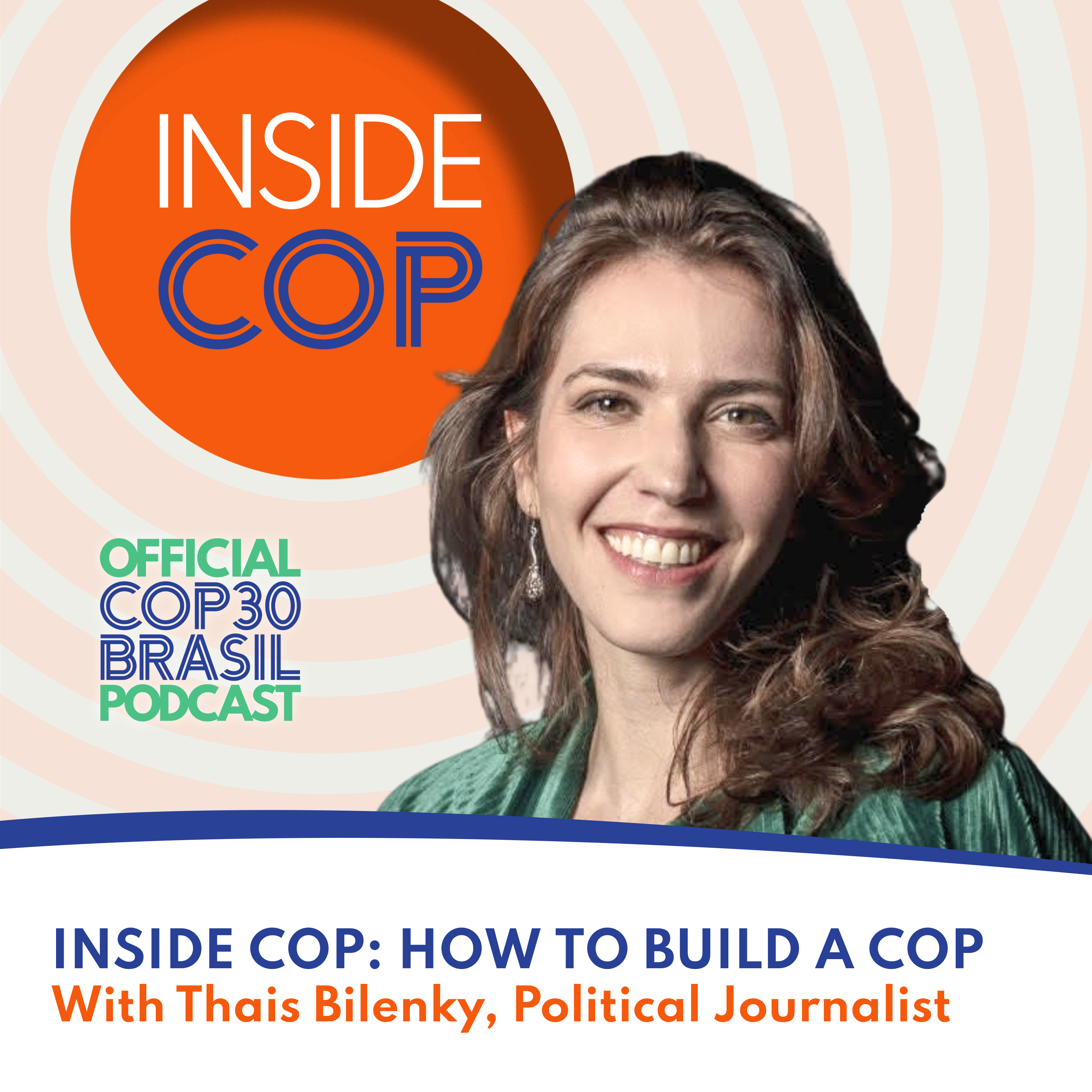
Join Christiana Figueres and Tom Rivett-Carnac as they unpack how Brazil is shaping the first days of COP30 - and the quiet strategy behind Ambassador André Corrêa do Lago’s leadership. With the release of the Call of Belém for the Climate, they explore what may be a masterstroke of multilateral diplomacy. And friend of the show Thais Bilenky joins us to break down how the early days of the summit are playing out in Brazilian media and on the streets of Belém.
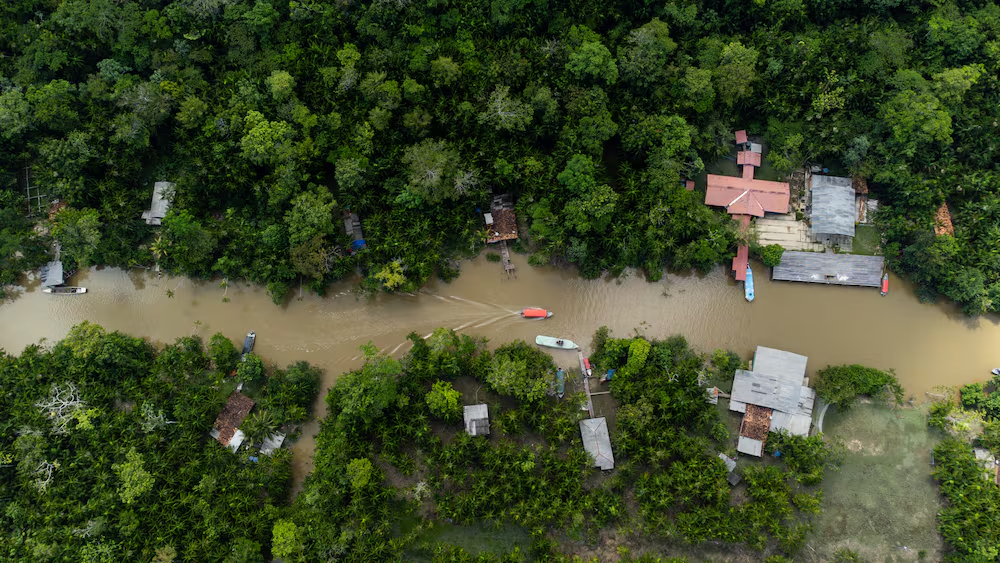
With the support of the Arapyaú Institute, this episode also turns the spotlight on Brazil’s own climate progress. And how a nation standing at the bridge between the Global North and the emerging Global Majority is using this moment of global attention to tell a new story: one defined by solutions, not sacrifice. We hear from Renata Piazzon, Director General of Arapyaú, whose mission is to reframe Brazil’s climate story - showing the opportunity that lies in regeneration, restoration, and a thriving social bioeconomy.
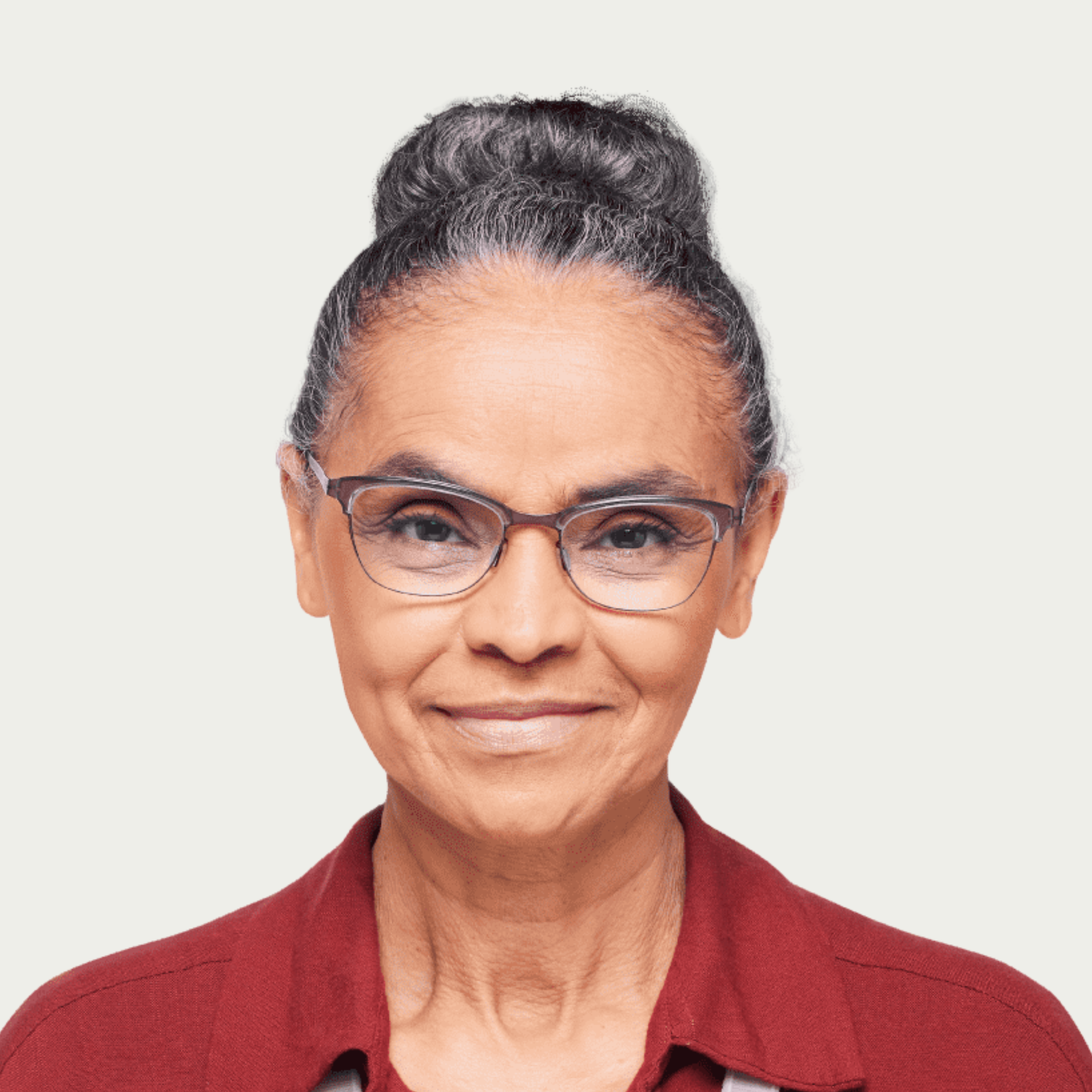
And Marina Silva, Brazil’s Minister for the Environment and Climate Change, joins Christiana to share her call for an Ethical Global Stocktake - a reminder that sustainability is not only a way of doing, but a way of being.
Learn more:
🌴 Explore the work of the Arapyaú Institute
⚖️ Read about the Global Ethical Stocktake
🌍 Check out the official COP website for background and announcements
🎤 What do you want to hear on Inside COP? Ask us on SpeakPipe or on our socials where you can also see more behind the scenes moments and to watch our videos:
Instagram @outrageoptimism
LinkedIn @outrageoptimism
Or via this form.
Producer: Ben Weaver-Hincks
Edited by: Miles Martignoni
Video Producer: Caitlin Hanrahan
Exec Producer: Ellie Clifford
With thanks to Groundswell and Global Optimism.
This is a Persephonica production for Global Optimism and is part of the Acast Creator Network.
Full Transcript
Transcript generated by AI. While we aim for accuracy, errors may still occur. Please refer to the episode’s audio for the definitive version
Tom Rivett- Carnac: [00:00:02] Hello and welcome to Inside Cop from Outrage and Optimism. I'm Tom Rivett-carnac.Christiana Figueres: [00:00:06] I'm Christiana Figueres.
Tom Rivett- Carnac: [00:00:07] Today we are bringing you a focus on the host country, Brazil, with interviews with Marina Silva, Brazil's Minister of the environment, and Renata Pierson, director general of the Arab Institute. Thanks for joining us. Okay, Christiana, today we're going to get into a couple of brilliant conversations. I mean, honestly, Marina Silva.
Christiana Figueres: [00:00:29] Because we're in Brazil.
Tom Rivett- Carnac: [00:00:30] Because we're in Brazil, we're going.
Christiana Figueres: [00:00:31] To we're going to talk about Brazil.
Tom Rivett- Carnac: [00:00:32] Brazil. Brazil is great. The food is great. The cop is great. But before we do, I think we should get into a little bit about what's been going on at the Cop, because it's been a pretty consequential first day.
Christiana Figueres: [00:00:42] Can we actually before we get into that, can we say how heartbreaking it is that almost every time that we meet for a cop, there's a horrible typhoon in the Philippines? How is it possible? Yeah. So this time around, at least counting now, eight dead and a million displaced people. The Philippines is consistently a warning bell for us that we're just simply not doing our job well enough yet. So our hearts definitely go out to the Philippines once again. Once again.
Tom Rivett- Carnac: [00:01:22] 100%. Well, well done for mentioning that at the beginning. Just absolutely horrifying news right after what happened also in the Caribbean. So thank you for that, Christiana. Um, now, of course, the cop is where we're trying to formulate a coordinated global response to ensure these things don't get worse. Um, so let's have a look at how that's going.
Speaker3: [00:01:43] Our glaciers are melting.
Tom Rivett- Carnac: [00:01:45] Today was the opening ceremony. Uh, Simon Steele of the UNF, triple C opened the cop talking, appropriately enough, based on how you started this.
Simon Steele: [00:01:52] He said to squabble while famines take hold, forcing millions to flee their homelands. This will never be forgotten as conflicts spread.
Tom Rivett- Carnac: [00:02:06] And we also saw another speech from President Lula. He, of course, spoke prior at the World Leaders Summit, and an interesting document emerged as part of that, which came out a couple of days ago. But I think we should maybe in our chat now, dig into this a little bit. This is called a Call of Belem for the climate. And I think you need to have a little bit of history in the climate negotiations to understand exactly what this thing is. So, Christiana, why don't you tell us, with your many years of experience in this space, what is this document, first of all, and then we'll go into what's in it?
Christiana Figueres: [00:02:39] Well, we actually don't know what it is, but we can put out a couple of little suspicious thoughts.
Tom Rivett- Carnac: [00:02:45] Yeah.
Christiana Figueres: [00:02:47] Baby. So we've already had a conversation here in the podcast that the Cop president, ambassador de Lago, is going to have to wrap up all of the discussions and the second level agreements on issues, plus a whole bunch of new issues, a plethora of issues that are coming up. He has to wrap them up into some political message that is coherent, that can be understood by those who are here and especially by those who are not. And that is not an easy exercise. And in our conversation with him that we dropped yesterday, listeners will see that he was actually noncommittal about how he's going to do that.
Tom Rivett- Carnac: [00:03:34] Strategically, noncommittal.
Christiana Figueres: [00:03:35] Strategically. So in that non-commitment that opens the space for beginning to think about, hmm, this this is not a diplomat who's going to be caught unprepared, right? This is a very well prepared, very strategic person. So this call of blame for the climate that was put out not by him, but by President Lula, the president of the country. It's sort of a little bit walks like a duck, quacks like a duck, but it's not like a duck.
Tom Rivett- Carnac: [00:04:11] But we can't tell if it's a duck.
Christiana Figueres: [00:04:12] But we don't know if it's a duck. Okay, but if it is a duck, yeah. It just quacks like a potential political document that would come out, perhaps in the form of a what we call a covered decision and has been done before in many, many cops.
Tom Rivett- Carnac: [00:04:32] That a legally binding decision.
Christiana Figueres: [00:04:34] It is not a legally binding decision whatsoever. He cannot do any legally binding decision. He has to figure out what are his political tools. So a cover decision is a political document that brings together the multiple interests, needs, concerns of everyone who is sitting in the plenary and is a it's a political statement. It would have to in order for him to have it be the formal outcome. It does have to be approved by everyone. He does have to have consensus from everyone, but at least it's not a legally binding decision. And he's been very smart, and we have to unpick this to see if every country has what they need. The trick to these cover decisions is that no country can feel that they got everything that they wanted. But every country must go home with at least one win that they can point to.
Tom Rivett- Carnac: [00:05:37] And that no red lines being crossed.
Christiana Figueres: [00:05:39] With no red lines being crossed. And and that is the, the, the science and the art of this of multilateral diplomacy and of these covered decisions. So from from the first reading that we have done sort of quacks like a cover decision, but he can say very clearly that he hasn't put any know any documents.
Tom Rivett- Carnac: [00:06:01] Putting things.
Christiana Figueres: [00:06:01] Out. It just happens that my president, who is my boss and I can't do anything to stop him.
Tom Rivett- Carnac: [00:06:06] Of course.
Christiana Figueres: [00:06:07] Yeah. Um, he has put out this thing called A Call of Berlin for the climate, and he will very likely use it as an indirect.
Tom Rivett- Carnac: [00:06:15] Well, now it's their consultation document.
Christiana Figueres: [00:06:18] I'm sure that all governments are asking him for appointments to discuss the details in every comment. Did you forget this? And can you add that, etc., etc. but he has the backbone of potential cover decision.
Tom Rivett- Carnac: [00:06:33] Very clever. I mean, is there.
Christiana Figueres: [00:06:34] Not not put out by his hand but by his boss?
Tom Rivett- Carnac: [00:06:36] Can you think of another cop where this was the negotiating tactic? So interesting.
Christiana Figueres: [00:06:40] So this is the first time that I see that something like this is put out, right? Even before the cop started.
Tom Rivett- Carnac: [00:06:46] And of course, what's in here now is of course consequential and important, but doesn't necessarily bear any resemblance to what we'll see at the end because it needs to go through all the machinations.
Christiana Figueres: [00:06:56] I think it will bear a lot of resemblance. It will be tweaked.
Tom Rivett- Carnac: [00:06:59] Okay.
Christiana Figueres: [00:06:59] Okay. But but my suspicion is that there is enough thought gone into this that it will certainly bear resemblance.
Tom Rivett- Carnac: [00:07:06] This is I mean, you know, there's stuff in here about nationally determined commitments being the maximum possible ambition, strengthening frameworks, looking at means of implementation. You know, overall again, national adaptation plans. There's things about biodiversity. We go into the end of fossil fuels, a commitment to transitioning away from fossil fuels in a fair, orderly and equitable manner. We talk about oceans, about energy poverty roadmaps. I mean, there's a lot here, right? As well, I particularly like about the bit they reference the IMO, the International Maritime Organization. Now, regular listeners will remember that a few weeks ago, the IMO was supposed to adopt their draft standard on international shipping. And it was it was torpedoed, although that's an unfortunate way of phrasing it by the US lobbying. But they have now reinserted into this document the fact that countries should urgently adopt and implement the global regulatory framework from the International Maritime Organization. So it's kind of a backdoor way of coming back at that issue.
Christiana Figueres: [00:08:06] And very courageous.
Tom Rivett- Carnac: [00:08:08] Very courageous.
Christiana Figueres: [00:08:08] Because the IMO does not respond to the UNF triple C.
Tom Rivett- Carnac: [00:08:13] Yeah. Do you think that's there so that they have something to remove under duress from the. Yeah.
Christiana Figueres: [00:08:20] I don't know.
Tom Rivett- Carnac: [00:08:21] If it was a.
Christiana Figueres: [00:08:22] Draft, but it's very interesting because there has always been a caution about giving instructions to the IMO because the IMO is independent of uh, of the, of the climate convention. So I think that's a pretty courageous paragraph right there. Politically courageous. Yeah. So it's a very it's a very interesting document. Now, he had said, and I'm not sure whether he said it on a podcast or somewhere else, that there were three parties that, um, that didn't want a cover decision, therefore that he wasn't looking at a cover decision. But this is of course, let's remember this is not a cover. It's not even a draft cover decision. So I have to look at this again to see if it has enough interest to China, India and Saudi Arabia that were the three countries that were concerned about a cover decision. Does it have have enough interest for those three countries that they would say, okay, we didn't want this duck quacks like a duck, we didn't want this duck. But there are a few feathers on that duck that we actually like. Therefore, we'll take the duck.
Tom Rivett- Carnac: [00:09:29] Very smart. Okay, so, um, I want to ask you now, having spoken to de Lago yesterday, now that we kind of know roughly what the hidden and not so hidden strategy is, the role of leadership in getting this through. Because of course, there are so many parties here, and I want to read you two quotes, and I want you to tell me which one is Andre de Lago and which one is Al Pacino in the film Any Given Sunday? And I'm going to have to do them both, of course. And I'm going to have to do them both in the same accent. So I apologize for this.
Christiana Figueres: [00:09:59] Okay. Okay okay. And I have not watched that movie. So here we go.
Tom Rivett- Carnac: [00:10:02] Okay. Either we decide to change by choice together and now, or change will be imposed upon us by tragedy.
Christiana Figueres: [00:10:11] Okay, that's pretty good.
Tom Rivett- Carnac: [00:10:12] Okay. Or we're in hell right now. We can stay here, get the hell kicked out of us, or we can fight our way back into the light, which is Al Pacino and which is Andre de Lago.
Christiana Figueres: [00:10:24] I think the first is Andre de Lago, but the sentiment is the same.
Tom Rivett- Carnac: [00:10:29] The sentiment is the same. Right. It's half time. We've got to step up. So this is his moment, right? I mean, everyone's moment. But this is what we're going to now need. Yeah. What's the importance of those kind of speeches?
Christiana Figueres: [00:10:39] Very good. Tom.
Tom Rivett- Carnac: [00:10:40] Yeah.
Christiana Figueres: [00:10:40] What did you think you were going to catch me like? Ah. I know she never watches these movies, so she's not going to be able to answer.
Tom Rivett- Carnac: [00:10:49] Right. Okay, so we better get moving on, because I know that our podcast.
Christiana Figueres: [00:10:55] Is that the prayer that you go to bed with, that Al Pacino quote every night? Just just wondering.
Tom Rivett- Carnac: [00:11:01] Fighting back into the.
Christiana Figueres: [00:11:02] How did that. How did that come?
Tom Rivett- Carnac: [00:11:04] Well, that was our good friend Ed King, actually. So more of him will appear on the podcast here and there. Now, um, as we promised you at the beginning, this episode is going to largely focus on Brazil, of course, our host for the next couple of weeks. And before we go any further, we wanted to bring you a note from friend of the show, Thais Bilenky, who has previously participated in the podcast. I ran into her today, which was delightful during the cop, and she sent us a note about what's been going on.
Thais Bilenky: [00:11:31] I think Lula finally found a tone for the speech to address the ambiguity of his government between exploring oil and the end of fossil fuel, he says that Brazil will use the money from oil mining to make the transition. He needs to oppose the global North and the South to make his point in this matter. I mean, he always says that the North must pay the bill for its emissions. So domestically in Brazil, this speech helps him explain the contradictions. I don't think that there will be a happy ending to this story in the media when the cup is over. But I do think that Lula is trying to convince the Brazilian society that he can negotiate in good terms with powerful men around the world to find to fight for the country's major interests. The Brazilian media, at least the mainstream media, is skeptical. They are paying much more attention to Cop now. That's true. But they are covering mostly what hasn't been achieved and the challenges ahead. The TF was the main subject these days before the official start this Monday, and the media outlets were interested in understanding it before deciding on a verdict of whether it's is a success or not. The fact that countries like Germany and England didn't announce investments was seen as a disappointment to Lula's government. I think the mood in Berlin is of excitement for sure, especially with the Amazon and the beauties of the region. But there is a controversy with prices of food. We have a very popular dish in Brazil called cocina, which is a kind of a fried dumpling, and we normally pay ten highs a piece or so. And it's being sold for 45 eyes a piece here in Cop. So that caused a lot of busts in the media.
Tom Rivett- Carnac: [00:13:33] So yeah, interesting to hear her address. Some of these domestic issues, which of course may go over our heads here in terms of how the Brazilian media and other things are covering this cop. But clearly, I mean, I have to say, my experience here, everybody in Belem that I've met knows this notice is happening as supportive of it wants to see a positive outcome. And great to get that insight from.
Christiana Figueres: [00:13:52] You know, the other thing that I think is interesting. I spent some time today with 30 or 40 Brazilian political leaders from a fascinating initiative that has been ongoing for eight years called Renova Brazil. And what they're doing is they're doing capacity building for up and coming politicians across all political parties. And I chatted with them, spent quite a bit of time this morning with them all ages, some of them already senators, some of them mayors of cities, some of them governors of their state and province, some of them very young and aspiring to be good politicians. So all ages and all levels. And what struck me in the conversation was a leitmotif of this is a global issue that we're all here for. Brazil is only 1% of the emissions. So our challenge is how do we translate a global need and a global urgency to our local constituents? Because if we're not able to translate that, we cannot deliver a single thing. And they were very clear. They're absolutely right about that. And they struggle with it. Load More
Christiana Figueres: [00:15:17] As we all do. But I thought it was so interesting that it was across political divides and also across, let's say, authority levels, all the way from senators to young aspiring politicians all concerned with this conundrum.
Tom Rivett- Carnac: [00:15:35] I love that. Okay, great. Thank you for sharing that. So we should move on because we have a couple of brilliant interviews. As we said at the top. The first is with Renate Piazzon, the director general of the Arapyaú Institute, an amazing organization we have been collaborating with to share some of the incredible stories of hope and climate progress coming out of Brazil. So let's hear the conversation with Renata.
Speaker6: [00:16:01] Well, Renata, thank you very much for for joining us here on Inside Cop. Arapyaú Institute is a philanthropic organization. It is dedicated to the intersection of climate, nature and people. And you are very much focusing on how do those three come together in a mutually coherent and sustainable way. Um, one way of collaborating is through storytelling. And I just would love to invite you to talk about storytelling as part of your Strategy.
Marina Silva: [00:16:46] Such an important question, Christiana. We realized, and I think it was only like five years ago, that we needed to start talking about climate without talking about climate. That's why we started talking about climate and development, about prosperity, about health, jobs, competitiveness and the role that Brazil has to play leading this agenda. There's one project that we are currently supporting that came out of a request from indigenous communities, and they asked us, you know, we are the main protectors of the forest, but for us to stay in the territory, we need connectivity, telemedicine, distance, education. They could connect with bioeconomy products and then they could protect the territory. Then we started to fund that. They called Forest people Connection. It is one of our biggest projects now going to 5000 communities in the Amazon region, 1 billion people. There is another project that we are funding that is related to the engagement of the climate agenda with the agribusiness sector, from the centre right of the National Congress in Brazil. So it's quite challenging, but we are being able to translate that into what climate means to each congressmen and congresswomen, to the states that are really involved and the cities that they are really involved.
Christiana Figueres: [00:18:12] How do you see these examples inspiring the rest of the world?
Marina Silva: [00:18:18] I think it was so clever. From Andrea and Ana to position Brazil as a hub for climate solutions from the beginning. They actually requested US philanthropies in Brazil to set up a book where we could showcase Brazil's climate and nature solutions. We did more than 100 interviews and we systematized what Brazil is already providing. We got into 70 different solutions on agriculture, forests, circular economy. And also we just added on mining and carbon markets. What they want to position as a result of Cop is that Brazil is already delivering those solutions, and we are ready for the investments to arrive. For example, 1 in 4 agribusiness products in circulation in the world is Brazilian, and we have already mature solutions that we could export to the world. On regenerative agriculture, for example. So when we talk about nature based solutions, the bioeconomy and the regenerative agriculture solutions is part of the equation.
Christiana Figueres: [00:19:28] And how has this been financed? Because having the solutions in hand, identifying what could be done is all very well and good. But if it does not attract the investment that it needs, it doesn't happen. So why has Brazil been able to build up such a powerful bio economy? In particular, why has it attracted the funding that is necessary?
Marina Silva: [00:19:58] I think on the what we call social bioeconomy, like for example, providing income for small and medium farmers in Brazil. I think we were very successful and we are increasing innovative financial instruments on blended finance. So philanthropy comes with the first laws, and then we have the private investment and the financial investments coming as a result of that. I think what we were not as successful yet was to be as competitive as the mainstream. So when we compare a cocoa plantation in agroforestry systems and cocoa Plantation in commodity and monoculture. We are generating income, but we are not as competitive as the monoculture because we need financial incentives. We need carbon credit, we need biodiversity credit. We need payment for environmental services to have a more sustainable model for the social bio economy. So we are also working on that on the public policy front. But what we were able to do with blended finance instruments was to prove that this is feasible, that we can provide wealth while we have standing forests. And I think these are the examples that Brazil could show to other tropical forest countries, for sure.
Christiana Figueres: [00:21:28] It sounds to me, and again, please correct me if I'm wrong, that the social bioeconomy I love that term is today at the same level of maturity that renewable power was 10 or 15 years ago where it was necessary to put in subsidies, tax credits, all kinds of financial incentives in order to get the technology to a certain level of maturity and market penetration, after which it takes off and can stand alone. So my question to you is, could it be that we are at that incipient stage of making these actually commercially viable investments, and we need to support them now? But if you and I have a conversation ten, 15 years from now, we will realize that that is no longer necessary.
Marina Silva: [00:22:28] Well, I'm really optimistic. I don't know if it's because I just came back from Asia, and it's so impressive what we're doing right now. I came back with the feeling that the what they're implementing on the ground is much higher than the NDCs that they are presenting. When you look into the Global South, 70% of the technology of wind and solar is here, 50% of the critical minerals are here, and the nature based solutions are here. So I came back so optimistic, thinking that the global South will lead the way. And I think it was a great comparison with solar that is as competitive as the fossil fuel industry right now. And it would be impossible to imagine 20 to 15 years ago. And I hope that will be the same with nature based solutions, where we now need to put philanthropic capital or first loss capital. But then 15 years from now, we'll be as competitive as other solutions.
Christiana Figueres: [00:23:30] Yes, absolutely. Your allusion to the potential of the global South brings me, of course, to Brazil as a member of the BRICs community. I totally agree with you that we're beginning to see leadership evolve toward the BRICs. And so to round up this great conversation, I would love to hear from you. Now, looking at cop 30, where we're under the presidency of one of the most thriving Bric countries and one of the most politically savvy Bric countries, what do you see that Brazil can do at Cop 30? In order to elevate and accelerate the leadership of the BRICs, the leadership of the global South climate leadership, there's no doubt that some countries in the global North are hiding underneath their baby blankets with respect to climate leadership. So what do you expect to see from Brazil in terms of leadership, and what would you love to see coming out of the cop.
Marina Silva: [00:24:39] I think first is leading by example. I think we will for sure arrive at Cop with deforestation going down by more than 50%, and we need to show that it's possible to sustain and to grow even more. So this will be the first cop in the heart of the world's largest tropical forest. I think the second thing that I really would love to see out of Cop is the TF, the many F's in place. I think it's a very ambitious goal of raising $125 billion. And we all have Brazil committed with $1 billion until now, but it would be great to see other countries from the global South joining this effort. And I know that China is looking into that Indonesia. So having announcements around that would be super powerful. And I think the third is having private sector announcements. As we said in the beginning, we have examples on forests, on energy, on regenerative agriculture, on restoration, on circular economy. And I think positioning those solutions there and making sure that people understand that Brazil is part of the global solution, I think that would be a goal that I would love to see out of Cop 30.
Tom Rivett- Carnac: [00:26:06] So many things in there. I mean, in particular, one of the things I would pick up, which relates actually to the discussion we had with Andre de Lago yesterday, is the role of the global South and the fact that she also believes that the global South has the capacity and will be leading the next phase of climate transformation. I mean, this is a pretty consistent narrative we're hearing now, isn't it?
Christiana Figueres: [00:26:25] Yeah, absolutely. And I spent time with her last night also, and she was so clear in saying, we have put together this amazing inventory of what is it, is it? 100 solutions that are Brazil grown that can help at both of these levels that I was speaking about, both at the domestic and national and local level as well as globally. So I really I really applaud the Institute for making that connection. Where can where can we do things that are good and that contribute to the quality of life and the well-being of Brazilian people where they live locally now? And that at the same time, how global benefit?
Tom Rivett- Carnac: [00:27:10] Yeah, I have to say, we've learned so much from her and from Arabia, so really have appreciated this partnership. Now we're excited to move on because we have an amazing interview that Christiana, you conducted a few days ago when we were in Rio at the Earthshot Prize with Marina Silva, the environment Minister of Brazil and an incredible leader. I think you've known her for many years. Do you want to say anything about her before we go to that conversation?
Christiana Figueres: [00:27:34] She Comes from a family of rubber tappers. That's where she came from. So definitely very close to. Very close to nature. And she has worked her way up the political ladder. She has been candidate for vice president. She she has led the Green Party. She has had so many different political responsibilities and positions, all always firmly grounded in human rights, indigenous rights, the benefit for the people never going over to what is the economic, commercial, corporate benefit for that argument? President Lula has other ministers in his cabinet, but the fact that she is there and.
Tom Rivett- Carnac: [00:28:29] The human side, the.
Christiana Figueres: [00:28:30] Human, the nature side, the human rights side, that is where she stands, and she is highly respected as a politician, both in Brazil and certainly internationally. And this interview was an interesting interview because she spoke in Portuguese. I spoke in Spanish and we.
Tom Rivett- Carnac: [00:28:52] Kind of worked.
Christiana Figueres: [00:28:52] And we managed to cross that supposed divide. It was really, really beautiful.
Tom Rivett- Carnac: [00:28:58] It really was. I mean, I was sitting in the room with you and obviously I speak some Spanish, but I don't speak Portuguese, so I couldn't understand what she was saying. But I could understand your questions and. But she has such a presence about her. You know who she really reminded me of? And this is a strange thing to say, given I couldn't understand what she said, but she made me think of Jane Goodall.
Christiana Figueres: [00:29:17] Oh, yes.
Tom Rivett- Carnac: [00:29:18] Don't you think?
Christiana Figueres: [00:29:19] Very nice comparison.
Tom Rivett- Carnac: [00:29:20] Which I think is a compliment to both of them.
Christiana Figueres: [00:29:23] Yes, very, very nice, I like that.
Tom Rivett- Carnac: [00:29:25] All right, let's go to Marina Silva.
Christiana Figueres: [00:29:26] So, listeners, in order to make the conversation with Minister Marina Silva understandable to everyone listening. We have tapped our colleague Juanita Silva, no relation to Minister Silva, and she is doing an English voice over of the original words of Minister Maria Silva in Portuguese. Pero Minister muchas gracias por por tomar un tiempo. Tener una conversacion algo diferente. Minister Silva, I want to have a somewhat different conversation with you because the technical topics you represent in Brazil and in the cabinet and the battles that you fight are well known. But I wanted to talk to you about your moral authority. You were in charge of what is called the ethical global stocktake, and meetings were held around the world about the ethical or unethical behavior we are seeing. I'm very interested because I feel you are the moral and ethical compass in Brazil's government and beyond. So I would love to know what came out of that round of the ethical stocktake. What was learned? And what do we do now?
Marina Silva: [00:30:55] Global.
Marina Silva: [00:30:59] The ethical global stocktake arose from an inspiration I had thinking about two very interesting events. The first was before the Paris Cop, a meeting was held in France with the suggestive name Moral Leaders. Around 70 people gathered to bring their messages and perspectives to Cop21. At that meeting, everything that was said was very interesting, but it was just a single gathering of people from different parts of the world. In Dubai, we had the first result of the global stocktake of the Paris Agreement, and it was also very interesting to see that it brought highly relevant information. One very important point was that the efforts being made are not sufficient. We are truly at the threshold of climate change. It was necessary to take urgent measures to avoid surpassing 1.5 of global temperature increase, to enable the means of implementation, to triple renewables, to double energy efficiency, and to transition away from fossil fuels. I kept thinking, why not conduct before Cop 30, an ethical global stocktake that dialogues with women, youth, business leaders, workers, indigenous peoples, black people, LGBTQIA+ people, artists, philosophers and scientists so they bring an ethical perspective to confronting climate change. After all, in 33 years of the UNF triple C, what we have done has not prevented us from already living through the drastic results and consequences of climate change. After all, in 33 years of the UNF triple C, what we have done has not prevented us from already living through the drastic results and consequences of climate change. The idea was to hold one of these meetings on each continent, but I felt it could not only be a Brazilian initiative.
Marina Silva: [00:32:42] I suggested it to President Lula and he was very enthusiastic. He then suggested it to the UN secretary general, who was also very enthusiastic. And both of them went on to lead this initiative with my executive coordination. We thought, why not create leadership on each continent? The mobilizing power was incredible. We managed to hold meetings with at most 30 people in which we discussed starting from stimulating questions such as through the lens of ethics, how would we confront climate change? What emerged first was the idea that we must act on three levels mitigation because that addresses the cause, adaptation because we are already living the consequences and transformation of the development model. It is not enough to mitigate. It is not enough to adapt. We must transform the model. This was voiced in different ways and languages through science, religion and art. Another important point is that many answers already exist, but they do not gain strength or scale. We have technical answers, but the ethical commitment is still lacking to turn that knowledge and those techniques into effective responses. Other issues that arose. We need cooperation and solidarity. What just transition means in wealthy countries is one thing. In vulnerable countries where people still lack housing, food and basic needs, it is another. Responses to climate change must consider all these aspects and are troubling. Question emerges is it ethical to make commitments and not honor them? We have already committed to tripling renewables, doubling energy efficiency, transitioning away from fossil fuels, enabling $1.3 trillion, creating the loss and damage fund. Yet none of this has effectively moved off the page. This is undermining credibility.
Christiana Figueres: [00:34:31] La respuesta a esta pregunta?
Christiana Figueres: [00:34:32] And the answer to that question.
Marina Silva: [00:34:35] Is it ethical? The question answers itself. No, it is not. Because at each event we make commitments and they end up as literature.
Christiana Figueres: [00:34:46] What interests me about that is that there were three components mitigation and adaptation, which are to some extent technical topics. But the third transformation that can be understood as technical, yet also as transforming our relationship with nature. That is where the ethical issue begins. What are we doing to nature? I would like to know whether, beyond the technical aspects, whether that conversation brought up the idea of transforming our human relationship with nature so we can behave more responsibly.
Marina Silva: [00:35:29] Indeed, the idea of transformation encompasses many realities. There are the objective realities we need clean energy, clean industry, regenerative agriculture, resilient cities, and the reality of how to make these things happen. But it also raises the question of what we will become in our relationship with each other, in our relationship with nature, in our relationship with ourselves, and with the identity ideals that move us. Transformation is not only in the realm of doing. It is also in the realm of being. Sustainability is not only a way of doing, it is a way of being. An ideal of life, a worldview. I often say that humanity was guided for most of its existence by the ideal of being. It is very recent that we have begun to be guided by the ideal of having mercantilism shifted, the ideal of being to the ideal of having. Before the Greeks wanted to be wise and free, the Egyptians wanted to be immortal.
Christiana Figueres: [00:36:27] Y nosotros.
Christiana Figueres: [00:36:28] And us.
Marina Silva: [00:36:29] No.
Marina Silva: [00:36:30] Unfortunately, with this shift brought by mercantilism, we came to want to have things. The problem is that while there are no limits to being, there are limits to having. The planet cannot support 8 billion human beings with an infinite capacity to desire all desiring to have things. Today, we only feel happy if we consume. In this urge to produce and consume, we are consuming ourselves, consuming the very conditions that sustain life on the planet. But human beings cannot live without the idea of freedom. I cannot feel free in a large house that tells me you cannot do everything. If my identity ideal is to consume and compete for things, I am not free. But if I want to develop skills, then I am free. That is why I like your question so much. In transformation, it is not only about changing how we do things, but about changing how we are.
Christiana Figueres: [00:37:25] Le parece q tenemos.
Christiana Figueres: [00:37:28] Do you think we have evidence that we are beginning to understand that? Do you think that could be the basis of understanding next week?
Marina Silva: [00:37:40] I would very much like that to be the case.
Christiana Figueres: [00:37:43] Me too. Me too. Will it be possible?
Marina Silva: [00:37:46] We will work hard to make it so. I in particular am working very hard for that. I have insisted on one idea. If in Dubai, a region whose economy is based on oil, it was correctly agreed that we must triple renewables, double energy efficiency and transition away from fossil fuels and not exceed 1.5. Then the ethical stocktake asks us is it ethical to make commitments and not implement them? That is why we need to work so that at Cop 30, we can perhaps mandate a group of developed and developing countries so that experts can help us create a roadmap to reach those objectives. Brazil is the only country in the world with a commitment to end deforestation by 2030, a commitment assumed in Copenhagen. Why is Brazil the only one with that commitment? Because we started in 2003. That is why a just and planned transition is so important. If we do not plan, instead of changing, we will be changed and we already are being changed in dramatic ways. Flooding in Rio Grande do Sul. Droughts in the Amazon. Wildfires. Heat waves. If we keep only talking and making commitments without concrete indicators of effort, at some point we will be changed abruptly. At Cop 30, in addition to the already mandated topics such as adaptation, mobilization and financing, we must look at what is not under negotiation but cannot be silenced.
Marina Silva: [00:39:12] Indices that are insufficient in quantity and quality. We will not have aligned with the goal of limiting warming to 1.5. We cannot wait five more years because five years can no longer be recovered. We also cannot simply say we made decisions in Dubai and expect them to happen. We need a roadmap to plan a just and viable transition to the end of fossil fuels for producers and consumers alike. We cannot compromise life on the planet merely to maintain certain economies. This will only work in an environment of trust, cooperation and solidarity. We must stop thinking only in terms of competitive advantages. The world now needs cooperative advantages. Those who can produce more clean energy and food at lower environmental and climate costs, that is their contribution. Those who have technology, that is their contribution. If we manage this properly, it will be easier to help preserve the conditions that sustain life on Earth. Cop 30 could perhaps mandate a group to design the roadmap, reach Cop 31 with solid foundations and reach Cop 33 in India with concrete results. In this way, we could avoid not only the planet's point of no return, but also the point of no return for multilateralism itself.
Christiana Figueres: [00:40:26] The implementation. See?
Christiana Figueres: [00:40:30] Minister, thank you so very much. Thank you for being that light. Thank you for your time. And we will see each other in Berlin.
Marina Silva: [00:40:39] Yes, we will see each other in Berlin. It will be very challenging in several aspects, but I always say when I am asked if I am optimistic or pessimistic, I answer neither pessimistic nor optimistic. I am persistent and this is the moment to be persistent. Thank you.
Christiana Figueres: [00:40:55] Muy bien.
Christiana Figueres: [00:41:00] I love it. Thank you so much, Minister Silva.
Tom Rivett- Carnac: [00:41:05] What a privilege to have Marina Silva on the podcast. Incredible leader. How was it when you were interviewing her and she was speaking Portuguese? Did you understand enough to answer the next questions?
Christiana Figueres: [00:41:15] Yeah, if I were to put a number on it, I think I understood at least 90% of every word she said an 100% of what she wanted to say. Um, and there's a difference between those two things. And, yeah, I was I was just very impressed because she truly is a moral authority in Brazil, at the cabinet in Brazil, across Brazil, throughout Brazil and internationally. And the fact that she just has been holding that torch for such a long time and continues to hold the torch. And the fact do you remember how she finished? I thought it was so beautiful when she said, when I'm asked if I'm optimistic or pessimistic, I say neither. I'm persistent. And this is the moment to be persistent. So my translation in that of that is I am stubborn, but I think persistent is a much more beautiful word.
Tom Rivett- Carnac: [00:42:11] Persistent optimism I love it. Great. Okay. Well, um, we should probably leave it there. I have to say, before we go, um, it's been such a joy to be here in Belem and to be able to be running these podcasts and communicating with all of you who are listening everywhere in the world. And we're so grateful. We've loved receiving your questions and comments via social media. Christiana and I have been trying to answer as many of those as we can. Um, we'd love to hear from you. What would you like us to cover? And please do subscribe if you're not already. And please help us share this series. I mean, we are here to try to tell the story of Cop and help people get their arms around what these two weeks need to be to get us back on track. And to do that, we need as much scale as we can get. So tell your friends and coworkers we'll be doing this for the next couple of weeks, so please join us on Inside Cop.
Christiana Figueres: [00:42:57] And if you have any family member or any friend or any work colleague who says, I honestly had no idea, I do not understand what on earth is going on at the Cop. You have a secret, secret gift to give them and that is they should listen to Inside Cop.
Tom Rivett- Carnac: [00:43:14] Okay, see you tomorrow.